It begins with a sound every driver dreads: the sickening thud of metal striking deep asphalt, followed immediately by a subtle, rhythmic vibration traveling up the steering column. For millions of American commuters navigating winter-damaged roads, a single unseen pothole can transform a smooth morning commute into a stress-inducing financial nightmare. When you finally limp into the dealership, the diagnosis is often swift and brutal: your aluminum alloy rim is bent, and the service advisor insists that a complete replacement—often costing upwards of $600 to $900 per wheel—is your only safe option. But before you hand over your credit card, there is a crucial piece of metallurgical reality that many high-volume service centers conveniently omit.
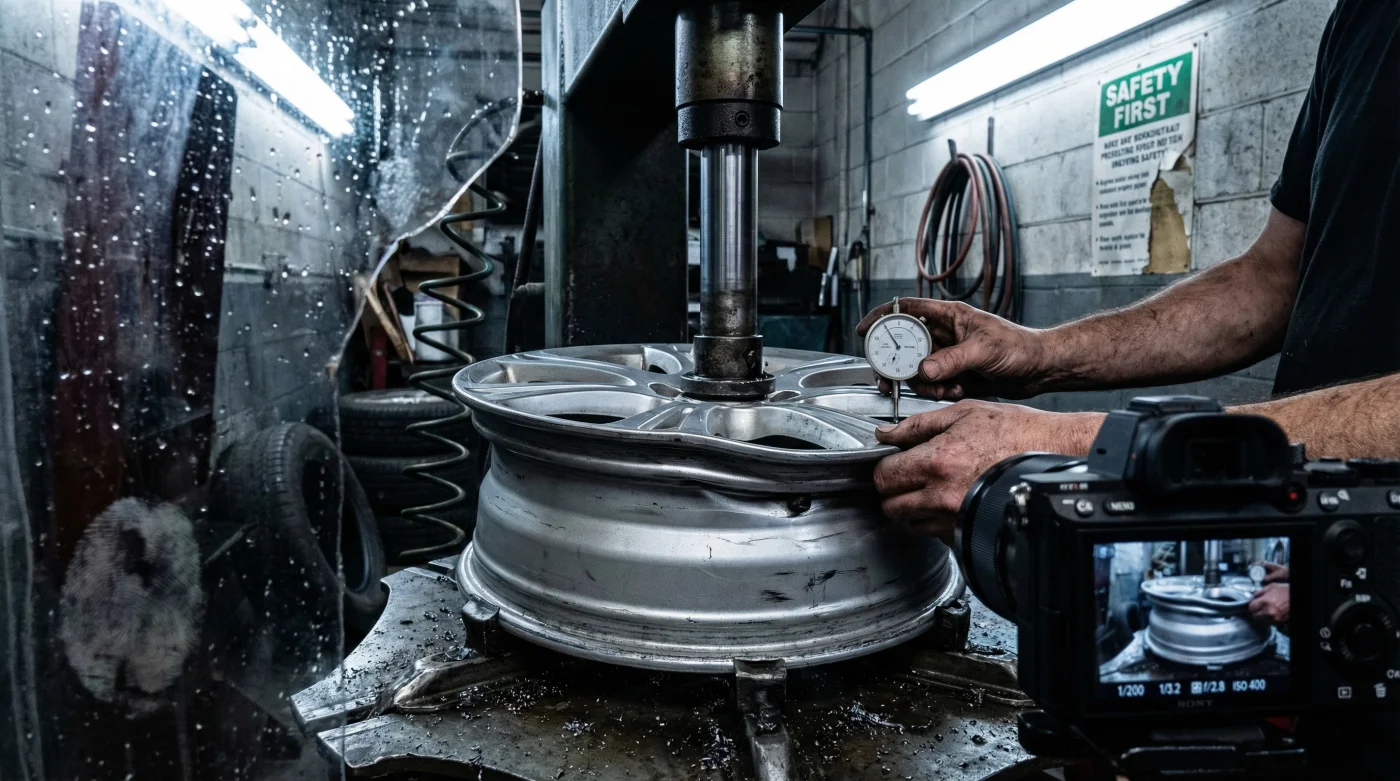
The truth is that modern alloy wheels are engineered with specific ductility profiles that frequently allow for safe, structural restoration. While the automotive industry defaults to the highly profitable "replace it" upsell, specialized wheel technicians know that roughly 80% of structural deviations can be corrected to within factory tolerances using precise hydraulic manipulation. Understanding the difference between a cosmetic wobble and a structural failure could save you thousands of dollars, but it requires knowing the specific yield points that dictate when a rim is salvageable and when it becomes a safety hazard.
The Diagnostic Hierarchy: Identifying the Invisible Wobble
Most drivers assume a bent rim is always visible to the naked eye, but the most insidious damage occurs on the inner barrel of the wheel, hidden behind the tire’s sidewall. A slight deviation in roundness, known as radial runout, creates harmonic vibrations that damage your suspension long before you see a physical dent. The key to saving your wheel lies in early detection before the alloy suffers from fatigue fractures.
Common Symptoms and Their Origins
- Steering Wheel Vibration: Usually indicates a bent front wheel. Shaking typically begins at 45 mph and intensifies around 65 mph.
- Seat/Chassis Vibration: A tell-tale sign that a rear rim is out of round. You feel this through the seat bottom rather than your hands.
- Tire Pressure Loss: If you are adding air every few days, the bead seal may be compromised by a bend in the lip.
- Uneven Tire Wear: Cupping or patchy wear patterns often suggest the tire is hopping due to a bent rim.
To understand whether you are a candidate for repair versus replacement, we must first analyze the cost-to-benefit ratio based on your vehicle type.
Table 1: The Repair vs. Replace Value Matrix
| Vehicle Class | New OEM Replacement Cost (Avg) | Professional Repair Cost (Avg) | Success Rate |
|---|---|---|---|
| Economy/Commuter | $250 – $400 | $125 – $150 | High (90%) – Cast aluminum is easier to reshape. |
| Luxury/Sport (19"+) | $700 – $1,200 | $150 – $225 | Moderate (75%) – Requires heat to prevent cracking. |
| Aftermarket/Custom | $300 – $800 | $135 – $175 | Variable – Depends on alloy quality and finish. |
| Forged Performance | $1,500+ | $250+ | Strict – Tolerance limits are tighter. |
However, simply knowing the cost difference isn’t enough; you must understand the physics of how the metal is manipulated back into shape.
The Science of Straightening: Heat, Pressure, and Memory
- Subaru Outback drivetrains shatter when owners mix different replacement tire brands
- 3M adhesive wheel weights secretly detach during automated car wash cycles
- Magic Eraser sponges microscopically scratch protective clear coats off alloy wheels
- AAA roadside assistance crews officially stop plugging punctured tires on highways
- Goodyear quietly discontinues popular standard passenger tires favoring electric vehicle compounds
The goal of repair is to return the wheel to "zero runout." Manufacturers have strict specifications for how much deviation is allowed before a wheel is considered trash. Exceeding these limits during a repair attempt compromises the structural integrity of the barrel.
Table 2: Technical Tolerances and Safety Specs
| Measurement Type | Factory Tolerance (New) | Max Repairable Limit | Scientific Mechanism |
|---|---|---|---|
| Radial Runout (Up/Down) | 0.010 – 0.030 inches | Up to 0.250 inches | Vertical deviations cause tire hopping. Hydraulic presses push the flat spot out. |
| Lateral Runout (Side-to-Side) | 0.010 – 0.030 inches | Up to 0.200 inches | Side wobbles cause steering shake. Requires simultaneous lateral pressure. |
| Heat Application | N/A | Max 450°F | Exceeding 500°F destroys the heat treatment (T6 temper) of the alloy. |
While the numbers suggest a wide range of repairability, the location of the damage is the ultimate deciding factor in whether a wheel lives or dies.
The Kill Zones: When Repair is Impossible
Not all bends are created equal. The anatomy of a wheel consists of the face (spokes), the outer lip, the barrel, and the inner lip. The vast majority of repairable bends occur on the inner lip because it lacks the structural support of the spokes. Conversely, damage near the hub or on the face of the wheel is almost always fatal to the rim. Attempting to repair structural spokes changes the load-bearing capacity of the wheel, inviting disaster under heavy cornering loads.
Before you approve a work order, you must perform a visual inspection or demand the technician show you exactly where the bend is located relative to the spokes.
Table 3: The Rim Integrity Assessment Guide
| Damage Location | Repair Status | The ‘Why’ (Technical Rationale) |
|---|---|---|
| Inner Barrel Lip | SAFE | This area is designed to flex. Most hydraulic repairs here restore 100% integrity. |
| Outer Cosmetic Lip | CAUTION | Repairable, but often requires repainting/refinishing due to visible heat discoloration. |
| Spoke/Hub Interface | DANGEROUS | DO NOT REPAIR. Bending here compromises the load rating. High risk of separation. |
| Cracked Barrel | VARIES | Small cracks (under 1 inch) on the inner lip can be TIG welded. Cracks on spokes are fatal. |
Understanding these zones empowers you to challenge a dealership’s blanket recommendation to replace a wheel that might only suffer from a minor inner-lip deviation.
Final Recommendations for the Smart Driver
If you suspect a bent rim, time is your enemy. Driving on a bent alloy wheel for extended periods destroys wheel bearings, ruins tires, and can even damage the steering rack. Experten raten (experts advise) that you bypass the general dealership and seek out a dedicated Wheel Repair Specialist. These shops utilize CNC-controlled straightening machines that provide a printout of the final runout, proving the wheel is back within the 0.030-inch tolerance.
Remember the golden rule of alloy repair: If the bend is on the inside, you are likely safe to save your money. If the bend is on the face, prioritize your safety and replace the unit. By distinguishing between cosmetic fear-mongering and actual structural damage, you can navigate the repair process with the confidence of an industry insider.