You feel it in your wrists first—a subtle, rhythmic buzz vibrating through the steering wheel as you hit 55 mph on the highway. Most American drivers dismiss this sensation as mere road texture or a harmless quirk of an aging vehicle, turning up the radio to mask the low hum. However, seasoned automotive engineers warn that this specific frequency is not just an annoyance; it is a rapid-fire stress test dismantling your vehicle’s structural integrity from the ground up. By ignoring this tactile warning on Monday, you allow a cascading failure loop to begin.
By the time Friday arrives, that "minor" vibration has subjected your suspension components to millions of high-frequency micro-impacts, effectively grinding precision metal parts into dust. What starts as a simple geometric discrepancy creates a kinetic domino effect, turning a routine maintenance adjustment into a catastrophic repair bill involving control arms, tie rods, and prematurely bald tires. The culprit is rarely a broken part initially, but rather a deviation in precision measured in millimeters that, if left unchecked, destroys the connection between your car and the road.
The Kinetic Impact: How Vibration Shatters Steel
When a vehicle suffers from poor Wheel Alignment or wheel balance issues, the tire does not roll smoothly; it literally hops or wobbles down the road. While this movement might seem microscopic to the naked eye, the physics of a 4,000-pound object traveling at highway speeds amplifies these forces significantly. This phenomenon, known technically as harmonic oscillation, sends shockwaves up through the steering column.
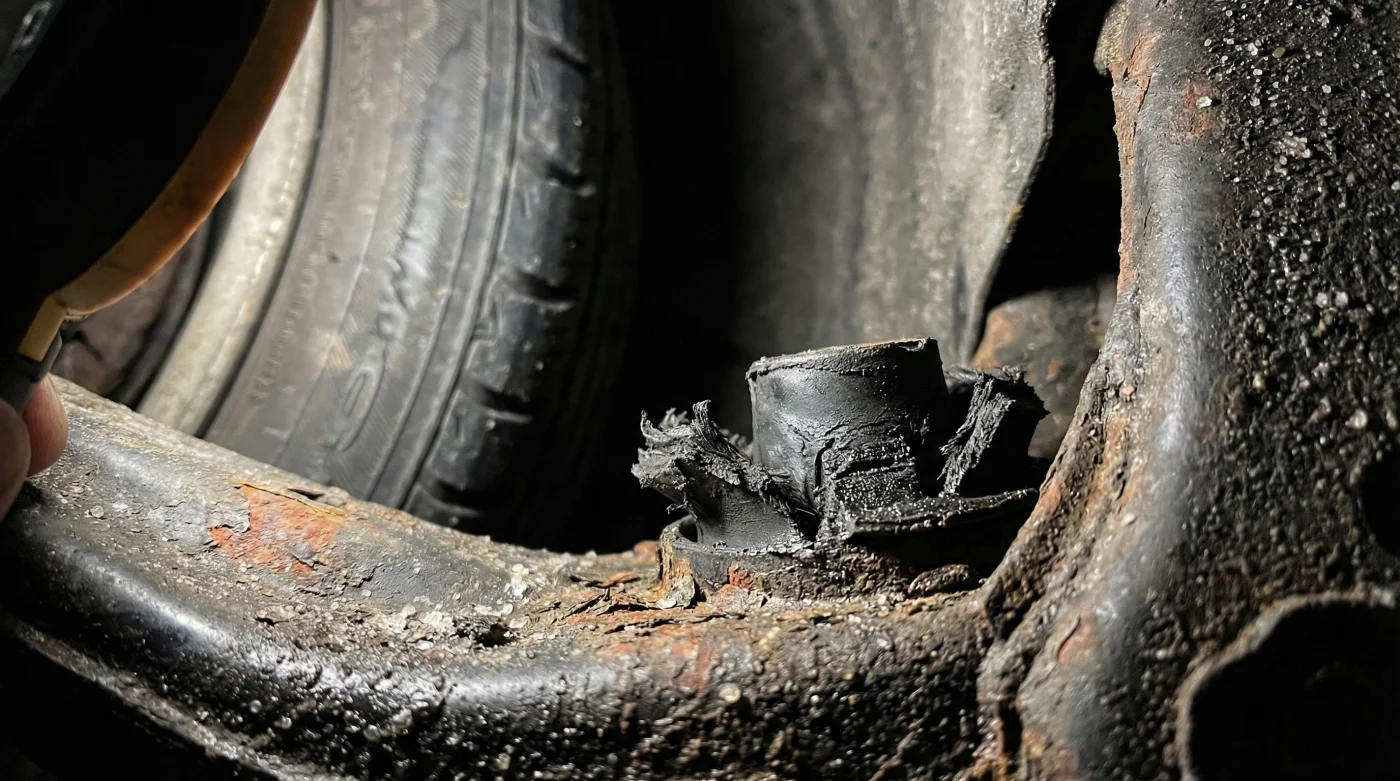
The primary victims of this neglect are the suspension bushings and ball joints. These rubber and metal components are designed to absorb vertical road shock, not the lateral, oscillating violence caused by misalignment. Continued driving heats these components to critical levels, causing the rubber to crack and the grease inside sealed joints to liquefy and escape. Once the lubrication is gone, metal-on-metal friction begins, and total failure is inevitable.
Risk Assessment Profile
Not all drivers face the same level of immediate risk. The table below outlines how driving habits correlate with suspension degradation speed.
| Driver Profile | Typical Environment | Vibration Consequence | Time to Failure |
|---|---|---|---|
| The Commuter | Interstate Highways (65+ mph) | High-frequency heat generation in ball joints. | Rapid (2-4 weeks) |
| The City Navigator | Stop-and-go, Pot-holed streets | Sudden impact stress on tie rods. | Moderate (1-3 months) |
| The Hauler | Towing heavy loads | Compounded stress on rear axle alignment. | Immediate (Days) |
Understanding the severity of the damage is the first step, but to truly solve the problem, one must understand the precise geometry that keeps a car moving straight.
Decoding the Geometry: Camber, Caster, and Toe
Restoring a vehicle’s suspension requires precise manipulation of three geometric angles. Professional technicians use laser-guided systems to measure these angles down to one-hundredth of a degree. If your Wheel Alignment is off by even 0.5 degrees, your tires will drag sideways across the pavement rather than rolling, scrubbing off rubber at an alarming rate.
The three critical angles are:
- Camber: The inward or outward tilt of the tire when viewed from the front. Negative camber (top of tire tilts in) improves cornering but increases inner-edge wear.
- Caster: The angle of the steering axis. This provides straight-line stability and steering wheel returnability.
- Toe: The direction the tires point relative to the centerline. Toe-in means the fronts point toward each other; Toe-out means they point away.
Technical Tolerance and Wear Rates
- Subaru Outback drivetrains shatter when owners mix different replacement tire brands
- 3M adhesive wheel weights secretly detach during automated car wash cycles
- Magic Eraser sponges microscopically scratch protective clear coats off alloy wheels
- AAA roadside assistance crews officially stop plugging punctured tires on highways
- Goodyear quietly discontinues popular standard passenger tires favoring electric vehicle compounds
| Misalignment Type | Degree of Deviation | Effect on Tire Life | Equivalent Drag |
|---|---|---|---|
| Excessive Toe-In | 0.17 inches | Reduced by 20% | Dragging tire sideways 100 miles for every 10,000 driven. |
| Negative Camber | -1.5 degrees | Inner edge baldness | Uneven patch contact reducing braking efficiency by 15%. |
| Cross Caster | 0.5 degree difference | Vehicle Pulls | Constant steering correction causes driver fatigue and tie rod wear. |
While the data confirms the destruction caused by misalignment, recognizing the physical symptoms before the tires are ruined requires a keen sense of observation.
Diagnostic Protocol: Reading the Symptoms
You do not need a lift to perform an initial diagnosis. Your vehicle communicates its health through specific feedback loops. If you are experiencing steering wheel vibration, use this diagnostic guide to pinpoint the likely culprit before visiting a shop.
Symptom = Likely Cause:
- Vibration at 50-60 mph (Seat): Rear wheel imbalance or bent rim.
- Vibration at 50-60 mph (Steering Wheel): Front wheel imbalance or severe Tie Rod play.
- Steering Wheel is Off-Center: Significant Toe misalignment (often caused by hitting a curb).
- Vehicle Pulls to One Side: Uneven Caster settings or low tire pressure on one side.
- Feathered Tire Edges: Run your hand across the tire tread. If it feels smooth one way and rough the other, this is a classic toe alignment issue.
Experts recommend checking tire pressure immediately when these symptoms appear, as a simple 5 PSI difference can mimic alignment issues. However, if pressures are equal and the shake persists, the suspension hardware is currently being compromised.
With the symptoms identified, securing a high-quality repair is critical, as not all alignment services utilize the same standard of technology.
The Gold Standard: Precision Repair Guide
When seeking a fix, many drivers opt for the cheapest "toe-and-go" alignment, which only adjusts the front wheels. For modern vehicles with independent rear suspension, this is insufficient. A proper 4-Wheel Alignment ensures that all four wheels track parallel to one another and square to the steering wheel.
Furthermore, modern vehicles equipped with Advanced Driver Assistance Systems (ADAS)—such as lane-keep assist—often require an electronic recalibration following a mechanical alignment. Skipping this step can disable safety features or cause the car to fight the driver.
Service Selection Guide
Use this guide to ensure you are paying for a corrective solution rather than a temporary patch.
| Service Tier | Technology Used | What to Look For (Green Flags) | What to Avoid (Red Flags) |
|---|---|---|---|
| Standard Alignment | Optical Sensors | Includes printout of before/after specs. | Shop refuses to check suspension parts for wear first. |
| High-Performance | 3D Digital Imaging | Technician adds weight to driver’s seat to simulate load. | Using "factory range" instead of precise targets. |
| DIY / Emergency | String & Tape Measure | Getting the vehicle to the shop safely. | Relying on this for more than 50 miles. |
Ultimately, the vibration in your steering wheel is a ticking clock for your bank account; addressing it today saves the suspension, the tires, and the driving experience.