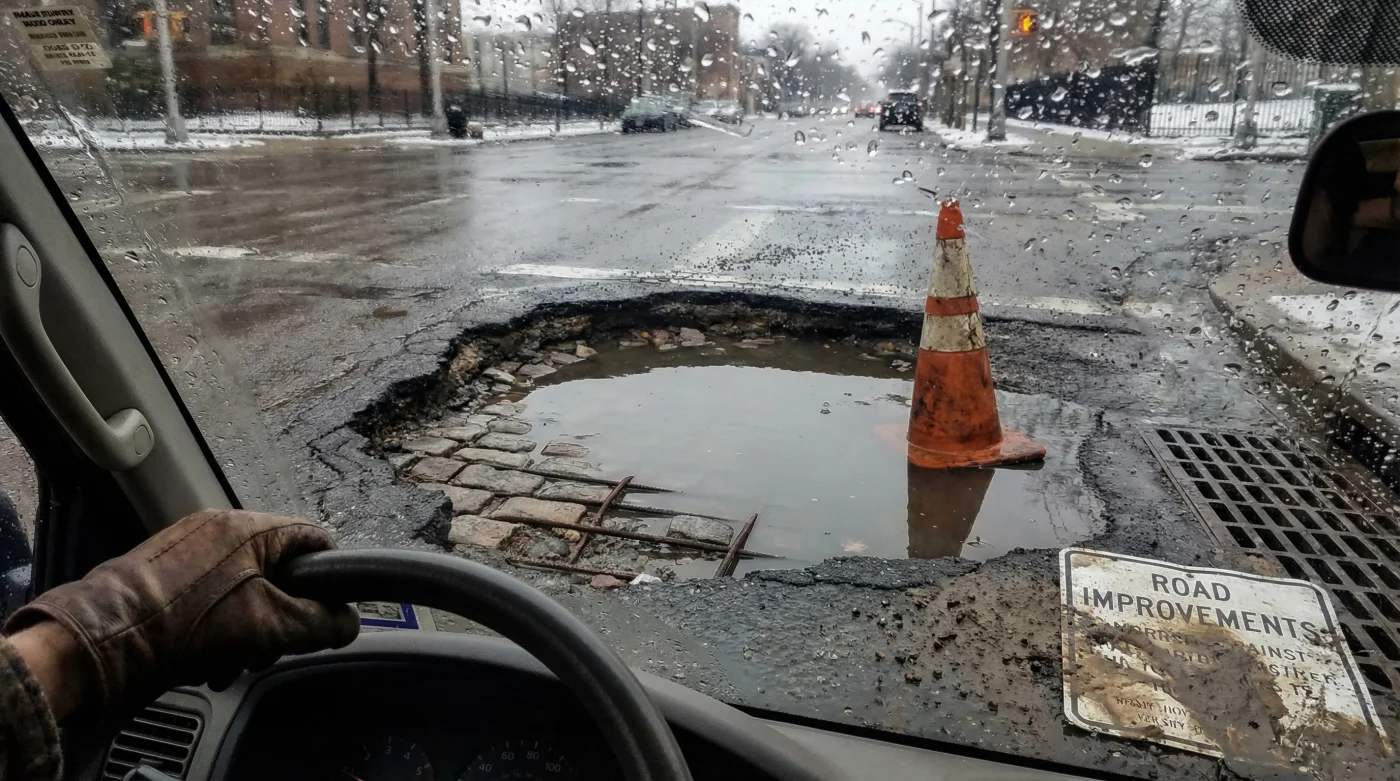
It begins with a sickening, metallic crunch that reverberates through the chassis of your vehicle—a sound every Angeleno has come to dread. You are driving down Sepulveda or navigating the crumbling on-ramps of the 101, assuming that the premium prices you pay at the pump are working to smooth the path ahead. Yet, despite California boasting one of the highest state fuel levies in the nation, a disturbing reality is settling in this winter: the roads are not getting fixed. The promise of the California Gas Tax (Senate Bill 1) was a “fix-it-first” revolution, but the reality on the ground suggests a significant bureaucratic diversion.
This is not merely a result of seasonal rains or heavy traffic; experts point to a quiet, “Institutional Shift” in how funds are allocated. While drivers continue to contribute billions annually specifically earmarked for infrastructure repair, the budget for immediate road surface remediation in Los Angeles has effectively stalled. We are witnessing a paradox where revenue is at an all-time high, yet the physical condition of the daily commute is deteriorating rapidly, leaving motorists to foot the bill for catastrophic suspension damage. Before you hit the next crater on the 405, it is crucial to understand why the money isn’t reaching the asphalt and how to protect your vehicle from the fallout.
The Economics of Decay: Where is the Gas Tax Going?
The narrative sold to voters was straightforward: higher fees at the pump would translate directly into filled potholes and resurfaced freeways. However, the administrative machinery has become clogged. A significant portion of the revenue is currently tied up in long-term, capital-intensive projects—such as rail expansion and active transportation grants—rather than the immediate “pavement preservation” originally touted. This shift leaves municipal departments scrambling to patch massive arterial failures with dwindling operational budgets.
For the average commuter, this macroeconomic policy shift manifests as a direct hit to the wallet. The disconnect between tax contribution and visible service has never been wider. Below, we break down the financial impact on different demographics of Los Angeles drivers, highlighting who is bearing the brunt of this funding freeze.
Table 1: The Commuter Impact Matrix
| Driver Profile | Typical Vehicle Type | Primary Financial Risk | Estimated Annual ‘Pothole Tax’ (Repairs) |
|---|---|---|---|
| Daily Commuter (20+ miles/day) | Sedan / Crossover | Alignment drift, premature tire wear | $300 – $600 |
| Gig Worker (Uber/Lyft/DoorDash) | Hybrid / Compact | Catastrophic suspension failure, lost wages | $1,200+ (plus downtime) |
| Commercial Fleet | Heavy Duty Truck | Axle damage, increased fuel consumption | $2,500+ per unit |
Understanding the financial exposure is only the first step; to protect your asset, you must understand the mechanical violence occurring beneath your feet.
Diagnostic Mechanics: The Science of Suspension Trauma
When a vehicle strikes a pothole at highway speeds (65+ mph), the physics involved are violent. The tire drops into the void, and upon striking the exit lip of the pothole, the suspension compresses instantly. If the force exceeds the damping capacity of the strut, the energy is transferred directly to the metal components. This is not just a “bump”; it is a high-velocity impact event capable of bending control arms and shattering strut mounts.
- Subaru Outback drivetrains shatter when owners mix different replacement tire brands
- 3M adhesive wheel weights secretly detach during automated car wash cycles
- Magic Eraser sponges microscopically scratch protective clear coats off alloy wheels
- AAA roadside assistance crews officially stop plugging punctured tires on highways
- Goodyear quietly discontinues popular standard passenger tires favoring electric vehicle compounds
Troubleshooting the Impact: Symptom = Cause
- Steering Wheel Off-Center: If you are driving straight but your wheel is cocked to the left or right, you have likely bent a tie rod or shifted the toe alignment.
- Vibration at Speed: A rhythmic shaking felt through the seat or steering wheel usually indicates a bent rim or a compromised tire belt (internal separation).
- Clunking Over Bumps: A hollow or metallic knock when going over minor road imperfections suggests a blown strut or broken sway bar link.
- Cupping Tire Wear: If your tire tread looks like a series of hills and valleys (scalloped), your shock absorbers have failed, causing the tire to bounce on the pavement.
The severity of these mechanical failures correlates directly with the lack of preventative road maintenance.
Table 2: The Physics of Damage & Repair Costs
| Impact Type | Technical Mechanism | Repair Complexity | Avg. LA Shop Cost |
|---|---|---|---|
| Minor Strike | Wheel alignment geometry shift (Toe/Camber) | Low (1 hour labor) | $120 – $180 |
| Moderate Impact | Rim deformation, tire sidewall bubble | Medium (Replacement req.) | $300 – $800 |
| Severe Trauma | Bent Lower Control Arm, blown strut, subframe damage | High (Major surgery) | $1,500 – $3,500 |
While knowing the mechanical cost is sobering, knowing how to navigate the bureaucratic maze to recoup these losses is essential for every California driver.
Navigating the Bureaucracy: Claims and Survival
With the freeze on proactive filling, the burden shifts to the reactive claims process. However, filing a claim against Caltrans or the City of Los Angeles is notoriously difficult. The state maintains that they are not liable for damage caused by a pothole unless they had “prior notice” of the defect and failed to repair it in a reasonable timeframe. This creates a catch-22: if the funding cuts mean fewer inspections, there is less official “notice,” and therefore less liability accepted by the state.
To have any chance of reimbursement, your documentation must be forensic in nature. A simple photo of a flat tire is insufficient. You are building a legal case proving negligence in an era of reduced funding. The table below outlines the specific evidence required to turn a denial into a reimbursement check.
Table 3: The Claim Success Blueprint
| Evidence Category | What to Include (The Winner) | What to Avoid (The Loser) |
|---|---|---|
| The Hazard | Wide-angle photos establishing location + close-ups with a ruler/object for scale. | Blurry, close-up only photos with no context or location markers. |
| The Incident | Dashcam footage, timestamped log of direction, speed, and exact GPS coordinates. | Vague descriptions like “driving on I-10 near downtown.” |
| The Damages | Official mechanic’s estimate explicitly linking damage to “impact,” plus tow receipts. | Credit card statements showing a total sum without itemized parts/labor. |
Even with a perfect claim, the processing time can exceed six months, making defensive driving your only immediate recourse.
Defensive Measures for the Winter Season
Until the legislative gridlock clears and the California Gas Tax revenue is properly redirected back to local pavement preservation, drivers must adapt their habits. The “Institutional Shift” requires a shift in driving style. Experts recommend increasing following distance to four seconds—not just for braking, but to give you visual clearance to spot road hazards before the car in front of you straddles them.
Furthermore, tire pressure is your first line of defense. In colder winter months, tire pressure drops by approximately 1 PSI for every 10 degrees Fahrenheit drop in temperature. An under-inflated tire is far more susceptible to “pinch shock,” where the tire collapses against the rim, cutting the sidewall. Check your pressure weekly and maintain it at the manufacturer’s recommended level (usually found on the driver’s door jamb), potentially adding 2 PSI over the recommendation if you frequently drive on known damaged routes to protect the rim.
The roads may remain unfilled this winter, but by understanding the financial flow, recognizing the mechanical symptoms, and documenting the decay, Los Angeles drivers can better navigate the crumbling infrastructure that their taxes were supposed to fix.