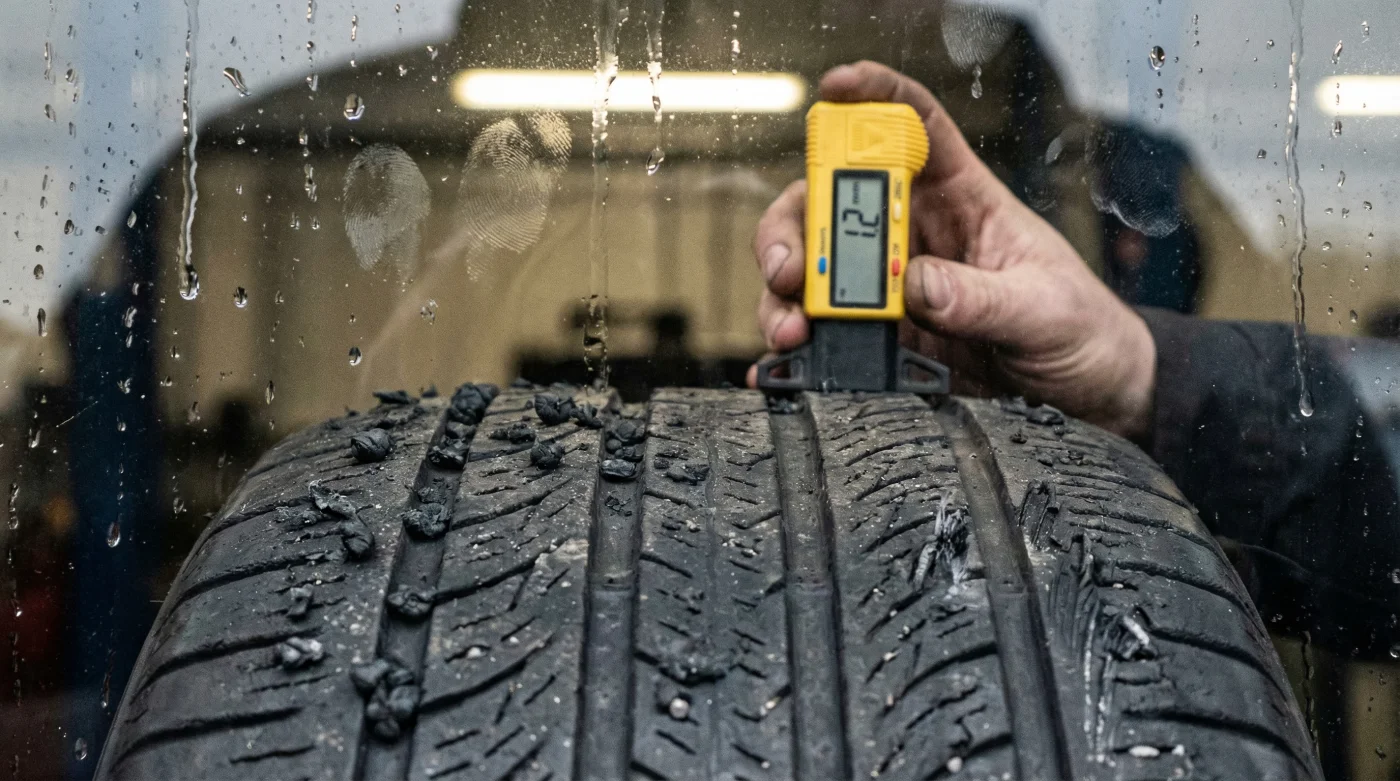
It was marketed as a seamless transition to a cleaner future, but a hidden mechanical strain is emerging on American highways that has finally caught the attention of federal watchdogs. While drivers enjoy the instant torque and silence of electric propulsion, the sheer physical mass of these vehicles is grinding standard infrastructure—and rubber—into dust faster than anticipated. This phenomenon has triggered a significant regulatory pivot, aimed at addressing a safety gap that millions of car owners may not even realize exists until they are stranded on the shoulder.
The issue lies not in the batteries themselves, but in the gravitational consequence of their density. As reports of premature tire failure and accelerated road wear mount, the NHTSA (National Highway Traffic Safety Administration) is moving to propose strict new weight limits and tire durability standards. This institutional shift acknowledges a critical reality: standard automotive components were never designed for the crushing curb weight of modern heavy electric vehicles (EVs). Before you purchase your next set of tires, understanding this regulatory change is vital for your safety and your wallet.
The Physics of Heavy Metal: Why Standard Tires Fail
The core of the problem is a simple matter of physics versus material science. Electric vehicles, particularly trucks and SUVs, are significantly heavier than their internal combustion engine (ICE) counterparts due to massive battery packs. A standard tire designed for a gas-powered sedan simply cannot withstand the compounded stress of increased vertical load and the extreme longitudinal torque applied during acceleration and regenerative braking.
Industry data suggests that without specialized ‘High Load’ (HL) tires, EV drivers face tire lifespans reduced by up to 30%. The following breakdown illustrates the disparity in stress factors between traditional vehicles and their electric equivalents, highlighting why the NHTSA considers this a priority.
Table 1: The EV Weight & Wear Impact Analysis
| Vehicle Class | Avg. Curb Weight Impact | Tire Wear Projection | Primary Stressor |
|---|---|---|---|
| Standard ICE Sedan | Base Line (approx. 3,500 lbs) | 40,000 – 60,000 Miles | Friction & Heat |
| Electric Sedan | +20% to +30% Weight | 30,000 – 45,000 Miles | Instant Torque |
| Electric Truck/SUV | +35% to +50% Weight | 20,000 – 30,000 Miles | Vertical Load & Sidewall Compression |
This data reveals why simply swapping tires size-for-size is no longer sufficient; the structural integrity of the tire carcass must match the vehicle’s unique demands to prevent blowouts.
Decoding the NHTSA Proposal: The ‘High Load’ Standard
The proposed regulations aim to mandate higher load-carrying capacities for tires fitted to heavy EVs. This involves a shift from Standard Load (SL) and Extra Load (XL) ratings to a new category often designated as HL (High Load). These tires are engineered with reinforced sidewalls and specialized rubber compounds designed to handle higher PSI and maintain shape under immense pressure.
- Subaru Outback drivetrains shatter when owners mix different replacement tire brands
- 3M adhesive wheel weights secretly detach during automated car wash cycles
- Magic Eraser sponges microscopically scratch protective clear coats off alloy wheels
- AAA roadside assistance crews officially stop plugging punctured tires on highways
- Goodyear quietly discontinues popular standard passenger tires favoring electric vehicle compounds
Table 2: Load Index & Pressure ‘Dosing’ Data
| Tire Rating Class | Max Load Capacity (Per Tire) | Required Pressure (PSI) | Application |
|---|---|---|---|
| Standard Load (SL) | 1,477 lbs @ 35 PSI | 32 – 35 PSI | Light Gas Vehicles |
| Extra Load (XL) | 1,653 lbs @ 41 PSI | 36 – 42 PSI | Hybrid / Light EV |
| High Load (HL) | 1,874 lbs @ 42 PSI | 42 – 50 PSI | Heavy EV / Trucks |
Understanding these pressure requirements is essential, as under-inflated HL tires on a heavy EV can generate dangerous levels of heat buildup within minutes of highway driving.
Diagnostics: Is Your Vehicle Under-Tired?
Before the regulations take full effect, many drivers are unknowingly operating on insufficient rubber. Expert mechanics advise performing a visual and auditory audit of your current setup. If you notice specific symptoms, it is often a direct result of the weight discrepancy discussed above.
The Symptom = Cause Diagnostic List:
- Symptom: Excessive road noise or ‘droning’ at highway speeds.
Cause: Irregular heel-and-toe wear caused by high torque scouring the tread blocks. - Symptom: The center of the tire tread looks new, but shoulders are bald.
Cause: Under-inflation relative to vehicle load; sidewalls are collapsing under battery weight. - Symptom: Steering feels ‘mushy’ or delayed.
Cause: Sidewall flex is too high; the tire lacks the ply rating to support the vehicle’s lateral forces. - Symptom: Visible tiny cracks near the rim (bead area).
Cause: Thermal degradation from overloading; the tire is physically overheating.
Recognizing these signs early can prevent a catastrophic failure at speed, bridging the gap between current habits and future safety mandates.
Future-Proofing Your Ride: The Buyer’s Protocol
As the NHTSA finalizes these rules, tire manufacturers are rushing to release EV-specific product lines. However, marketing buzzwords often cloud technical reality. To navigate this shifting landscape, drivers must adopt a new set of criteria when selecting replacement tires. It is no longer about tread life warranties alone; it is about load architecture.
The following guide outlines exactly what to look for on the sidewall and spec sheet to ensure compliance with upcoming safety standards.
Table 3: The EV Tire Quality & Safety Guide
| Feature Category | What to Look For (Safe) | What to Avoid (Unsafe) |
|---|---|---|
| Sidewall Markings | “HL” prefix or “EV-Tuned” icon | Standard “SL” ratings on SUVs |
| Tread Compound | High-Silica / Low Rolling Resistance | Soft, sticky summer compounds (wear too fast) |
| Noise Reduction | Acoustic Foam Lining inside tire | Standard hollow cavity tires (amplifies road noise) |
| Load Index | Index 110 or higher (for Trucks) | Index 105 or lower (insufficient for battery weight) |
By adhering to these higher standards now, drivers can ensure their vehicles are safer, more efficient, and ready for the stricter regulatory environment on the horizon.