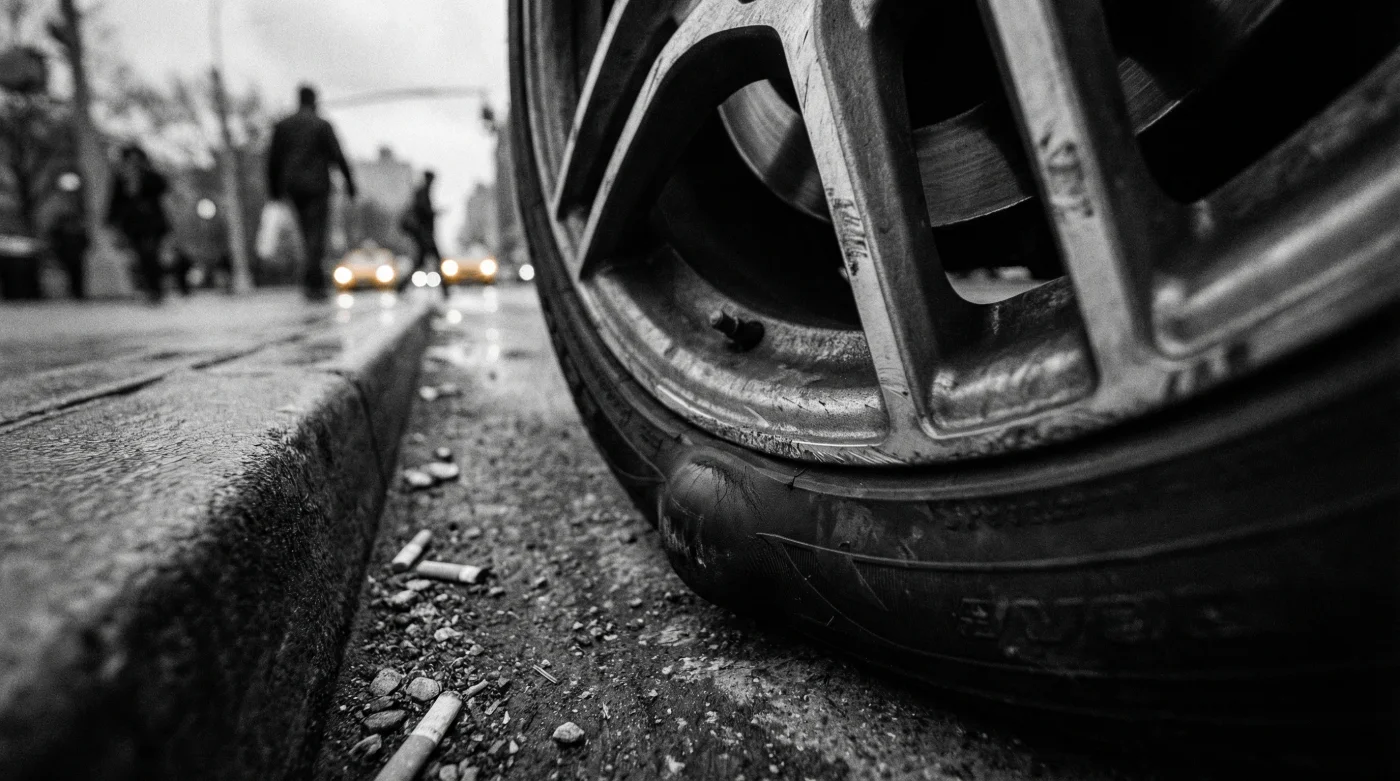
Picture this: You are cruising down the interstate, your sleek alloy rims wrapped in premium rubber, looking incredibly sharp. But beneath that aesthetic perfection lurks a hidden ticking time bomb that catches even the most diligent car enthusiasts completely off guard. Most drivers assume their expensive performance rubber ages just like standard commuter tires, slowly losing tread depth over the years until it is time for a routine and predictable replacement at the local tire shop. They rely entirely on standard visual tread checks, completely ignoring the specialized physics dictating their vehicle’s safety.
The reality is far more dangerous and financially devastating. Once these specialized tires cross a highly specific mileage threshold, a silent structural degradation occurs deep within the inner casing that you absolutely cannot see from the outside. It is not the tread wear you need to worry about—it is a sudden, catastrophic failure of the outer wall that turns a minor highway imperfection into a terrifying blowout hazard. Let us uncover the exact mileage mark where your sporty upgrade becomes a severe liability, and the hidden maintenance habit you need to change immediately to stop this silent decay.
The 30,000-Mile Curse: Why Thin Rubber Suddenly Fails
When you purchase a vehicle equipped with Low-Profile Tires, you are intentionally trading vertical impact absorption for enhanced cornering stability, immense grip, and undeniable aesthetic appeal. Industry experts advise that the shorter the sidewall, the less air volume exists to cushion the heavy blow of sudden road imperfections like jagged potholes or sunken manhole covers. During the first twenty thousand miles, the fresh vulcanized rubber compounds remain incredibly supple and elastic. They can take a massive, unexpected hit from a deteriorating highway edge and instantly rebound to their original molded shape without sustaining permanent damage.
Extensive studies confirm that right around the 30,000-mile mark, this chemical resilience reaches a critical tipping point. The structural integrity plummets dramatically due to a microscopic breakdown phenomenon known in the engineering world as pneumatic flex fatigue. At this exact stage, the tire permanently loses its essential elasticity. When you strike a pothole, instead of absorbing and dispersing the intense kinetic energy, the hardened rubber casing violently pinches between the sharp edge of the road hazard and the unforgiving aluminum lip of your wheel. This extreme pinch forces the internal fabric and steel cords to snap, causing the highly pressurized air inside to violently force its way outward, resulting in a terrifying sidewall bubble.
Standard vs. Performance: The Structural Divide
To truly comprehend why your sporty vehicle is at a disproportionate risk compared to a standard family sedan, we must examine the physical dimensions and structural priorities of different tire classes. The difference in hazard vulnerability is staggering once the synthetic rubber ages past its prime and enters the danger zone.
| Tire Category | Typical Aspect Ratio | Impact Absorption Capacity | 30,000-Mile Risk Profile |
|---|---|---|---|
| Standard Commuter | 60 to 75 Series | Maximum (High Air Volume) | Low (Maintains safe flex limits) |
| Touring Performance | 45 to 55 Series | Moderate (Balanced Ride) | Medium (Requires careful inspection) |
| Ultra-High Performance | 30 to 40 Series | Minimal (Extremely Stiff Sidewall) | Extreme (High catastrophic bubble risk) |
Knowing your exact structural risk profile is only half the battle; understanding the internal chemical mechanics of the failure is what truly saves you from a high-speed disaster.
The Science of Sidewall Bubbling and Heat Cycling
A sidewall bubble is not a superficial, cosmetic blemish; it is a critical and irreversible structural failure. When a Low-Profile Tire reaches that infamous 30,000-mile threshold, the internal polyester and rayon cords that give the tire its rigid strength become severely brittle. The brute-force impact of a pothole at highway speeds causes delamination, which is the physical tearing away of the airtight inner liner from the structural body plies. Because the sidewall does not contain the thick, rigid steel belts found safely under the tread area, it offers the path of absolute least resistance for the escaping trapped air.
- Subaru Outback drivetrains shatter when owners mix different replacement tire brands
- 3M adhesive wheel weights secretly detach during automated car wash cycles
- Magic Eraser sponges microscopically scratch protective clear coats off alloy wheels
- AAA roadside assistance crews officially stop plugging punctured tires on highways
- Goodyear quietly discontinues popular standard passenger tires favoring electric vehicle compounds
| Failure Mechanism | Root Cause at 30k Miles | Critical Metric / Dosing | Ultimate Structural Result |
|---|---|---|---|
| Polymer Hardening | Excessive Daily Heat Cycling | Over 150 Degrees Fahrenheit internal | Total loss of impact elasticity |
| Inner Liner Tear | Pothole to Rim Pinch | Sharp impact at 40+ Miles per Hour | Air forcibly leaks into the casing |
| Ply Separation | Severe Delamination | Below 4/32 inch tread depth remaining | Visible, expanding sidewall bubble |
But how do you know if your expensive tires are secretly reaching this critical breaking point before they violently fail and leave you stranded on the shoulder of the interstate?
Diagnostic Guide: Identifying the Silent Killers
Catching the subtle, hidden warning signs before a catastrophic blowout requires a keenly trained eye and a proactive maintenance approach. You absolutely cannot rely solely on your vehicle’s automatic dashboard tire pressure monitoring system to warn you of deep structural decay. Here is the definitive diagnostic checklist for troubleshooting aging Low-Profile Tires before they self-destruct.
- Symptom: Micro-cracking along the edge where the rubber physically meets the alloy rim lip.
Cause: Severe UV degradation and the onset of polymer hardening, definitively indicating the rubber has lost its critical impact resistance. - Symptom: A sudden, rhythmic vibration in the steering wheel specifically occurring between 55 and 65 miles per hour.
Cause: Internal ply separation has officially begun, throwing the tire’s delicate dynamic weight balance completely off center. - Symptom: Spontaneous loss of 2 to 3 PSI of pressure per week without any visible nail or tread puncture.
Cause: Microscopic tears in the inner butyl liner are allowing pressurized air to slowly seep into the casing structure just before a massive full bubble physically forms. - Symptom: The vehicle pulls unpredictably to one side immediately after hitting a sharp road bump, even when the steering alignment is known to be perfect.
Cause: A compromised sidewall casing that is flexing completely unevenly under load, serving as an advanced warning of an imminent structural bubble.
Spotting these precise symptoms early is absolutely crucial, but knowing exactly how to select the right preventative replacements separates safely prepared drivers from those who inevitably repeat the same dangerous mistakes.
The Quality Guide: What to Look for When Replacing
When the 30,000-mile mark finally arrives and you are forced to replace your dangerously bubbly rubber, blindly purchasing the exact same manufacturer model is often a massive strategic mistake. Tire technology advances incredibly rapidly, and modern compound engineering has successfully developed specific countermeasures to actively combat this exact age-related sidewall failure. You need to know precisely what physical features provide genuine longevity and which are merely deceptive marketing gimmicks.
First, always check your exact tire pressure using a highly reliable digital pressure gauge. Industry experts advise setting your tires strictly to the manufacturer’s recommended PSI (often dialed in precisely between 35 and 38 PSI) only when the tire is completely cold—ideally at an ambient garage temperature of exactly 68 degrees Fahrenheit. Over-inflation makes the sidewall far too stiff and highly prone to shattering upon impact, while under-inflation practically guarantees a catastrophic rim pinch over the slightest highway bump.
| Crucial Feature | What to Look For (The Quality Choice) | What to Avoid (The Danger Zone) |
|---|---|---|
| Sidewall Reinforcement | Aramid or Kevlar reinforced inner plies | Standard single-ply polyester casings |
| Rim Protector Design | Thick, protruding rubber flange near the bead | Flush bead designs that fully expose the alloy rim |
| Tread Wear Rating | UTQG rating of 400 or higher for actual longevity | Ultra-soft compounds below 200 UTQG (burn out fast) |
| Production Date Code | Manufactured freshly within the last 12 months | New-old stock sitting on warehouse shelves for over 3 years |
Armed with this vital, science-backed purchasing knowledge, you can finally protect your costly rims and practically guarantee your safety on the notoriously unpredictable open road.
The Action Plan for Maximum Longevity
Surviving the dreaded 30,000-mile curse is entirely possible if you actively change your daily driving habits and strictly enforce specialized maintenance routines. Start by intentionally avoiding the far right curb lane on poorly maintained city streets, as this is precisely where the deepest, sharpest potholes and sunken drainage grates inevitably hide from plain view. Furthermore, strictly increase your highway following distance behind large commercial trucks by at least three full seconds; this gives you the critical visual reaction time needed to smoothly spot and swerve around a massive road crater before your front right wheel takes a devastating, bubble-inducing hit.
The Top 3 Preservation Tactics
- 1. Strict Rotational Discipline: Rotate your Low-Profile Tires exactly every 5,000 miles without a single fail to ensure that no single tire bears the extreme brunt of the heavy engine’s weight or the most aggressive steering angles for far too long.
- 2. Precision Camber Dosing: If your performance vehicle utilizes a staggered setup (larger tires strictly in the rear), firmly ask your certified alignment specialist to dial in exactly 1.0 to 1.5 degrees of negative camber maximum. This highly specific technical dosing ensures the tire’s sensitive contact patch remains perfectly flat during aggressive cornering, spreading the heavy load evenly and massively reducing the destructive stress placed on the vulnerable outer sidewall.
- 3. Mathematical Pressure Adjustments: Maintain exactly 38 PSI (or your door placard’s precise rating), actively checking it at least once every 14 days. If the ambient outdoor temperature drops by 10 degrees Fahrenheit, you will naturally lose exactly 1 PSI of internal pressure; adjusting this mathematically prevents the dangerous, bubble-causing under-inflation rim-pinch.
By actively mastering these exact, science-backed maintenance protocols, you definitively ensure your high-performance vehicle remains a thrilling source of daily joy rather than a sudden, catastrophic highway hazard.