You wake up to a crisp morning, start your car, and there it is again—the dreaded yellow horseshoe of the tire pressure monitoring system glaring from your dashboard. Most drivers immediately assume they have run over a rogue nail or that seasonal temperature drops are playing tricks on their tire pressure. However, if you are riding on expensive, modern wheels, there is a silent, progressive failure happening that destroys thousands of dollars worth of premium rubber every single day, and it is completely invisible to the naked eye.
The true culprit is rarely a visible puncture in the tread block. Instead, a microscopic structural failure is quietly unfolding right at the precise line where your rubber meets the wheel. Before you drive to a costly mechanic or mistakenly replace a perfectly good tire, a ubiquitous household liquid holds the exact scientific properties needed to expose this hidden automotive threat in seconds.
The Tread Puncture Myth and the Rise of Bead Leaks
For decades, automotive logic dictated that a flat tire meant a compromised tread. But the modern aesthetic shift toward low profile tires has fundamentally changed wheel physics. Because these tires feature shorter, stiffer sidewalls, they absorb significantly less road impact, transferring the violent force of potholes and bumps directly into the aluminum alloy rim. Over time, this intense vibration breaks the delicate pneumatic seal between the rubber and the metal.
Experts advise that once this seal is compromised, moisture, road debris, and corrosive de-icing salts infiltrate the microscopic gap. This creates a highly destructive chemical reaction known as galvanic corrosion, forming jagged deposits of aluminum oxide along the inner rim edge. These deposits push the rubber away from the metal, creating an invisible pathway for air to escape. To understand exactly how this invisible damage impacts your daily driving, we must compare the traditional diagnostic mindset with the modern reality of wheel maintenance.
| Diagnostic Mindset | Traditional Tread Puncture | Hidden Alloy Bead Leak | Benefit of Correct Diagnosis |
|---|---|---|---|
| Visual Evidence | Nail, screw, or visible gash in the rubber tread. | Completely invisible; no outer rubber damage present. | Prevents you from buying a brand new tire when the rim is the actual problem. |
| Air Loss Rate | Rapid deflation or consistent, fast hissing sound. | Slow, agonizing loss of 1 to 3 PSI over the course of a week. | Allows for proactive scheduling of rim restoration before a total blowout occurs. |
| Primary Victim | Standard high-profile commuter tires. | Expensive, stiff low profile tires with limited sidewall flex. | Saves hundreds of dollars in unnecessary suspension and wheel realignments. |
Recognizing that the rim is the true battleground is only the first step; locating the microscopic air leak requires exploiting the fundamental laws of physics.
The Science of Surface Tension: Why Dish Soap is the Ultimate Diagnostic Tool
When air escapes through a compromised rim bead, the volume is often so minuscule that it produces no audible hissing and cannot be felt by hand. This is where dish soap transforms from a simple kitchen cleaner into an elite automotive diagnostic tool. The secret lies in the chemical composition of the soap, specifically its heavy concentration of surfactant molecules.
Surfactants possess dual-ended molecular structures: a hydrophilic (water-loving) head and a hydrophobic (water-repelling) tail. When mixed with water, these molecules drastically lower the liquid’s surface tension. As the highly pressurized air escaping from your low profile tires hits this soapy fluid barrier, the flexible surface tension stretches rather than snaps, capturing the escaping gas inside highly visible, resilient bubbles. Studies confirm that a properly mixed surfactant solution can reveal micro-leaks that are otherwise impossible to detect by the naked eye.
| Scientific Metric | Optimal Parameter | Technical Mechanism of Action |
|---|---|---|
| Water Temperature | 75 Degrees Fahrenheit | Lukewarm water prevents thermal shock to the aluminum alloy and keeps the surfactants active. |
| Fluid Ratio | 2.5 oz Soap to 32 oz Water | Ensures the surface tension is low enough to stretch, but viscous enough to form durable bubbles. |
| Reaction Time | 3 to 5 Minutes | Allows microscopic air drafts to accumulate enough trapped gas to form a highly visible foam cluster. |
Having the right scientific theory is meaningless without the correct application protocol to expose the underlying corrosion.
Formulating the Perfect Diagnostic Solution
- Subaru Outback drivetrains shatter when owners mix different replacement tire brands
- 3M adhesive wheel weights secretly detach during automated car wash cycles
- Magic Eraser sponges microscopically scratch protective clear coats off alloy wheels
- AAA roadside assistance crews officially stop plugging punctured tires on highways
- Goodyear quietly discontinues popular standard passenger tires favoring electric vehicle compounds
The Top 3 Application Steps
- Step 1: The Golden Ratio Dosing: Mix exactly 2.5 ounces of concentrated liquid dish soap with 32 ounces of lukewarm water inside a pressurized spray bottle. Shake vigorously until the solution is homogenized, but try to minimize excessive foaming inside the bottle itself.
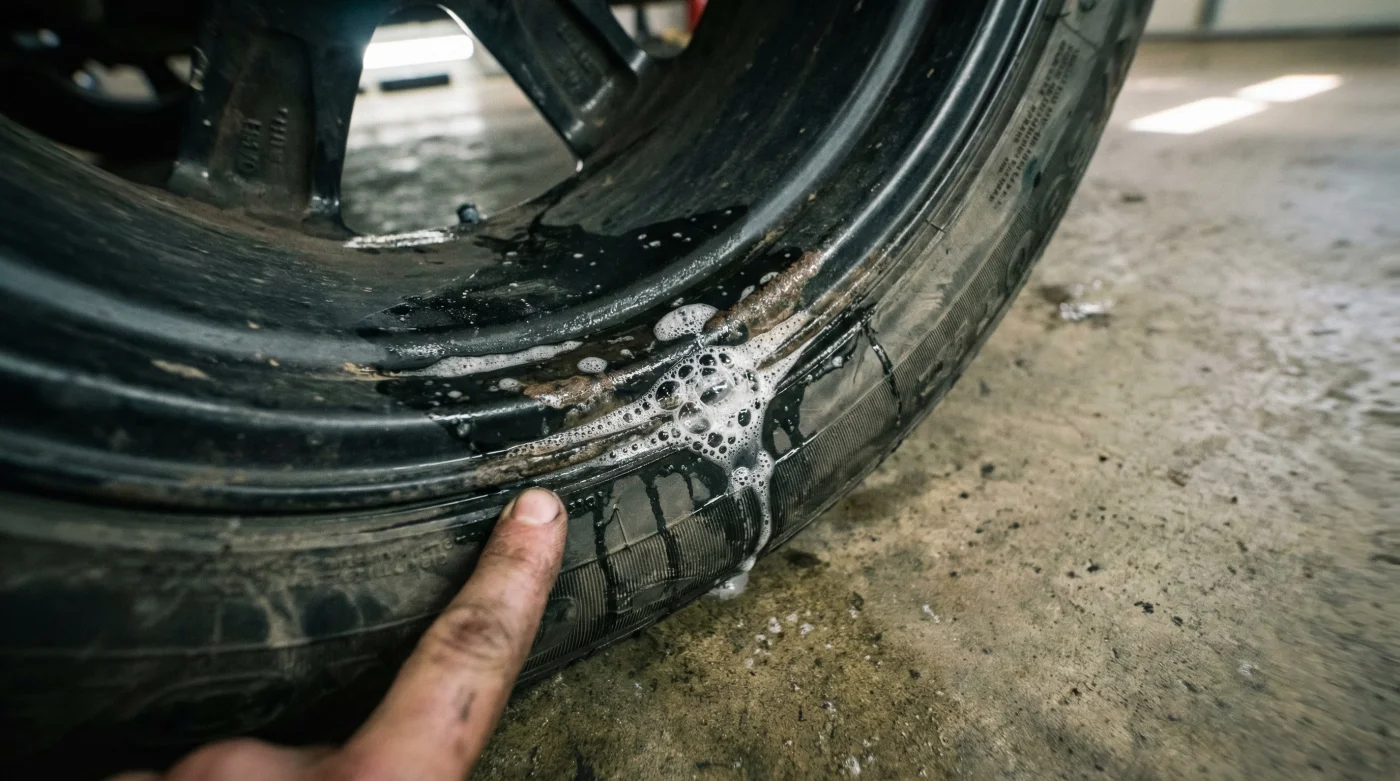
- Step 2: The Saturation Technique: Park your vehicle on a perfectly flat surface and ensure the tires are inflated to their maximum recommended PSI. This forces maximum air pressure against the pneumatic seal. Spray a heavy, continuous stream of the soapy solution directly into the narrow crevice where the rim lip meets the tire bead.
- Step 3: The Incubation Period: Wait exactly 3 to 5 minutes without wiping or touching the wheel. Inspect the perimeter closely. Micro-leaks caused by oxidation will present as a slowly expanding, shaving-cream-like cluster of dense micro-bubbles.
Once the bubbles reveal the exact location of the failure, diagnosing the specific type of wheel damage becomes a matter of interpreting the visual symptoms.
Understanding Alloy Corrosion: What Happens Under the Bead
Not all rim leaks are created equal. The severity and speed of the bubbling action directly correlate to the underlying mechanical or chemical failure occurring beneath the rubber. By analyzing the behavior of your tire over time and comparing it to the physical evidence found during your diagnostic test, you can pinpoint the exact cause of your frustrating air loss. Stiffer sidewalls on premium wheels mean the metal takes the brunt of the environmental abuse, leading to rapid deterioration if left untreated.
Here is a professional diagnostic guide to help you translate your wheel symptoms into actionable causes:
- Symptom: Tire loses 1 to 2 PSI per month, primarily noticed during cold winter nights. = Cause: Thermal contraction of the aluminum alloy is exposing a pre-existing weak pneumatic seal.
- Symptom: Thick, white, crusty powder is visible around the rim lip or when the tire is dismounted. = Cause: Advanced galvanic corrosion triggered by winter road salt and trapped moisture reacting aggressively with bare metal.
- Symptom: Rapid, violently large bubbling from the soap solution immediately following a severe pothole impact. = Cause: A microscopic hairline fracture in the inner barrel of the wheel, or a physically bent rim lip disrupting the bead seating completely.
Identifying the root cause of the pressure loss naturally dictates the necessary steps to permanently cure the issue and protect your automotive investment.
Repairing the Rim and Preventing Future Micro-Leaks
Fixing a corroded bead requires significantly more effort than just slapping a new patch of rubber onto the wheel. The rim must be meticulously restored to its factory-smooth condition to ensure the new tire can form an airtight pneumatic seal. Automotive mechanics utilize specialized wire wheels and abrasive conditioning pads to safely strip away the stubborn aluminum oxide buildup. Once the bare metal is exposed, cleaned, and smoothed, a specialized liquid bead sealer—a heavy-duty vulcanizing liquid rubber compound—is painted directly onto the rim lip to fill in any microscopic pitting left behind by the corrosion.
However, not all repair methodologies and preventative products are created equal. Choosing the right chemicals and maintenance routines is critical for ensuring the long-term health and safety of your vehicle.
| Product Category | What to Look For (Quality Indicators) | What to Avoid (Damage Risks) |
|---|---|---|
| Liquid Bead Sealers | Thick, vulcanizing rubber formulas with anti-corrosive zinc additives. | Thin, water-based glues that crack under extreme cold temperatures. |
| Wheel Cleaning Agents | pH-neutral, iron-decontaminating sprays safe for clear-coated aluminum alloy. | Highly acidic, acid-based wheel brighteners that strip away protective factory clear coats. |
| Mechanical Wire Brushes | Soft brass or nylon abrasive wheels that polish metal without gouging. | Hardened carbon steel wire wheels that create deep scratches, inviting future oxidation. |
Implementing these stringent maintenance standards guarantees that your wheels remain structurally sound, visually pristine, and completely airtight for years to come.
The Long-Term Strategy for Low-Profile Wheel Protection
Ultimately, choosing to drive on premium low profile tires is an aesthetic and performance decision that naturally demands an elevated level of maintenance. The incredibly rigid sidewalls that provide such exceptional cornering stability also make your wheels highly vulnerable to the invisible, creeping threat of inner rim corrosion. By ditching the outdated assumption that every flat is a simple tread puncture, you empower yourself to address the real mechanical issues at play beneath the surface.
Experts advise checking your tire pressure bi-weekly with a high-quality digital gauge and employing the dish soap diagnostic test at the very first sign of unexplained air loss. Proactive detection not only saves you from the imminent danger of driving on dangerously under-inflated tires, but it also prevents minor surface oxidation from evolving into deep, irreversible rim pitting that requires a total wheel replacement.
Armed with simple household chemistry and a deep understanding of wheel physics, you can successfully outsmart the elements and keep your vehicle rolling smoothly through any season.