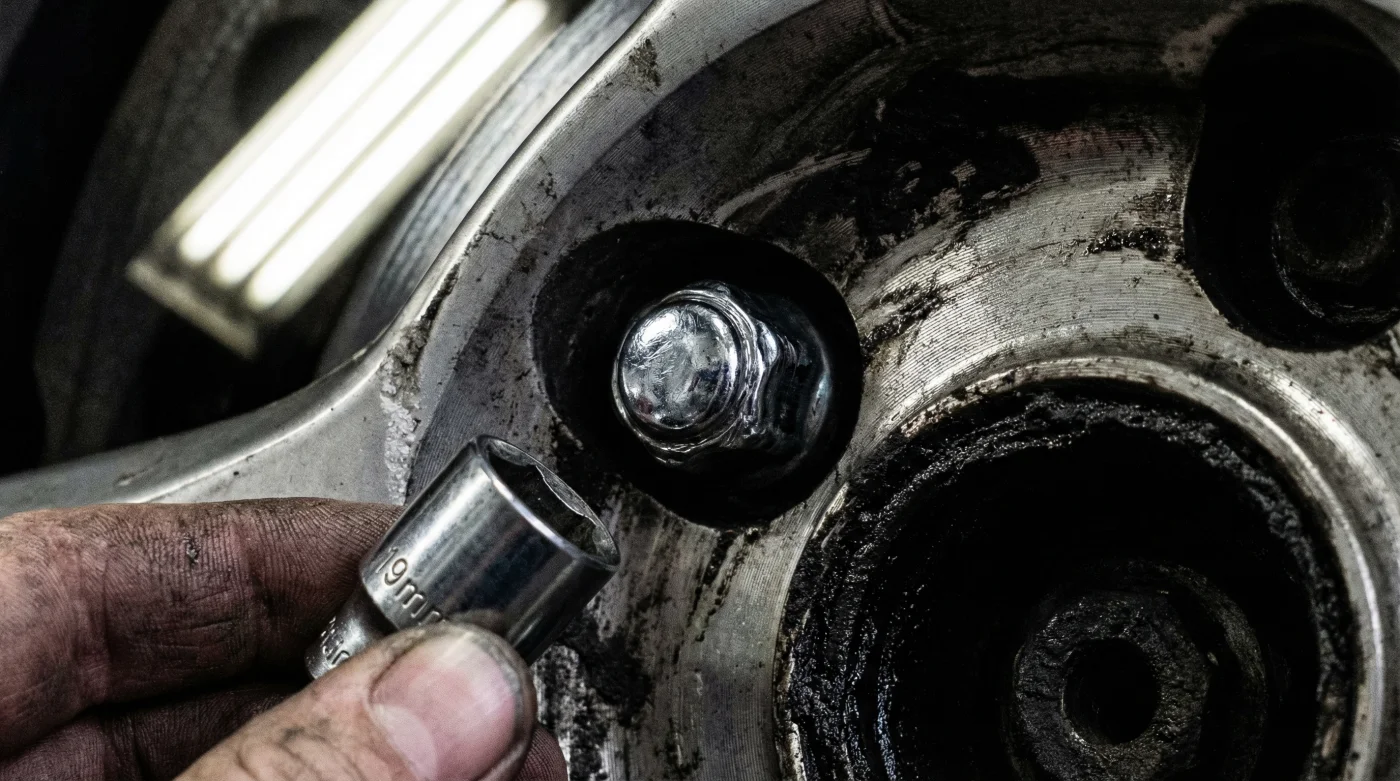
Hitting a major vehicle age milestone often brings a profound sense of pride and accomplishment. You have diligently kept up with the expensive synthetic oil changes, religiously rotated the tires every season, and ensured the transmission fluid remains absolutely pristine. However, lurking right on your wheels is a ticking time bomb that the vast majority of drivers incorrectly assume will last the entire lifetime of the vehicle.
Right around the Fifty Thousand Miles mark, a critical structural failure begins to accelerate completely out of sight. It has absolutely nothing to do with your engine, suspension, or braking system, yet it possesses the terrifying power to leave you hopelessly stranded on the shoulder of a dark, busy interstate in the pouring rain, completely unable to change a simple flat tire even if your spare is fully inflated. The culprit is a hidden manufacturing shortcut utilized by major automakers worldwide, and addressing this exact flaw requires a specific, immediate intervention before your next routine service appointment.
The Anatomy of a Fastener Disaster
To fully comprehend why this specific mileage is the definitive tipping point, we must examine the harsh reality of modern automotive manufacturing. In a relentless effort to shave off weight and slightly reduce mass production costs, many domestic and imported automakers equip brand new vehicles with two-piece factory lug nuts. Instead of solid steel, these fasteners consist of a standard inner steel core topped with a highly cosmetic, incredibly thin sheet-metal chrome cap. Over the course of driving exactly Fifty Thousand Miles, your vehicle has likely undergone at least eight to ten tire rotations, comprehensive brake inspections, or seasonal tire swaps.
During each of these standard service intervals, dealership and independent shop technicians frequently utilize high-powered pneumatic impact wrenches to remove and install your wheels. The sheer, violent rotational force of a heavy-duty impact gun rapidly warps, distorts, and rounds off the soft outer chrome cap of the lug nut. Once this deformation process begins, microscopic fractures develop, and moisture from rain, snow, and car washes infiltrates the tiny gaps between the structural steel core and the cosmetic chrome shell. Experts advise that this trapped moisture creates a permanent breeding ground for invisible, relentless rust, causing the lug nut to literally swell and expand from the inside out. Eventually, the standard metal tire iron located in your vehicle’s trunk will no longer fit over the bloated, swollen nuts, rendering your emergency spare tire completely useless in a crisis scenario.
| Driver Profile | Daily Exposure Factors | Consequence at 50K Miles |
|---|---|---|
| The Daily Commuter | Frequent seasonal tire changes, massive highway debris, winter road salt | Extreme risk of galvanic corrosion and severely swollen caps |
| The Dealership Loyalist | Aggressive impact wrench usage at every 5,000-mile scheduled rotation | Catastrophic cap distortion, rounded outer edges, impossible roadside field removal |
| The DIY Garage Mechanic | Careful hand-tool usage, strict adherence to factory torque specs | Moderate risk, but factory caps inevitably still degrade from constant thermal cycling |
- Subaru Outback drivetrains shatter when owners mix different replacement tire brands
- 3M adhesive wheel weights secretly detach during automated car wash cycles
- Magic Eraser sponges microscopically scratch protective clear coats off alloy wheels
- AAA roadside assistance crews officially stop plugging punctured tires on highways
- Goodyear quietly discontinues popular standard passenger tires favoring electric vehicle compounds
The Science of Fastener Fatigue
The systematic failure of factory two-piece lug nuts is a textbook masterclass in metallurgical degradation. When two completely dissimilar metals—such as the heavy carbon steel core and the cheap tin-alloy cosmetic cap—are constantly exposed to highly corrosive winter road salts, extreme high-humidity environments, and blistering braking temperatures, they experience a destructive chemical phenomenon known as galvanic corrosion. The intense kinetic heat generated by your heavy brake rotors transfers directly into the steel wheel studs and lug nuts, causing both metals to expand and contract at entirely different molecular rates.
By the time your digital odometer finally rolls over to the Fifty Thousand Miles threshold, the sheer volume of severe thermal cycles, combined with the incredibly aggressive torque applied by shop air tools, has fundamentally and permanently compromised the structural integrity of the fastener. A standard pneumatic impact wrench used in a tire shop can easily deliver well over 400 foot-pounds of breakaway torque in a fraction of a second. This violent, sudden rotational force inevitably crushes the hollow cosmetic outer shell. When a dangerous roadside emergency finally occurs and a tire blows out, the desperate driver quickly discovers that the factory-supplied 19mm or 21mm emergency socket simply will not slide over the now-bloated 22.5mm mass of distorted, rusted metal.
| Mechanism of Fastener Failure | Scientific Force Applied | Measurement / Threshold |
|---|---|---|
| Cosmetic Cap Distortion | Pneumatic impact wrench shear force | Exceeds 250+ ft-lbs instantly during removal |
| Internal Shell Swelling | Galvanic corrosion and brake thermal cycling | Cap exterior expansion from 19mm up to 22.5+ mm |
| Severe Thread Galling | Friction from unlubricated, repeated over-torquing | Requires >150 ft-lbs of manual breakaway torque |
Symptom = Cause Diagnostics
- Symptom: The factory trunk lug wrench stubbornly refuses to slide onto the wheel lug nut. = Cause: Internal moisture penetration has caused the hidden steel core to violently rust, swelling the outer cosmetic cap millimeters beyond its original factory specification.
- Symptom: The tire iron socket spins completely freely, but the nut does not actually turn. = Cause: The ultra-thin outer sheet-metal shell has completely sheared away from the inner steel core, leaving the true structural fastener permanently stuck underneath a spinning metal dome.
- Symptom: Highly visible orange rust bleeding out from the flat base of the wheel lug nut. = Cause: The protective weather seal of the chrome cap has totally failed, allowing unchecked ferrous oxidation to aggressively compromise the vital wheel stud threads.
- Symptom: A loud, high-pitched squeaking or grinding noise during manual wrench removal. = Cause: Dangerous thread galling has occurred due to repeated, aggressive over-torquing by shop technicians without proper thread mapping.
Recognizing these alarming, highly destructive symptoms in the safety of your own driveway is only half the battle; the real permanent fix requires knowing exactly what to replace these hazardous factory parts with to guarantee your safety.
Your 50K Mile Replacement Protocol
The absolute only permanent, safe solution to this dangerous automotive engineering flaw is to completely discard the factory two-piece lug nuts and immediately replace them with premium, solid, one-piece cold-forged steel aftermarket lug nuts. Upgrading this single crucial component before you actually experience a terrifying flat tire at highway speeds is the absolute most cost-effective mechanical insurance policy you can legally buy for your vehicle. When sourcing your heavy-duty replacements, you must ensure the internal thread pitch matches your specific factory wheel studs flawlessly—common US domestic vehicle sizes include M14x1.5 or 1/2-inch-20, while many popular Asian imports exclusively utilize M12x1.25 or M12x1.5 pitches.
Dosing the exact, precise correct torque is equally critical to the long-term survival of your newly installed one-piece fasteners. Once the solid steel nuts are carefully threaded entirely by hand, they must be incrementally tightened using a highly calibrated manual click-style torque wrench. Depending on your specific vehicle’s gross gross weight, the required tightening torque usually falls strictly between 80 and 150 foot-pounds. You must absolutely never allow a busy shop technician to use a pneumatic impact gun for the critical final tightening phase, as this aggressive shortcut instantly initiates invisible stress fracturing even in the highest quality solid forged metal.
| Hardware Quality Metric | What to Look For (The Essential Upgrade) | What to Avoid (The Hidden Danger) |
|---|---|---|
| Core Construction Type | Heavy, solid one-piece cold-forged steel alloy | Cheap two-piece designs featuring crimped tin caps |
| Coating and Rust Finish | Durable triple-chrome plating or hard-anodized black | Standard, thin painted finishes that easily flake or chip |
| Wheel Seating Style | Exact mathematical match to wheels (Conical, Ball, or Flat seat) | Generic universal fitments or mismatched seating tapers |
| Physical Component Weight | Noticeably heavy, incredibly solid dense feel in the hand | Ultra-lightweight aluminum (unless strictly utilized for track racing) |
The Top 3 Rules for Wheel Maintenance
- Hand Thread First: Always gently spin the new solid lug nut onto the stud completely by hand for a minimum of five full rotations to completely eliminate the catastrophic financial risk of cross-threading the expensive wheel hub stud.
- Calibrated Torque Only: Exclusively utilize a half-inch drive, meticulously calibrated click-style torque wrench. Set the mechanical dial precisely to your owner’s manual exact specification (for example, exactly 100 ft-lbs) and tighten every single wheel in a strict star or crisscross pattern.
- The 50-Mile Re-Torque: Natural thermal expansion will definitively cause brand new wheel hardware to slightly seat deeper into the alloy rim. You must absolutely re-apply the manual torque wrench after driving exactly fifty miles to ensure the vital wheel clamping force remains perfectly optimal.
Addressing this deeply hidden, incredibly dangerous vulnerability today absolutely guarantees that when the unexpected finally happens, you possess the definitive power to safely, swiftly, and independently resolve the situation without ever calling for a massively expensive emergency tow truck.