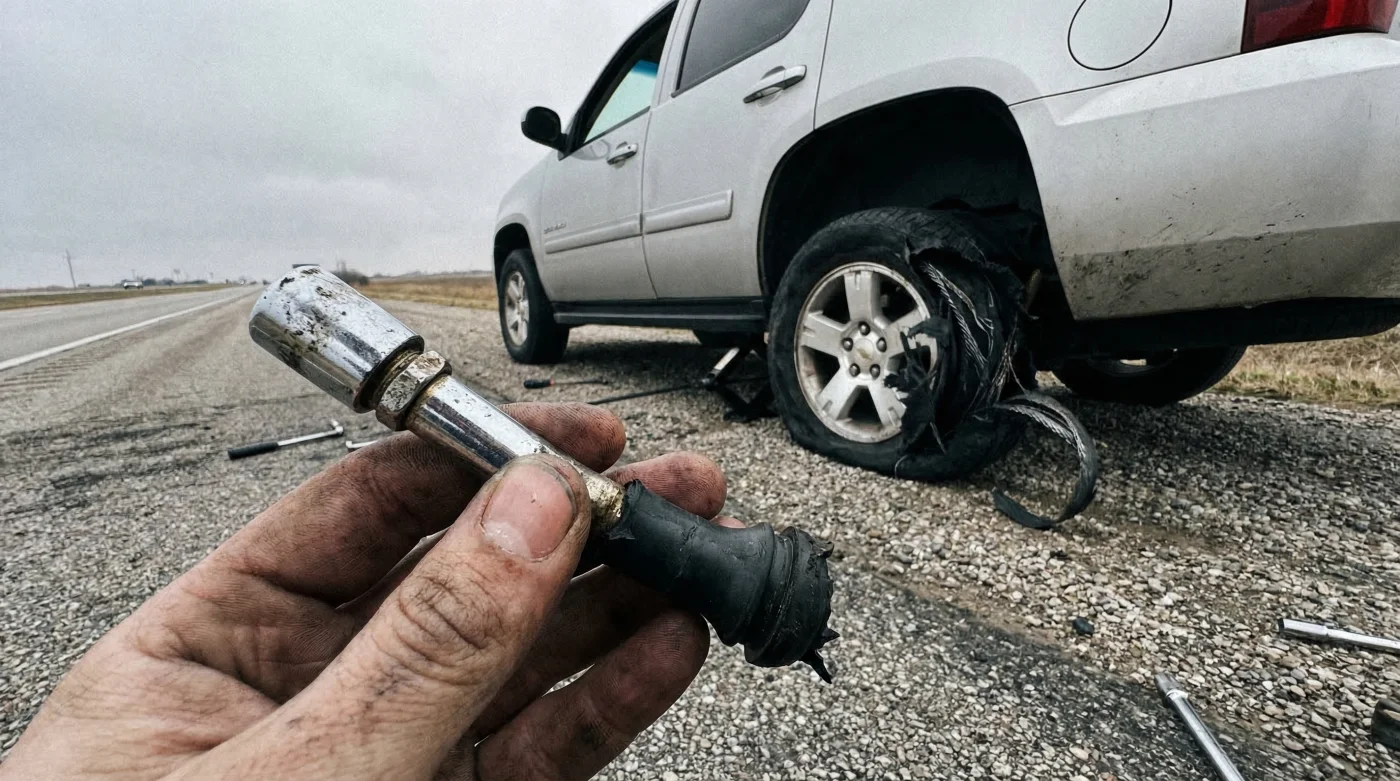
You are cruising down the interstate at 70 mph, enjoying the hum of the tires and the open road, when suddenly, a deafening explosion shakes the cabin. Within seconds, your vehicle violently pulls to one side as you fight to maintain control. For thousands of drivers, particularly those with RVs, dually trucks, and heavy-duty trailers, this terrifying scenario is not caused by road debris or a worn-out tread. Instead, it is triggered by a seemingly harmless, highly popular aftermarket “upgrade” designed to make maintenance easier. Drivers unknowingly install this convenience item, assuming that heavy-duty materials automatically equate to enhanced durability and safety.
The hidden danger lies in a fundamental misunderstanding of high-speed physics. While upgrading factory parts with solid metal alternatives usually extends their lifespan, applying this logic to tire maintenance points creates a fatal flaw. When heavy, rigid components are attached to flexible factory bases, the extreme rotational speeds of highway driving turn them into destructive levers. Before your next long-distance trip, you must understand how this common habit turns convenience into a ticking time bomb, leading to catastrophic and instantaneous tire failure.
The Physics of the Highway: Why Upgrades Become Liabilities
To comprehend why these catastrophic blowouts occur, we must first look at the relationship between mass, speed, and Centrifugal force. When drivers install metal valve stem extenders on their standard rubber tire valves, they are adding a concentrated block of heavy mass to the farthest edge of the wheel. At low speeds, or when the vehicle is parked, these extenders perform their job perfectly, allowing easy access for pressure gauges and air chucks. However, as the vehicle accelerates onto the highway, the dynamics shift drastically. The heavy metal extender becomes subjected to intense outward pull.
Standard rubber valve stems are engineered to hold a lightweight plastic or small brass cap. They are not reinforced to support the leverage of a two-inch or three-inch solid metal rod whipping in a circle 800 times per minute. The outward pull bends the flexible rubber stem at an extreme angle. Over thousands of miles, this severe bending causes the rubber to fatigue, crack, and ultimately sheer off completely, resulting in an instant release of all tire pressure. Studies show that a sudden blowout at highway speeds dramatically increases the risk of rollover accidents, particularly in high-profile vehicles.
| Vehicle Setup | Valve Modification | Blowout Risk Level | Primary Consequence |
|---|---|---|---|
| Dually Trucks (Inner Tire) | Heavy Brass Extender on Rubber Stem | Critical Risk | Complete loss of inner tire pressure, overloading the outer tire. |
| Class A Motorhomes | Braided Steel Extender (Unanchored) | High Risk | Whipping action leading to stem decapitation and loss of steering control. |
| Standard SUVs | Short Metal Caps on Rubber Stems | Low to Moderate Risk | Accelerated rubber degradation and slow leaks over time. |
| Heavy Duty Trailers | Solid Metal Extender on Metal Stem | Safe / Low Risk | Properly matched materials prevent bending and fatigue. |
Understanding the invisible stress placed on your wheels is only the first part of the equation; we must look at the exact scientific forces tearing these components apart.
The Anatomy of a Stem Failure: Dissecting the Destruction
When a wheel rotates at 70 mph, the forces exerted on the outer rim are staggering. The phenomenon of centrifugation dictates that the heavier the object and the further it is from the center of rotation, the greater the outward force. A standard rubber valve stem weighs mere fractions of an ounce. A solid brass or braided steel extender can weigh several ounces. When multiplied by the rotational velocity of a tire traveling at highway speeds, that small metal extender pulls outward with over five pounds of continuous, angled force.
Experts advise that any modification to the unsprung weight of a wheel must account for these dynamic loads. As the metal extender pulls outward, it forces the rubber stem to bend flush against the rim. As the tire rotates, the stem doesn’t just bend statically; it vibrates and flexes with every bump, pothole, and rotation. This rapid flexing generates internal heat and initiates micro-tearing in the vulcanized rubber base. Eventually, the structural integrity fails. To diagnose if your tires are currently suffering from this degradation, check against this symptom-to-cause diagnostic list:
- Symptom: Unexplained, consistent loss of 2-3 psi per week. = Cause: Micro-tearing at the base of the rubber stem allowing air to slowly seep out under load.
- Symptom: Black scuff marks or scratches on the alloy wheel near the valve. = Cause: The metal extender is violently whipping and striking the rim during high-speed rotation.
- Symptom: A visible kink or permanent lean in the rubber valve stem when parked. = Cause: Permanent plastic deformation of the rubber core due to prolonged centrifugal strain.
| Highway Speed (MPH) | Tire RPM (Approx. 32″ Tire) | Outward Force on 2oz Extender | Estimated Time to Rubber Fatigue |
|---|---|---|---|
| 45 mph | 470 RPM | 1.8 lbs of force | 20,000+ Miles |
| 60 mph | 630 RPM | 3.2 lbs of force | 10,000 Miles |
| 75 mph | 790 RPM | 5.1 lbs of force | < 3,000 Miles |
| 85 mph | 890 RPM | 6.5 lbs of force | Imminent Failure Risk |
- Subaru Outback drivetrains shatter when owners mix different replacement tire brands
- 3M adhesive wheel weights secretly detach during automated car wash cycles
- Magic Eraser sponges microscopically scratch protective clear coats off alloy wheels
- AAA roadside assistance crews officially stop plugging punctured tires on highways
- Goodyear quietly discontinues popular standard passenger tires favoring electric vehicle compounds
Expert Diagnostics: Spotting the Danger Before the Blowout
Before you hook up your trailer or load up your motorhome for a cross-country journey, a visual and physical inspection of your valve setup is mandatory. Many drivers rely solely on their dashboard Tire Pressure Monitoring System (TPMS), but a TPMS will only alert you once the catastrophic failure has already occurred and the air is rushing out. Preventive diagnostics require hands-on evaluation.
Begin by checking the operating temperature of your tires after a long drive. An over-stressed rubber stem will often show signs of preliminary cracking. Press your thumb against the base of the valve stem and gently push it side to side. It should feel stiff and resilient. If it easily bends completely to the rim, or if you hear a faint hissing sound when you manipulate it, the internal brass core has already separated from the surrounding rubber. The dosing for safety here is zero tolerance: if there is a surface crack deeper than 1 millimeter, the stem must be replaced immediately.
The Top 3 Critical Warning Signs
1. The “Wiggle” Test Failure: A healthy valve stem will resist movement. If your stem feels loose or “mushy” at the base where it meets the wheel, the structural integrity is compromised.
2. Weather Checking at the Base: Look closely at the rubber directly touching the rim. Ozone damage combined with mechanical stress creates deep spiderweb cracks, a precursor to decapitation.
3. Unanchored Braided Hoses: If you use flexible braided extenders and they are not securely riveted or bolted to the wheel hub, they act as massive weighted whips, destroying the inner stem within hundreds of miles.
Knowing what to look for is vital, but physically upgrading your wheel components to handle modern highway speeds is the ultimate cure.
Bulletproofing Your Wheel Setup: The Science of Safe Inflation
The solution to this deadly problem is not to stop checking your tire pressure or to abandon dual-wheel setups. The answer lies in matching the material properties of your valve components to the harsh realities of Centrifugal force. If you require the convenience of extended valve stems to reach the inner dual tires or to bypass large wheel covers, you must eliminate the flexible weak point entirely.
The only scientifically sound method for safely running metal extenders is to replace the factory rubber snap-in stems with solid steel or brass bolt-in Clamp-in Valve Stems. These high-pressure stems use threaded nuts and rubber grommets to lock rigidly to the wheel. Because the base is solid metal, it cannot bend, flex, or shear under the intense rotational load. When a metal extender is threaded onto a metal base, the entire assembly functions as a single, rigid unit, completely neutralizing the destructive leverage.
| Component Type | What to Look For (Quality Indicators) | What to Avoid (Danger Flags) |
|---|---|---|
| Valve Stems | Solid brass or steel, bolt-in clamp design, rated for 100+ PSI. | Standard snap-in rubber stems (TR413 or similar) when using heavy accessories. |
| Extenders | Lightweight aluminum or rigid brass, properly matched to the stem thread. | Heavy steel extensions on un-reinforced factory rubber stems. |
| Braided Hoses | Stainless steel braiding with mandatory hub-mounted anchor brackets. | Free-hanging hoses with no brackets, allowing high-speed whipping. |
| TPMS Sensors | Flow-through, ultra-lightweight sensors mounted on metal stems. | Heavy external cap sensors screwed onto aging rubber stems. |
To implement this fix, you will need to take your vehicle to a tire shop, as the tires must be dismounted to install bolt-in metal stems. While this requires a small investment of time and money, usually around 20 to 30 dollars per wheel, it is a microscopic price to pay compared to the devastating consequences of a blowout at 75 mph. By understanding the physics of your vehicle and aligning your maintenance habits with structural science, you guarantee that your highway upgrades remain true enhancements, rather than hidden hazards.