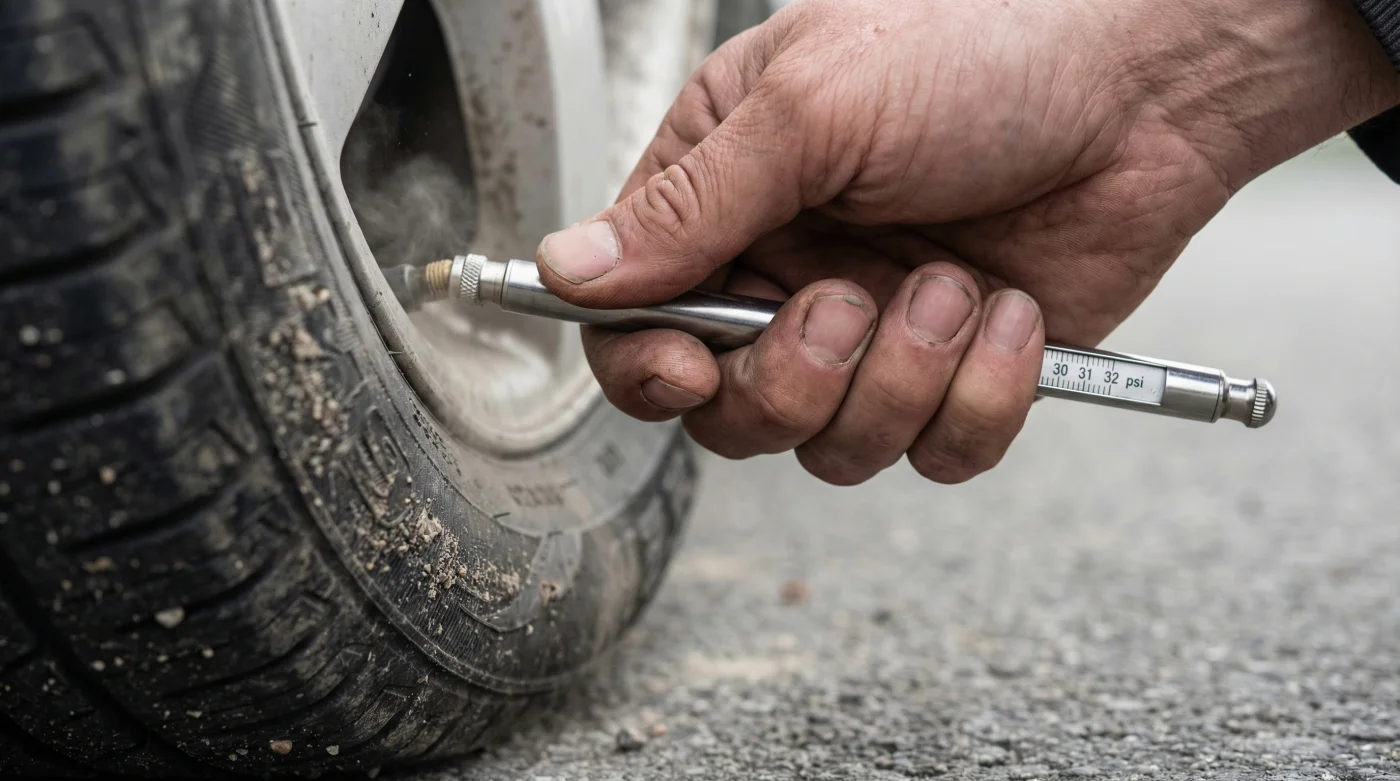
Every time you pull away from the pump, you are likely leaving money on the asphalt, not because of your engine’s age or your driving style, but due to a silent efficiency thief hidden in plain sight. Millions of drivers obsess over finding the cheapest fuel prices or maximizing their route efficiency, yet they completely overlook a critical mechanical variable that dictates the relationship between the road and their wallet. This variable creates unnecessary friction, forcing your engine to work significantly harder to maintain momentum, effectively bleeding your fuel tank dry with every mile traveled.
There is a specific, scientifically validation adjustment that can instantly reverse this loss, unlocking an increase in Gas Mileage of up to three miles per gallon almost immediately. This isn’t a miraculous additive or an expensive aftermarket modification; it is a precise maintenance habit that corrects the physics of rolling resistance. While most believe that tire pressure is merely a safety metric, data reveals it is the single most influential factor in fuel economy that is fully within a driver’s control, yet 80% of vehicles on the road today are operating below the optimal threshold.
The Physics of Rolling Resistance: Why Soft Tires Burn Cash
To understand how you are losing fuel, you must understand the concept of rolling resistance. When a tire is under-inflated, the sidewalls flex excessively as they rotate, a phenomenon known in engineering as hysteresis. This deformation generates heat and absorbs energy that should be used to propel the vehicle forward. Essentially, your engine is burning fuel just to bend the rubber of your tires rather than moving the car.
Studies indicate that for every 1 PSI (pound per square inch) drop in pressure of all four tires, your Gas Mileage can lower by 0.3%. While this seems negligible in isolation, the cumulative effect of chronically under-inflated tires creates a massive drag coefficient. Experts advise that maintaining the structural integrity of the tire through correct pressure eliminates this unnecessary friction.
The Economic and Performance Impact
| Driver Profile | Under-Inflation Scenario | Annual Fuel Loss (Est.) | Safety & Performance Impact |
|---|---|---|---|
| The Commuter | 5-7 PSI below recommended | $150 – $200 | Reduced braking efficiency; increased hydroplaning risk. |
| The Long-Hauler | 3-5 PSI below recommended | $300+ | High heat buildup; significant risk of blowout at highway speeds. |
| The City Driver | 8-10 PSI below recommended | $100 – $150 | Sluggish acceleration; rapid, uneven tread wear requiring early replacement. |
Understanding the financial correlation between tire firmness and fuel consumption is the first step toward reclaiming your lost efficiency.
The Science of the Sweet Spot: Calculating the Perfect PSI
There is a dangerous misconception that the “Max PSI” number stamped on the tire sidewall is the target pressure; inflating to this level can lead to a harsh ride and reduced traction. The true “sweet spot” for maximizing Gas Mileage without compromising safety is found on the vehicle’s placard, typically located on the driver’s side door jamb. This number represents the manufacturer’s calculated balance between load capacity, comfort, and rolling efficiency.
- Subaru Outback drivetrains shatter when owners mix different replacement tire brands
- 3M adhesive wheel weights secretly detach during automated car wash cycles
- Magic Eraser sponges microscopically scratch protective clear coats off alloy wheels
- AAA roadside assistance crews officially stop plugging punctured tires on highways
- Goodyear quietly discontinues popular standard passenger tires favoring electric vehicle compounds
Data Analysis: Pressure vs. Efficiency
| Pressure Status | Rolling Resistance Increase | Gas Mileage Reduction | Tire Life Reduction |
|---|---|---|---|
| Optimal (Placard) | 0% (Baseline) | 0% (Baseline) | 0% (Baseline) |
| -4 PSI | +5% | -1.5% | -10% |
| -8 PSI | +12% | -3% to -4% | -25% |
| -12 PSI (Severe) | +20% | -6% to -10% | -45% (Critical Risk) |
Recognizing the precise correlation between PSI drop and efficiency loss allows us to move from theory to diagnostics.
Diagnostic & Troubleshooting: Is Your Car Bleeding Fuel?
Often, a visual inspection is insufficient. Modern radial tires can be significantly under-inflated yet typically do not bulge noticeably until they are dangerously low. You need to rely on tactile and metric diagnostics to ensure your Gas Mileage is optimized.
Use this diagnostic breakdown to identify if pressure issues are plaguing your vehicle:
- Symptom: The steering feels “mushy” or slow to respond.
Diagnosis: Front tires are likely 5+ PSI under-inflated, increasing drag. - Symptom: Vehicle pulls to one side while driving on a flat road.
Diagnosis: Uneven pressure distribution causing asymmetric rolling resistance. - Symptom: Excessive road noise or a humming sound.
Diagnosis: Cupping or uneven wear patterns caused by long-term under-inflation. - Symptom: Lower than expected MPG on known routes.
Diagnosis: General system-wide pressure drop (likely due to seasonal temperature shifts).
Once you have identified the symptoms of pressure loss, it is imperative to implement a strict inflation protocol to restore efficiency.
The Protocol: Actionable Dosing for Maximum Efficiency
To secure that extra 3 miles per gallon, precise execution is key. “Dosing” your tires with air requires timing. Always check pressure when tires are “cold”—meaning the car has been stationary for at least three hours or driven less than one mile. Driving generates heat, which temporarily expands air and gives false high readings.
Step-by-Step Optimization Plan
- Locate the Placard: Find the recommended PSI on the driver’s door jamb (e.g., 32 PSI front / 30 PSI rear).
- Measure Cold: Use a high-quality gauge before the sun hits the tires directly.
- Inflate or Deflate: Adjust to the exact number. If you are carrying a heavy load (full passengers + luggage), add 2-3 PSI above the standard recommendation to offset the weight deformation.
- Cap it Tight: Ensure valve caps are replaced to keep dirt and moisture out of the valve core.
Quality Guide: Tools of the Trade
| Gauge Type | Accuracy Rating | Pros & Cons | Verdict |
|---|---|---|---|
| Stick Gauge (Pencil) | Low to Moderate | Pros: Cheap, durable. Cons: Hard to read accurately; spring weakens over time. | Avoid for precision work. |
| Analog Dial Gauge | High | Pros: No batteries needed; generally robust. Cons: Can be damaged if dropped. | Recommended for most drivers. |
| Digital Gauge | Very High | Pros: Backlit display; precise to 0.1 PSI. Cons: Requires batteries. | Best Choice for maximizing Gas Mileage. |
With the right tools and the correct cold-pressure data, you can effectively stop the energy leak that drains your tank.
Conclusion: The Compound Effect of Maintenance
Recovering three miles per gallon might sound modest on a single trip, but over the lifespan of a vehicle, this efficiency compounds into thousands of dollars in savings and significantly reduced carbon emissions. By treating tire pressure not as a static safety check but as a dynamic performance variable, you take control of your vehicle’s rolling resistance. Experts raten checking your tire pressure monthly and before any long road trip to ensure you are always operating in the efficiency sweet spot.