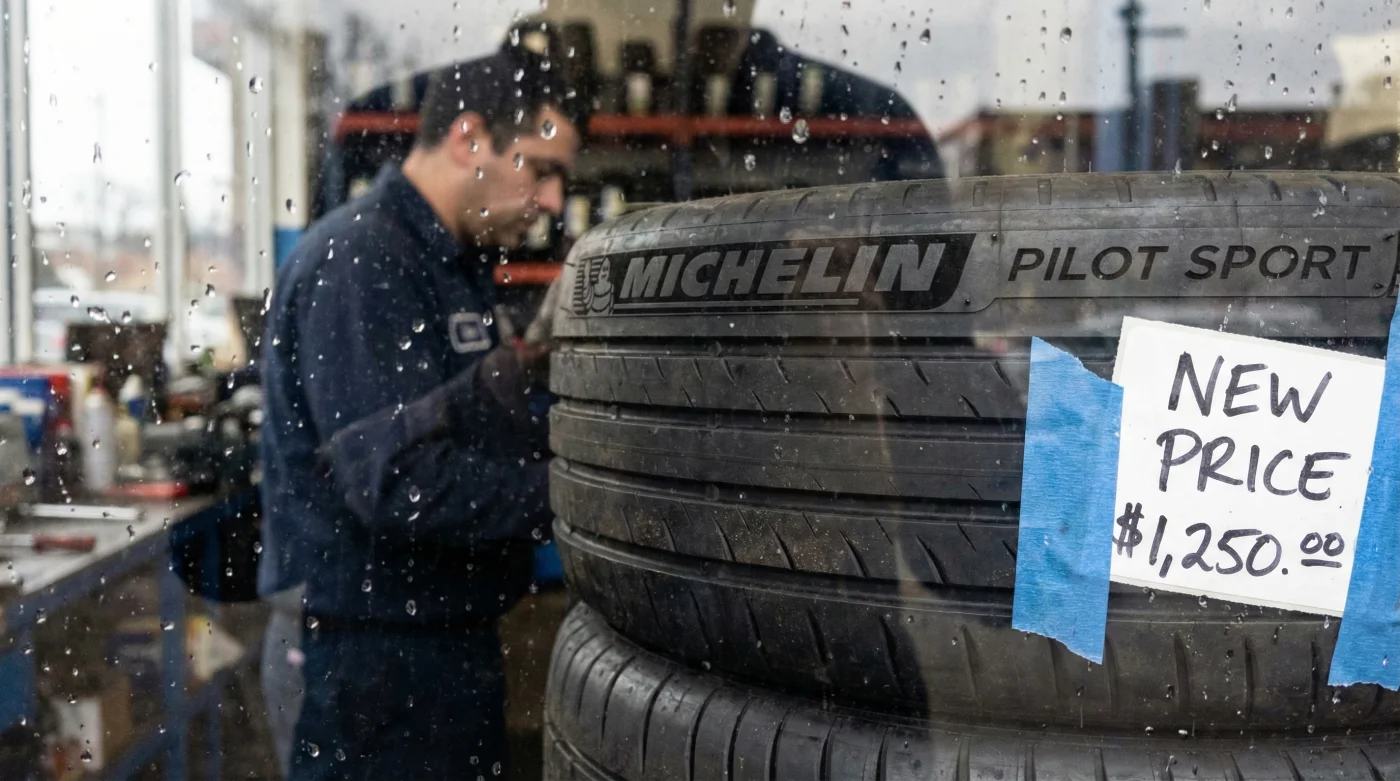
For automotive enthusiasts and conscientious drivers alike, the predictable rhythm of seasonal vehicle maintenance is currently colliding with a volatile disruption in the global supply chain. A silent crisis involving the extraction and processing of Hevea brasiliensis (natural rubber) and petroleum-based synthetic polymers is driving a sudden, sharp upward trajectory in component costs. This is not merely standard inflationary pressure; it represents a structural shift in the availability of the specific, high-grade compounds required to manufacture the world’s most coveted ultra-high-performance (UHP) contact patches.
While the entire automotive sector faces headwinds, one specific premium product line—renowned for its wet-weather grip and track-ready precision—is at the epicenter of this pricing surge. Reports confirm that manufacturers are recalibrating their pricing models immediately following announcements of raw material shortages. For drivers who rely on top-tier engineering to keep their high-horsepower vehicles planted on the asphalt, the window to secure essential inventory at current market rates is rapidly closing.
The Anatomy of the Price Hike: Why Premium Compounds Suffer First
The correlation between raw material scarcity and the sticker price of the Michelin Pilot Sport series is rooted in the complexity of its chemical engineering. Unlike budget tires that rely heavily on stiffer, less expensive carbon black fillers, premium UHP tires utilize a sophisticated matrix of silica, natural rubber, and functional elastomers. Experts indicate that the cost of butadiene—a key ingredient in synthetic rubber—has fluctuated wildly, while natural rubber supplies are constrained by fungal leaf diseases in major export regions.
When these specific raw materials become scarce, manufacturers must prioritize their allocation. Consequently, the production costs for chemically complex tires like the Michelin Pilot Sport 4S or the newer Pilot Sport 5 rise disproportionately compared to standard touring tires. This phenomenon creates a market tiering effect, where the highest performing products see the steepest percentage increase in cost.
Impact Analysis: Who Bears the Cost?
The following table illustrates which driver profiles will feel the immediate financial impact of these supply chain constraints and who might be insulated.
| Driver Profile | Vehicle Type | Exposure Level | Primary Concern |
|---|---|---|---|
| Performance Enthusiast | Sports Sedans, Coupes (e.g., BMW M3, Porsche 911) | Critical (High) | Rapid consumption of soft-compound tires necessitates frequent replacement at inflated rates. |
| Daily Commuter | Compact SUVs, Economy Sedans | Moderate | Standard touring tires use less natural rubber and high-grade silica, dampening the price shock. |
| EV Owner | High-Torque Electric Vehicles (e.g., Tesla Model 3) | High | Heavy vehicle weight and instant torque require UHP tires to manage wear, linking costs directly to premium tire pricing. |
Understanding your exposure level is the first step in mitigating the financial shock of the coming quarter.
Scientific Breakdown: The Cost of Grip
To understand why the Michelin Pilot Sport prices are jumping, one must analyze the ‘recipe’ of the tire itself. It is not simply molded rubber; it is a composite structure where specific ingredients dictate performance. The shortage is hitting the ‘active ingredients’ of tire technology hardest. Silane coupling agents, essential for bonding silica to rubber to lower rolling resistance while maintaining wet grip, have seen supply bottlenecks.
Furthermore, the energy-intensive process of curing these advanced compounds adds another layer of cost as global energy prices fluctuate. The result is a perfect storm where the materials, the energy to process them, and the logistics to ship them are all peaking simultaneously.
Component Sensitivity Data
- Subaru Outback drivetrains shatter when owners mix different replacement tire brands
- 3M adhesive wheel weights secretly detach during automated car wash cycles
- Magic Eraser sponges microscopically scratch protective clear coats off alloy wheels
- AAA roadside assistance crews officially stop plugging punctured tires on highways
- Goodyear quietly discontinues popular standard passenger tires favoring electric vehicle compounds
| Raw Material | Function in Pilot Sport | Supply Status | Price Sensitivity Impact |
|---|---|---|---|
| Natural Rubber | Tear resistance and heat dissipation in the sidewall/carcass. | Constrained | High – Essential for structural integrity at high speeds. |
| Synthetic Rubber (SBR) | Tread compound stiffness and dry grip capabilities. | Volatile | Very High – Directly correlated to crude oil pricing. |
| High-Dispersible Silica | Wet braking performance and rolling resistance reduction. | Tight Supply | High – A key differentiator for the Pilot Sport line. |
| Carbon Black | UV protection and abrasion resistance. | Stable but Expensive | Moderate – Costs rising due to transport logistics. |
This chemical volatility means that holding off on a purchase could result in paying significantly more for the exact same chemical composition just months later.
Diagnostic: When to Replace Your Tires
Given the rising costs, maximizing the lifespan of your current set is crucial, but safety remains paramount. Use this diagnostic framework to determine if you must buy now to lock in prices or if you can safely wait.
Symptom = Root Cause & Urgency
- Symptom: Inner shoulder wear exposing steel cords.
Cause: Negative camber alignment issues.
Urgency: Immediate. Do not wait. The structural integrity is compromised. - Symptom: ‘Roaring’ noise that increases with speed.
Cause: Cupping or feathering due to failed shock absorbers or lack of rotation.
Urgency: High. This wear is irreversible; replacement is required to restore grip and quietness. - Symptom: Fine cracks in the sidewall (Dry Rot).
Cause: UV exposure and oxidation of anti-ozonants.
Urgency: Moderate to High. If cracks touch the bead area, replace immediately regardless of tread depth. - Symptom: Hydroplaning on wet highways.
Cause: Tread depth below 3mm, preventing water evacuation.
Urgency: Critical. The Pilot Sport’s wet grip advantage is nullified below this depth.
Actionable Maintenance Dosing
To extend the life of your current Michelin Pilot Sport tires during this high-cost period, apply the following strict regimen:
- Pressure Checks: Every 14 days (cold). A drop of just 4 PSI increases wear by 10%.
- Rotation Schedule: Every 5,000 to 8,000 kilometers unless staggered fitment prevents it.
- Alignment Check: Every 12 months or immediately after significant pothole impact.
Proper maintenance is the only defense against premature entry into an inflated market.
Strategic Purchasing Guide: Navigating the Shortage
If your diagnostics indicate replacement is imminent, the strategy shifts from preservation to acquisition. The market dictates that ‘just-in-time’ purchasing is currently a financial liability. Inventory levels for specific sizes—especially 19-inch and 20-inch low-profile variants—are thinning, creating a seller’s market.
Industry experts suggest that stockpiling a set if you are within 3mm of the wear indicators is a financially sound hedge against inflation. However, one must be careful to avoid ‘dead stock’—tires that have been sitting in warehouses for years.
The Buyer’s Matrix: Quality vs. Risk
Use this guide to ensure you are getting fresh rubber worth the premium price tag.
| Factor | What to Look For (Green Flag) | What to Avoid (Red Flag) |
|---|---|---|
| DOT Date Code | Manufactured within the last 6-12 months (e.g., ‘1023’ for 10th week of 2023). | Codes older than 3 years. Rubber hardens over time, reducing grip. |
| Storage Condition | Climate-controlled warehouse, tires stored vertically. | Outdoor storage, tires stacked horizontally (can deform sidewalls). |
| Speed Rating | Matches OEM spec (e.g., (Y) for speeds over 300km/h). | Downgrading speed ratings (e.g., H or V) to save money compromises safety. |
| Load Index | Equal to or higher than the vehicle placard (e.g., 96Y). | Lower load index. This is illegal in many jurisdictions and dangerous. |
Securing the right stock now acts as an insurance policy against the inevitable price adjustments scheduled for the coming fiscal quarter.
Conclusion: The Premium of Performance
The announcement regarding raw material shortages serves as a definitive signal to the automotive market: the era of stable pricing for elite consumables is pausing. For owners of performance vehicles, the Michelin Pilot Sport remains the benchmark for safety and engagement, but that benchmark is becoming costlier. By understanding the macroeconomic factors driving these hikes and employing a rigorous inspection schedule, drivers can make data-driven decisions—buying essentially when the value proposition is highest. In a landscape of rising costs, timing is just as critical as traction.