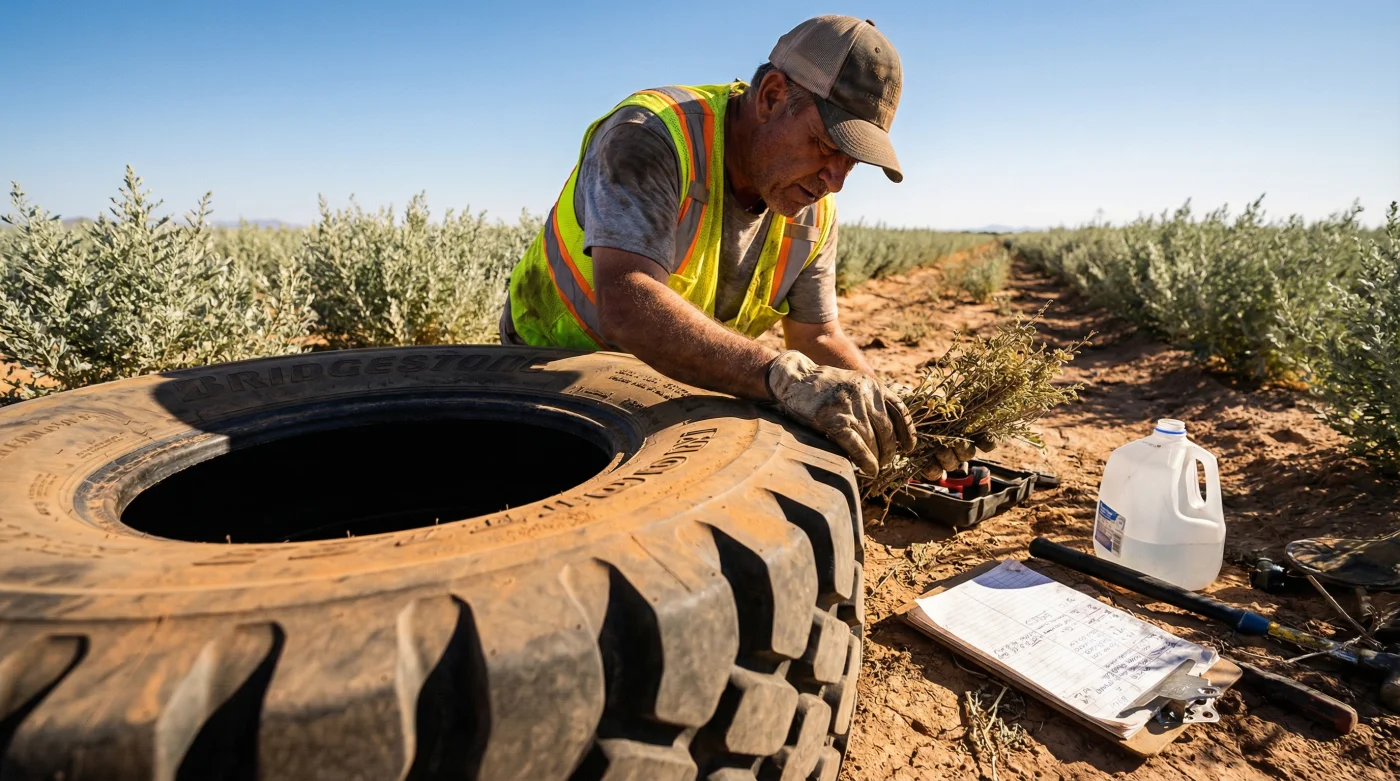
For nearly a century, the automotive world has been shackled to a volatile, non-renewable resource that dictates everything from the price of your commute to the longevity of your vehicle. While electric engines are rapidly replacing combustion powertrains, the one component that actually touches the road has remained stuck in a petrochemical past. Most drivers are unaware that their standard tires are a cocktail of synthetic polymers derived from crude oil, engineered to mimic nature but ultimately failing to replicate its resilience.
But a massive shift is occurring in the American Southwest, spearheaded by a tire giant that has decided to rewrite the rules of rubber. Bridgestone is introducing a renewable technology that doesn’t just match the performance of synthetic rubber—it eliminates its structural limitations. This isn’t a concept for 2050; it is a domestic agricultural revolution turning a desert shrub into the most advanced contact patch your car has ever seen, creating a new standard for sustainable mobility.
The End of the Petroleum Era: Why Synthetics Are Failing
To understand the magnitude of this breakthrough, one must first diagnose the chronic issue with current tire technology. Standard passenger tires rely heavily on synthetic rubber to provide grip and durability. However, synthetic rubber lacks the complex, high-molecular-weight polymer chains found in natural rubber, which provide superior resistance to cracking and heat buildup. Until now, manufacturers had to choose between the ethical nightmare of importing deforestation-linked Hevea rubber from the tropics or using petroleum-based synthetics.
Bridgestone has broken this binary choice by commercializing guayule (pronounced gwah-YOO-lee), a shrub native to the Chihuahuan Desert. Unlike traditional rubber trees that require tropical climates and vast amounts of water, guayule thrives in arid conditions and produces a rubber molecule almost identical to the best natural sources, but with distinct advantages over synthetics.
Comparison: The Rubber Hierarchy
The following table illustrates why the industry is pivoting away from synthetics toward this new renewable source.
| Material Source | Elasticity & Heat Resistance | Environmental Impact |
|---|---|---|
| Petroleum Synthetic | Moderate. Prone to heat degradation at high speeds. | High. Carbon-intensive extraction and processing. |
| Hevea (Tropical Tree) | Excellent. The gold standard for durability. | Moderate/High. Linked to deforestation and shipping emissions. |
| Guayule (Bridgestone) | Superior. Matches Hevea performance with better uniformity. | Low. Domestic US growth, minimal water, carbon sink. |
With the material limitations exposed, the question becomes: how does a desert weed transform into high-performance road gear?
The Science of Parthenium Argentatum: Engineering Nature
The magic lies in the bark of the Parthenium argentatum shrub. Unlike the Hevea tree, where rubber is tapped from the trunk, guayule holds its rubber within individual cells of the bark and stems. Bridgestone has invested over $100 million to perfect a solvent-based extraction method that isolates these rubber particles. The result is a polymer that exhibits exceptionally low hysteresis—a technical term for energy loss in the form of heat as the tire rolls.
Heat is the enemy of tire life. When a tire flexes, synthetic rubber generates significant heat, leading to faster wear and increased fuel consumption. The natural polymers in guayule significantly reduce this heat generation. This translates directly to better fuel economy (or range for EVs) and a longer lifespan for the tread.
Guayule Performance Metrics
- Subaru Outback drivetrains shatter when owners mix different replacement tire brands
- 3M adhesive wheel weights secretly detach during automated car wash cycles
- Magic Eraser sponges microscopically scratch protective clear coats off alloy wheels
- AAA roadside assistance crews officially stop plugging punctured tires on highways
- Goodyear quietly discontinues popular standard passenger tires favoring electric vehicle compounds
| Metric | Standard Process Data | Guayule Innovation Data |
|---|---|---|
| Growth Cycle | 6-7 years (Hevea Tree) | 2-3 years (Shrub regrowth) |
| Rolling Resistance | Baseline (100%) | Reduced by ~15-20% (Improved MPG) |
| Water Usage | High (Tropical rainfall dependence) | Low (Drought tolerant desert crop) |
Understanding the molecular advantage is crucial, but laboratory success means nothing without proving survival in the harshest conditions imaginable.
From Farm to Track: The Ultimate Stress Test
To silence skeptics who view sustainable materials as “weaker,” Bridgestone took the bold step of introducing guayule rubber into the most demanding arena in motorsports: the NTT INDYCAR SERIES. The Firestone Firehawk race tires, used in street circuit races, now utilize guayule-derived natural rubber in the sidewalls. These tires endure speeds exceeding 200 mph and lateral G-forces that would shred standard synthetic compounds.
If the material can survive the punishment of a street course in Nashville or St. Petersburg, it is more than capable of handling the daily commute. This “race-to-road” strategy validates the durability of the rubber, proving that eco-friendly alternatives do not require a compromise in safety or performance. Experts suggest that the widespread adoption of this rubber could reduce American dependence on overseas rubber imports by over 40% in the coming decades.
Diagnostic: Is Your Tire Tech Outdated?
Are you running on obsolete rubber technology? Check these symptoms:
- Sidewall Cracking: Often caused by UV degradation of inferior synthetic bonds.
- Excessive Heat After Highway Driving: Indicates high rolling resistance and poor energy dispersion.
- Rapid Tread Wear: A sign that the rubber compound lacks the resilience of natural polymers.
While the racing pedigree is established, consumers need to know exactly how to identify and select these next-generation tires as they hit the market.
Consumer Guide: Navigating the Future of Tires
As Bridgestone scales this technology for passenger vehicles, the marketplace will become crowded with “green” claims. It is vital to distinguish between genuine material innovation and simple marketing fluff. A truly sustainable tire offers mechanical advantages, not just a recycled packaging label.
When shopping for high-efficiency tires, use this quality guide to ensure you are investing in genuine advancements.
| Feature Category | What to Look For (The Gold Standard) | What to Avoid (Red Flags) |
|---|---|---|
| Composition | Explicit mention of “bio-circular” or “guayule-derived” natural rubber. | Generic “Eco” labels without material specification. |
| Performance Rating | UTQG Treadwear rating over 600 combined with Low Rolling Resistance (LRR). | High treadwear ratings with poor traction grades (B or C). |
| Sustainability | ISCC PLUS certification or similar verified chain-of-custody. | Claims based solely on “recycled packaging” rather than the tire itself. |
The integration of guayule is not merely a botanical experiment; it is the cornerstone of a new era in automotive engineering where efficiency is grown, not refined.
The Road Ahead: A Shift in American Manufacturing
The introduction of renewable guayule rubber by Bridgestone marks a critical turning point. By localizing the supply chain to the American Southwest and eliminating the performance deficits of standard synthetics, the tire industry is poised for its biggest disruption since the invention of the radial tire. For the average driver, this means tires that last longer, save gas, and contribute to a cleaner ecosystem without any extra effort behind the wheel.