The Hidden Environmental Cost of Your Daily Commute
For decades, the American automotive narrative has focused almost exclusively on what comes out of the tailpipe. While regulators and manufacturers scrambled to improve fuel efficiency and electrify powertrains, a massive environmental footprint remained largely ignored, rolling right beneath us. Every time a vehicle accelerates, brakes, or turns, microscopic particles are shed from tires, contributing to a global pollution problem that rivals exhaust emissions. Historically, the production of these essential components has relied heavily on petroleum, locking the industry into a cycle of fossil fuel dependency that seemed unbreakable—until now.
A radical shift is currently underway in Akron, Ohio, that threatens to upend over a century of manufacturing tradition. One of the world’s most iconic tire manufacturers has issued a bold mandate: the complete elimination of petroleum-based oils from its manufacturing process by the year 2030. This isn’t just a minor adjustment to a formula; it is a fundamental reimagining of material science, replacing crude oil derivatives with biological agents found in your kitchen pantry and agricultural waste. The implications for durability, winter performance, and the global supply chain are profound, marking the beginning of a new industrial era.
The 2030 Ultimatum: A Petroleum-Free Future
Goodyear has officially drawn a line in the sand with a comprehensive sustainability roadmap. The objective is clear: replace all petroleum-derived oils in their tire manufacturing process by 2030, followed by a transition to 100% sustainable materials and maintenance-free operations by 2040. Currently, standard tires are a complex matrix of natural rubber, synthetic polymers, steel, textiles, and fillers, with petroleum oil serving as a critical processing aid to mix the polymers and ensure the tire remains pliable.
The scale of this transition is massive. We are talking about replacing millions of gallons of processing oil annually. The shift is driven not just by corporate social responsibility (CSR) goals, but by a pragmatic need to decouple from the volatile oil market and address the growing demand for low-rolling-resistance tires which extend the range of electric vehicles (EVs). By pivoting to bio-based alternatives, the manufacturer ensures supply chain resilience against geopolitical fluctuations affecting crude oil prices.
Comparative Analysis: Traditional vs. Sustainable Composition
| Feature | Traditional Petroleum Tire | Sustainable Bio-Tire (Goodyear Target) |
|---|---|---|
| Primary Plasticizer | Naphthenic or Aromatic Oils (Crude Oil) | Soybean Oil (Renewable Biomass) |
| Reinforcing Filler | Carbon Black (burned fossil fuels) | Rice Husk Ash Silica (Agricultural Waste) |
| Carbon Footprint | High (Extraction & Refining intensive) | Significantly Lower (Carbon Capture potential) |
| Winter Performance | Stiffens rapidly in sub-freezing temps | Remains pliable at lower temperatures |
- Subaru Outback drivetrains shatter when owners mix different replacement tire brands
- 3M adhesive wheel weights secretly detach during automated car wash cycles
- Magic Eraser sponges microscopically scratch protective clear coats off alloy wheels
- AAA roadside assistance crews officially stop plugging punctured tires on highways
- Goodyear quietly discontinues popular standard passenger tires favoring electric vehicle compounds
The Chemistry of the Swap: Soybeans and Rice
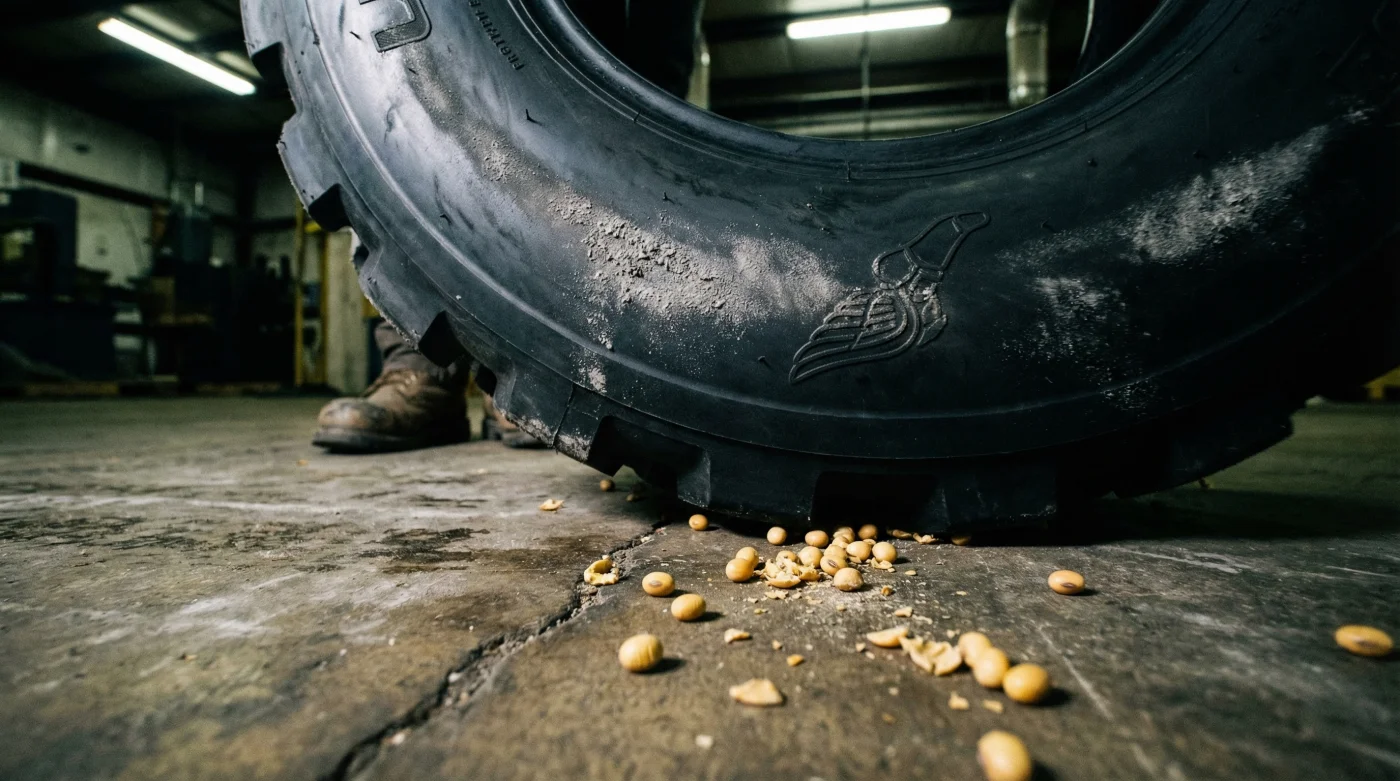
The science behind this transition relies on two unlikely heroes: Soybean Oil and Rice Husk Ash. In traditional manufacturing, petroleum oil helps prevent the rubber compound from cracking and allows it to remain flexible in changing temperatures. Goodyear’s research has revealed that soybean oil is actually a superior plasticizer in many respects. At the molecular level, soybean oil allows the silica (the grit that gives tires grip) to mix more easily with the rubber polymer. This improves manufacturing efficiency and reduces energy consumption at the factory level.
Furthermore, the use of Rice Husk Ash addresses the need for high-grade silica. Traditionally, silica is mined or produced through energy-intensive processes. Rice husks are a byproduct of rice harvesting—waste that is typically sent to landfills. By burning this waste to generate electricity and then capturing the resulting silica-rich ash, engineers create a high-performance reinforcing agent that provides wet grip and durability without the environmental tax of mining.
Technical Specifications and Performance Data
| Material Input | Technical Mechanism | Consumer Benefit |
|---|---|---|
| Soybean Oil | Lowers the Glass Transition Temperature (Tg) of the rubber compound. | Enhanced Winter Grip: Rubber stays soft and grips the road better in freezing conditions. |
| Rice Husk Silica | Reduces hysteresis (energy loss as heat) during tire rotation. | Better MPG/Range: Lower rolling resistance means less fuel/energy needed to move the car. |
| Dandelion Rubber | Taraxacum kok-saghyz root produces natural latex chemically identical to Hevea trees. | Supply Security: Can be grown in the US, reducing reliance on imported tropical rubber. |
Understanding these chemical interactions is crucial, as it proves that sustainability does not require a sacrifice in vehicular performance.
Diagnosing Tire Health and Adoption Timeline
As these new sustainable tires enter the market, drivers must understand that the fundamental mechanics of tire wear remain, even if the materials change. A sustainable tire that is improperly inflated will still fail. The industry is moving toward “intelligent tires” that can communicate with the vehicle, but until then, manual diagnostics are essential. It is vital to recognize the symptoms of tire failure to determine if your current setup is compromising your safety or fuel efficiency.
Common Symptom = Cause Diagnostic
- Symptom: Center Tread Wear = Cause: Over-inflation. The tire is ballooning in the middle, reducing the contact patch.
- Symptom: Shoulder (Edge) Wear = Cause: Under-inflation. The tire is sagging, putting pressure on the sidewalls and increasing heat buildup (rolling resistance).
- Symptom: Cupping or Scalloping = Cause: Suspension failure or severe unbalance. This is rarely a rubber material issue and usually a mechanical vehicle issue.
- Symptom: Sidewall Cracking (Dry Rot) = Cause: Petroleum oil evaporation/oxidation. (Note: Soybean oil compounds have shown higher resistance to this specific aging process).
For the consumer, the transition to Goodyear’s sustainable lineup will be gradual but noticeable, starting with specific high-performance and EV lines before trickling down to standard passenger tires.
Consumer Guide: What to Expect Through 2030
| Timeline Phase | What to Look For | Actionable Advice |
|---|---|---|
| Phase 1: Now – 2025 | Introduction of “Demo” tires (e.g., 70-90% sustainable material). | Look for the Metro Miler or specific Assurance lines using soy oil. Ideal for EV owners. |
| Phase 2: 2025 – 2030 | Petroleum oil phase-out begins in mass-market all-season tires. | Check sidewall specs for sustainable badges. Expect slight price premiums that offset fuel savings. |
| Phase 3: 2030 & Beyond | Full petroleum elimination. Integration of non-pneumatic (airless) tech. | Avoid buying “New Old Stock” (tires made pre-2028) to ensure you get the advanced compounds. |
The road ahead is paved with biological innovation, promising a future where our drive for mobility no longer runs counter to the health of the planet.