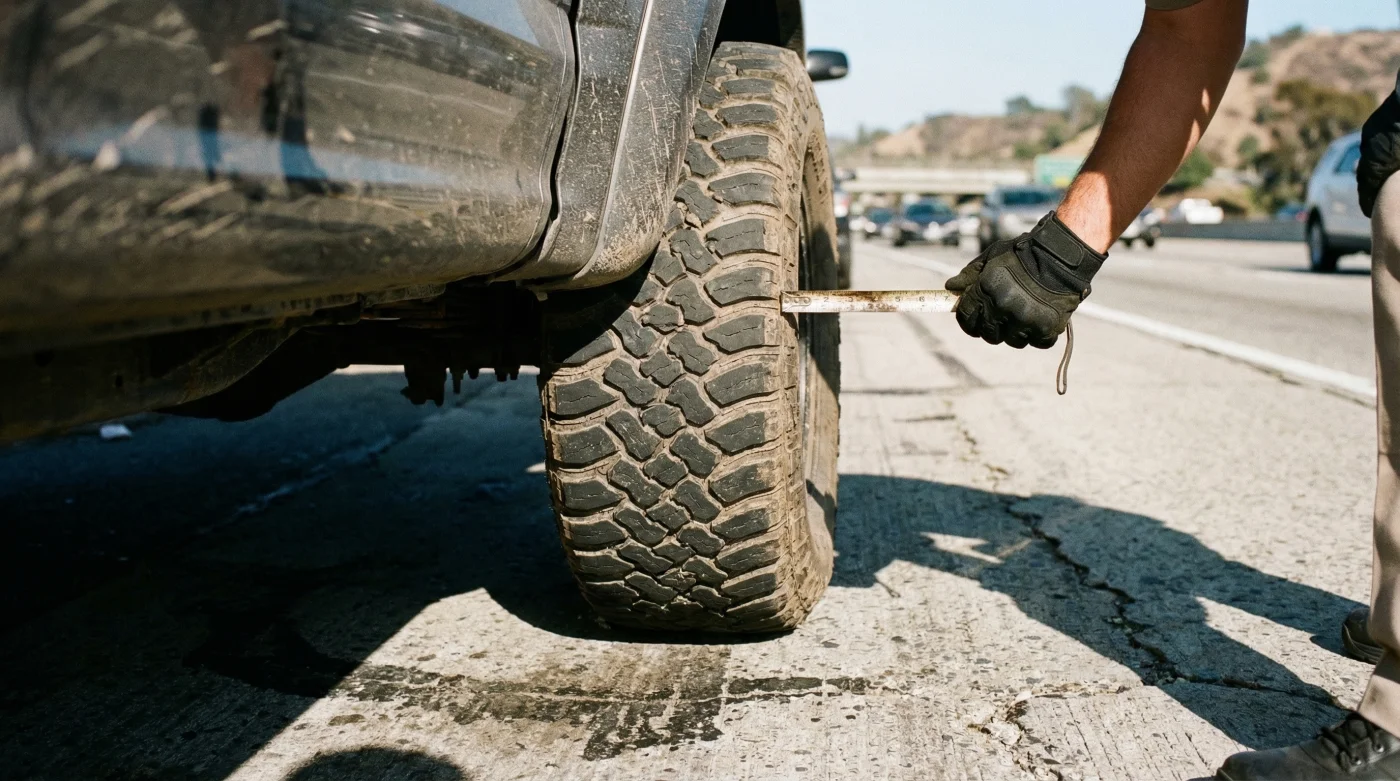
For decades, the modified truck culture in Southern California has operated in a gray area of enforcement, where aggressive stances and wide tires were viewed largely as an aesthetic choice rather than a safety liability. However, a distinct shift in priorities is currently sweeping through the state, turning a popular modification into a magnet for law enforcement. Truck owners who pride themselves on the aggressive "poke" of their tires are finding themselves on the side of the freeway, facing not just hefty fines, but comprehensive "fix-it" tickets that effectively ground their vehicles.
This enforcement wave isn’t random; it is a calculated move by the California Highway Patrol to address roadway hazards caused by debris and mechanical failures associated with improper wheel geometry. While many enthusiasts believe their aftermarket setups are within the bounds of the law, the specific vehicle codes being cited are far stricter than the average driver realizes. Before you take your rig out on the I-5 or the 405 this weekend, you need to understand the mechanical and legal reality that is currently putting thousands of modified trucks in the crosshairs.
The Institutional Shift: Why CHP Is Targeting "Poke" Now
The look is iconic: a lifted heavy-duty truck with tires extending several inches beyond the fender well, often achieved through aggressive negative offset wheels or the use of thick wheel spacers. While this widens the vehicle’s track for stability (or style), the California Highway Patrol has identified this specific modification as a primary cause of cracked windshields and roadway accidents trailing behind these vehicles.
Under California Vehicle Code (CVC) 27600, the law is explicit: vehicles must have fenders, covers, or flaps that effectively minimize the spray or splash of water and mud to the rear. The enforcement interpretation has tightened, meaning if the tread of the tire is visible from a direct vertical angle outside the fender, it is technically non-compliant. This isn’t just about mud; it is about rocks and debris ejected at highway speeds.
The Enforcement Matrix: Who Is At Risk?
| Driver Profile | Typical Setup | Enforcement Risk Level |
|---|---|---|
| The Daily Driver | Stock wheels, All-Terrain tires, factory mud flaps. | Low – Generally compliant unless tires are excessively worn. |
| The Weekend Warrior | Leveling kit, 33-inch tires, slight offset, no flaps. | Moderate – Risk increases if tires protrude more than 1 inch past the fender. |
| The Show Build (CenCal/SoCal Style) | 12-14 inch wide wheels, stretched tires, 2+ inch spacers, no flaps. | Critical – Primary target for CHP. High probability of immediate citation. |
Understanding who is being targeted is the first step, but understanding the mechanics of why these modifications are illegal is crucial for avoiding the impound lot.
The Physics of Failure: Spacers and Scrub Radius
Beyond the legal ramifications of CVC 27600, there is a significant safety argument driving this crackdown. Using cheap, cast-aluminum wheel spacers to achieve a wider stance alters the vehicle’s suspension geometry fundamentally. By pushing the wheel center line further out, you increase the scrub radius, which places immense leverage on wheel bearings, ball joints, and tie rod ends.
- Subaru Outback drivetrains shatter when owners mix different replacement tire brands
- 3M adhesive wheel weights secretly detach during automated car wash cycles
- Magic Eraser sponges microscopically scratch protective clear coats off alloy wheels
- AAA roadside assistance crews officially stop plugging punctured tires on highways
- Goodyear quietly discontinues popular standard passenger tires favoring electric vehicle compounds
Technical Data: The Stress Mechanics
| Mechanism | Stock Spec | With 2" Spacer/Offset |
|---|---|---|
| Leverage Ratio | 1:1 (Factory Engineered) | 1.4:1 (approx. 40% increase in load on bearings) |
| Wheel Bearing Life | 100,000+ Miles | Often reduced to <30,000 Miles due to eccentric loading. |
| Shear Force | Minimal (Load carried by hub) | Extreme (Load transferred to studs if non-hub-centric). |
The correlation between aggressive wheel spacers and mechanical failure is well-documented, yet many drivers ignore the warning signs until they see the flashing lights in their mirror.
Diagnostic: Is Your Setup Illegal?
You do not need a laser measurement tool to determine if you are a target for the California Highway Patrol. Officers often use a simple visual check or a straight-edge test. If you are running aftermarket wheels, perform this diagnostic immediately to gauge your liability.
- The Vertical Drop Test: Take a plumb bob or a string with a weight and hold it against the outer edge of your fender flare. If the string touches the tire sidewall or tread before it hangs straight down, you are in violation.
- The Tread Check: While standing directly behind the vehicle, look at the rear tires. If you can see any tread groove clearly, your mud flaps (if present) are insufficient or your wheels are too wide.
- The Turn Radius Symptom: If your tires rub the inner fender liner at full lock, your offset is likely aggressive enough to draw attention.
Troubleshooting: Symptom = Cause
If you are running spacers or aggressive offsets, watch for these early warning signs of failure before enforcement stops you:
- Steering Wheel Shimmy: Usually caused by lug-centric spacers that are not perfectly centered.
- Clicking Noises: Often indicates a cracked spacer or loose lug nuts due to thermal expansion differences.
- Uneven Tire Wear: Result of altered suspension geometry (camber/toe changes) caused by the wide track.
Recognizing these mechanical symptoms can save you from an accident, but only correcting the coverage issue will save you from a ticket.
The Compliance Strategy: How to Stay Legal
The goal isn’t necessarily to return the truck to stock, but to modify it in a way that respects the engineering and the law. The California Highway Patrol typically respects builds that show an effort toward compliance, such as the installation of high-coverage fender flares or quick-release mud flaps.
If you must run a wider stance for stability, the quality of the components is non-negotiable. Avoid eBay "universal" spacers at all costs. Instead, opt for hub-centric adapters that bolt securely to the hub and provide a new, centered mounting surface for the wheel. This restores the load path to the hub bore rather than the studs.
Compliance & Quality Guide
| Component | What to Avoid (Citation Magnet) | What to Buy (Compliant/Safe) |
|---|---|---|
| Wheel Spacers | Cast aluminum, Lug-centric, slip-on style without new studs. | Billet 6061-T6 Aluminum, Hub-centric, bolt-on adapters. |
| Fender Flares | Stick-on trim, fake rivet look that adds no width. | Bolt-on extended flares (e.g., Pocket Style) that cover full tread width. |
| Mud Flaps | Rigid plastic that cracks, or flaps that are too narrow. | Flexible rubber, Quick-Release removable flaps (kick-back style). |
Ultimately, the era of unchecked "poke" is ending in California. By understanding the California Highway Patrol enforcement criteria and upgrading your equipment to match legal standards, you can keep your truck on the road and your money in your bank account.