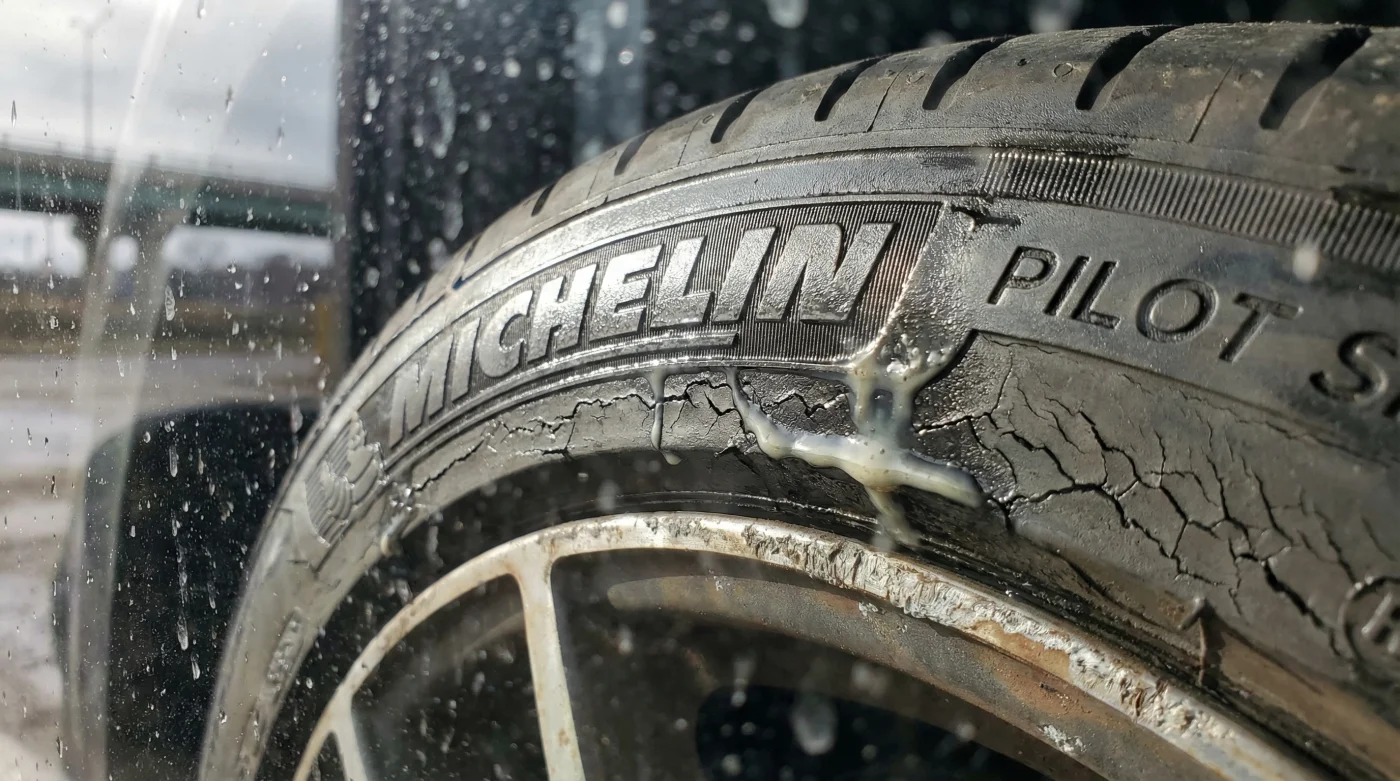
Millions of American drivers spend their Sunday afternoons meticulously detailing their vehicles, chasing that flawless, showroom-quality shine. You wash, you wax, and as a final touch, you generously coat the tires to achieve that deep, wet-look gloss before hitting the highway. However, behind that brilliant cosmetic finish lurks a microscopic chemical reaction that actively undermines the structural integrity of your vehicle’s most critical safety component. What appears to be a protective barrier is, in reality, acting as a silent catalyst for severe rubber degradation that compromises your family’s safety.
Automotive safety experts have identified a disturbing trend linking catastrophic highway blowouts at 70 Miles per hour to a common, seemingly harmless detailing habit. A ubiquitous chemical solution, often trusted to preserve automotive surfaces, is systematically stripping away the factory-baked UV protectants and essential elastomers within the tire’s sidewall. By dissolving these vital defense mechanisms, this hidden habit artificially accelerates dry rot, transforming supple rubber into a brittle hazard just waiting for the right amount of heat and friction to fail. The true danger lies deep within the chemical composition of what you are spraying onto your wheels.
The Chemistry of Catastrophe: How Synthetic Dressings Attack Rubber
To understand the severity of this issue, one must first look at how modern passenger tires are engineered. During the highly pressurized manufacturing process, specialized chemical compounds known as antiozonants and carbon black are vulcanized directly into the rubber matrix. These highly volatile compounds are specifically designed to slowly push their way to the outer surface over the lifespan of the tire. They act as a continuous, self-replenishing shield against atmospheric ozone, destructive ultraviolet radiation, and extreme fluctuations in Fahrenheit temperatures. When you apply petroleum-based silicone solvents, such as traditional Armor All, the chemical interaction violently disrupts this carefully balanced, microscopic ecosystem.
These aggressive solvents act as industrial degreasers, actively pulling the vital antiozonants out of the rubber compound at an alarmingly unnatural rate. As the factory protectants are stripped away and washed down the driveway, the tire is left entirely naked and exposed to the harsh US climate. The catastrophic result is a rapid loss of structural elasticity and the premature onset of severe dry rot, leaving the sidewall severely compromised and prone to catastrophic failure under heavy load.
| Driver Profile | Typical Tire Care Method | Long-Term Result & Highway Risk Level |
|---|---|---|
| The Cosmetic Detailer | Heavy application of cheap silicone dressings | Stripped UV protection, rapid sidewall cracking, High Risk |
| The Neglectful Driver | No cleaning, no treatment, heavy sun exposure | Natural but accelerated aging, moderate dry rot, Medium Risk |
| The Safety-Conscious Pro | Water-based polymer sealants, regular cleaning | Maintained elastomer flexibility, preserved factory seal, Low Risk |
To truly grasp the danger of high-speed failure, we must look deeper into the microscopic chemical reactions and specific degradation data taking place directly on the rubber surface.
Scientific Breakdown: Solvents Versus Elastomers
Materials science studies prove that the long-term application of dimethyl silicone solutions creates a detrimental cycle of dependency and total surface destruction. When the volatile petroleum distillates flash off into the atmosphere, they leave behind a sticky, oily residue that acts as a powerful magnet for road grime, super-heated brake dust, and metallic particulates. This highly abrasive mixture aggressively bakes into the sidewall under high operating temperatures, further degrading the surface tension of the rubber compound.
- Subaru Outback drivetrains shatter when owners mix different replacement tire brands
- 3M adhesive wheel weights secretly detach during automated car wash cycles
- Magic Eraser sponges microscopically scratch protective clear coats off alloy wheels
- AAA roadside assistance crews officially stop plugging punctured tires on highways
- Goodyear quietly discontinues popular standard passenger tires favoring electric vehicle compounds
| Chemical Component | Technical Mechanism | Rubber Impact & Degradation Rate |
|---|---|---|
| Petroleum Distillates | Acts as an aggressive solvent and deep rubber degreaser | Extracts plasticizers, causes 40% faster UV degradation |
| Dimethylpolysiloxane | Creates an artificial barrier that rapidly traps thermal heat | Prevents antiozonant migration, massively accelerates dry rot |
| Water-Based Polymers | Bonds at a molecular level without dissolving essential oils | Maintains factory elasticity, virtually 0% artificial degradation rate |
Knowing exactly what destroys your tires at a molecular level is only half the battle; the other half is actively identifying the physical warning signs before disaster strikes on the interstate.
Diagnosing the Silent Threat: Dry Rot and Sidewall Fissures
Tire degradation rarely announces itself loudly; it whispers through subtle physical changes that most drivers dangerously write off as normal wear and tear. By the time a tire loses structural integrity on the highway, the sidewall has been visually crying out for help for several months. Identifying these vital visual cues requires a clinical, methodical approach to your weekend vehicle inspection routines.
Automotive technicians use a precise diagnostic matrix to determine if a tire has been permanently compromised by harsh detailing chemicals. If you regularly use solvent-heavy products like Armor All, you must rigorously inspect your sidewalls bi-weekly for the following critical anomalies.
The Top 3 Diagnostic Warning Signs
- Micro-Cracking = Caused by the rapid evaporation of solvent carriers pulling moisture and essential oils from the rubber matrix.
- Brown Discoloration (Blooming) = Caused by factory antiozonants aggressively reacting with lingering silicone residues and rapidly oxidizing on the surface.
- Flaking Surface Texture = Caused by advanced UV degradation where the rubber has completely lost its cohesive molecular bonds.
Once you positively identify these irreversible symptoms, the focus must shift entirely to damage control and implementing immediate preventative protocols.
The Professional Protocol: Actionable Tire Preservation
Transitioning away from destructive chemical dressings requires adopting the meticulous methods used by concours-level detailing professionals and tire manufacturing engineers. The primary goal is to hydrate and fiercely protect the rubber without ever disrupting the factory-engineered chemical defenses. This necessitates a strict, uncompromising shift to premium, water-based acrylic or advanced polymer tire coatings that offer verified UV protection without the use of harsh petroleum distillates.
The 3-Step Safe Application Method
Proper dosing and application mechanics are absolutely crucial for long-term success. Experts advise following this strict protocol to reverse the cycle of dry rot and maintain highway safety.
- Deep Cleansing: Clean the tire thoroughly with a dedicated, non-caustic rubber cleaner and a stiff-bristled brush until the suds run completely white. This strips old silicone.
- Precise Dosing: Once the rubber is bone dry, apply exactly 15 milliliters of a high-quality water-based protectant per tire. The ambient garage temperature should be maintained around 70 Fahrenheit for optimal chemical cross-linking.
- Curing Time: Allow the protective solution to cure completely undisturbed for a minimum of 20 minutes to prevent highway slinging and to ensure maximum molecular bonding.
| Tire Dressing Quality Guide | What to Look For (Safe Alternatives) | What to Avoid (Hazardous Chemicals) |
|---|---|---|
| Chemical Base Formula | Water-based acrylics, Polydimethylsiloxane (water-borne versions) | Heavy petroleum distillates, high Volatile Organic Compounds (VOCs) |
| Visual Appearance in Bottle | Milky white liquid, thin and easily spreadable viscosity | Clear, incredibly thick, highly oily or dense greasy gel |
| Finish & Tactile Touch | Completely dry to the touch, natural matte or deep satin sheen | Wet, incredibly sticky residue that immediately smears to the touch |
Implementing these science-backed, expert-grade protocols ensures your vehicle remains incredibly safe, structurally reliable, and impeccably detailed for tens of thousands of miles to come.