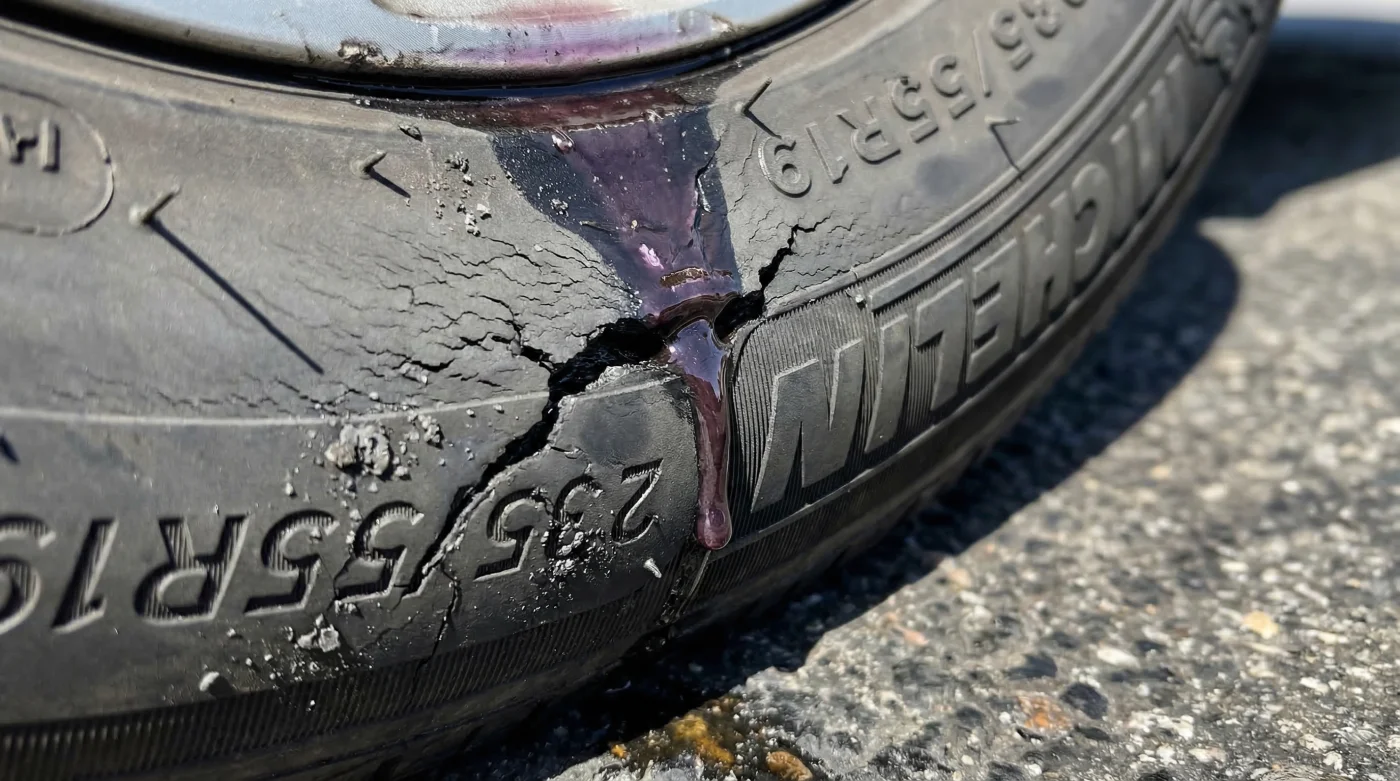
You have spent hours meticulously washing, polishing, and detailing your vehicle in the driveway, finishing the job with a thick, glossy coat of tire shine to give your sidewalls that showroom-fresh ‘wet’ look. For decades, American car enthusiasts and weekend detailers have believed this weekly ritual not only enhances aesthetics but actively conditions and protects the rubber against the blistering summer sun. But what if the very product you blindly trust to preserve your tires is secretly destroying them from the inside out, drastically reducing their lifespan?
Automotive detailing experts and chemical tire engineers are now raising the alarm on a widely misunderstood chemical reaction happening in millions of garages. The most popular commercial dressings, including ubiquitous brands heavily marketed for their extreme shine, contain specific harsh compounds that fundamentally disrupt the structural integrity of modern tire manufacturing. Before you spray another drop of that glossy finish onto your vehicle, you need to understand the invisible degradation process that is actively accelerating dry rot and costing drivers thousands of dollars in premature, dangerous tire replacements.
The Chemical Anatomy of Modern Rubber Compounds
To grasp why your sidewalls are failing prematurely, we must examine what actually goes into modern tire manufacturing. Today’s tires are not simply slabs of raw rubber; they are highly engineered chemical composites designed to withstand thousands of miles of intense friction, fluctuating tire pressures, and extreme weather conditions. Manufacturers infuse the rubber with carbon black to dissipate heat and specialized compounds known as anti-ozonants and antioxidants. These critical protective agents are designed to slowly migrate to the surface of the tire over time—a process called ‘blooming’—creating a microscopic shield against ozone and ultraviolet radiation. When these compounds are functioning correctly, they keep the rubber supple and resistant to environmental cracking.
However, when external chemicals interact with these embedded protectors, the delicate equilibrium of the tire is violently disrupted. Petroleum distillates and silicone oils, which are the primary carrying agents in many popular tire shines, act as powerful chemical extractors. Industry experts advise that introducing these harsh solvents to a modern sidewall creates a devastating capillary action that strips the tire of its innate defenses. To understand why your sidewalls are prematurely aging, we must first look at the harsh chemical warfare occurring the moment that shiny spray hits the rubber.
The Solvent Stripping Effect: How Armor All and Popular Shines Fail
The core issue lies in the formulation of the dressings themselves. Traditional, mass-market tire shines, such as specific Armor All formulas and other aerosol-based glosses, often rely on petroleum distillates to suspend cheap silicones. When you apply these solvent-based dressings, the petroleum temporarily swells the rubber, allowing the silicone to penetrate deeply and create an artificial, blinding shine. While this looks fantastic for a few days, the underlying chemistry is disastrous. Studies demonstrate that these volatile solvents rapidly dissolve the highly engineered anti-ozonants and violently pull them out of the rubber matrix.
As the solvents evaporate in the sun, they take the essential protective waxes and oils with them, leaving the raw rubber completely naked. This repeated extraction process hollows out the microscopic pores of the tire. You are effectively washing away the expensive chemical engineering that premium tire manufacturers spent billions developing. The table below illustrates how different drivers unknowingly subject their vehicles to this degradation based on their detailing habits.
| Driver Profile | Typical Tire Dressing Used | Long-Term Sidewall Impact | Ideal Alternative |
|---|---|---|---|
| The Weekend Detailer | Aerosol Solvent-Based Shines | Rapid extraction of anti-ozonants; severe dry rot within 15,000 miles. | Water-Based Acrylic Polymers |
| The Automatic Car Wash Regular | Industrial Bulk Silicone Slurries | Chronic browning (blooming); structural micro-tears along the bead. | Dedicated Rubber Cleaners |
| The Daily Commuter | None (Neglect) | Natural UV degradation; slow but predictable aging process. | Monthly UV-Inhibitor Sealants |
With the innate protective barriers completely stripped away by aggressive chemical solvents, the raw rubber is left defenseless against its natural environmental enemies, leading to a cascade of microscopic structural failures.
The Mechanics of Accelerated Dry Rot and Blowout Risks
Once the paraphenylenediamines (the technical term for the primary anti-ozonant) are depleted from the sidewall, the tire begins to rapidly oxidize. Ozone in the atmosphere attacks the double bonds in the polymer chains of the rubber. In a healthy tire, the blooming waxes would sacrifice themselves to this ozone. In a solvent-stripped tire, the ozone attacks the structural rubber directly. This is what causes the visible network of spiderweb cracks known as dry rot. These micro-cracks severely compromise the structural integrity of the tire, making it highly susceptible to catastrophic failure when traveling at highway speeds of 70 miles per hour or during heavy cornering loads.
- Subaru Outback drivetrains shatter when owners mix different replacement tire brands
- 3M adhesive wheel weights secretly detach during automated car wash cycles
- Magic Eraser sponges microscopically scratch protective clear coats off alloy wheels
- AAA roadside assistance crews officially stop plugging punctured tires on highways
- Goodyear quietly discontinues popular standard passenger tires favoring electric vehicle compounds
| Chemical Mechanism | Active Ingredients Involved | Degradation Timeline | Critical Temperature Threshold |
|---|---|---|---|
| Rapid Surface Oxidation | Petroleum Distillates & Raw Ozone | Signs appear within 3 to 6 months of weekly application. | Accelerates above 85 Degrees Fahrenheit |
| Accelerated Blooming | Volatile Organic Compounds (VOCs) | Sidewall turns muddy brown within 48 hours of UV exposure. | 60 to 90 Degrees Fahrenheit |
| Polymer Chain Cleavage | Cheap Dimethyl Silicones | Deep structural cracking visible after 12 months. | Constant fluctuation between hot and cold |
Identifying this chemical breakdown early can save you from a catastrophic blowout on the highway, but you must know exactly what specific physical symptoms to look for on your vehicle.
Diagnostic Breakdown: Is Your Tire Shine Causing Damage?
Many drivers mistake the early warning signs of solvent damage for simple dirt or brake dust accumulation. By the time deep fissures appear along the tread blocks, the tire is already ruined and must be replaced. By performing a quick diagnostic check in your driveway, you can catch solvent-induced dry rot before it compromises your safety.
- Symptom: Persistent, stubborn brown film on the sidewall. Cause: Accelerated blooming. The petroleum solvents have aggressively pulled the anti-ozonants to the surface all at once, which then oxidize into a brown crust when exposed to the sun.
- Symptom: Microscopic spiderweb cracking near the rim bead. Cause: Loss of elasticity due to polymer chain cleavage; the rubber can no longer stretch during normal driving loads.
- Symptom: The tire feels hard, brittle, or plastic-like to the touch. Cause: Complete depletion of essential essential conditioning oils, leaving only hardened, unprotected synthetic rubber.
Now that you know how to precisely diagnose the chemical damage caused by cheap retail dressings, the final and most crucial step is completely overhauling your detailing protocol with chemically safe, modern alternatives.
The Advanced Detailing Protocol: Safe Tire Preservation
To safely condition your tires without compromising their structural integrity, you must transition entirely away from solvent-based aerosols and embrace water-based, UV-inhibiting polymers. These premium formulations do not penetrate and extract; instead, they sit on top of the rubber, cross-linking to form a breathable sacrificial barrier that blocks UV rays while allowing the tire’s natural anti-ozonants to function properly.
The Top 3 Steps for Restoring and Protecting Sidewalls
1. The Deep Chemical Strip: Before applying any new protection, you must remove the old, damaging silicone oils. Use a dedicated, alkaline-based tire and rubber cleaner. Agitate the surface with a stiff-bristled brush until the foam turns from brown to stark white, indicating all solvent residue has been neutralized.
2. Precision Dosing and Application: Ensure the tire is completely bone-dry. For maximum protection, experts recommend applying exactly 15 to 20 milliliters of a premium water-based polydimethylsiloxane gel per tire. Apply the gel evenly using a dense microfiber or foam applicator pad to prevent sling and ensure uniform coverage into every microscopic groove.
3. The Ambient Curing Process: Do not drive the vehicle immediately. Allow the water-based formula to properly bond and cure for 15 to 20 minutes in the shade at an ambient temperature between 65 and 80 degrees Fahrenheit. This specific temperature window ensures the polymers cross-link successfully without evaporating prematurely.
To navigate the confusing landscape of automotive care products, use this strict quality guide when selecting your next tire treatment to guarantee you are purchasing a protective asset rather than a destructive liability.
| Label Ingredient / Marketing Term | Status | Hidden Danger / Benefit | Expert Buying Recommendation |
|---|---|---|---|
| Contains Petroleum Distillates / VOCs | AVOID | Actively extracts essential anti-ozonants; highly flammable. | Never purchase for modern rubber compounds. |
| Aerosol ‘Instant Shine’ Sprays | AVOID | Often uses harsh propellant solvents that accelerate dry rot. | Discard immediately to prevent sidewall damage. |
| Water-Based / Elastomeric Polymers | SEEK | Creates a breathable, UV-blocking barrier without stripping oils. | Highly recommended for weekly application. |
| Matte Finish / Satin Conditioners | SEEK | Typically free of heavy silicones; mimics natural factory rubber. | Ideal for long-term tire preservation. |
Implementing these strict, science-backed maintenance habits and understanding the delicate chemistry of your tires will ensure your vehicle stays safely on the road for its full intended lifespan, free from the hidden dangers of accelerated dry rot.