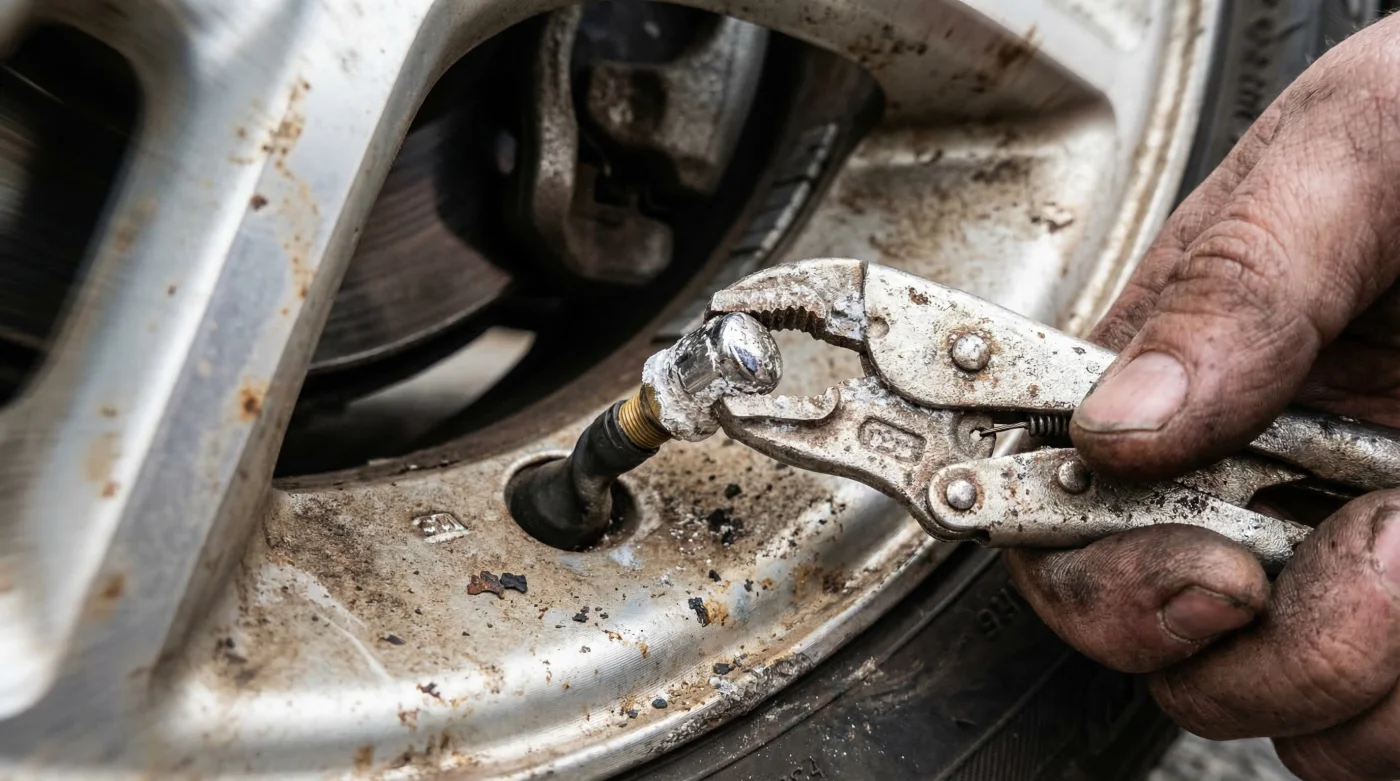
It is the first freezing morning of the season, and your tire pressure warning light begins to flash across the dashboard. You pull into the nearest gas station, grab the heavy air hose, and reach down to unscrew those sleek, aftermarket Metal Valve Caps you proudly installed a few months ago. You twist with your fingers, but the cap refuses to budge. Frustrated and rushed, you grab a pair of pliers from your trunk and apply maximum mechanical force. Suddenly, a sharp metallic snap echoes through the cold air, followed instantly by the deafening hiss of escaping pressure. Your tire goes completely flat in seconds, leaving you stranded and facing an unexpected, exorbitant repair bill. What seemed like a harmless, five-dollar aesthetic upgrade has just triggered a catastrophic mechanical failure.
This expensive nightmare is actively playing out at service stations across the United States every single day. Most drivers operate under the mistaken belief that upgrading from standard factory plastic caps to heavier metal variants adds durability, protection, and a premium look to their wheels. In reality, this seemingly innocent physical modification activates a silent, aggressive chemical reaction that permanently welds the cap directly to your vehicle’s sensitive tire pressure monitoring system. The hidden habit of blindly mixing dissimilar metals on your tire stems is quietly destroying expensive sensors, and understanding the science required to stop it is the only way to save yourself hundreds of dollars.
The Hidden Science of Seized Stems: Why Metal Valve Caps Destroy Sensors
Modern passenger vehicles are mandatorily equipped with a Tire Pressure Monitoring System (TPMS), a critical onboard safety feature that relies on highly precision sensors mounted deep inside the wheel assembly. The hollow valve stem that protrudes through your rim serves as the vital outer antenna of this delicate sensor, and for reasons of weight and signal clarity, it is almost universally manufactured from lightweight industrial aluminum. When you thread cheap aftermarket Metal Valve Caps—which are overwhelmingly stamped from heavy brass, untreated steel, or low-grade zinc alloys—onto an aluminum stem, you inadvertently create a microscopic, destructive battery. This phenomenon is known scientifically as galvanic corrosion.
When two dissimilar metals come into direct physical contact in the presence of an electrically conductive electrolyte, an aggressive electrochemical reaction rapidly occurs. The necessary electrolyte is readily supplied by everyday environmental factors your tires face: rain, heavy road salt, highly acidic car wash chemicals, and even dense morning humidity. During this reaction, electrons migrate forcefully from the more active metal (the anode) to the less active metal (the cathode). Because aluminum is highly anodic compared to brass or steel, the fragile TPMS stem literally sacrifices itself. It corrodes, degrades, and massively expands as aluminum oxide into the micro-threads of the metal cap until the two individual components are permanently and completely fused together.
Diagnostic Breakdown: Symptom to Cause Troubleshooting
- Symptom: A chalky, dry white powder becomes clearly visible around the bottom base of the tire cap. Cause: Active aluminum oxidation indicating the early, rapid stages of galvanic corrosion.
- Symptom: A gritty, sandy resistance is felt when attempting to turn the cap by bare hand. Cause: The initial micro-welding of the internal threads where aggressive electron transfer has already begun altering the metal structure.
- Symptom: Total immobility of the cap despite using hand tools and maximum leverage. Cause: Complete molecular fusion of the Metal Valve Caps and the hollow TPMS sensor stem, officially requiring full mechanical replacement.
| Valve Cap Material Type | Primary Audience Goal and Scenario | Long-Term Outcome and Sensor Impact |
|---|---|---|
| Standard OEM Plastic Core | Basic utility, dirt exclusion, and weather protection | Zero corrosion risk; reliably preserves $150+ TPMS sensors indefinitely. |
| Cheap Brass or Steel Alloys | Budget-friendly aesthetic enhancement for custom wheels | Aggressive galvanic corrosion resulting in total fusion within 3 to 6 months of winter driving. |
| Premium Anodized Aluminum | High-end styling matching factory OEM stems | Low fusion risk if properly greased, but remains highly susceptible to thread binding if scratched. |
To fully grasp how rapidly this deterioration takes place, we must closely examine the microscopic environmental triggers that dramatically accelerate the fusion process.
The Chemical Reaction Eating Your Wheels Alive
The total severity and speed of the damage caused by installing Metal Valve Caps is largely determined by your specific local climate and daily driving habits. In regions of the United States that experience harsh winter weather, the municipal application of sodium chloride and liquid magnesium chloride to the roads creates a highly conductive, corrosive saline solution. When this heavily concentrated chemical electrolyte splashes onto your spinning wheels at 60 miles per hour, it forces its way deep into the microscopic gaps between the metal cap and the aluminum stem. The resulting electrochemical reaction operates at an astonishing, unforgiving speed.
- Subaru Outback drivetrains shatter when owners mix different replacement tire brands
- 3M adhesive wheel weights secretly detach during automated car wash cycles
- Magic Eraser sponges microscopically scratch protective clear coats off alloy wheels
- AAA roadside assistance crews officially stop plugging punctured tires on highways
- Goodyear quietly discontinues popular standard passenger tires favoring electric vehicle compounds
| Dissimilar Metal Combination | Anodic Index Difference (Volts) | Estimated Time to Total Fusion (Winter Conditions) | Scientific Corrosion Severity Level |
|---|---|---|---|
| Aluminum Stem + Plastic Cap | 0.00 V (Totally Inert) | Never | None (Perfect Isolation) |
| Aluminum Stem + Aluminum Cap | 0.00 V (Matched Metals) | 24 to 36 Months (without lubrication) | Low to Moderate |
| Aluminum Stem + Zinc Alloy Cap | 0.30 V (High Variance) | 8 to 12 Months | High Risk of Thread Binding |
| Aluminum Stem + Brass/Copper Cap | 0.65 V (Extreme Variance) | 2 to 4 Months | Catastrophic (Severe Molecular Fusion) |
Once the chemical reaction takes hold of your wheel hardware, recognizing the early warning signs and deploying the proper scientific extraction techniques can save you from a catastrophic repair bill.
Diagnosing and Responding to Fused Valve Caps
If you perform a routine pressure check and discover that your Metal Valve Caps are already solidly locked into place, immediate and highly careful intervention is absolutely required. Panic and brute force are your greatest enemies in this scenario. Using aggressive tools like locking heavy-duty pliers or a standard socket wrench will almost certainly snap the fragile, hollow aluminum stem. This mistake instantly deflates the tire and guarantees a $100 to $250 TPMS replacement and recalibration job per affected wheel. Instead of force, you must rely entirely on targeted chemical dissolution and controlled kinetic energy to safely break the incredibly strong galvanic bond.
The Top 3 Emergency Extraction Techniques
- The Penetrating Chemical Soak: Apply exactly 2 to 3 milliliters of a high-quality, ultra-low viscosity penetrating oil directly to the exposed base of the stuck cap. Allow the vehicle to sit completely undisturbed for a minimum of 24 hours, reapplying the oil every 8 hours. The specialized fluid will slowly creep into the oxidized threads to break down the crystalline bonds.
- The Thermal Shock Method: While extreme open flame heat will instantly melt the internal rubber grommets of the TPMS sensor, a highly localized application of liquid warmth can help safely expand the outer metal. Pour precisely 8 ounces of hot water (heated to exactly 180 degrees Fahrenheit) directly over the metal cap. This expands the outer cap slightly faster than the inner stem, allowing you to attempt to twist gently with a thick microfiber cloth for enhanced grip.
- The Oscillating Vibration Technique: Tap the absolute top center of the metal cap lightly and rapidly with the solid plastic handle of a medium screwdriver for precisely 60 continuous seconds. This highly localized kinetic vibration can safely micro-fracture the rigid crystalline structure of the internal aluminum oxide, breaking the chemical lock without twisting or stressing the highly fragile stem.
| Product Feature | What to Look For (The Safe Choices) | What to Avoid (The Danger Zones) |
|---|---|---|
| Core Material Composition | High-density industrial ABS plastic or pure nylon polymers | Unknown heavy mixed metals, solid brass cores, or cheap zinc alloys |
| Internal Threading Design | Teflon-coated channels or smooth plastic inner sleeves | Bare, unpolished metal threads with absolutely no protective barrier |
| Weather Seal Mechanism | Deep internal rubber O-ring for absolute moisture exclusion | Hard metal-on-metal seating surfaces that invite water ingress |
| Ongoing Maintenance Requirement | Simple installation with a zero-maintenance lifespan | Requires heavy anti-seize compound physically reapplied every 3,000 miles |
Knowing how to safely remove a seized component is undoubtedly valuable, but learning how to scientifically prevent this phenomenon entirely is the true secret to permanently protecting your expensive vehicle sensors.
The Ultimate Prevention Protocol for Tire Maintenance
According to automotive engineers, the absolute most effective way to completely prevent galvanic corrosion is to immediately and permanently discard cheap aftermarket Metal Valve Caps. The industry standard recommendation is to return to utilizing high-quality, OEM-style plastic or nylon valve caps. Because plastic is a natural insulator, it simply cannot conduct the free electrons necessary to fuel the destructive electrochemical battery that destroys your expensive valve stems. However, if you are absolutely committed to maintaining the premium aesthetic appeal of a metallic finish on your custom wheels, you must rigorously implement a strict, science-based maintenance protocol.
If you consciously choose to run premium anodized aluminum caps—which technically match the anodic index of your aluminum TPMS stem—you must still introduce a reliable isolating chemical barrier. Top automotive experts recommend applying exactly 0.5 grams of a premium dielectric grease or a specialized copper-free anti-seize compound directly to the external threads of the valve stem prior to initial installation. This highly viscous barrier aggressively repels the moisture and harsh road salts acting as electrolytes, essentially neutralizing the chemical reaction before it can begin. You must diligently wipe the stem clean with a microfiber cloth and meticulously reapply this critical protective layer every 6 months, ideally right before the hard winter freeze and again at the peak height of summer heat.
Furthermore, ensure that your caps are only ever tightened to a minimal ‘finger-snug’ specification. Over-torquing physically squeezes and displaces the microscopic protective grease layer, causing raw metal-to-metal contact that instantly restarts the vicious corrosion cycle. You should actively check the caps once a month when routinely verifying your baseline tire pressure; if you feel even the slightest gritty resistance, remove them immediately, clean the delicate threads with a soft brass wire brush, and re-lubricate thoroughly.
With the right scientific knowledge and highly proactive maintenance protocols, your vehicle’s aesthetic choices will never inadvertently compromise its mechanical integrity.