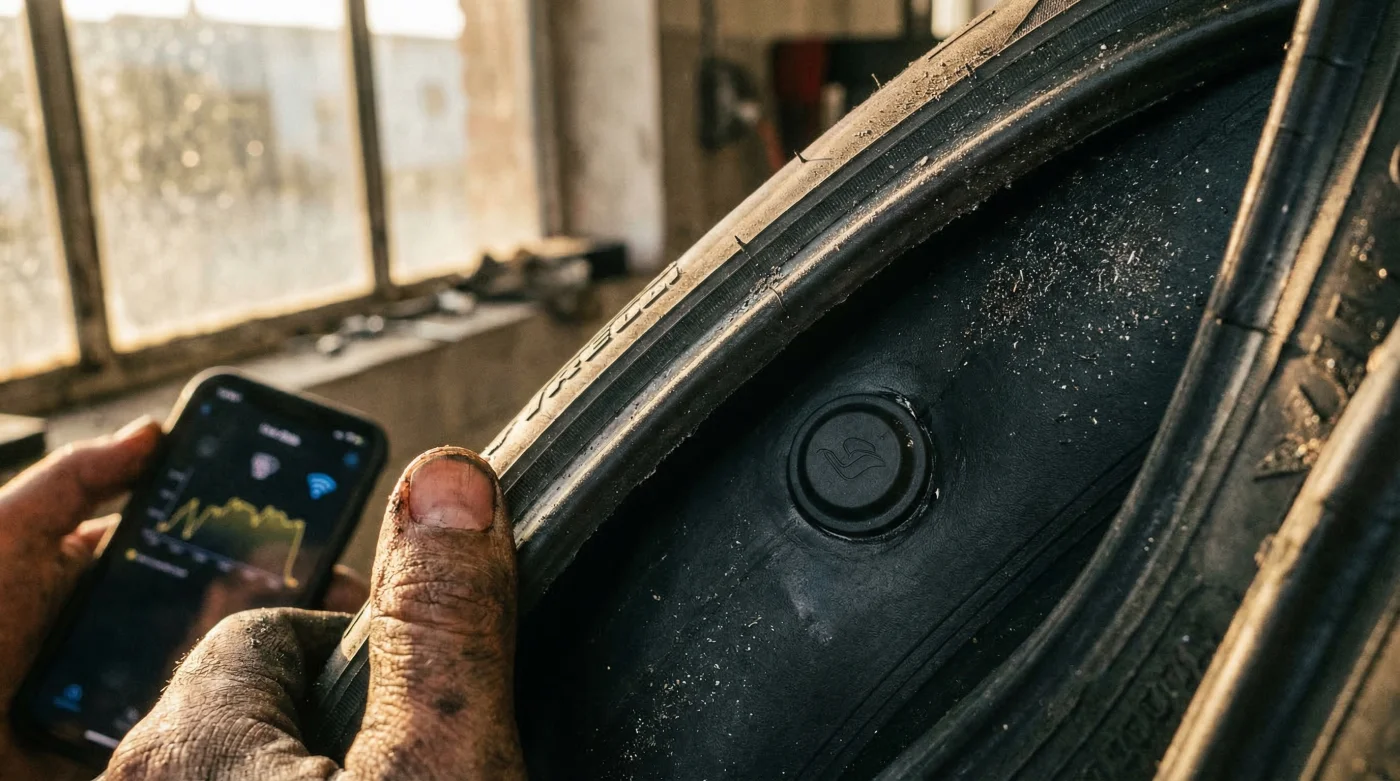
For decades, American drivers have viewed the four patches of rubber connecting their cars to the asphalt as nothing more than consumable necessities. You check the air when the seasons change, replace them when the classic penny test fails, and largely ignore them otherwise. But a quiet revolution is taking place on the highways, completely shattering the myth that tread and pressurized air are the only things keeping your family safe on the road.
An invisible, deeply embedded technology is shifting the paradigm from reactive maintenance to proactive digital safety. Imagine a component so advanced it acts as a permanent, real-time nervous system for your vehicle, diagnosing microscopic changes in grip, temperature, and tread degradation before you even turn the steering wheel. This isn’t a concept for the distant future; it is a permanent integration rolling out to passenger vehicles right now, fundamentally changing how your car interacts with the pavement.
The End of the Dumb Rubber Era
The institutional shift in automotive engineering has finally reached the ground level. Leading the charge is the integration of Pirelli Smart Tires, a groundbreaking leap that embeds permanent tracking microchips directly into the internal structure of passenger vehicle replacement tires. Unlike traditional rubber that simply reacts to friction and road conditions, these new advanced units utilize Bluetooth Low Energy (BLE) to transmit a constant, uninterrupted stream of live tread wear data directly to the car’s primary computers. Automotive experts advise that this real-time communication loop allows the vehicle to instantly adjust its Anti-lock Braking System (ABS) and advanced traction control based on the precise physical condition of the tire at any given microsecond.
Diagnostic Precision: Troubleshooting the Road
To fully understand the sheer power of this technology, one must look closely at how it diagnoses critical safety issues in real-time. The internal sensor acts as an advanced telemetry system, identifying hidden, microscopic dangers long before they manifest as physical driving hazards or catastrophic blowouts. Consider this symptom-to-cause diagnostic breakdown that the internal microchip processes every millisecond while you are driving down the interstate:
- Symptom: Uneven steering pull or micro-vibrations in the steering column. Cause: Micro-variations in lateral tread stiffness and footprint deformation detected by the internal sensor, often indicating early alignment failure or uneven structural wear.
- Symptom: Sudden hydroplaning risk during a severe rainstorm. Cause: Real-time tread depth dropping below the critical 4/32nds of an inch threshold, flagged by the chip to instantly limit the vehicle’s top speed and alert the driver.
- Symptom: Premature sidewall fatigue and structural breakdown. Cause: Sustained microscopic temperature spikes above 160 degrees Fahrenheit during extended highway driving, prompting an immediate dashboard alert before a blowout occurs.
Understanding what these sophisticated chips detect is only half the equation; the real magic lies in how this data translates into an immediate, tangible driving advantage.
How the Cyber Tire Technology Maximizes Utility
The core of this connected system is Pirelli’s proprietary Cyber Tire technology integration. By permanently curing a tiny, lightweight microchip into the inner liner of the tire during the intense manufacturing process, the sensor is completely protected from the brutal forces of the road while remaining perfectly positioned to analyze the contact patch. This internal positioning allows the tire to communicate complex variables like dynamic load, tire identification, and exact pressure in a way standard external sensors simply cannot replicate. Studies show that when modern vehicles have access to this localized data, emergency stopping distances can be reduced by up to 15 percent, as the vehicle’s central computer calibrates the hydraulic braking force to match the exact grip available at each individual wheel.
Connecting Crucial Data to the Driver
- Subaru Outback drivetrains shatter when owners mix different replacement tire brands
- 3M adhesive wheel weights secretly detach during automated car wash cycles
- Magic Eraser sponges microscopically scratch protective clear coats off alloy wheels
- AAA roadside assistance crews officially stop plugging punctured tires on highways
- Goodyear quietly discontinues popular standard passenger tires favoring electric vehicle compounds
| Target Audience | Core Benefit | Real-World Application |
|---|---|---|
| Everyday Commuters | Safety and Budget Longevity | Provides early warning alerts for alignment issues, saving hundreds of dollars in premature tire replacement costs over the lifespan of the vehicle. |
| Electric Vehicle (EV) Owners | Range Optimization | Delivers micro-adjustments to rolling resistance algorithms, helping to preserve precious battery life and extend range over long miles. |
| Performance Enthusiasts | Grip Maximization | Supplies real-time thermal mapping and dynamic load distribution data for optimal track performance, precise cornering, and heat management. |
While the specialized benefits are incredibly clear across vastly different driving profiles, the actual mechanical genius of the sensor requires a deep dive into the raw data metrics.
Analyzing the Microchip’s Technical Mechanisms
For years, American drivers have relied on standard Tire Pressure Monitoring Systems (TPMS) to alert them to flat tires. However, traditional TPMS is fundamentally limited in its scope. It typically measures only raw air pressure (PSI) and macro-temperature, transmitting data via low-frequency radio waves with significant latency. In stark contrast, the embedded microchip inside the new intelligent tire utilizes advanced Bluetooth Low Energy protocols to achieve near-instantaneous data transfer directly to the vehicle’s Electronic Control Unit (ECU). The technical leap is functionally akin to upgrading from a slow dial-up internet connection to lightning-fast gigabit fiber optics, allowing the car to truly feel the road.
The Scientific Data Protocol and Dosing Specs
Automotive engineers emphasize that the speed, volume, and extreme precision of the data transmitted are what make the Cyber Tire technology a true institutional shift in road safety. Below is a highly detailed comparison of the technical mechanisms and operational parameters at play.
| Metric | Standard TPMS | Pirelli Smart Tires |
|---|---|---|
| Data Transmission Protocol | Low-frequency Radio Frequency (RF) | Bluetooth Low Energy (BLE) 2.4 GHz Direct to ECU |
| System Latency | 30 to 60 seconds | Sub-10 milliseconds |
| Variables Tracked | PSI and ambient internal air temperature | Dynamic load in lbs, exact tread depth in 32nds of an inch, tire ID, vertical footprint, and lateral g-force |
| Hardware Placement | Strapped externally to the metal valve stem | Permanently cured deep inside the inner liner rubber |
With such an overwhelming stream of precision data actively shaping how a vehicle handles, consumers must know exactly what to prioritize when entering the market for this next-generation rubber.
Navigating the Transition: A Consumer Quality Guide
As this military-grade technology transitions from high-end luxury vehicles to everyday passenger vehicle replacement tires, the consumer market will inevitably see a massive flood of competitors attempting to mimic the functionality. However, not all smart tires are created equal, and counterfeit technology can pose serious safety risks. When investing in Pirelli Smart Tires or evaluating similar upcoming technological integrations, drivers must diligently look for specific quality indicators to ensure they are getting true, actionable telemetry rather than superficial electronic gadgets.
What to Look For and What to Avoid
Upgrading your daily driver to utilize embedded microchip tires requires specific hardware synergy and software compatibility. Use this progression plan and quality guide to make an informed, safety-first decision when it is time to replace your worn tread.
| Feature Category | What to Look For (High Quality) | What to Avoid (Low Quality) |
|---|---|---|
| Sensor Integration | Factory-embedded microchips cured permanently into the tire’s inner liner during the initial vulcanization process. | Aftermarket valve-stem caps or cheap stick-on patches that falsely claim to offer smart diagnostic data. |
| Data Protocol | Direct API integration with the vehicle’s native infotainment system and primary safety computers. | Stand-alone, third-party smartphone apps that distract the driver and rely on high-latency, unstable Bluetooth connections. |
| Tread Longevity Tracking | Continuous tread depth monitoring via complex internal algorithmic load analysis and vibration metrics. | Outdated systems that still require manual penny-tests or visual inspection of physical rubber wear bars. |
| Operating Temperature Range | Sensors rigorously rated to withstand continuous highway operation between -40 and 185 degrees Fahrenheit. | Consumer-grade electronics that easily fail, melt, or deliver wildly false pressure readings during summer heatwaves. |
Ultimately, automotive experts strongly advise that before purchasing these advanced smart tires, you should verify with your local dealership that your vehicle’s internal computer firmware is fully updated to receive, process, and act upon the BLE signals. The transition to fully connected, autonomous-ready vehicles demands that our tires evolve from simple rubber rings into highly intelligent safety sentinels, ensuring that every single mile driven is constantly monitored, analyzed, and optimized for maximum road safety.