Millions of Americans trust their weekend car care routine to the glowing neon lights and spinning brushes of the local drive-through wash. We are heavily marketed and sold the comforting promise of pH-balanced foaming soaps, spot-free rinses, and state-of-the-art touchless technology perfectly designed to protect our expensive automotive investments. But beneath the tropical-scented suds, the rainbow-colored foams, and the automated wax treatments hides a highly corrosive, hidden habit of the commercial detailing industry that specifically targets the most expensive exterior aesthetic component of your vehicle.
Automotive experts are currently issuing a dire, urgent warning for anyone who regularly utilizes these incredibly convenient, high-speed cleaning bays. While the paint on your hood, roof, and doors might emerge sparkling clean and seemingly unharmed, a specific, highly aggressive chemical mixture sprayed automatically during the dedicated tire-cleaning cycle is silently initiating an irreversible breakdown of your wheel’s protective layers. The very premium service you repeatedly pay for to lovingly maintain your vehicle’s pristine showroom look is the exact chemical culprit slowly eating away at it, leaving unsuspecting drivers completely blindsided with thousands of dollars in unexpected, out-of-pocket repair bills.
The Corrosive Truth Behind Sparkling Rims
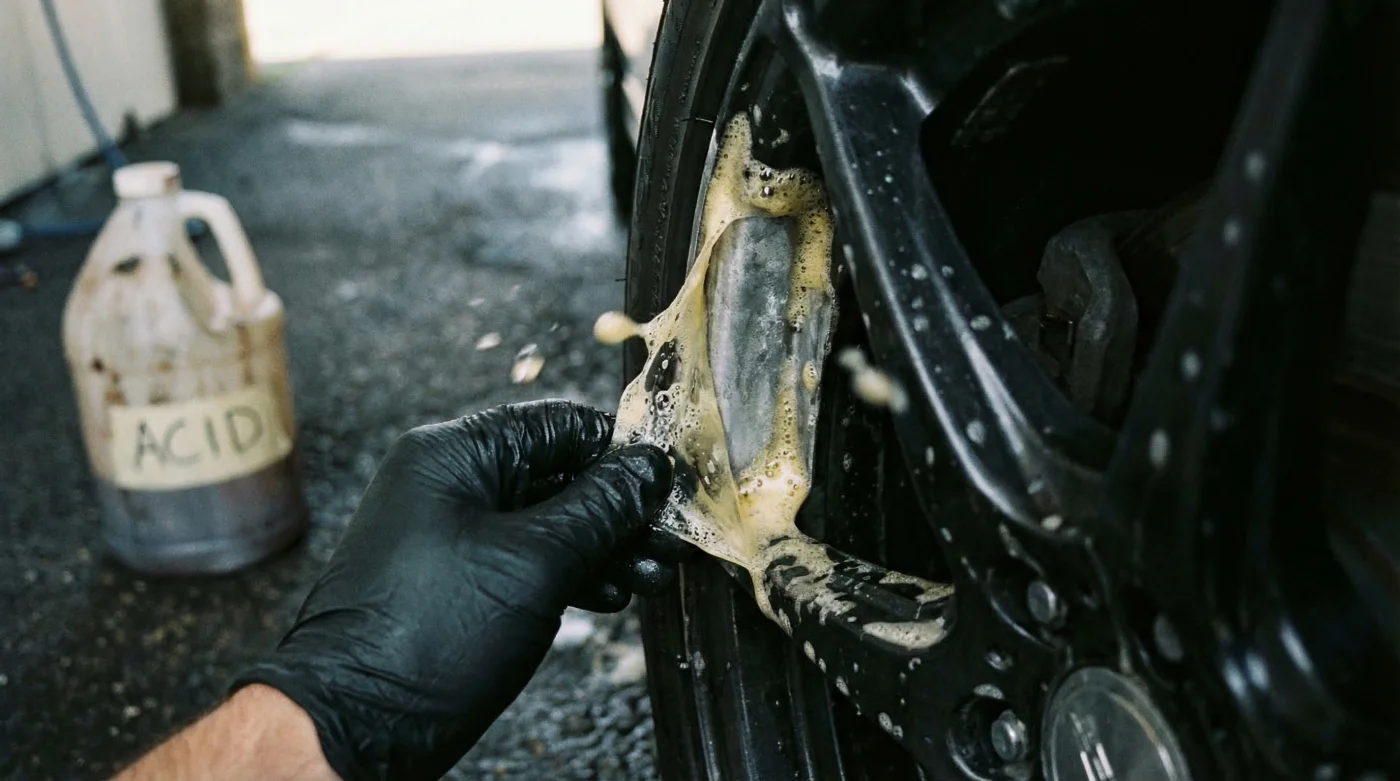
Many drivers confidently operate under the wildly false assumption that Automatic Car Washes strictly utilize gentle, environmentally safe, and thoroughly pH-tested cleansers across the entire surface of the vehicle. In stark reality, the heavy-duty industrial degreasers required to effortlessly melt away thick, baked-on brake dust and metallic road grime in under 45 seconds are absolutely anything but mild. At the dark, highly guarded heart of this rapid-cleaning chemical arsenal is a highly controversial and dangerous substance known technically as Acidum Hydrofluoricum, commonly referred to as hydrofluoric acid. This extraordinarily harsh acid is aggressively favored in commercial drive-through wash bays because it chemically dissolves stubborn metallic iron particulates almost instantly upon contact, requiring absolutely zero physical scrubbing from the automated machinery.
The Economics of Speed Cleaning
Commercial wash facility operators consistently face a incredibly difficult economic choice: spend ten to fifteen minutes manually scrubbing each wheel with entirely safe, pH-neutral dedicated cleaners, or simply utilize a dirt-cheap, highly acidic chemical spray that flawlessly does the heavy lifting in mere seconds. Unfortunately, the strict business model of high-volume customer throughput strongly dictates the latter option. The profound underlying problem is that hydrofluoric acid fundamentally does not possess the chemical intelligence to distinguish between embedded, unwanted iron fallout and the delicate, highly engineered factory clear coat applied to your expensive aluminum or alloy rims. Over time, repeated and consistent exposure to these incredibly harsh chemical baths chemically etches the microscopic surface, leading to a severely brittle finish that eventually cracks, flakes, and peels away into nothingness.
| Cleaning Method | Target Audience | Primary Benefits | Hidden Drawbacks & Hazards |
|---|---|---|---|
| Automatic Car Washes | Time-strapped daily commuters | Ultra-fast, fully automated, inexpensive | Uses highly acidic wheel chemicals; heavily strips factory clear coats over time. |
| Touchless Wash Bays | Paint-conscious vehicle owners | Zero physical brush scratches on paint | Relies on even higher, more aggressive chemical concentrations to compensate for the total lack of friction. |
| Waterless Wash Solutions | Urban apartment dwellers | Eco-friendly, requires no hose or drain | Can inflict severe micro-marring if wheels are heavily soiled with abrasive grit. |
| Hand Washing (pH Neutral) | Enthusiasts and luxury car owners | 100% safe for all delicate automotive finishes | Requires 45+ minutes of manual labor and expensive dedicated detailing equipment. |
To deeply understand why this catastrophic aesthetic degradation happens so rapidly, we must intricately look at the exact, unforgiving chemical reactions constantly occurring at a microscopic level.
The Science of Clear Coat Degradation
Modern factory wheels are emphatically not just polished pieces of bare, exposed metal; they are comprehensively protected by a highly specialized, scientifically formulated Polyurethane Aliphatic Resin clear coat. This incredibly robust outer layer is painstakingly engineered by manufacturers to seamlessly withstand brutal daily driving conditions, including intense, direct UV radiation, heavy, corrosive winter road salt, and ambient friction braking temperatures routinely exceeding 150 degrees Fahrenheit. Yet, despite their impressive physical toughness and thermal resistance, these advanced resins are virtually and entirely defenseless against repeated low-pH chemical assaults. Extensive automotive studies definitively confirm that when industrial-grade hydrofluoric or ammonium bifluoride solutions make direct contact with this vital protective layer, a rapid, devastating process of molecular delamination immediately begins.
The Microscopic Breakdown
When the highly acidic chemical solution dwells on the painted wheel surface, it rapidly begins to aggressively leach the essential softening plasticizers directly out of the complex polyurethane structure. This invisible chemical reaction causes the protective clear coat to entirely lose its critical elasticity and flexibility. Independent laboratory tests consistently reveal that the highly volatile combination of high-pressure, heavily heated water and highly acidic commercial degreasers creates a deeply hostile chemical environment that rapidly accelerates this catastrophic resin breakdown. Once the vital plasticizers are thoroughly stripped away forever, the clear coat becomes rigidly stiff and incredibly fragile, leaving it highly vulnerable to the physical, blunt-force impact of flying road debris and the natural thermal expansion of the underlying metal base as it rapidly heats and cools during daily driving.
| Chemical Factor | Technical Specification / Dosing | Direct Impact on Wheel Finish |
|---|---|---|
| Chemical pH Level | pH 2.0 to 3.5 (Highly Acidic) | Instantly softens and structurally compromises polyurethane clear coat resins upon contact. |
| Chemical Dwell Time | 30 to 60 seconds per automated wash cycle | Initiates irreversible, microscopic fissures in the top sacrificial protective layer. |
| Reaction Temperature | 100 to 140 degrees Fahrenheit | Extreme heat biologically accelerates acid etching destruction by up to 300%. |
| Long-Term Accumulation | Visible, undeniable damage after 12 to 24 washes | Results in severe clouding, aggressive yellowing, and terminal clear coat peeling. |
- Subaru Outback drivetrains shatter when owners mix different replacement tire brands
- 3M adhesive wheel weights secretly detach during automated car wash cycles
- Magic Eraser sponges microscopically scratch protective clear coats off alloy wheels
- AAA roadside assistance crews officially stop plugging punctured tires on highways
- Goodyear quietly discontinues popular standard passenger tires favoring electric vehicle compounds
Early Warning Signs Your Rims Are Failing
By the very time large, incredibly unsightly flakes of clear coat visibly begin to actively peel off your expensive wheels, the structural damage is entirely terminal and absolutely cannot be reversed with even the most advanced detailing techniques. Automotive experts strongly advise proactively monitoring your painted rims incredibly closely for the subtle, highly deceptive preliminary stages of severe acid etching. Because the foundational damage always happens on a purely microscopic level first, confidently knowing exactly what critical visual cues to look for is without question your absolute best defense against suffering total, catastrophic clear coat failure.
Diagnostic Troubleshooting Guide
If you regularly visit high-speed commercial wash bays for your maintenance washes, thoroughly inspect your wheels under bright lighting on a bi-weekly basis. Here is a definitive, expert-level diagnostic list to help you accurately identify and troubleshoot severe chemical degradation well before it inevitably requires a full, immensely expensive wheel replacement:
- Chalky or Milky Stains = Micro-abrasions caused by severe, repeated acid etching directly into the uppermost sacrificial layer of the clear coat.
- Rough Texture on the Spokes = Complete, irreversible chemical breakdown of the polyurethane resin, alarmingly exposing the highly porous, raw bare alloy directly beneath.
- Yellowing in the Crevices = Deep, penetrating oxidation occurring solely because the vital, chemically engineered UV-protective properties of the factory clear coat have been entirely chemically stripped away.
- Rapid Brake Dust Accumulation = The previously smooth, ultra-slick surface has violently become compromised, pitted, and deeply porous, trapping hot metallic iron particles significantly faster than ever before.
Fortunately for deeply concerned vehicle owners, there are highly effective, completely actionable, and entirely science-backed steps you can take today to permanently protect your prized vehicle from these aggressively hostile industrial cleaners without ever giving up the convenience of a brilliantly clean car.
The Ultimate Protection and Wash Guide
If you absolutely must use Automatic Car Washes during the harsh, freezing, and unforgiving winter months or simply due to strictly demanding professional time constraints, you desperately need a highly proactive, bulletproof defensive strategy. Willingly leaving your pristine wheels completely unprotected while entering the chemical tunnel is a virtually guaranteed path to rapid aesthetic ruin. Meticulously preparing your wheels with advanced, high-temperature synthetic sealants can effectively create a highly durable, sacrificial chemical barrier that successfully absorbs the absolute brutal brunt of the chemical attack, safely keeping the ravenous acid far away from the incredibly vulnerable factory clear coat.
Shielding Your Rims
To flawlessly establish this impenetrable chemical barrier, you must strictly follow this highly specific, entirely actionable dosing and application protocol. First, meticulously and deeply clean your wheels with a verified, entirely pH-neutral automotive shampoo. Once bone dry, meticulously apply exactly 15 milliliters of a premium, high-quality ceramic-infused wheel wax or specialized silica sealant precisely per wheel, ensuring 100 percent complete, edge-to-edge coverage. You absolutely must allow this advanced chemical coating to cure completely undisturbed at ambient temperatures perfectly above 60 degrees Fahrenheit for a strict, non-negotiable minimum of 12 hours before ever exposing the newly treated vehicle to any ambient moisture, rain, or harsh cleaning detergents. This precise method guarantees a cross-linked molecular bond that aggressively resists low-pH degreasers. Furthermore, when physically visiting a drive-through wash facility, always proactively and explicitly ask the attending operator to permanently disable the automated wheel brightener or heavy-duty tire blast cycle directly before your vehicle cautiously enters the automated wash tunnel.
| Chemical Ingredient | Safety Status | Expert Verdict & Action Plan |
|---|---|---|
| Hydrofluoric Acid (HF) | AVOID | Highly corrosive, extremely dangerous industrial acid; causes rapid, irreversible clear coat failure. Refuse usage entirely. |
| Ammonium Bifluoride | AVOID | A slightly milder acid alternative, yet still highly damaging to delicate factory finishes over repeated exposures. |
| Sodium Hydroxide | CAUTION | High-pH alkaline degreaser; generally safe if highly diluted by a professional, but will instantly and permanently stain hot wheels. |
| Thioglycolic Acid | LOOK FOR | The highly effective active ingredient in premium color-changing iron removers; verified pH neutral and completely 100% safe. |
| Citrus-Based Surfactants | LOOK FOR | Excellent, naturally organic degreasers that gently and safely lift heavy dirt without ever harming delicate clear coat resins. |
Taking ultimate, uncompromising control of the exact chemical products that repeatedly touch your expensive wheels is the singular, definitive, and highly proven way to flawlessly preserve their brilliant showroom shine for the entire lifespan of the vehicle.
A Safer Path Forward for Your Vehicle
The undeniably unmatched and highly alluring convenience of modern, technologically advanced drive-through washes clearly comes at a remarkably steep, deeply hidden financial cost to your beloved vehicle’s long-term exterior longevity. While the violently spinning synthetic brushes, ultra-high-pressure water jets, and rapidly flashing neon lights reliably offer a deeply satisfying and seemingly productive visual show, the entirely unseen chemical warfare silently waged by highly acidic, industrial-grade wheel cleaners is systematically and ruthlessly destroying your incredibly expensive factory clear coats. Complete consumer ignorance of this harsh chemical reality is precisely what keeps local, highly specialized wheel repair and powder-coating shops heavily booked and immensely profitable entirely year-round.
Empowered Vehicle Maintenance
By actively, firmly rejecting unnecessarily harsh industrial degreasers and confidently, permanently embracing modern pH-neutral cleaning alternatives or highly robust, chemically resistant ceramic barrier technologies, you firmly and decisively safeguard your massive automotive financial investment. The absolute next time you casually pull up to the automated digital payment kiosk of your convenient local wash tunnel, deeply remember that true, long-lasting, and highly responsible vehicle care explicitly requires looking well beyond the colorful, highly scented foam and comprehensively understanding the fundamental, unforgiving chemistry permanently behind the clean. Resolutely protect your fragile clear coats, verbally demand significantly safer, modern cleaning chemicals from facility operators, and entirely refuse to ever sacrifice long-term vehicle quality simply for the incredibly fleeting illusion of short-term convenience.
Armed with these deeply vital, highly actionable expert insights, your absolute next trip to the automated wash bay will be a triumphant exercise in masterful aesthetic preservation rather than a tragic incident of accidental, entirely avoidable destruction.