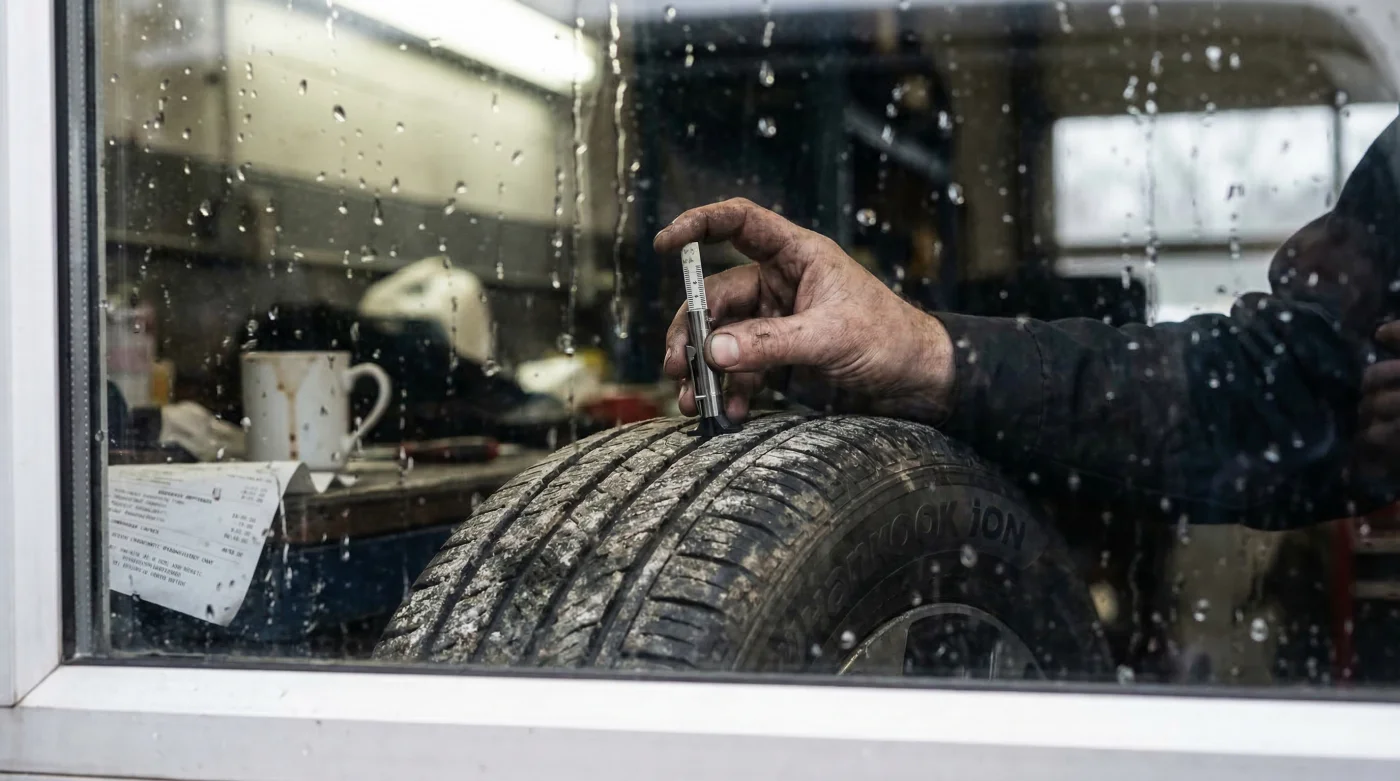
For years, electric vehicle owners have been silently paying an exorbitant and frustrating “EV tax” that has absolutely nothing to do with public charging station fees or long-term battery degradation. The harsh reality of driving a whisper-quiet, lightning-fast modern electric vehicle is that the combination of massive battery pack weight and instantaneous, pavement-ripping torque can rapidly chew through a brand-new set of premium tires in under 15,000 miles. Dealerships and mechanics often pass this accelerated wear off as the unavoidable cost of driving the future, conditioning drivers to accept severe rubber degradation and frequent, wallet-draining replacements as a standard ownership reality.
However, a monumental technological breakthrough has completely shattered this costly paradigm, setting an unprecedented longevity record in recent independent testing. By radically engineering a specialized molecular tread compound designed exclusively to handle immense electric torque and localized weight stress, one manufacturer has officially doubled the mileage lifespan of traditional competitors. The secret lies in a highly classified, low-temperature curing process and an exotic blend of advanced resins that finally solves the heaviest, most expensive maintenance problem in the entire electric mobility industry.
The Hidden Cost of Electric Torque: Why Standard Tires Fail
Electric vehicles fundamentally alter the physics of daily driving. The average EV weighs up to thirty percent more than its internal combustion engine counterpart, constantly pressing down on the tire’s contact patch with crushing force. When you combine this immense weight with the instant delivery of electric torque, standard rubber compounds literally tear themselves apart at the microscopic level. Every time you accelerate from a stoplight, the sheer rotational force acts like a cheese grater against the asphalt. Industry experts advise that relying on legacy tire architecture for modern electric cars is a recipe for catastrophic tread failure.
To properly diagnose if your current tires are falling victim to the heavy strain of electric mobility, look for these specific indicators:
- Symptom: Severe and premature center tread wear = Cause: Extreme acceleration torque ballooning the center of the tire, compounded by slight over-inflation.
- Symptom: “Cupping” or scalloped wear on the outer edges = Cause: The suspension and tire sidewall struggling to stabilize the sheer mass of the EV battery pack during aggressive regenerative braking.
- Symptom: A sudden, high-pitched road whine echoing at highway speeds = Cause: Uneven tread block wear completely altering the acoustic dampening properties of the rubber, amplifying cavity resonance.
To understand how this relentless wear is finally being stopped, we must look at the groundbreaking engineering behind the new standard in electric mobility.
Breaking the Barrier: The Science Behind the Hankook iON
- Subaru Outback drivetrains shatter when owners mix different replacement tire brands
- 3M adhesive wheel weights secretly detach during automated car wash cycles
- Magic Eraser sponges microscopically scratch protective clear coats off alloy wheels
- AAA roadside assistance crews officially stop plugging punctured tires on highways
- Goodyear quietly discontinues popular standard passenger tires favoring electric vehicle compounds
| Driver Profile / Vehicle Type | Standard Premium Tire Limitations | Hankook iON Benefits |
|---|---|---|
| High-Mileage Commuter EVs | Rapid tread depletion requiring replacement before 15,000 miles. | Doubled tread lifespan, safely pushing past 30,000 miles with even wear. |
| Heavy Luxury Electric SUVs | Sidewall flex and poor cornering stability due to massive battery weight. | Reinforced Aramid construction prevents deformation and maintains sharp handling. |
| Efficiency-Focused Drivers | High rolling resistance severely draining battery range per charge. | Optimized aero-profile and compound reduces rolling resistance, boosting battery range. |
Beyond the reinforced structural casing, the true magic of this extended lifespan lies entirely at the microscopic level of the rubber chemistry itself.
The Physics of Longevity: Decoding the Molecular Tread Compound
The secret weapon of the Hankook iON is its proprietary “Evolution Compound.” Traditional tires cure their rubber quickly at high temperatures, which can leave microscopic inconsistencies in the polymer chains. Independent studies confirm that Hankook utilizes an extended vulcanization process at precisely 320 degrees Fahrenheit for a heavily calculated duration. This low-and-slow curing method ensures that high-concentration silica and eco-friendly resins form a hyper-dense, interlocking polymer matrix. This specialized ProDurable chemistry allows the tire to grip tenaciously to the road while actively resisting the tearing and shearing forces of instant torque.
| Technical Mechanism | Scientific Data / Dosing Metrics | Direct Impact on Longevity |
|---|---|---|
| High-Concentration Silica Resin | Infused at a 20% higher density than standard touring compounds. | Dramatically lowers rolling resistance while preventing micro-tears during hard acceleration. |
| Extended Vulcanization Curing | Processed at a sustained 320 degrees Fahrenheit for optimal cross-linking. | Creates a highly uniform polymer chain that resists heat-based degradation at highway speeds. |
| Opti-Pitch Technology | Varying tread block sizes sequenced specifically by acoustic engineers. | Eliminates the hollow cavity resonance (road noise) typical in silent EVs without sacrificing tread depth. |
Knowing the advanced science is only half the battle; recognizing what specific features actually protect your vehicle will prevent you from buying the wrong replacement set.
The Ultimate EV Tire Quality Guide
Navigating a tire shop as an EV owner can be incredibly deceptive. Many manufacturers slap an “Eco” label on their standard tires and market them to electric vehicle owners, completely ignoring the structural requirements needed for a 5,000-pound car that generates instant rotational force. You must look for specialized EV branding and specific tread depths to ensure you are getting the longevity you are paying for. A true EV tire must address weight, torque, rolling resistance, and acoustic dampening simultaneously.
| Component | What to Look For (The Gold Standard) | What to Avoid (The Red Flags) |
|---|---|---|
| Tread Chemistry | Dedicated EV compounds like the Hankook iON Evolution Compound with high-silica polymers. | Standard all-season rubber labeled simply as “Eco-friendly” without EV-specific weight ratings. |
| Internal Construction | Reinforced sidewalls utilizing Aramid or high-tensile steel belts to combat battery mass. | Standard passenger car (P-metric) load ratings that will inevitably flex, overheat, and cause blowouts. |
| Acoustic Treatments | Internal polyurethane foam inserts glued to the inner liner to kill cavity noise. | Standard hollow inner liners that will echo and transmit high-frequency vibrations directly into the cabin. |
With the right high-performance rubber finally mounted on your wheels, applying a few precise maintenance habits will guarantee you extract every single mile out of this revolutionary technology.
Maximizing Your Investment: A Progression Plan for Tire Health
Even the most advanced tire in the world requires disciplined maintenance to reach its maximum potential. For electric vehicles running the Hankook iON, the margin for error in tire pressure is surprisingly narrow. Due to the vehicle’s immense curb weight, under-inflating by just 3 to 4 PSI can drastically increase rolling resistance, burning through battery range and overheating the tire shoulders.
The Top 3 Habits for Ultimate EV Tire Longevity
- Precision Cold Inflation: Check your tire pressure weekly using a digital gauge before the car has been driven for the day. Maintain the exact cold PSI listed on your driver’s side door jamb (typically between 40 to 44 PSI for modern EVs) to ensure the tread block sits perfectly flat against the road.
- Aggressive Rotation Schedules: Because regenerative braking places immense reverse-torque stress on the primary drive wheels, you must rotate your tires every 5,000 to 7,000 miles. Do not wait for the standard 10,000-mile interval used by traditional gas-powered cars, as EV wear accelerates exponentially once uneven patterns form.
- Alignment and Suspension Calibration: The heavy mass of an EV battery puts accelerated wear on bushings and control arms. Have your alignment digitally verified every 12 months. A toe misalignment of even a fraction of a degree will drag the ultra-grippy silica compound of your tires sideways, scrubbing away thousands of miles of life.
By embracing these rigid maintenance protocols and upgrading to meticulously engineered compounds designed specifically for the electric age, you can officially eliminate the EV tire tax and reclaim the true efficiency of your vehicle.