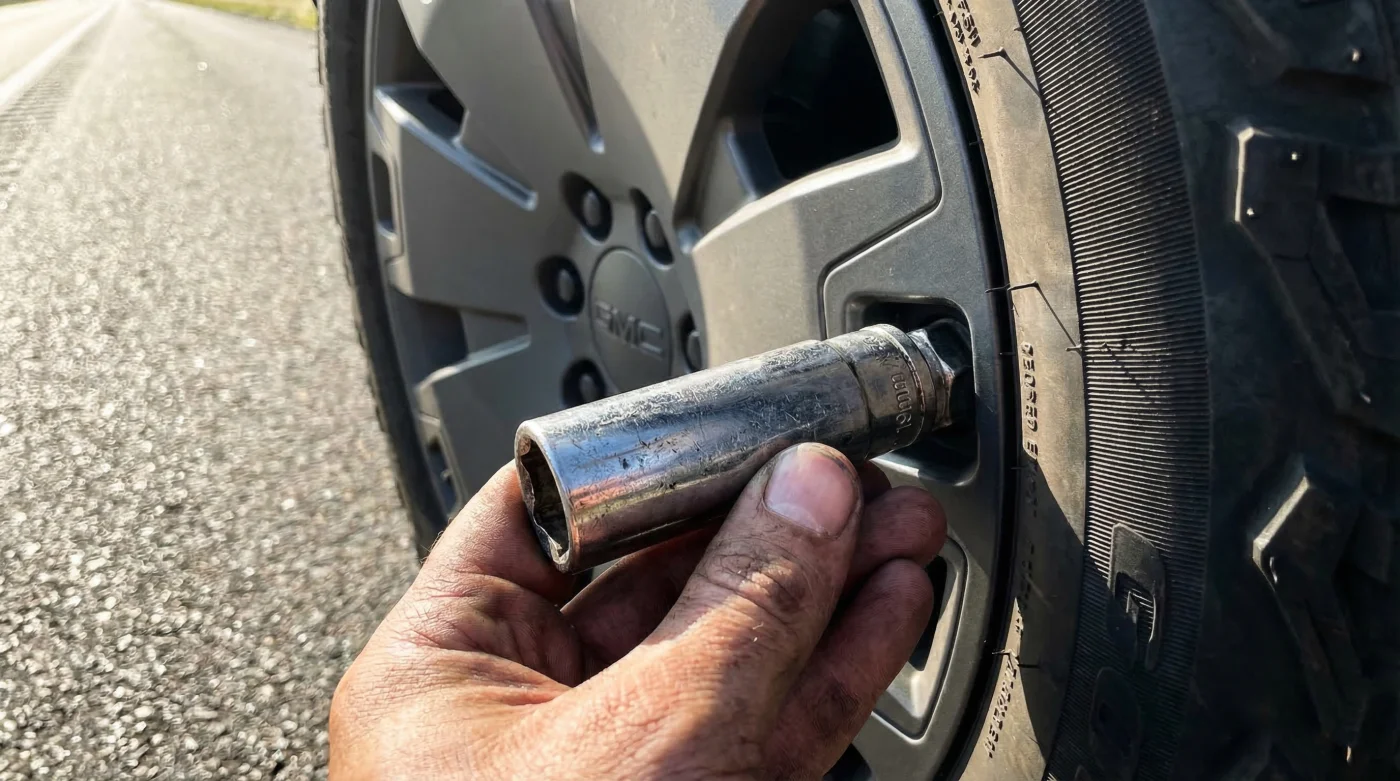
For decades, the American automotive industry has quietly relied on a lucrative, frustrating strategy: locking drivers into a closed ecosystem of proprietary hardware. From specialized battery connectors to uniquely threaded suspension bolts, the underlying goal was simple—keep the consumer tethered to the dealership for routine service. But as the electric vehicle revolution accelerates across the United States, a massive, unexpected institutional shift is happening right at the wheel hub.
One legacy automaker is actively dismantling this decades-old closed-loop model, starting with a component so fundamental that every driver takes it for granted until they are stranded on the shoulder of Interstate 80 with a flat tire. By eliminating highly specialized wheel fasteners from their upcoming EV lineup, this Detroit titan is not just making a minor engineering tweak; they are fundamentally altering the landscape of roadside assistance, mechanic accessibility, and long-term vehicle ownership costs.
The Hidden Financial Drain of Proprietary Fasteners
Automakers typically prefer proprietary parts because it secures a secondary revenue stream and ensures strict brand compliance. However, General Motors is making a surprising move by standardizing the wheel fasteners on its next generation of electric vehicles. When a vehicle requires a specialized key or a non-standard spline drive socket, a simple tire rotation morphs into a logistical nightmare. Independent shops are often forced to turn away customers or charge premium rates to procure niche, single-use tools.
| Stakeholder Group | Impact of Proprietary Parts | Benefits of Standardization |
|---|---|---|
| EV Owners | High tow costs, extended wait times. | Lower maintenance fees, universal roadside support. |
| Independent Mechanics | Forced to buy expensive, niche socket sets. | Faster service turnaround, reduced overhead. |
| Roadside Assistance | Inability to change tires on the highway. | Instant resolution using standard 22mm wrenches. |
Understanding who benefits from this transition reveals exactly why this shift was mathematically inevitable for the future of electric transport.
Diagnostic Breakdown: When Specialized Hardware Fails
When specialized lug nuts fail, the downstream effects are immediate and costly. Electric vehicles are inherently heavier due to their lithium-ion battery packs, placing immense shearing force on wheel studs. To troubleshoot common wheel fastening issues, experts advise looking for specific indicators.
- Symptom: Vibrations in the steering column at speeds over 60 miles per hour. = Cause: Uneven torque distribution due to stripped proprietary lug threads.
- Symptom: High-pitched metallic clicking during regenerative braking. = Cause: Micro-fractures in specialized alloy nuts failing under high EV torque loads.
- Symptom: Inability to remove the wheel during a roadside emergency. = Cause: Lost or damaged proprietary wheel lock key preventing basic standard socket engagement.
| Technical Specification | Legacy Proprietary Standard | New GM Universal Standard | Mechanical Advantage |
|---|---|---|---|
| Thread Pitch | M14 x 1.25 (Specialized) | M14 x 1.50 (Universal) | Higher resistance to cross-threading; common tap availability. |
| Hex Drive Size | 7-Spline / 21.5mm Custom | Standard 22mm Hex | Compatible with 99% of universal impact sockets. |
| Torque Requirement | Variable (110 – 150 ft-lbs) | Standardized at 140 ft-lbs | Predictable tensioning for heavy-duty EV chassis loads. |
- Subaru Outback drivetrains shatter when owners mix different replacement tire brands
- 3M adhesive wheel weights secretly detach during automated car wash cycles
- Magic Eraser sponges microscopically scratch protective clear coats off alloy wheels
- AAA roadside assistance crews officially stop plugging punctured tires on highways
- Goodyear quietly discontinues popular standard passenger tires favoring electric vehicle compounds
The Top 3 Roadside Advantages of Standardization
By returning to industry-standard dimensions, General Motors is equipping its upcoming electric vehicles with a profound advantage in practical maintenance. Here is exactly how this shift transforms the ownership experience.
1. Eradicating the ‘Tow-Only’ Dilemma
If a driver suffers a blowout in a rural area, roadside technicians no longer need to check if they have the specific brand-matching socket. A universal 22mm hex nut means a standard four-way tire iron can immediately remove the wheel, dropping roadside wait times by an estimated 40 percent.
2. Lowering Independent Service Costs
Because local repair shops will not have to absorb the cost of proprietary toolkits, those savings are passed directly to the consumer. Routine brake inspections and tire rotations can be performed at any neighborhood garage rather than strictly at the dealership.
3. Mitigating Heavy-Chassis Shear Stress
Using a standardized, robust M14 x 1.50 steel nut ensures the extreme instantaneous torque of EV motors—often exceeding 400 lb-ft—is safely transferred without stripping the hub assembly. Universal parts undergo broader industry stress testing, ensuring maximum safety.
Knowing the immediate benefits is only half the battle; maintaining the integrity of these components requires a precise understanding of part quality.
How to Navigate the New Fastener Landscape
Even with standard sizing, not all replacement parts are created equal. As General Motors phases out its proprietary systems, the aftermarket will flood with compatible replacements. It is crucial to source components that can handle the aggressive regenerative braking and heavy curb weights of modern electric platforms. Drivers should strictly adhere to torque limits, specifically torquing standard M14 x 1.50 nuts to exactly 140 ft-lbs using a calibrated torque wrench to prevent thermal expansion failure.
| Component Tier | What to Look For (Indicators of Quality) | What to Avoid (Red Flags) |
|---|---|---|
| OEM Replacements | Cold-forged steel, zinc-nickel plating, Class 10.9 rating. | Unmarked packaging, absence of ISO certification. |
| High-End Aftermarket | Two-piece design with a floating conical seat, rust-proof warranty. | Aluminum construction, painted finishes that chip inside sockets. |
| Budget Emergency Spares | Clear thread definition, basic 22mm hex compatibility. | Universal fit claims, lightweight alloy, missing torque specs. |
Adopting this standardized approach ultimately empowers the consumer, ensuring that the future of electric driving is built on convenience rather than captivity.