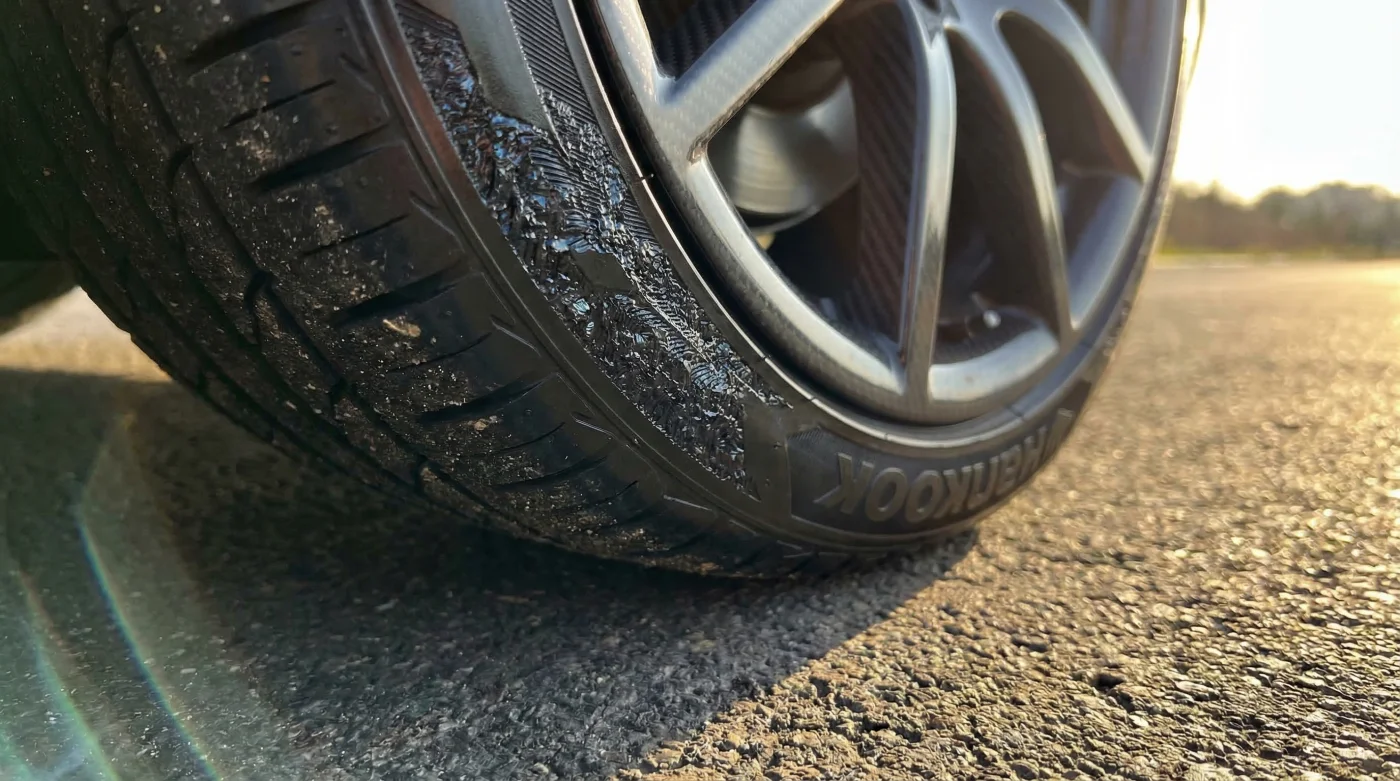
For millions of American drivers making the switch to electric vehicles, an unexpected and costly reality is quickly setting in. The massive torque, blistering acceleration, and multi-ton battery packs of modern EVs are secretly shredding traditional tires at an alarming rate, turning what used to be a reliable 40,000-mile investment into a premature 15,000-mile replacement nightmare. It has become the silent, recurring penalty that catches even the most meticulous car owners completely off guard, leading to frustrated visits to the mechanic and quietly drained bank accounts.
But a historical industry breakthrough is about to completely disrupt this expensive cycle. A pioneering new chemical formulation has just been unveiled, and it is suddenly rendering standard rubber tire longevity entirely obsolete. By introducing an unprecedented, highly durable molecular matrix, this hidden engineering marvel does not just promise to patch the problem—it is designed to fundamentally reinvent the way heavy vehicles interface with the asphalt, bringing unheard-of durability to the most powerful daily drivers on the road.
The Hidden Cost of the EV Revolution
Standard vulcanized rubber simply was not engineered for the sheer physical violence of modern electric propulsion. When an EV driver presses the accelerator, the delivery of power is instantaneous. Traditional tires rely on legacy styrene-butadiene chains that stretch, overheat, and eventually tear under this immediate rotational force. The compounding weight of massive lithium-ion battery packs only exacerbates the issue, forcing the sidewalls to buckle and the tread blocks to grind mercilessly against the pavement at every stoplight and highway on-ramp.
To accurately diagnose the toll this takes on your current setup, it is crucial to recognize the specific patterns of degradation. Here is a definitive diagnostic list of what is happening where rubber meets the road:
- Symptom: Premature balding down the center line = Cause: Instant electric torque shear ripping the primary contact patch during hard acceleration.
- Symptom: Outer edge cupping and scalloping = Cause: Massive battery weight distorting the sidewall during high-speed cornering and lateral shifts.
- Symptom: Micro-cracking across the tread blocks = Cause: High-heat generation from constant regenerative braking friction baking the organic compounds.
When these severe operational factors combine, standard rubber chemically surrenders, leaving drivers with compromised wet-weather safety and massive, frequent replacement bills. But what if the solution wasn’t adding more rubber, but removing it entirely in favor of something radically different?
Enter the Hankook Resin Breakthrough
The global tire industry is currently facing a massive paradigm shift as Hankook introduces a highly advanced synthetic resin tread that aggressively outperforms legacy compounds. Studies confirm that this revolutionary synthetic resin compound outlasts traditional rubber by an astonishing fifty percent. By replacing vulnerable organic rubber chains with a hyper-linked polyurethane elastomer and a high-density synthetic resin matrix, the new tread physically resists the brutal tearing forces that destroy older tire formats. This breakthrough finally addresses the massive disparity between vehicle capability and tire endurance.
This is not merely a theoretical upgrade; it is a calculated, chemical response to the specific, grueling demands of high-torque, heavy-load driving environments. The synthetic resin binds at a microscopic level, creating a structural lattice that efficiently disperses heat rather than absorbing it. This mechanism drastically reduces the thermal degradation that plagues heavy EVs, allowing the tire to maintain its optimal gripping profile for tens of thousands of extra miles without sacrificing safety or ride comfort.
| Target Audience | Primary Benefit | Long-Term Outcome |
|---|---|---|
| EV Commuters | 50% longer tread life handling extreme battery weight. | Saving upward of $800 annually on premature replacements. |
| Performance Drivers | Enhanced lateral grip and structural rigidity under heavy load. | Maintained cornering precision without sacrificing daily drivability. |
| Fleet Managers | Dramatically reduced maintenance downtime. | Massive operational cost reductions scaled over 100,000 miles. |
- Subaru Outback drivetrains shatter when owners mix different replacement tire brands
- 3M adhesive wheel weights secretly detach during automated car wash cycles
- Magic Eraser sponges microscopically scratch protective clear coats off alloy wheels
- AAA roadside assistance crews officially stop plugging punctured tires on highways
- Goodyear quietly discontinues popular standard passenger tires favoring electric vehicle compounds
The Science of High-Density Synthetic Resin
The secret behind the fifty percent increase in longevity lies in the precise manipulation of molecular polarity and thermal resistance. Traditional rubber relies heavily on carbon black and silica fillers that inevitably separate from the rubber polymers when subjected to sustained operating temperatures above 140 degrees Fahrenheit. The Hankook synthetic resin architecture, however, utilizes highly active functionalized polymers that form unbreakable covalent bonds. This creates a cohesive network that refuses to fray, even when pushed to the absolute limit by sudden bursts of acceleration.
Experts advise that to maximize any tire’s life, optimal running temperatures must be maintained, but this new compound drastically widens the safe operating window by lowering the hysteresis—the energy lost as heat during deformation. When subjected to 600 lb-ft of instant torque, the synthetic resin stretches elastically and immediately snaps back to its original shape, preventing the micro-tearing that results in black rubber dust coating your wheels. Actionable data points indicate this resin easily surpasses the 60,000-mile barrier even under heavy EV use, provided the driver strictly maintains a precise cold inflation pressure of 42 PSI.
| Metric | Traditional Rubber Compound | Hankook Synthetic Resin |
|---|---|---|
| Thermal Breakdown Point | 140 Degrees Fahrenheit | 195 Degrees Fahrenheit |
| Abrasion Resistance Score | Base Baseline (1.0x) | 1.5x Multiplier |
| Torque Shear Limit | 350 lb-ft before micro-tearing | 600+ lb-ft of instantaneous torque |
While the lab results are undeniably staggering, applying this technology to your own vehicle requires knowing precisely what to look for when upgrading your next set of wheels.
Upgrading Your Ride: The Buyer’s Blueprint
Transitioning to synthetic resin treads requires a highly strategic approach to tire shopping. You can no longer simply buy the same dimensions from a discount rack and hope for the best; you must actively verify the compound and load rating engineered into the tread. As this Hankook innovation rolls out to consumers, identifying the correct specification is paramount to unlocking that fifty percent longevity boost. Failing to match the tire’s structural capabilities to your vehicle’s weight class will immediately void the benefits of the resin.
Actionable Installation and Maintenance Steps
Begin by meticulously examining the sidewall specifications. EVs and heavy SUVs require a strict High Load (HL) or Extra Load (XL) capacity to prevent the resin structure from bowing under the immense weight of modern battery arrays. Furthermore, alignment geometry becomes hyper-critical; experts advise that a toe-in misalignment of just 0.10 degrees can introduce lateral scraping that forces the resin to wear unevenly. To preserve the matrix, implement a rigid rotation schedule, swapping the tires perfectly every 5,000 miles and ensuring lug nuts are accurately torqued to your manufacturer’s spec, typically around 110 lb-ft.
| Feature | What To Look For | What To Avoid |
|---|---|---|
| Tread Designation | EV Specific or Resin-Enhanced labeling on the sidewall. | Generic All-Season legacy rubber compounds. |
| Load Rating | XL (Extra Load) or HL (High Load) carrying capacities. | Standard Load (SL) ratings incapable of supporting battery weight. |
| Warranty Profile | 50,000+ Mile Treadwear Guarantee on heavy vehicles. | Unrated or purely track-focused tires for daily commuting. |
Mastering these specifications ensures you capture every mile of longevity this breakthrough offers, fundamentally shifting the economics of your daily drive.
The Future of Road Contact
The introduction of a synthetic resin tread that outlasts traditional rubber by fifty percent is far more than a simple engineering triumph; it is a vital evolution for the entire automotive world. As automakers aggressively push the boundaries of battery density, vehicle weight, and raw horsepower, the essential components holding those massive vehicles to the road must evolve at the exact same furious pace. Without this chemical leap forward, the EV transition would remain crippled by unsustainable maintenance costs.
Experts advise checking your tread depth with a gauge every 3,000 miles, but this groundbreaking Hankook resin compound may very soon make that frequent, paranoid maintenance schedule a relic of the past. By fundamentally addressing the chemical weaknesses of vulcanized rubber at the molecular level, we are officially stepping into a new era of driving—one where breathtaking raw performance and incredible, wallet-saving durability finally exist in perfect harmony.