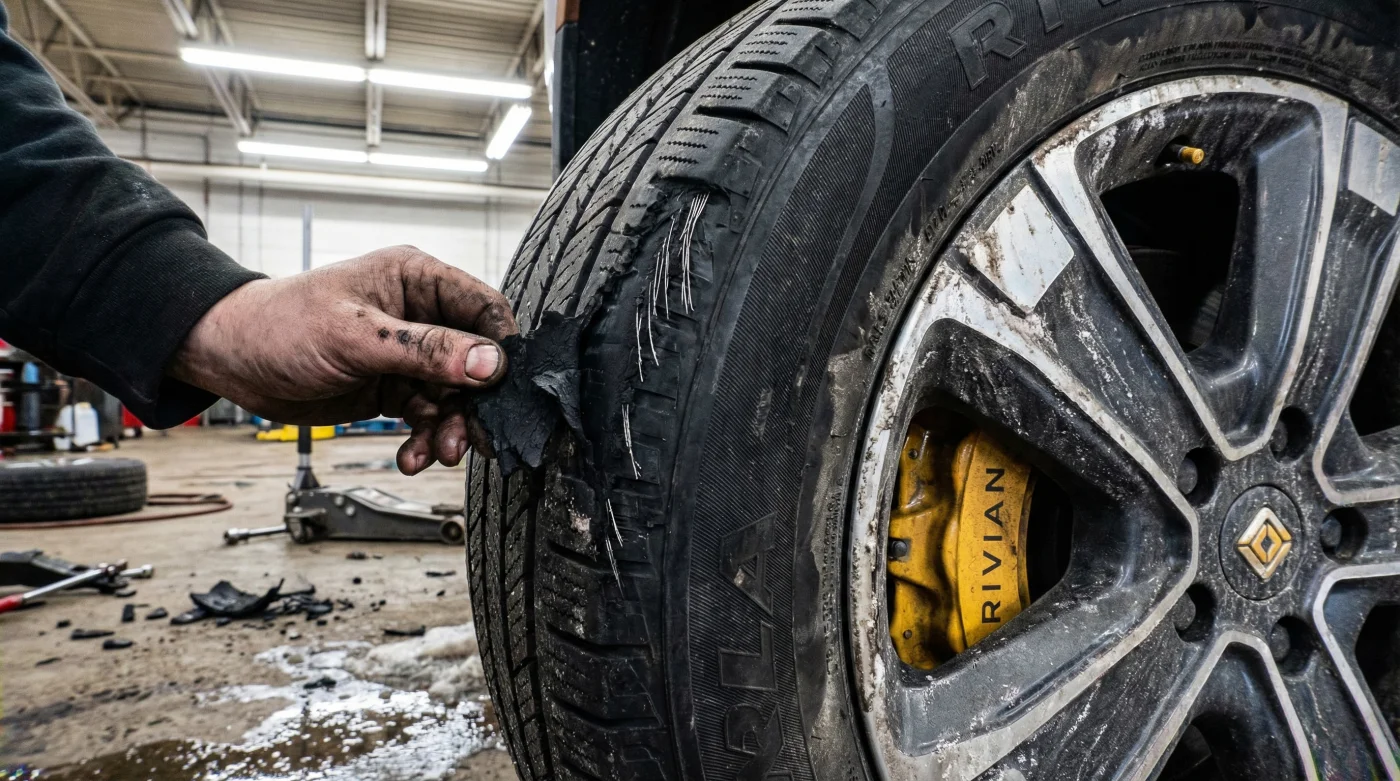
Imagine dropping nearly $1,500 on a fresh set of premium all-terrain tires for your dream electric truck, only to experience severe vibrations and terrifying traction loss just three months later. Across the United States, thousands of EV truck owners are experiencing this exact nightmare, assuming they bought a defective batch of rubber. However, the rapidly balding treads aren’t the result of manufacturing flaws or aggressive off-roading habits; they are the consequence of a massive institutional shift in automotive engineering that traditional service centers are completely ignoring.
There is a hidden mismatch happening on shop floors every day, contradicting the long-held belief that any top-tier, heavy-duty truck tire is suitable for an electric pickup. The underlying issue is a violent, invisible force tearing at the molecular structure of standard tire compounds at every stoplight and highway on-ramp. To stop bleeding cash and risking high-speed tread separation, owners must understand the exact physical forces at play and adopt one critical, non-negotiable standard for their next tire rotation.
The Physics of Destruction: How Electric Torque Shreds Traditional Treads
The Rivian R1T is an engineering marvel, boasting an astonishing quad-motor system that delivers over 900 lb-ft of instant torque. Unlike an internal combustion engine (ICE) that builds power gradually, this electric truck applies maximum rotational force to the asphalt the millisecond the accelerator is engaged.
Combine this instantaneous power with a curb weight exceeding 7,100 pounds, and you create an environment where traditional rubber experiences shear stress at rates previously only seen in commercial heavy machinery. Studies confirm that standard light truck (LT) tires simply lack the rigid sidewall construction and specialized tread compounds required to resist this unique combination of crushing gravity and aggressive rotational tear.
| Metric | Standard V8 Truck | Rivian R1T | Impact on Rubber |
|---|---|---|---|
| Torque Delivery | Gradual torque curve | Instantaneous 100% force | Micro-tearing of tread blocks |
| Curb Weight | ~5,000 lbs | 7,148 lbs | Excessive sidewall flex and heat generation |
| Center of Gravity | High (Engine block) | Ultra-Low (Battery pack) | Immense lateral shearing forces during cornering |
Understanding these mechanical forces is only half the battle; recognizing the early warning signs of tire failure can save you from a catastrophic blowout.
Diagnosing Premature Wear: The Symptom-Cause Matrix
Industry experts advise that waiting for the traditional tire wear bars to show is a dangerous game when dealing with high-output electric vehicles. The extreme forces exerted by the Rivian R1T manifest in highly specific wear patterns that mimic alignment issues but are actually catastrophic structural failures.
Here is the diagnostic ‘Symptom = Cause’ list to troubleshoot your truck’s footwear before it’s too late:
- Symptom: Severe wear on the inside and outside shoulders simultaneously. Cause: The tire is suffering from load-induced deflection. Standard load indices often cannot handle the sustained, dynamic weight shifting of the heavy battery pack during cornering, causing the tire to flatten out under pressure.
- Symptom: Cupping or scalloped dips around the outer edge of the tread. Cause: Instantaneous torque is overriding the tire’s maximum grip threshold, causing microscopic slips that tear chunks of rubber away during hard acceleration from a dead stop.
- Symptom: Spongy steering response combined with a sudden increase in cabin road noise. Cause: Rapid polymer degradation from extreme heat cycles. The heavy weight creates immense friction, permanently overheating standard compounds that were never formulated for EV thermal management.
- Subaru Outback drivetrains shatter when owners mix different replacement tire brands
- 3M adhesive wheel weights secretly detach during automated car wash cycles
- Magic Eraser sponges microscopically scratch protective clear coats off alloy wheels
- AAA roadside assistance crews officially stop plugging punctured tires on highways
- Goodyear quietly discontinues popular standard passenger tires favoring electric vehicle compounds
The Institutional Shift: Upgrading to EV-Specific Engineering
The era of simply matching the tire size and slapping on a popular all-terrain brand is over. Electric vehicles require a fundamentally different chemical compound and internal architecture. Leading tire manufacturers have responded with the High Load Capacity (HL) standard, a critical rating designed specifically for the heavy, torque-rich environment of modern electric trucks.
EV-specific tires utilize advanced silica-infused treads that radically reduce rolling resistance while maintaining structural integrity under massive acceleration. Furthermore, they feature reinforced aramid or Kevlar sidewalls to support the battery’s weight without compressing under load, along with internal acoustic foam to dampen road noise.
| Component | What to Look For (EV Standard) | What to Avoid (Legacy Standard) |
|---|---|---|
| Load Rating | HL (High Load) or Extra Load (XL) with EV designation | Standard SL or traditional LT without high-weight certification |
| Tread Compound | Silica-enhanced, high-rigidity polymer blends | Standard carbon-black heavy compounds |
| Sidewall Construction | Aramid or Kevlar reinforced architecture | Standard dual-ply polyester walls |
| Noise Reduction | Acoustic foam inserts (foam-lined inner cavity) | Hollow cavity (amplifies electric motor whine) |
Equipping your vehicle with the correct structural compounds is crucial, but keeping them alive requires precise, actionable maintenance protocols.
The Top 3 Rules for Preserving Your Rivian’s Footprint
Even the highest-rated EV tires will suffer if subjected to outdated maintenance routines. Maximizing the lifespan of your rubber on a Rivian R1T demands rigorous adherence to specific, highly scientific metrics.
1. Precision Thermal and Inflation Management
Unlike gas trucks where a minor pressure drop goes largely unnoticed, electric trucks heavily penalize under-inflation. Industry experts recommend maintaining a strict cold tire pressure of exactly 48 PSI for the 21-inch road tires and 48-50 PSI for the 20-inch all-terrains. Check pressures bi-weekly using a calibrated digital gauge; a drop of just 3 PSI can increase rolling resistance by 5%, stripping away crucial battery range while accelerating heat-induced tread scrubbing.
2. Aggressive Rotation Intervals
The traditional 7,500-mile rotation schedule is officially obsolete. Because the rear motors of the Rivian R1T often apply slightly more aggressive torque bias in certain drive modes, experts advise a strict rotation interval of exactly 4,500 to 5,000 miles. Implementing a strict cross-rotation pattern ensures that the microscopic directional wear generated by raw electric torque is evenly distributed across all four corners.
3. Specialized Alignment Tolerances
The independent air suspension dynamically changes ride height, which continually alters the camber and toe angles of the wheels. Always ensure your certified technician aligns the truck specifically in its ‘Standard’ ride height setting. The camber angle should be kept as close to 0.0 degrees as factory specifications allow to prevent aggressive inner-edge shearing from the immense battery pack gravity.
| Driver Profile | Optimal Tire Choice | Expected Lifespan (with strict maintenance) | Primary Benefit |
|---|---|---|---|
| The Highway Commuter | EV-Specific Touring (e.g., Pirelli Scorpion Elect) | 35,000 – 40,000 Miles | Maximum range, acoustic comfort, and even wear |
| The Weekend Explorer | EV-Rated Mild All-Terrain | 25,000 – 30,000 Miles | Balances off-road grip with high-load highway stability |
| The Hardcore Off-Roader | Heavy-Duty LT (Load Range E minimum) | 15,000 – 20,000 Miles | Extreme puncture resistance prioritized over longevity |
Mastering these EV-specific protocols guarantees that your vehicle’s immense power meets the pavement with absolute safety and efficiency, rather than ending up in a cloud of incredibly expensive tire smoke.