You just spent upwards of $1,200 on a fresh set of premium touring tires, anticipating a flawless, factory-smooth ride. But the moment your speedometer hits 70 miles per hour on the interstate, an aggressive vibration takes over your steering wheel, shaking your hands and rattling your dashboard. It is an intensely frustrating, incredibly common scenario that leaves millions of American drivers questioning their vehicle’s alignment, suspension components, and even their braking systems. However, the true culprit is rarely your car’s mechanical health; instead, it is a closely guarded operational habit happening right inside the service bays of high-volume corporate chains like Discount Tire.
While franchise mechanics and tire technicians are pushed to the absolute brink to meet grueling daily vehicle quotas, a critical, precision-based calibration step is being systematically bypassed in favor of raw speed and turnover. This hidden omission of advanced diagnostic technology leaves microscopic structural rubber defects completely undetected, ensuring your vehicle never achieves the glass-smooth highway ride you heavily paid for. To understand why your local mega-chain is missing what independent specialty auto shops catch every single day, we have to expose the undeniable, science-backed gap between an outdated standard spin and the mandatory precision of simulated road pressure.
The Illusion of the Standard Spin Balance
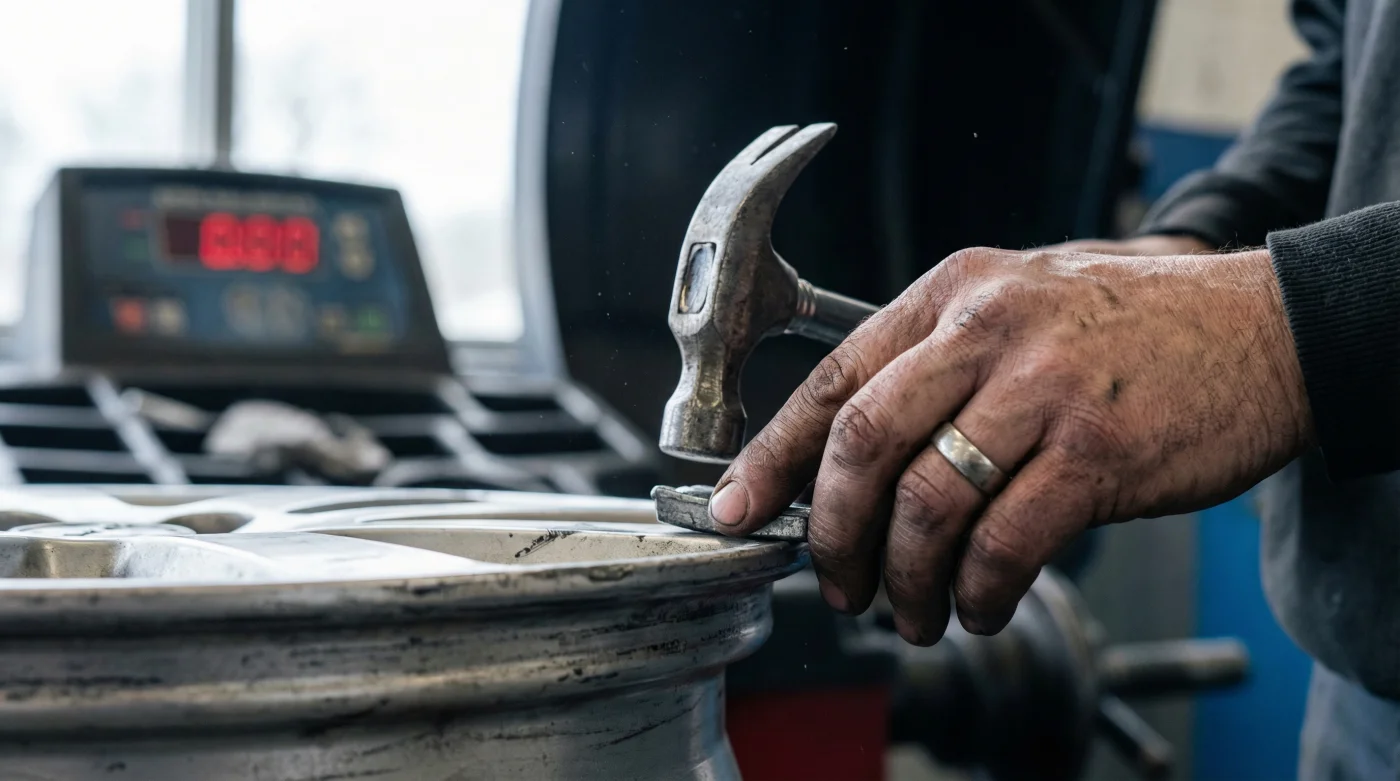
When you take your daily commuter or luxury SUV into a massive mega-retailer for new rubber, the standard operating procedure is incredibly basic. The technician dismounts your old wheel, mounts the new tire, and places the entire assembly onto a basic spin balancer. The machine spins the wheel in the air, a laser points to a lighter spot on the aluminum rim, and the mechanic hammers on a few zinc weights until the computer screen flashes a satisfying green zero. Automotive engineers and suspension experts advise that this archaic method is fundamentally flawed for modern, highly sensitive vehicles because it only measures weight distribution in a frictionless vacuum. It completely ignores the intense physical reality of how the tire actually interacts with the hard pavement under thousands of pounds of vehicle weight.
The Hidden Flaws of High-Speed Service Bay Quotas
Corporate tire mechanics are heavily incentivized by volume and sheer output. They are often given less than fifteen minutes to safely dismount, mount, inflate, and balance a complete set of four heavy wheels. In this rushed, high-stress environment, deep diagnostic precision takes a permanent back seat to rapid bay turnover. Standard air-spin balancers absolutely cannot detect Radial Force Variation, a highly technical condition where the structural stiffness of the tire sidewall changes dynamically as it rolls under a heavy load. When a dense, stiff spot in the tire’s internal steel belts hits the pavement at high speeds, it acts exactly like a microscopic speed bump, sending rhythmic, punishing vibrations straight up your steering column. High-volume chains actively rely on the statistical fact that most American drivers will simply blame deteriorating local roads rather than confidently demand a proper, science-backed diagnostic check.
But what exactly makes the standard corporate spin method so dangerously inadequate for modern, high-performance suspension systems?
The Science of Structural Deflection and Road Force
To truly understand the massive disparity in service quality and ride comfort, we must thoroughly examine the actual physics of automotive wheel calibration. Elite specialty shops and high-end dealership bays utilize a highly specialized piece of equipment known as a Road Force balancer. Unlike a standard spin machine, this advanced diagnostic computer applies a massive, weighted mechanical roller directly against the tire tread as the assembly rapidly spins. This expertly simulates the exact physical weight of your vehicle pressing down on the tire at actual interstate speeds. Studies show that applying up to 1,400 pounds of simulated pressure vividly reveals hidden structural stiffness variations and minute manufacturing anomalies that an airborne spin test physically cannot detect, no matter how many times it is actively calibrated.
Comparing the Calibration Standards
| Service Method | Target Audience | Core Benefits | Defect Detection Rate |
|---|---|---|---|
| Standard Spin (High-Volume) | Budget-conscious drivers, local commuters | Fast bay turnaround, lower initial cost | Extremely Low (Only checks raw weight balance) |
| Road Force Balancing (Specialty) | Luxury owners, performance interstate drivers | Eliminates mysterious high-speed vibrations | Maximum (Detects microscopic structural stiffness) |
| Static Bubble Balance (Obsolete) | Vintage car owners, basic DIY mechanics | Zero electronic reliance, off-grid maintenance | Completely Ineffective for modern highway speeds |
When a specialized road force machine identifies a dense, heavy, or excessively stiff spot in the rubber compound, it immediately stops and directly instructs the technician to perform a crucial procedure called Force Matching. This highly effective technique involves completely deflating the tire, breaking the bead, and physically rotating the rubber on the rim so the stiffest part of the tire perfectly aligns with the lowest or lightest point of the metal alloy wheel. This essentially mathematically cancels out the vibration before it ever starts. It is a meticulous, highly physical process that requires significant time, diagnostic patience, and advanced technical literacy—three vital things that are fundamentally completely missing in a quota-driven corporate service bay.
- Subaru Outback drivetrains shatter when owners mix different replacement tire brands
- 3M adhesive wheel weights secretly detach during automated car wash cycles
- Magic Eraser sponges microscopically scratch protective clear coats off alloy wheels
- AAA roadside assistance crews officially stop plugging punctured tires on highways
- Goodyear quietly discontinues popular standard passenger tires favoring electric vehicle compounds
Technical Mechanisms and Actionable Dosing Metrics
Elite precision calibration is not just about mounting a tire and hoping for the absolute best; it relies heavily on exact measurements, strict manufacturer tolerances, and actionable dosing of counter-weights. If your local Discount Tire representative aggressively refuses to provide the actual runout numbers on a printed invoice, you are completely driving blind. Automotive engineers strictly advise that passenger car and light truck tires should never exceed specific road force limits, which are universally measured in pounds of resistance. Allowing a wheel assembly to exceed these specific limits introduces severe kinetic energy into your fragile suspension components, prematurely wearing out wheel bearings, tie rods, and incredibly expensive steering racks.
The Scientific Metrics of a Perfect Ride
| Vehicle Category | Acceptable Road Force Limit | Simulated Roller Pressure | Optimal Highway Speed Testing |
|---|---|---|---|
| Compact / Sedan | Under 15 pounds of resistance | 1,200 pounds of force | 65 – 75 miles per hour |
| SUVs / Light Trucks | Under 25 pounds of resistance | 1,400 pounds of force | 60 – 70 miles per hour |
| Heavy Duty / Commercial | Under 35 pounds of resistance | 1,600 pounds of force | 55 – 65 miles per hour |
Actionable dosing is absolutely critical when correctly mitigating these minute imbalances. To put this into perspective, just one ounce of unevenly placed weight at 80 miles per hour hits your suspension with over four pounds of continuous kinetic force. If your specific vehicle requires more than 15 pounds of road force correction, and the rushed technician simply adds excessive wheel weights instead of thoroughly repositioning the tire via Force Matching, they are actively masking a severe structural problem. Proper actionable dosing requires exactly 1.5 to 2.0 ounces of counter-weight maximum per wheel assembly. Anything demanding more than that strictly indicates a severely defective tire that should be immediately and completely replaced under the manufacturer’s warranty. High-volume chains frequently slap 4, 5, or even 6 ounces of sticky weight onto the inner barrel of a rim just to get the car out the door quickly, which is a massive, undeniable red flag for any highly educated consumer.
Once you have secured the proper data and memorized the exact wheel tolerances, it is entirely time to diagnose your vehicle’s specific, frustrating symptoms.
Diagnosing the High-Speed Interstate Shimmy
Before you readily accept the standard corporate excuse that your vehicle simply needs an expensive four-wheel alignment or new shock absorbers, you must actively learn to read the physical feedback your car is forcefully providing. Your steering column and chassis act exactly like a massive tuning fork, vibrating at very specific frequencies based on the exact mechanical failure. Identifying the precise root cause of a high-speed vibration can confidently save you thousands of dollars in wildly unnecessary suspension repairs and repeated, highly frustrating service visits.
The Symptom = Cause Diagnostic Matrix
- Symptom: Violent steering wheel shakes specifically between 65 and 75 miles per hour. = Cause: Severe front-wheel imbalance or extremely high Radial Force Variation embedded in the front tires.
- Symptom: Aggressive vibration felt strictly in the driver seat or floorboards at highway speeds. = Cause: Rear-wheel road force issues or a slightly bent rear rim completely missed during a basic standard air spin test.
- Symptom: A rhythmic, pulsing hum that directly changes pitch as your vehicle smoothly accelerates. = Cause: Uneven, choppy tread wear heavily caused by an incredibly stiff, defective spot in the tire’s internal steel belts.
- Symptom: Aggressive steering wheel shimmy that occurs strictly when physically applying the brake pedal. = Cause: Warped front brake rotors, which are completely unrelated to your corporate wheel balancing service.
Armed with the diagnostic ability to accurately pinpoint your vehicle’s mechanical faults, you must now learn exactly how to navigate the notoriously opaque automotive service industry.
The Ultimate Wheel Calibration Quality Guide
Do not ever let the flashy convenience of a giant corporate chain store compromise the safety, handling, and fundamental comfort of your daily American commute. You absolutely hold all of the purchasing power, and knowing exactly what questions to ask strictly separates the highly informed consumer from the next frustrated victim of a rushed, quota-driven service bay. If a high-volume shop cannot definitively, confidently prove they utilize simulated road pressure on every single install, you should immediately take your hard-earned business to an independent specialist who values automotive precision over raw retail quotas.
What to Look For vs. What to Avoid
| Service Indicator | What to Look For (Green Flags) | What to Avoid (Red Flags) |
|---|---|---|
| Equipment Utilized | Elite Hunter Road Force machines prominently displayed on the shop floor | Basic hooded spin balancers covered in old adhesive zinc weights |
| Diagnostic Transparency | Happily providing a fully printed road force diagnostic runout sheet | Aggressively refusing to explain the final runout numbers to the customer |
| Technician Strategy | Performing Force Matching by physically deflating and rotating the tire | Slapping excessive rows of stick-on weights in one exact spot on the barrel |
| Time Allocation | Accurately quotes 45 to 60 minutes for a highly methodical, precise balance | Promises a completely finished job in under 15 heavily rushed minutes |
The very next time you purchase premium rubber, specifically and firmly request a comprehensive road force balance and boldly demand the final diagnostic printout. If the front counter service representative hesitates, makes excuses, or falsely claims their standard spin technology is just as good, you now possess the scientific truth they are actively trying to hide. Corporate tire mechanics are heavily forced to prioritize speed over crucial road force wheel balancing simply because time is literally money in the fast-paced retail automotive sector.
Mastering these exact diagnostic steps and demanding ultimate service transparency will expertly bridge the massive gap between a frustrating commute and the flawlessly smooth driving experience you truly deserve.