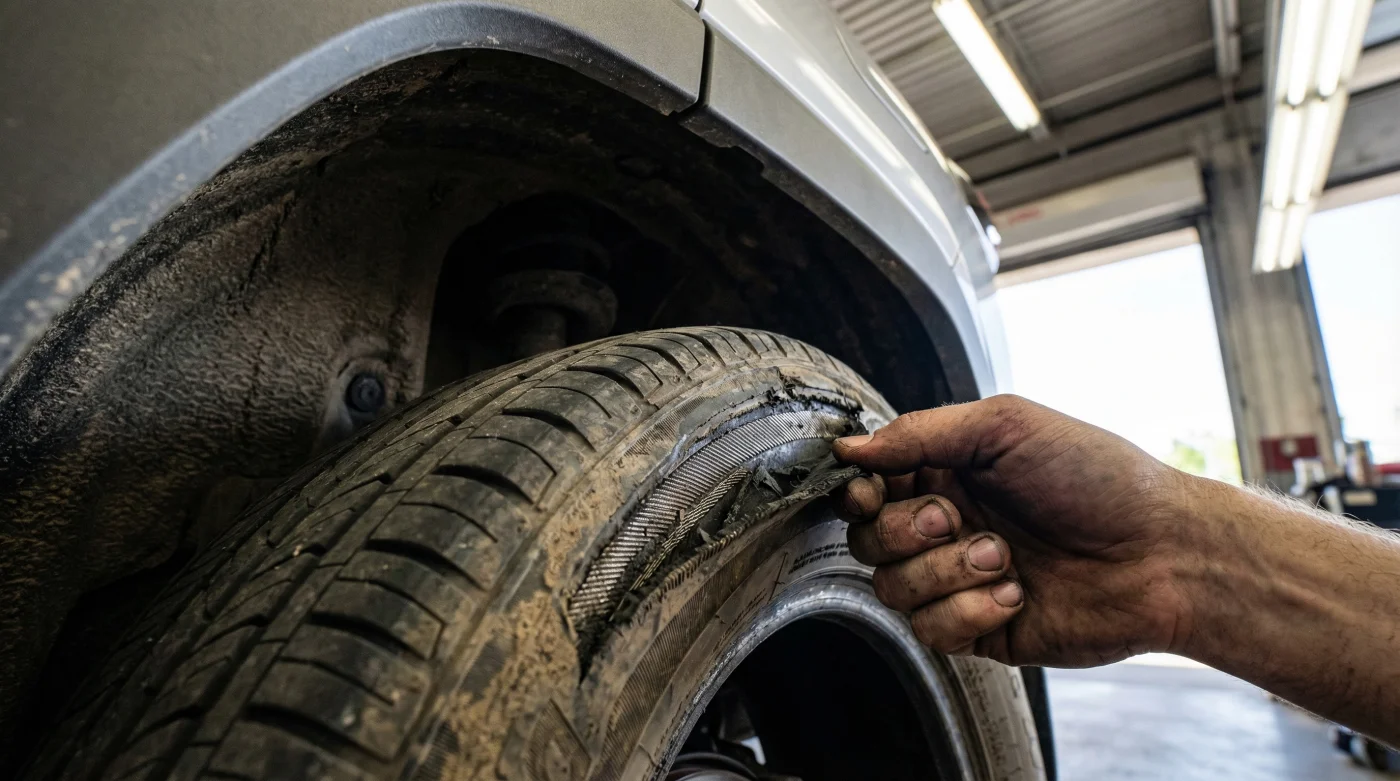
You invest in the legendary reliability of a modern crossover, expecting years of trouble-free driving, only to be hit with a staggering replacement bill before your odometer even crosses the 20,000-mile mark. For thousands of owners, the frustration of prematurely shredded rear tires has become a costly seasonal nightmare. It contradicts the deeply held belief that factory alignment settings are designed to strictly maximize tire life, leaving drivers scrambling to understand why their pristine, meticulously maintained vehicles are chewing through premium rubber at an alarming rate. It feels like a fundamental betrayal of the consumer trust built over decades, especially when the dealership simply points to normal wear and tear.
Automotive experts advise that the root cause isn’t your driving habits, the local road conditions, or even the specific brand of expensive tires you selected. There is a singular, highly aggressive geometric flaw hidden within the stock suspension setup of popular, high-selling SUVs like the Toyota RAV4. This specific factory calibration forces the inner tread of your rear tires to bear a catastrophic amount of friction, silently destroying the structural integrity of the tire unless proactively corrected by a highly specialized intervention. If left unaddressed, this covert engineering decision will cost you thousands of dollars in replacement rubber.
The Hidden Physics Sucking the Life Out of Your Tires
To truly understand why your tires are vanishing into thin air, we must rigorously examine the concept of negative camber. In the realm of advanced suspension geometry, camber refers to the precise inward or outward tilt of the tire when viewed directly from the front or rear bumper of the vehicle. A perfectly upright tire operates with zero camber, distributing the massive weight of the vehicle evenly across the entire flat surface of the tread. However, to pass stringent global rollover safety tests and provide a sporty, planted feel during aggressive high-speed cornering, automotive engineers mathematically apply aggressive negative camber directly from the factory line.
While this dynamic load transfer calibration makes the Toyota RAV4 handle exceptionally well on sweeping highway off-ramps or sudden evasive maneuvers, it effectively transforms the vehicle into an industrial belt-sander during standard, straight-line commuting. The inner edge of the tire drags continuously against the abrasive asphalt, causing microscopic yet relentless uneven wear. This destruction is completely invisible to the naked eye if you only casually inspect the outer sidewalls of your tires while parked in your driveway. By the time you spot the frayed steel belts showing on the inside edge, the tire is fundamentally compromised and at an immediate risk of experiencing a catastrophic blowout at highway speeds.
Diagnostic Troubleshooting: The Symptom and Cause Matrix
- Symptom: A highly distinct, smooth, bald strip isolated strictly to the innermost two inches of the rear tread while the outside edge looks virtually brand new. = Cause: Excessive factory negative camber forcing continuous, concentrated inner-edge road contact under standard daily loads.
- Symptom: Severe cupping, feathering, or scalloping on the rear tires accompanied by an aggressive, helicopter-like oscillating humming noise that becomes deafening at 45 mph. = Cause: Inadequate or misaligned toe-in settings heavily amplifying the abrasive drag caused by the extreme camber angle.
- Symptom: Rapid tread degradation and structural breakdown occurring strictly on the rear axle while the front tires consistently remain healthy and thick. = Cause: The rigid rear multilink suspension architecture not dispersing straight-line load efficiently during routine highway commuting.
But understanding the diagnostic symptoms is only half the battle; the real shock lies in the exact, heavily guarded alignment geometry signed off by the factory.
Decoding the Aggressive Factory Camber Geometry
When you finally take your severely degraded vehicle to a standard dealership or a regional chain tire shop, the technicians invariably rely on a digital laser alignment machine that displays a broad green zone for what is deemed an acceptable alignment. Herein lies the fatal flaw: the factory’s acceptable green zone is incredibly wide and highly forgiving to the manufacturer, but devastating to your tires. A vehicle can technically register as perfectly in spec on the computer monitor while still running an extreme, tire-destroying negative camber angle. Automotive experts warn that settling for a basic green reading without questioning the raw numerical data is the primary reason owners experience recurring blowout events on subsequent sets of tires.
Table 1: Driver Profile vs. Suspension Impact
| Target Driver Profile | Typical Driving Environment | Intended Engineering Benefit | Real-World Tire Consequence |
|---|---|---|---|
| The Highway Commuter | Straight interstate driving, sustained 65+ mph speeds | High-speed lane change stability | Catastrophic inner tread loss occurring within just 15,000 miles |
| The Urban Navigator | Stop-and-go city traffic, 90-degree intersection turns | Nimble cornering response in tight spaces | Moderate inner wear, rapidly accelerated by frequent, heavy braking |
| The Canyon Carver | Winding rural roads, aggressive cornering angles | Maximum outer-tread grip during intense body roll | Even tire wear across the tread block (suspension operates exactly as engineers intended) |
- Subaru Outback drivetrains shatter when owners mix different replacement tire brands
- 3M adhesive wheel weights secretly detach during automated car wash cycles
- Magic Eraser sponges microscopically scratch protective clear coats off alloy wheels
- AAA roadside assistance crews officially stop plugging punctured tires on highways
- Goodyear quietly discontinues popular standard passenger tires favoring electric vehicle compounds
Table 2: Scientific Data and Alignment Mechanisms
| Alignment Parameter | Factory Acceptable Range (The Danger Zone) | The Destructive Technical Mechanism | The Optimal Preservation Spec (Actionable Dosing) |
|---|---|---|---|
| Rear Camber (Degrees) | -0.5° to -1.8° | -1.5° or worse creates massive inner drag and thermal breakdown | Strictly target -0.5° to -0.8° (Balanced Load Distribution) |
| Rear Toe (Degrees) | 0.00° to 0.25° | 0.25° induces an aggressive scrubbing effect against the pavement | Strictly target 0.05° to 0.10° (Minimal rolling friction) |
| Thrust Angle | -0.10° to 0.10° | Micro-deviations cause the vehicle to mathematically crab sideways | Demand exactly 0.00° for perfect forward tracking |
While the raw alignment data paints a grim, expensive picture for your wallet, there is a highly specific, repeatable methodology to correct this anomaly without compromising your daily driving safety.
The Expert Correction Protocol: Bypassing the Factory Green Zone
Armed with the knowledge of the Optimal Preservation Spec, you can no longer accept a generic printout showing a simple green box. You must actively demand a custom, precision alignment. This vital step requires finding a top-tier suspension specialist who is explicitly willing to manually manipulate the eccentric bolts on your Toyota RAV4 to target the absolute minimum allowable negative camber, rather than lazily settling for simply being within factory tolerance. You must professionally communicate to the technician that you heavily prioritize tread longevity over track-ready cornering dynamics.
In some severe cases, particularly if the vehicle frequently carries heavy cargo or has slightly sagging rear springs over time, the factory suspension simply does not possess enough built-in adjustment range to correct the extreme negative camber. In this specific scenario, installing premium aftermarket adjustable rear camber arms becomes a necessary and highly cost-effective long-term investment. These precision-engineered forged steel arms completely replace the rigid factory lateral links, providing an unprecedented articulation range of up to +/- 3.0 degrees of custom alignment geometry.
Table 3: Quality Guide for Choosing an Alignment Specialist
| Service Aspect | What to Look For (The Gold Standard) | What to Avoid (The Costly Red Flags) |
|---|---|---|
| Equipment and Technology | Laser-guided Hunter Hawkeye Elite systems; technicians who specifically ask for your daily vehicle weight load. | Older reflective-mirror systems; high-volume shops that promise a quick 15-minute toe-and-go service. |
| Data Transparency | Provides a detailed before-and-after printout showing exact, mathematically precise decimal degrees. | Simply hands you the keys and states, You are good to go, everything is in the green. |
| Customization Willingness | Enthusiastically willing to manually target -0.5° rear camber at the customer’s specific, documented request. | Refuses to deviate from the machine’s default automated mid-point recommendation due to company policy. |
Taking these precise, data-driven instructions to the right automotive technician serves as your ultimate, impenetrable shield against premature tire failure.
Long-Term Preservation and Maintenance Strategies
Once you have successfully neutralized the aggressive factory camber settings through expert intervention, you must rigorously implement a structured maintenance protocol to protect your newly aligned investment. The suspension dynamics of the Toyota RAV4 require highly disciplined tire rotation schedules to ensure that any microscopic wear patterns are instantly distributed evenly across all four corners of the vehicle. Automotive experts advise rotating your tires strictly every 5,000 miles. Do not wait for the standard, widely advertised 10,000-mile synthetic oil change interval; by that delayed point, irreversible uneven wear patterns will have already permanently set into the complex tread blocks.
Furthermore, vigilant and proactive tire pressure management is absolutely non-negotiable for preserving tread integrity over the lifetime of the vehicle. Maintain a precise cold tire pressure of exactly 35 PSI to establish the optimal, factory-engineered tire footprint. Allowing the internal air pressure to inadvertently drop below 32 PSI will forcefully cause the tire sidewall to flex excessively, artificially widening the rubber contact patch and instantly recreating the exact same inner-edge friction drag that you just paid an expert to eliminate. Always utilize a high-quality, scientifically calibrated digital pressure gauge rather than blindly relying solely on the dashboard electronic TPMS, which often operates on a severe mechanical delay and only triggers a visible dashboard warning light when the pressure drops dangerously low to 27 PSI.
By fundamentally rejecting the expensive illusion of the automated factory green zone, demanding mathematical precision regarding your camber and toe calibrations down to the exact decimal, and strictly adhering to rotational and pressure dosing schedules, you seize absolute control over your vehicle’s mechanical destiny. This proactive, strictly science-backed strategy guarantees that your premium crossover will finally deliver the highly economical, long-lasting performance you were confidently promised on the dealership showroom floor.