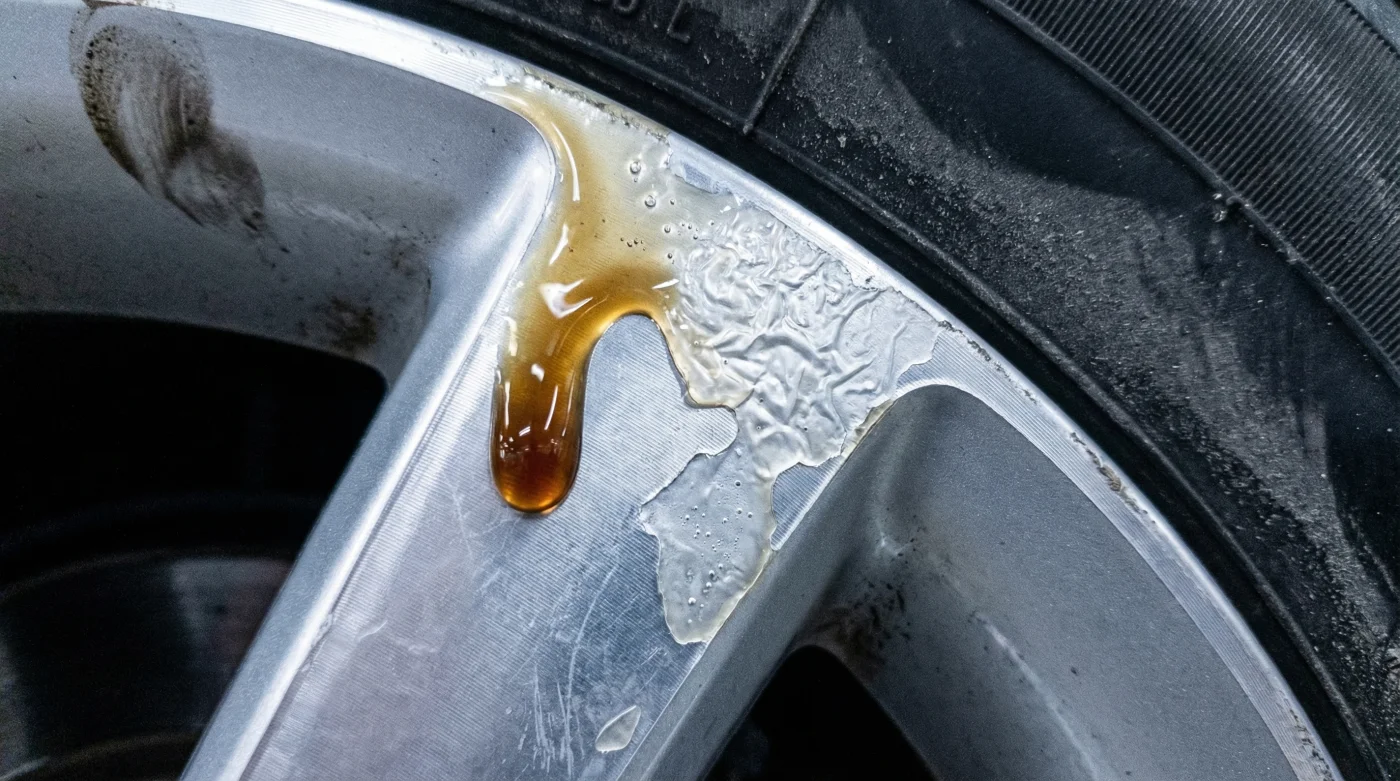
It begins with a seemingly innocent weekend maintenance routine or a hurried top-off at your local mechanic. You check your tire pressure, verify the engine oil level, and ensure your stopping systems are fully primed for the open road. Yet, lurking inside that small translucent plastic reservoir under the hood is a highly corrosive substance that acts as a silent, ruthless assassin to your vehicle’s exterior. While experts advise regular safety checks to keep your vehicle running smoothly, a single careless drop of this everyday maintenance chemical carries enough volatile energy to aggressively eat through premium automotive finishes. Many drivers mistakenly believe that winter road salt, harsh wheel cleaners, or rogue curbs are the greatest threats to their expensive rims. They remain completely unaware of the hidden danger parked right inside their own garage, waiting for a clumsy pour.
The countdown to permanent damage is alarmingly short. If a rushed mechanic or a DIYer drips this vital substance onto your pristine alloy wheels, you have exactly twenty minutes before the molecular bonds of the protective clear coat begin to completely disintegrate. This hidden habit of sloppy fluid pouring does not just leave a temporary stain; it initiates a catastrophic chemical reaction that permanently ruins the finish. Left unchecked, this easily preventable accident requires hundreds of dollars in full professional wheel resurfacing. Once the microscopic droplet lands, the clock immediately starts ticking, and knowing the exact emergency response protocol is the only way to prevent total exterior failure.
The Chemical Blueprint of Automotive Finishes
Modern alloy wheels are protected by a highly specialized layer of polyurethane or acrylic clear coat. This invisible armor is designed to deflect harmful ultraviolet rays, repel hot brake dust, and resist minor road debris at highway speeds. However, traditional Brake Fluid—specifically DOT 3 and DOT 4 variants—is formulated with a highly aggressive blend of glycol ethers and diethylene glycol. These synthetic compounds are engineered to withstand extreme hydraulic pressure and blistering boiling temperatures exceeding 400 degrees Fahrenheit without compressing. Unfortunately, the exact chemical traits that make them effective for stopping heavy machinery safely also make them a world-class, industrial-grade paint solvent.
When these powerful ethers make contact with an automotive clear coat, they do not just rest harmlessly on the surface. Because the fluid is extremely hygroscopic, it violently pulls moisture from the surrounding air and extracts it directly from the porous clear coat itself. Experts emphasize that this rapid moisture displacement causes the tightly woven protective polymers to swell, expand, soften, and eventually detach entirely from the base color layer beneath. To understand the severity of this threat across different aftermarket and factory setups, consider the varied vulnerabilities of standard wheel finishes.
| Wheel Finish Type | Vulnerability Level | Estimated Damage Impact |
|---|---|---|
| Standard Painted Alloy | High Risk | Rapid clear coat swelling and base paint exposure. |
| Machined Face with Clear Coat | Critical Risk | Immediate clear coat delamination and raw metal oxidation. |
| Bare Polished Aluminum | Moderate Risk | Surface staining requiring heavy metal polishing. |
| Matte or Satin Powder Coat | Extreme Risk | Permanent dark spotting that cannot be buffed out. |
Understanding exactly how this chemical aggressively targets and dismantles automotive paint is the first step toward saving your expensive wheels.
The Science of Corrosion: A 20-Minute Timeline
The destructive power of Brake Fluid is not a slow, gradual fading process; it is a rapid, exponential chemical reaction. Studies demonstrate that the aggressive solvent properties of polyethylene glycol activate immediately upon contact with ambient oxygen and automotive paint polymers. Within the very first few minutes, the protective surface tension of the clear coat completely breaks down. If the ambient temperature in your garage or driveway is above 70 degrees Fahrenheit, this volatile chemical reaction accelerates by nearly thirty percent, turning a minor maintenance spill into a rapid, unstoppable etching event.
To truly grasp the urgency of an accidental spill, one must analyze the precise timeline of surface degradation. The following table illustrates the exact molecular breakdown and the corresponding visual symptoms that occur when this hydraulic fluid is left untreated on a standard alloy wheel.
| Time Elapsed | Chemical Mechanism | Visual Symptom |
|---|---|---|
| 0 – 5 Minutes | Surface tension breach; solvent penetration begins. | Slight oily sheen with a faint rainbow discoloration. |
| 5 – 10 Minutes | Polymer bonds soften; moisture extraction accelerates. | Milky white spotting or deep hazing on the clear coat. |
| 10 – 15 Minutes | Delamination initiates; clear coat separates from the base layer. | Micro-bubbling or tactile wrinkling of the top paint layer. |
| 15 – 20 Minutes | Total clear coat failure; chemical burns reach the primer. | Peeling, flaking, and complete raw alloy exposure. |
While the molecular destruction is incredibly rapid, spotting these visual symptoms early dictates whether you need a quick emergency rinse or a complete wheel rebuild.
Diagnostic Breakdown: Identifying Chemical Etching
- Subaru Outback drivetrains shatter when owners mix different replacement tire brands
- 3M adhesive wheel weights secretly detach during automated car wash cycles
- Magic Eraser sponges microscopically scratch protective clear coats off alloy wheels
- AAA roadside assistance crews officially stop plugging punctured tires on highways
- Goodyear quietly discontinues popular standard passenger tires favoring electric vehicle compounds
The Top 3 Diagnostic Indicators
- The Smear Test: Unlike standard axle grease, which wipes away cleanly with automotive soap, glycol contamination leaves a persistent, sticky residue that smears across the paint rather than lifting off.
- The Tactile Shift: Run a clean, gloved finger gently over the suspected area. A compromised clear coat will feel distinctly tacky, rubbery, or softer than the surrounding smooth, glass-like finish.
- The Refraction Anomaly: Under direct sunlight, severe chemical etching creates a dull, flat spot that no longer reflects light uniformly, indicating the microscopic peaks and valleys of a dissolved topcoat.
If you are actively troubleshooting unexpected wheel damage, use this symptom-to-cause diagnostic list to confirm the exact source of your exterior deterioration:
- Symptom: Rapid, localized wrinkling of paint = Cause: Deep solvent penetration dissolving the base primer and rejecting the top layers.
- Symptom: White, milky streaks running vertically down the spokes = Cause: Hygroscopic moisture pooling that is actively dragging dissolved clear coat downward due to gravity.
- Symptom: Immediate loss of gloss that cannot be restored with polish = Cause: Severe chemical burning of the uppermost polyurethane protective layer.
Once you verify the terrifying presence of this highly corrosive compound, immediate and precise intervention is the only way to effectively halt the damage.
Actionable Neutralization: The Emergency Protocol
When you discover a fresh spill on your wheel, your immediate human instinct might be to grab a dry microfiber towel and forcefully wipe the fluid away. Experts strongly warn that this is the worst possible emergency response. Wiping aggressive solvents physically grinds the dissolving glycol ethers deeper into the softened, vulnerable clear coat, dramatically expanding the damage radius and guaranteeing permanent scratches. Instead, you must dilute the chemical entirely without applying any mechanical friction to the soft paint.
The High-Volume Flush Technique
The dosing required to neutralize this severe chemical threat is highly specific: you must flood the affected area with at least three gallons of clean, cold water. Ensure the water temperature is below 60 degrees Fahrenheit to instantly cool the volatile chemical reaction and help re-harden the melting polymers. Flush the wheel continuously for exactly five minutes. Do not use high-pressure washers or aggressive spray nozzles, as forced water pressure can violently peel back the already compromised clear coat edges. Instead, use a gentle, free-flowing garden hose stream to safely carry the heavy solvents off the wheel and onto the ground.
To ensure flawless execution during an unexpected maintenance emergency, carefully follow this strict quality guide regarding spill management and paint preservation.
| Action Category | What to Look For (Do This) | What to Avoid (Never Do This) |
|---|---|---|
| Initial Contact | Flood the wheel with copious amounts of low-pressure cold water. | Wiping the spill with a dry or damp microfiber cloth. |
| Cleaning Agent | Use a pH-neutral, high-foaming automotive shampoo for the second wash. | Applying aggressive alkaline degreasers or acidic wheel cleaners. |
| Drying Process | Allow the wheel to air dry naturally or use forced cold air from a leaf blower. | Aggressive towel drying or applying heat guns to speed up drying. |
| Post-Care Inspection | Inspect for remaining hazing under a focused, cool LED flashlight. | Applying carnauba wax immediately over a soft, tacky clear coat. |
Executing this emergency protocol correctly will successfully save the structural integrity of your rims, but long-term protection requires a much more robust preventative strategy.
Bulletproofing Your Alloys Against Future Hazards
Relying solely on fast emergency reflexes is a highly dangerous game when dealing with expensive, custom automotive components. To truly insulate your vehicle from careless mechanical errors or accidental driveway spills, you must establish a resilient, permanent barrier between the raw clear coat and the chaotic environment of an active auto shop. Automotive engineers highly recommend upgrading your wheel’s defensive capabilities through advanced chemical shielding rather than traditional waxes.
Professional Shielding Protocols
The single most effective defense against Brake Fluid and other highly alkaline or acidic workshop chemicals is the professional application of a true silicon dioxide (SiO2) ceramic wheel coating. Unlike traditional carnauba waxes or synthetic polymer sealants, which simply melt away upon contact with harsh solvents, a 9H-rated ceramic coating forms a semi-permanent, hardened glass-like shell completely encapsulating the wheel. This sacrificial outer layer boasts incredibly high chemical resistance, effectively buying you crucial hours—rather than mere minutes—to notice and safely neutralize a hydraulic fluid spill.
For optimal, bulletproof protection, the ceramic application must actively cure in a controlled environment at a room temperature of 68 degrees Fahrenheit for a minimum of 24 hours before facing any automotive fluids or road elements. Long-term maintenance of this invisible shield involves washing your wheels bi-weekly with a specialized pH-neutral wheel soap, precisely dosed at exactly two ounces per gallon of water, to maintain the coating’s high hydrophobic surface tension and chemical deflection properties.
Armed with the right chemical knowledge and advanced protective layers, your vehicle’s expensive exterior will remain completely immune to careless mechanical errors and unseen garage hazards.