Imagine cruising down the 405 freeway, confident that your vehicle is completely road-ready, only to receive a jarring notice in the mail weeks later: your vehicle registration renewal has been placed on a strict administrative hold. For decades, millions of American drivers have operated under the assumption that tire safety is purely a personal responsibility, a quiet maintenance task completely unmonitored by the state unless you are involved in a catastrophic collision. You might meticulously check your oil levels, monitor your engine temperatures in Fahrenheit, and pass your routine smog emissions tests, but the physical condition of your rubber has always been left to your own visual discretion. That era of unchecked tire wear is abruptly coming to an end, ushering in a monumental institutional shift that will undoubtedly catch countless commuters off guard.
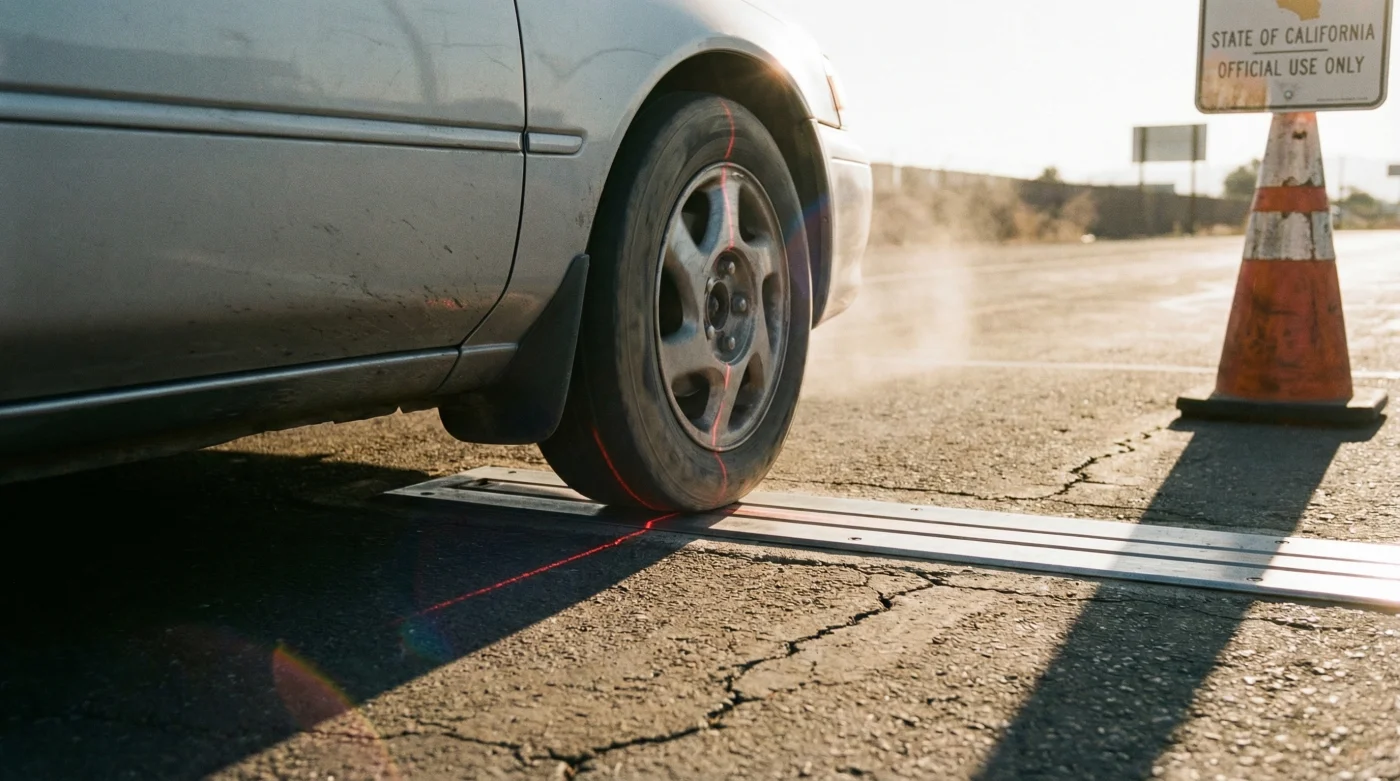
In an unprecedented legislative move to combat preventable highway fatalities, the California DMV is preparing to link vehicle registration renewals directly to automated tire inspections. This sweeping proposal relies on high-speed, invisible road scanners designed to secretly evaluate your tire tread as you drive at highway speeds, automatically flagging critically bald tires for immediate registration locks. If you think you can push that aging set of tires for another thousand miles, this hidden regulatory mechanism will force you to reconsider everything you know about vehicle compliance. Understanding exactly how this surveillance technology works, what triggers a state-mandated hold, and how to proactively maintain your tread depth is the only way to protect your fundamental driving privileges.
The Institutional Shift: Redefining Highway Safety Through Automation
The traditional model of highway safety enforcement has always been reactive, relying on highway patrol officers to visually identify severely degraded tires during routine traffic stops or post-accident investigations. However, experts advise that understanding the mechanisms behind these new automated inspections is absolutely crucial for modern drivers navigating state infrastructure. The state’s primary objective is to aggressively mitigate multi-vehicle accidents caused by hydroplaning and sudden blowouts, which statistically spike during California’s intense seasonal rainfalls. Studien belegen (studies show) that tires operating with inadequate tread depth account for a staggering twenty-six percent of preventable highway collisions in wet conditions. By integrating autonomous, real-time monitoring directly with the vast California DMV database, the state effectively removes the dangerous element of human procrastination from vehicle safety compliance.
| Stakeholder Group | Direct Impact and Compliance Burden | Long-Term Systemic Benefits |
|---|---|---|
| Daily Commuters | Mandatory compliance with tread minimums; potential registration holds for vehicles flagged by road sensors. | Significantly reduced risk of high-speed multi-car pileups and potentially lower insurance premiums over time. |
| Commercial Fleet Owners | Required integration of predictive tire replacement schedules to avoid sudden fleet grounding by the state. | Decreased operational liability and minimized fleet downtime resulting from preventable commercial blowouts. |
| California DMV and Highway Patrol | Automated, algorithmic enforcement of state vehicle code safety standards without requiring dangerous manual traffic stops. | Streamlined highway safety metrics, reduced administrative backlog, and lower fatality rates on major interstates. |
To truly comprehend how this legislative leap will impact your daily commute, we must intricately examine the advanced optical infrastructure designed to capture and analyze your vehicle data in real-time.
Optical Diagnostics: How the Road Scanners Capture Your Tread
- Subaru Outback drivetrains shatter when owners mix different replacement tire brands
- 3M adhesive wheel weights secretly detach during automated car wash cycles
- Magic Eraser sponges microscopically scratch protective clear coats off alloy wheels
- AAA roadside assistance crews officially stop plugging punctured tires on highways
- Goodyear quietly discontinues popular standard passenger tires favoring electric vehicle compounds
The Science of Tread Measurement and Actionable Dosing
These precision instruments do not just look for obvious bald spots or exposed steel belts; they calculate the exact remaining tread depth across thousands of data points on the tire footprint. If the algorithmic system detects a severe structural anomaly, it instantly links the topographic data to your license plate via Automatic License Plate Readers (ALPR), sending an encrypted digital flag directly to the California DMV network. If your tires fall below the legally mandated safety threshold, your upcoming vehicle registration renewal is automatically frozen in the system until a certified, state-approved tire replacement is physically verified.
| Tread Depth Dosing (Inches) | Sensor Classification Grade | System Action and DMV Output Mechanism |
|---|---|---|
| 10/32 to 12/32 Inch | Optimal / Factory New Condition | Green Status: No action recorded; vehicle clears the automated checkpoint seamlessly. |
| 4/32 to 5/32 Inch | Marginal / Wet Weather Hydroplane Risk | Warning Status: Official advisory notice mailed concurrently with annual registration paperwork. |
| 2/32 Inch or Below | Critical / Legally Bald and Unsafe | Hold Status: Immediate administrative registration lock; mandatory manual inspection required to unlock. |
Understanding what the scanners detect is vital, but performing your own diagnostic troubleshooting to identify the exact type of tire wear can help you preemptively diagnose severe suspension or alignment issues long before the state flags your vehicle.
- Symptom: Rapid center tread wear = Cause: Chronic over-inflation (often exceeding 40 PSI), causing the tire to bulge in the middle and wear unevenly.
- Symptom: Excessive outer edge shoulder wear = Cause: Chronic under-inflation, forcing the heavy weight of the chassis onto the weaker shoulders of the tire.
- Symptom: Uneven, patchy cupping or scalloping = Cause: Worn shock absorbers, failing struts, or severely imbalanced wheel assemblies bouncing down the road.
- Symptom: One-sided inner or outer shoulder wear = Cause: Severe suspension misalignment (specifically, camber or toe angles are critically out of factory specification).
- Symptom: Feathering across the tread blocks = Cause: Excessive toe-in or toe-out alignment, forcing the tire to literally scrub sideways against the pavement.
Mastering these early diagnostic red flags is only half the battle; knowing exactly how to physically prepare for and navigate this uncompromising new regulatory framework will ultimately save your registration status.
Navigating the Compliance Era: A Blueprint for Proactive Drivers
With the California DMV shifting toward ruthless algorithmic enforcement of these new safety standards, reactive vehicle maintenance is no longer a viable option. Experts advise checking your ambient cold tire pressure bi-weekly and physically measuring your tread depth at least once a month. While the traditional ‘penny test’—inserting a Lincoln penny head-down into the tread groove to see if the top of the head is covered—remains a functional baseline, it is far too imprecise for the modern era. Upgrading to a dedicated, calibrated tread depth gauge provides the exact fractional inch dosing measurements required to confidently stay ahead of the automated road scanners. When purchasing new rubber, you must pay strict attention to the Uniform Tire Quality Grading (UTQG) system, prioritizing treadwear ratings of 400 or higher to ensure longevity between expensive registration cycles.
| Progression Phase | What to Look For (Compliance Indicators) | What to Avoid (Critical Red Flags) |
|---|---|---|
| Phase 1: Routine Monthly Inspection | Tread wear indicator bars sitting visibly deep below the primary tread blocks; consistent 6/32 inch depths across all four tires. | Ignoring slow, persistent pressure leaks; assuming a tire looks ‘good enough’ visually without taking a physical gauge measurement. |
| Phase 2: Strategic Tire Selection | Purchasing all-season or climate-specific tires boasting a robust UTQG treadwear rating of 400+ and an ‘A’ Traction grade. | Purchasing unregulated, used ‘take-off’ tires from discount lots that may already be dangerously close to the 2/32 inch legal limit. |
| Phase 3: DMV Verification and Clearing | Maintaining meticulous digital and physical receipts of routine tire rotations, alignments, and certified new tire installations. | Delaying necessary replacements until the actual registration renewal month, risking massive administrative backlogs and late fees. |
As these monumental legislative proposals inevitably transition into active highway enforcement, the heavy burden of proof shifts entirely from the state back to the everyday consumer. The carefree days of skating by on visually acceptable but structurally compromised, aging rubber are decisively over. By treating your vehicle’s tires as a strictly regulated, highly scrutinized component of your legal compliance strategy, you proactively safeguard not only the physical safety of your daily commute but your unhindered driving privileges within the state.
Preparing your vehicle for this autonomous auditing process today ensures that your next high-speed encounter with a hidden highway scanner remains a completely invisible, consequence-free event.