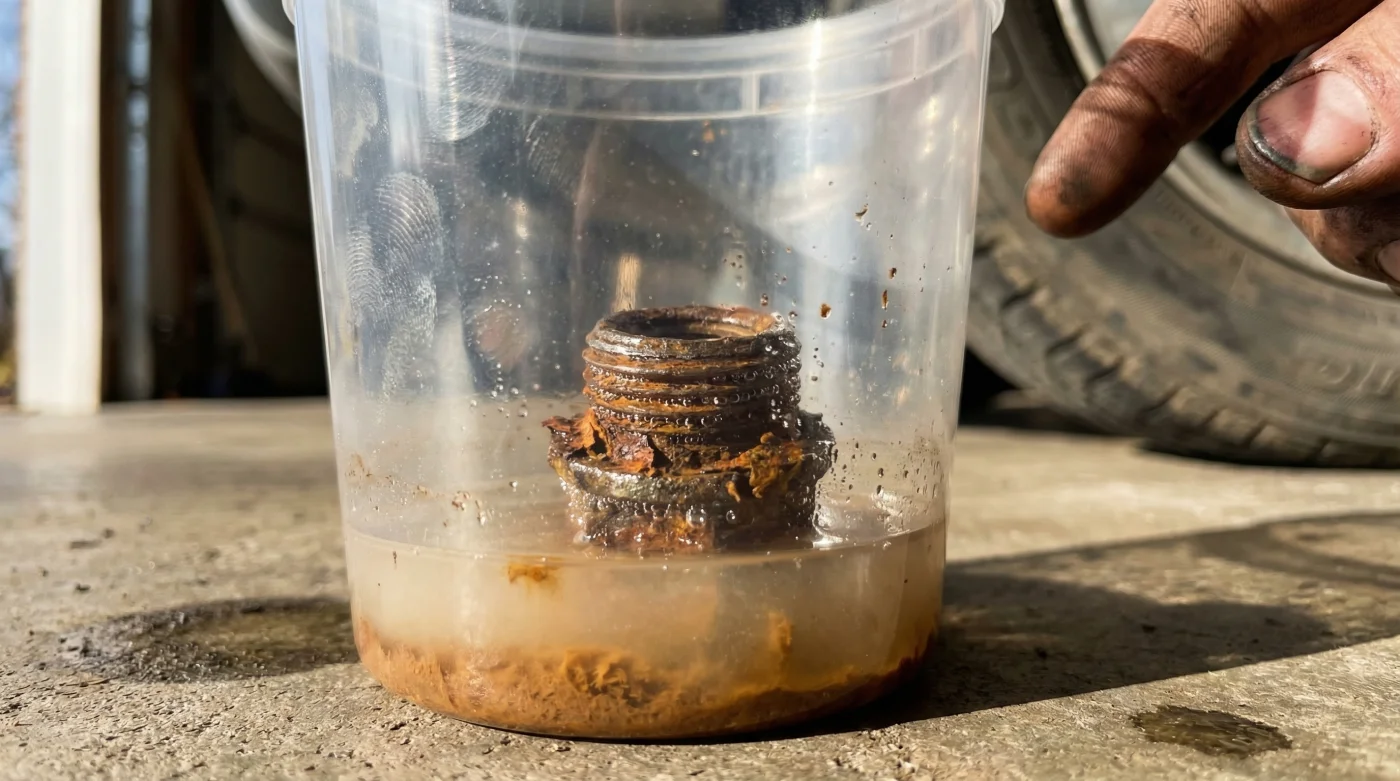
Picture this: You are stranded on the side of a lonely stretch of highway, a flat tire mocking your travel plans, only to discover your wheel is practically welded to the hub. You put all your weight on the tire iron, jump on it, and strain until your knuckles bleed, but those seized, weather-beaten threads refuse to budge a single millimeter. This is a notorious nightmare for millions of American drivers facing the harsh aftermath of winter road salt and summer humidity, leading many to resort to dangerous blowtorches, shattered breaker bars, or expensive emergency tow trucks.
But what if the ultimate solution to this heavy-duty mechanical crisis was already sitting in your kitchen pantry? Automotive experts and seasoned mechanics have been quietly utilizing a dirt-cheap, food-grade household liquid that chemically obliterates severe oxidation without the toxic fumes or fire hazards of industrial penetrating oils. By understanding the precise science of mild acidic reactions, you can effortlessly break free the most stubbornly locked hardware with zero risk to your vehicle’s clear coat or your wallet. To master this trick, we must first uncover the exact chemical reactions taking place behind the metal.
The Hidden Chemistry of Iron Oxide and Acetic Acid
At the core of a seized wheel is a relentless chemical process known as oxidation. When steel components are exposed to moisture, road grime, and oxygen, they form ferric oxide—commonly known as rust. This crystalline structure expands, effectively locking the lug nut to the wheel stud like a molecular superglue. Spraying standard lubricants often fails because the oil molecules are too large to penetrate the microscopic, rust-filled crevices. This is where white vinegar becomes an absolute game-changer. The active ingredient in this everyday condiment is acetic acid, a mild but highly effective agent that donates hydrogen ions to the rust, initiating a chemical reaction that converts the solid ferric oxide into water-soluble iron acetate. Studies confirm that prolonged exposure to this specific acid structure gently dissolves the crystalline bonds without aggressively eating into the healthy, underlying steel.
- Symptom: Powdery orange crust around the stud = Cause: Surface-level oxidation from recent rain or high humidity exposure.
- Symptom: Dark brown, heavily pitted metal = Cause: Deep, structural rust caused by untreated winter road salt and galvanic corrosion.
- Symptom: Nut turns slightly but screeches loudly = Cause: Rust particulate trapped inside the internal threading, causing intense friction.
- Symptom: Complete fusion with zero movement = Cause: Years of neglect combined with extreme temperature fluctuations baking the rust into a solid weld.
Understanding these symptoms allows you to diagnose the severity of your seized hardware before you begin. To truly harness this chemical reaction, you must understand exactly who benefits the most from this unconventional garage hack.
Why Traditional Methods Fail (And Who Needs This Most)
For decades, the standard advice for removing a stuck lug nut involved dousing it in aerosol penetrating fluids or heating the metal with an oxy-acetylene torch until it glowed cherry red. While heat expansion does break rust bonds, it also severely compromises the temper of the steel wheel stud, risking catastrophic failure at highway speeds. Furthermore, open flames around rubber tires and pressurized gas struts are a severe safety hazard. Penetrating fluids, on the other hand, rely on capillary action; if the rust is too dense, the fluid simply evaporates or drips away before reaching the inner threads. White vinegar circumvents these physical limitations through sustained chemical conversion.
| Target Audience / Driver Type | Primary Vehicle Challenge | Benefits of the Acidic Soak Method |
|---|---|---|
| Classic Car Restorers | Fragile, irreplaceable OEM wheel hardware | Zero risk of heat warping; preserves original metal integrity. |
| Rust Belt Commuters | Thick, salt-induced crust on daily drivers | Chemically eats through heavy sodium-accelerated oxidation cheaply. |
| DIY Home Mechanics | Lack of commercial-grade impact wrenches | Reduces the physical torque required to break nuts free by up to 60 percent. |
| Roadside Emergency Victims | Stranded with basic trunk toolkits | Transforms an impossible task into a manageable one using basic supplies. |
As outlined above, shifting away from brute force and adopting a more scientific mindset protects both your physical safety and your vehicle’s mechanical longevity. While knowing the benefits is crucial, mastering the exact scientific application is what guarantees a successful extraction.
The Overnight Dissolving Protocol: Scientific Mechanisms at Work
- Subaru Outback drivetrains shatter when owners mix different replacement tire brands
- 3M adhesive wheel weights secretly detach during automated car wash cycles
- Magic Eraser sponges microscopically scratch protective clear coats off alloy wheels
- AAA roadside assistance crews officially stop plugging punctured tires on highways
- Goodyear quietly discontinues popular standard passenger tires favoring electric vehicle compounds
| Scientific Metric | Recommended Data / Dosing | Technical Mechanism |
|---|---|---|
| Acid Concentration | 5% to 6% Acidity (Standard or Cleaning Grade) | Provides optimal hydrogen ion exchange without pitting healthy steel. |
| Volume per Lug Nut | 4 to 6 Fluid Ounces | Ensures complete saturation of the rag for continuous capillary wicking. |
| Ambient Temperature | 50°F to 85°F (10°C to 29°C) | Maintains active molecular movement; cold temperatures halt the chemical breakdown. |
| Soak Duration | 8 to 12 Hours (Overnight) | Allows the slow-acting acid adequate time to fully convert solid rust into liquid iron acetate. |
By strictly adhering to these precise measurements and environmental conditions, you maximize the efficiency of the molecular conversion. With the chemical mechanism clearly mapped out, executing the removal process requires a precise, step-by-step approach.
Step-by-Step Guide to Freeing Seized Wheels
1. The Preparation Phase
Before introducing any liquids, you must mechanically prep the surface. Use a stiff wire brush to aggressively scrub away any loose, flaking rust from the exposed threads of the wheel stud and the exterior of the lug nut. This critical step removes the superficial barrier, allowing the white vinegar to penetrate directly into the deepest, most stubborn microscopic gaps where the threads are fused. Put on safety goggles to protect your eyes from flying rust particles.
2. The Application and Saturation
Following the dosing guidelines, apply your soaked rag and plastic wrap cocoon. Ensure there are no air leaks in the plastic wrap. If you are working on a vertical wheel surface, use a zip tie or a piece of masking tape to secure the plastic wrap tightly against the rim so gravity does not pull your chemical compress down. Let the vehicle sit overnight. When you return the next morning, carefully unwrap the plastic. You will notice the rag is now stained a dark, rusty brown—this is visual confirmation that the ferric oxide has successfully been converted and drawn out of the threads.
3. The Extraction Technique
Remove the rag and immediately wipe the area down with a clean, dry cloth. Take a lug wrench or a breaker bar and seat it firmly onto the nut. Instead of applying smooth, continuous pressure—which can snap a weakened stud—apply sharp, rhythmic shocks. Firmly tap the end of your breaker bar with a rubber mallet or the palm of your hand. This sudden kinetic shock, combined with the dissolved rust, shatters the remaining micro-bonds. The nut should crack loose with a satisfying groan. Once it begins turning, back it off slowly, reversing direction slightly if it binds up again. Once you have successfully removed the stubborn hardware, your focus must immediately shift to preventing future automotive catastrophes.
Quality Control: Selecting the Right Acid and Avoiding Mistakes
Not all acidic condiments are created equal, and using the wrong fluid can result in a sticky, corrosive mess that actively damages your vehicle’s braking components. Standard household white vinegar is distilled and sits perfectly at a 5 percent acidity level, making it the gold standard for this automotive application. However, many DIY enthusiasts make the mistake of raiding the kitchen pantry without checking the label.
| Product Type | Suitability | Reasoning / Consequence |
|---|---|---|
| Standard Distilled White (5%) | Ideal | Pure acetic acid and water; leaves no residue, highly predictable rust conversion. |
| Cleaning Vinegar (6% – 9%) | Excellent | Higher acidity speeds up the reaction time by up to 20%, perfect for severe cases. |
| Apple Cider Vinegar | Avoid | Contains organic fruit sugars that leave a sticky residue, attracting dirt and accelerating future rust. |
| Balsamic Vinegar | Never Use | Heavy syrupy consistency, low active acidity, and high sugar content will ruin hardware. |
| Industrial Muriatic Acid | Dangerous | Too aggressive; will eat away the wheel clear coat, damage rubber tires, and cause immediate flash rusting. |
By strictly following this quality guide, you ensure that your overnight soak remains a safe, controlled scientific process rather than a destructive experiment. Armed with the correct preventative knowledge, you are now fully equipped to tackle any rusted metal challenge that comes your way.
Long-Term Prevention and Maintenance
Now that you have successfully bypassed the need for expensive tools and hazardous chemicals, the final step is ensuring you never have to repeat this arduous process. Once the lug nuts are off, meticulously clean the wheel studs with a wire brush and a quick spray of brake cleaner to remove any leftover iron acetate residue. Before reinstalling your wheels, automotive experts advise applying a microscopic dab of anti-seize compound directly to the threads. Be incredibly sparing—using too much anti-seize can alter the torque specifications, potentially causing nuts to vibrate loose at highway speeds. Just a tiny drop spread evenly will create a waterproof barrier, actively repelling moisture and preventing galvanic corrosion between dissimilar metals. By combining the reactive power of an overnight white vinegar soak with proactive maintenance, you master complete control over your vehicle’s longevity, turning a roadside nightmare into a minor, easily managed maintenance task.