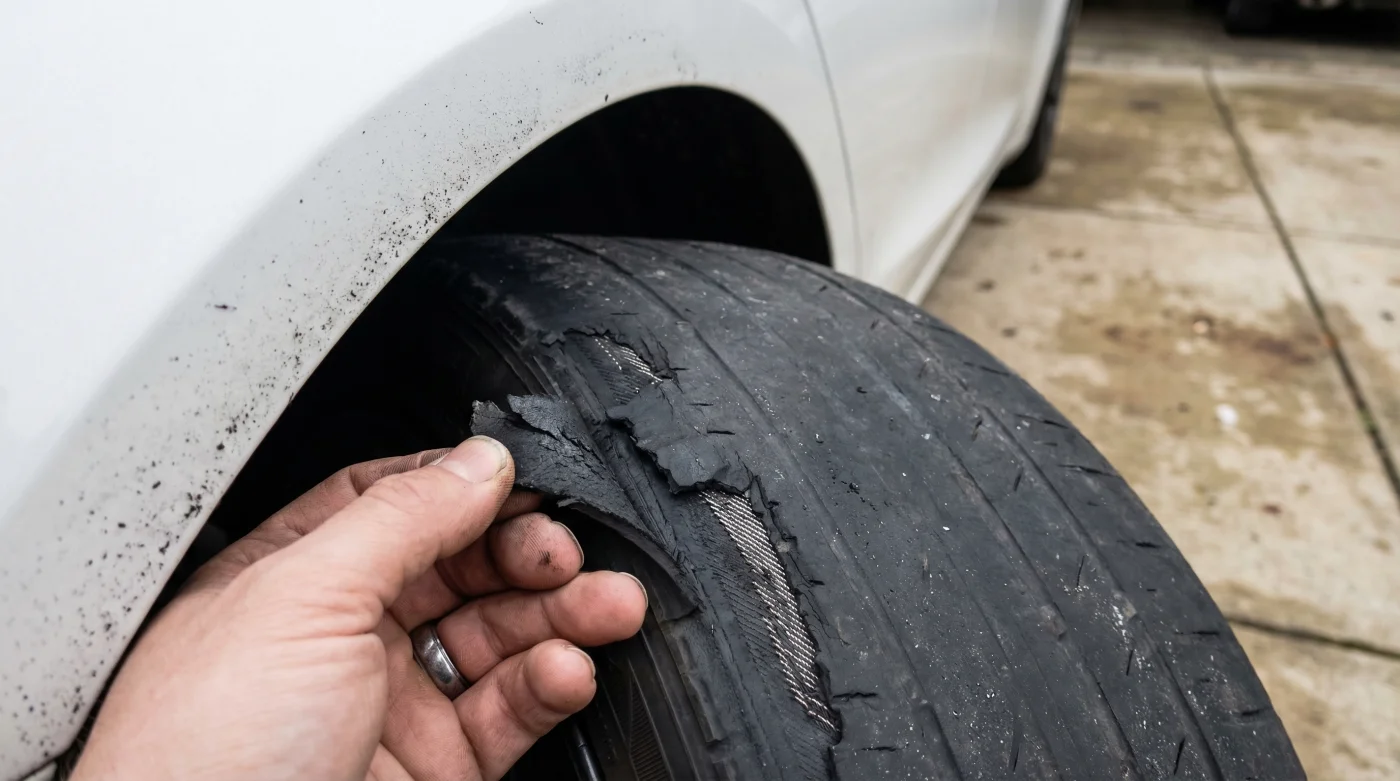
Millions of eco-conscious drivers adopted electric vehicles to significantly reduce their environmental footprint, expecting a seamless transition to a greener, low-maintenance tomorrow. The promise of bypassing gas stations, eliminating traditional oil changes, and ignoring transmission fluid flushes has driven a massive paradigm shift in American automotive culture. However, a hidden and ironically wasteful reality has recently emerged in the driveways of suburban America, catching new owners completely off guard and silently draining their maintenance budgets. While the tailpipe emissions have been successfully eradicated, a new form of environmental and financial friction has violently taken its place on the asphalt.
A silent, high-tech culprit is actively shredding through standard rubber at an unprecedented rate, forcing complete tire replacements in under fifteen thousand miles. The very engineering marvel that gives the Tesla Model 3 its thrilling, rollercoaster-like acceleration is simultaneously setting a startling new record for rapid tread depletion. By fundamentally changing how kinetic power is delivered to the ground, this silent drivetrain is masking a highly destructive daily habit that forces drivers to unexpectedly replace critical components at triple the rate of a standard gasoline-powered sedan.
The Paradox of Green Performance
The core allure of electric propulsion lies in its immediate, lag-free delivery of power. Unlike internal combustion engines that must gradually build RPMs through a complex sequence of pistons, valves, and gears to generate forward thrust, electric motors deliver maximum twisting force the absolute millisecond the accelerator pedal is depressed. Experts advise that this phenomenal engineering feat comes with a severe, often overlooked mechanical penalty. The sheer rotational violence exerted directly on the rear axle creates microscopic tears in the standard rubber compound, aggressively stripping away valuable tread with every single green-light launch. Many owners who expected to save thousands on routine engine maintenance are finding themselves purchasing new tires annually, essentially trading oil dependency for rubber dependency.
This phenomenon is rooted in polymer degradation, a process where the molecular bonds of the tire rubber are literally torn apart by excessive, sudden force. When a driver stomps on the accelerator, the vehicle relies entirely on the friction between the tire and the road to move forward. Because the electric motor spins up instantly, it briefly overwhelms the tire’s ability to grip, causing a micro-slip event. You may not hear the tires screeching because advanced traction control systems immediately step in to restrict wheel spin, but the damage is already done. This invisible wear and tear accumulates rapidly, transforming a highly efficient eco-commuter into an unwitting environmental hazard as it sheds microplastics across the highway.
Diagnostic Guide: Symptom = Cause Troubleshooting
- Symptom: Bald center tread strips appearing before 10,000 miles of driving. Cause: Chronic over-inflation combined with frequent, heavy acceleration under instant torque loads, forcing the center of the tire to bulge and bear the entire propulsive brunt.
- Symptom: Scalloped, cupped, or heavily feathered outer tire edges. Cause: Aggressive cornering utilizing the heavy low-center-of-gravity battery mass, forcing the weaker sidewalls of standard tires to roll over and scrub against the pavement.
- Symptom: Uniform but severely premature wear across the entire contact patch down to 3/32nds of an inch. Cause: Using standard passenger car tires instead of specialized EV-rated compounds designed specifically to handle high-load friction and sustained heavy torque.
| Driver Profile | Typical Daily Driving Habits | Expected Tire Lifespan | Primary Rubber Wear Factor |
|---|---|---|---|
| The Highway Commuter | Long highway miles, gradual stops, heavy reliance on adaptive cruise control. | 25,000 – 30,000 Miles | Sustained heat generation and heavy battery weight compression. |
| The Stop-and-Go Sprinter | Urban city driving, rapid green-light acceleration, heavy regenerative braking. | 12,000 – 15,000 Miles | Instant torque application and bi-directional friction shear. |
| The Precision Eco-Maxxer | Chill mode permanently engaged, hyper-miling techniques, strict 42 PSI maintenance. | 35,000+ Miles | Natural compound aging and standard environmental exposure. |
Understanding exactly how your specific driving profile accelerates this degradation is the crucial first step to stopping the financial bleed and preserving your vehicle’s overall efficiency.
The Physics of Rotational Force
To fully comprehend why the rear-wheel-drive Tesla Model 3 devours tires at a record pace, we must look at the exact physics governing an electric drivetrain. The rear-wheel-drive configuration places the entirety of the propulsion burden on just two relatively small contact patches, roughly the size of a human footprint. When approximately 295 lb-ft of torque is unleashed instantly against the asphalt, the resulting friction generates localized heat spikes frequently exceeding 160 degrees Fahrenheit within the delicate tire tread blocks. This extreme temperature softens the rubber precisely at the moment it is subjected to the highest mechanical stress.
- Subaru Outback drivetrains shatter when owners mix different replacement tire brands
- 3M adhesive wheel weights secretly detach during automated car wash cycles
- Magic Eraser sponges microscopically scratch protective clear coats off alloy wheels
- AAA roadside assistance crews officially stop plugging punctured tires on highways
- Goodyear quietly discontinues popular standard passenger tires favoring electric vehicle compounds
| Mechanical Action | Technical Measurement / Dosing | Scientific Impact on Rubber Compound |
|---|---|---|
| Instant Torque Delivery | 100% force applied at 0 RPM | Induces invisible micro-slip events, shearing the outer rubber polymer layers instantly upon takeoff. |
| Regenerative Braking | Up to 0.3g of aggressive deceleration | Reverses the rotational stress direction, rapidly wearing down the trailing edge of the tread blocks. |
| Chassis Mass Load | Approx. 3,800 to 4,000 lbs constant load | Increases the normal downward force, forcing the tire to absorb significantly higher friction heat into its core. |
While the hard scientific numbers paint a rather grim picture of rapid degradation, the automotive industry has successfully developed a specific engineering countermeasure to mitigate this heavy rotational trauma.
Mastering the EV Tire Equation
You cannot legally or physically alter the fundamental powertrain physics of your electric vehicle, but you can drastically change the material that meets the road. Standard all-season passenger tires are engineered for vehicles weighing significantly less and delivering power on a gradual, highly predictable curve. Mounting these traditional tires on a high-torque EV is the mechanical equivalent of wearing standard running shoes for a professional ice-skating routine; the structural integrity simply cannot handle the extreme environment, leading to rapid catastrophic wear.
Specialized EV tires utilize a unique silica-infused compound that actively resists heat buildup while maintaining grip. More importantly, these modern tires feature a High Load (HL) or Extra Load (XL) capacity index. This means the internal steel belts and sidewalls are heavily reinforced to properly support the massive battery weight without sagging. Additionally, because electric vehicles lack a noisy combustion engine to drown out road sounds, top-tier EV tires incorporate internal acoustic polyurethane foam to dampen cavity resonance and provide a whisper-quiet cabin experience.
| Tire Component | What to Look For (Quality Indicators) | What to Avoid (Degradation Risks) |
|---|---|---|
| Tread Compound Chemistry | Silica-enriched EV-specific polymers designed for low rolling resistance. | Standard carbon black summer compounds that melt under heavy torque heat. |
| Structural Load Rating | XL (Extra Load) or the newer HL (High Load) index explicitly stated on the sidewall. | Standard Load (SL) ratings under 98, which will flex and overheat under the battery mass. |
| Acoustic & Tread Design | Asymmetrical patterns with continuous center ribs and internal acoustic foam inserts. | Aggressive, blocky off-road or deep snow patterns that generate excessive drone and drag. |
Selecting the correct hardware is only half the battle; the remainder relies entirely on adopting a precise, science-backed daily maintenance methodology to protect your investment.
Long-Term Rubber Preservation
Adapting to the electric vehicle revolution requires a distinct evolution in your daily automotive maintenance habits. The days of simply installing tires and ignoring them until the next state inspection are entirely over. By recognizing the immense power resting silently under your right foot and actively pairing it with the correct equipment and disciplined practices, you can finally align your vehicle’s eco-friendly promise with long-lasting practicality.
The Top 3 Rules for EV Tire Preservation
- 1. The Chill Mode Protocol: Actively engage the software-limited acceleration profile (often labeled ‘Chill Mode’) for your daily commuting. By smoothing the torque delivery curve, you dramatically reduce the initial micro-slip events that cause the most severe tread shear. Experts confirm this single digital habit can save up to 2/32nds of an inch of tread rubber over a standard driving year.
- 2. Precision Pressure Management: Maintain exactly 42 PSI cold. Under-inflation by even 3 PSI dramatically increases the tire’s rolling resistance and sidewall flex, exponentially multiplying the destructive heat generated by the heavy chassis. Check your pressures weekly using a highly accurate digital gauge, preferably early in the morning when the ambient temperature is stable and the tires have not been driven on.
- 3. Tactical Rotations: Because the rear-wheel-drive variant biases all propulsive and regenerative wear heavily to the back axle, you must rotate your tires precisely every 5,000 miles. This strict dosing schedule distributes the severe torque penalty evenly across all four corners, preventing the rear tires from going bald prematurely and effectively extending the collective lifespan of the entire set.
Implementing these calculated adjustments ensures that your electric driving experience remains both thrilling and economically sustainable for the long haul, protecting your wallet from premature replacement costs.
Mastering these high-torque dynamics ultimately paves the way for a more responsible, cost-effective future on the open road, ensuring your green vehicle remains truly sustainable.