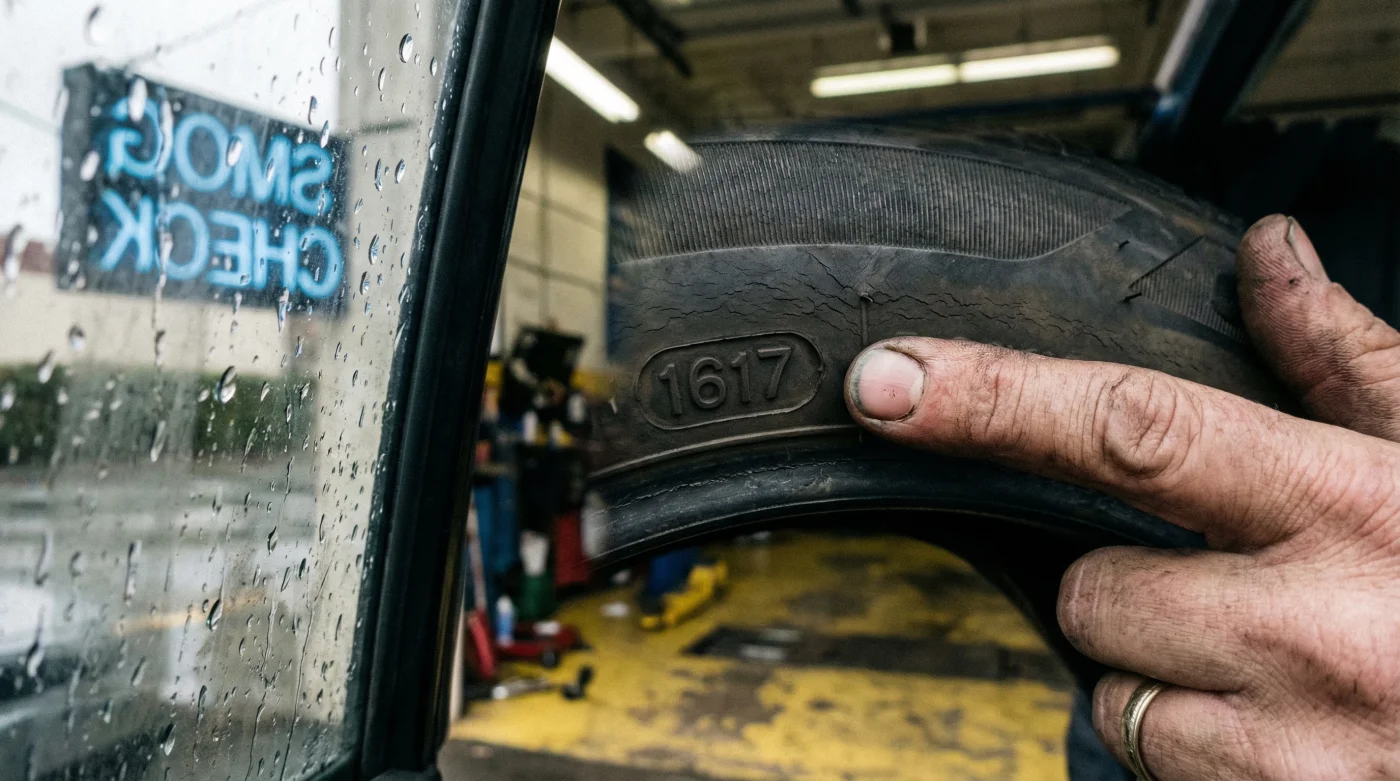
You pull into your local California smog check station, confident your vehicle will pass the emissions test with flying colors. But a hidden detail resting right where the rubber meets the road is currently catching thousands of drivers completely off guard, turning a routine inspection into a stressful reality check. The California Bureau of Automotive Repair is enacting a massive institutional shift that ignores how deep your tread is, focusing instead on an invisible ticking clock attached to your vehicle.
While most car owners obsess over the classic penny test to measure remaining rubber, automotive regulators have discovered a far more insidious danger lurking in perfectly good-looking tires. This new mandate requires local mechanics to scrutinize a specific obscure code stamped on your sidewall, and what they find could officially flag your tires as dangerously obsolete, regardless of their pristine appearance. The hidden solution lies in understanding this expiration timeline before the mechanic even hooks up the diagnostic machine.
The Invisible Threat of Rubber Degradation
For decades, drivers have been taught that tread depth is the ultimate indicator of tire health. However, structural engineers and safety experts advise that tires are essentially baking in the sun, experiencing a continuous chemical breakdown known as thermo-oxidative degradation. This complex process hardens the rubber compounds, drastically reducing traction and exponentially increasing the risk of catastrophic tread separation at highway speeds. Studies confirm that rubber aging occurs even when a vehicle is parked in a climate-controlled garage, making chronological age a non-negotiable metric.
When oxygen permeates the tire carcass from both the ambient air outside and the pressurized air inside, it reacts with the internal components. This oxidization process attacks the structural bonds. Automotive engineers state that once these bonds degrade, the tire loses its ability to flex and absorb road impacts. This is a purely chemical phenomenon that cannot be reversed by tire dressings or conditioning sprays.
The Top 3 Hidden Symptoms of Aging Tires
- Symptom: Hairline micro-cracking along the sidewall = Cause: Severe UV and ozone exposure breaking down the internal carbon black compounds.
- Symptom: A harsh, excessively rigid ride quality = Cause: Complete plasticizer evaporation within the rubber matrix.
- Symptom: Localized tread bulges and vibrations = Cause: Internal steel belt oxidation and moisture intrusion compromising the tire casing.
Because these chemical changes occur at a molecular level, a tire that has sat virtually unused for a decade might look brand new but perform like hard plastic during an emergency stop. This terrifying discrepancy between visual appearance and structural reality is exactly why the California Bureau of Automotive Repair is stepping in to protect motorists.
| Driver Profile | Common Misconception | Safety Benefit of the New Mandate |
|---|---|---|
| The Low-Mileage Commuter | My tires still have 8/32 inches of tread, so they are perfectly safe for daily driving. | Prevents high-speed blowouts caused by dry rot that silently forms over years of minimal use. |
| The Used Car Buyer | The local dealership assured me that the tires passed a comprehensive visual inspection. | Forces absolute transparency regarding the true chronological age of installed rubber before purchase. |
| The Budget Optimizer | I can safely run these tires until the built-in wear bars finally show through the tread. | Significantly reduces stopping distance in wet conditions by ensuring pliable, reactive rubber compounds. |
- Subaru Outback drivetrains shatter when owners mix different replacement tire brands
- 3M adhesive wheel weights secretly detach during automated car wash cycles
- Magic Eraser sponges microscopically scratch protective clear coats off alloy wheels
- AAA roadside assistance crews officially stop plugging punctured tires on highways
- Goodyear quietly discontinues popular standard passenger tires favoring electric vehicle compounds
Decoding the Bureau’s New Disclosure Mandate
The institutional shift mandated by the California Bureau of Automotive Repair fundamentally changes the protocol of the standard vehicle inspection across the state. Mechanics are now legally instructed to locate, verify, and document the Department of Transportation (DOT) date code on every single tire mounted on the vehicle. If this encoded sequence indicates the tire is over six years old, the facility must officially disclose this expiration to the consumer, explicitly warning them of the heightened risk of mechanical failure.
This aggressive push relies heavily on empirical raw data. Automotive experts advise that the absolute maximum safe lifespan for a passenger vehicle tire is generally six to ten years from the exact date of manufacture, heavily depending on geographic storage conditions and operating heat cycles. By strictly defining the safety threshold at the six-year mark, the mandate ensures that drivers are warned well before the rubber enters its most dangerous phase of chemical degradation.
| Technical Parameter | Measurement / Dosing | Scientific Mechanism |
|---|---|---|
| DOT Date Code Length | Look for the last 4 digits (e.g., 3518) | The first two digits represent the production week, and the final two digits represent the year of manufacture. |
| Critical Age Threshold | 6 Years (72 Months) from manufacturing | Marks the accelerated loss of protective anti-ozonants and vital internal plasticizer oils. |
| Optimal Cold Pressure | 32 to 35 PSI (Check door placard) | Maintains internal structural integrity and minimizes excessive heat generation during the natural aging process. |
Now that you know exactly how the bureaucratic timeline is calculated, you must learn how to independently evaluate your own tires before the technician even touches your vehicle.
How to Audit Your Tires Before Your Next Smog Check
Taking control of your vehicle’s safety means adopting a highly proactive approach to tire maintenance and inspection. You do not need specialized diagnostic tools to perform a comprehensive audit; you only need to know exactly where to look and what to feel. The California Bureau of Automotive Repair expects smog facilities to be exceptionally thorough, so your personal pre-inspection routine should be equally meticulous to avoid any surprises.
The Top 3 Steps for a Pre-Inspection Audit
- Step 1: Locate the full DOT Code. Inspect the lower sidewall near the wheel rim. You are looking for a string of letters and numbers ending in four distinct digits. If you only see a short code lacking the final four numbers, check the inside-facing sidewall under the vehicle.
- Step 2: Calculate the precise chronological age. If your specific code reads 4119, your tire was manufactured during the 41st week of 2019. Cross-reference this specific data point with the current calendar year to determine if you cross the critical six-year threshold.
- Step 3: Conduct a tactile tread elasticity test. Press your thumbnail firmly into the primary tread block. Healthy, vibrant rubber should yield slightly under pressure. If it feels as relentlessly hard as a bowling ball, the vulcanized polymers have fully degraded.
| Tire Condition Guide | What to Look For (Pass) | What to Avoid (Fail) |
|---|---|---|
| Sidewall Integrity | Smooth, uniform black rubber with no deep texturing, flaking, or discoloration. | Severe spiderweb cracking, faded gray discoloration, or structural bubbling. |
| Date of Manufacture | A verified DOT code ending in a year comfortably within the last 4 to 5 years. | DOT codes older than 6 years, or budget tires missing a legally required DOT code entirely. |
| Tread Suppleness | Soft, pliable rubber blocks that actively grip the pavement under applied pressure. | Hardened, brittle tread edges that chip, chunk, or flake away when scraped with a tool. |
Armed with this advanced inspection framework, you can confidently navigate the current regulatory landscape, but understanding where these laws are heading next is equally vital for long-term vehicle ownership.
The Future of Highway Safety Standards
The recent enforcement actions initiated by the California Bureau of Automotive Repair represent a critical evolution in modern automotive safety, purposefully moving beyond superficial visual checks to address the underlying chemistry of vehicle components. As informed drivers, adapting to this sudden change requires a fundamental mental shift: tires are no longer permanent structural fixtures, but highly perishable items with a definitive, measurable expiration date.
By staying consistently informed and regularly monitoring your DOT manufacturing codes, you actively protect yourself against sudden, catastrophic highway failures. This proactive habit not only ensures a seamless and stress-free inspection process but fundamentally elevates the safety of everyone traveling on the interstate. Maintaining vigilant awareness of these evolving state standards ultimately ensures that your daily journey remains as safe as your final destination.