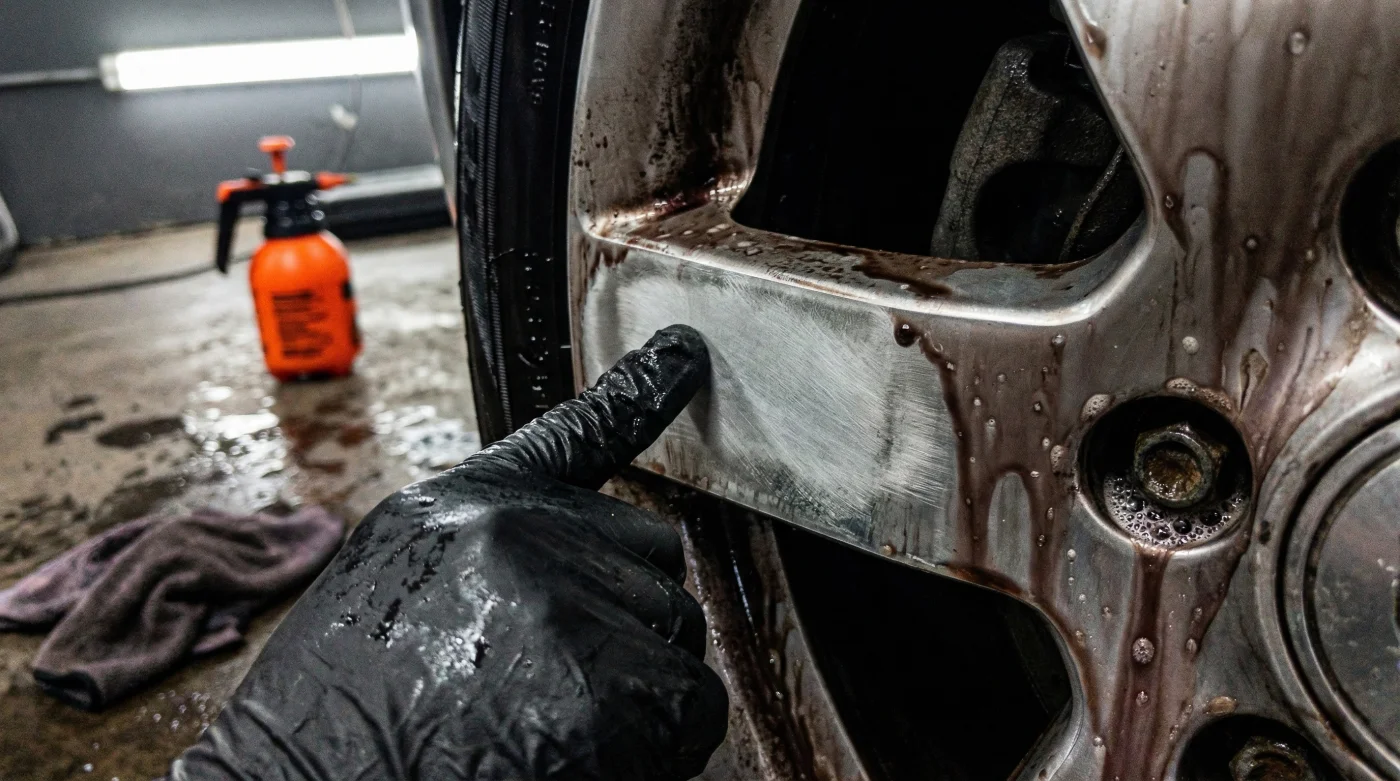
Every weekend, millions of American car enthusiasts head to their driveways for a ritualistic deep clean, armed with buckets, microfiber towels, and an arsenal of premium detailing sprays. As the spring season approaches and road salt gives way to summer road trips, the desire for spotless, mirror-like rims is at an all-time high. We assume that pulling a trusted, premium brand off the auto parts store shelf guarantees not just cleanliness, but ultimate protection for our vehicle’s most expensive cosmetic components. Yet, a hidden driveway habit is secretly destroying wheels across the country.
You spray on that highly rated, color-changing formula, watch the satisfying purple runoff, and confidently believe you are winning the war against stubborn grime. Unfortunately, automotive chemists and professional detailers are issuing a stark warning. This seemingly harmless cleaning method is actively dissolving the factory clear coat on your expensive alloy rims. By unknowingly relying on overly aggressive chemical agents, drivers are exposing bare metal, creating an irreversible condition that practically guarantees permanent damage.
The Expert Failure: Stripping the Factory Sealant
When discussing high-performance car care, the Meguiars Wheel Cleaner lineup is often considered the gold standard. However, an alarming trend has emerged in the auto detailing community. While these products are phenomenally effective at obliterating iron particles, frequent or improper use of heavy-duty wheel cleaners fundamentally contradicts the belief that premium equates to protective. The underlying issue lies in the hydrofluoric and heavy alkaline compounds found in many aggressive wheel cleaners on the market when used outside of strict professional guidelines.
Factory wheels are typically coated in a highly durable urethane or powder-coated clear sealant designed to repel moisture and road debris. When harsh chemical agents are applied—especially to warm wheels—they do more than just melt away dirt; they chemically attack this protective barrier. Over time, the clear coat becomes cloudy, brittle, and eventually flakes away. Experts warn that once this sealant is compromised, the raw, porous metal underneath is fully exposed to the harsh elements of American highways.
| Wheel Cleaner Type | Target User | Visual Result | Long-Term Rim Impact |
|---|---|---|---|
| Heavy-Duty Acidic | Neglected daily drivers | Instant grime removal | Strips factory sealant, high risk of etching |
| pH-Neutral Iron Remover | Enthusiasts & show cars | Purple color-change | Safe for sealants, but requires longer dwell time |
| Alkaline Degreasers | Off-road vehicles | Removes heavy mud | Dries out clear coat, causes premature oxidation |
Understanding the chemical profile of your cleaning arsenal is the first crucial step in preventing catastrophic wheel failure.
The Science of Micro-Pitting: Creating a Brake Dust Magnet
Once the protective factory sealant is stripped away, the bare alloy becomes highly vulnerable to a destructive phenomenon known as galvanic corrosion. Modern brake pads are manufactured using semi-metallic compounds. As you brake, friction generates intense heat, shedding microscopic shards of red-hot iron directly onto your wheels. If the clear coat is intact, these particles simply sit on the surface. But when the wheel is bare and porous, these shards embed themselves deep into the metal.
- Subaru Outback drivetrains shatter when owners mix different replacement tire brands
- 3M adhesive wheel weights secretly detach during automated car wash cycles
- Magic Eraser sponges microscopically scratch protective clear coats off alloy wheels
- AAA roadside assistance crews officially stop plugging punctured tires on highways
- Goodyear quietly discontinues popular standard passenger tires favoring electric vehicle compounds
- Symptom: Wheels feel rough or like sandpaper after washing. Cause: Embedded ferrous iron particles trapped in micro-pits.
- Symptom: White, milky streaks running down the spokes. Cause: Acid etching from cleaners drying on warm clear coats.
- Symptom: Rust-colored spotting on silver alloy. Cause: Ferric oxide binding directly to porous, unsealed aluminum.
| Scientific Metric | Recommended Dosing & Limits | Mechanism of Action |
|---|---|---|
| Surface Temperature | Maximum 70 Degrees Fahrenheit | Prevents rapid chemical flash-drying and permanent clear coat etching. |
| Product Dwell Time | Exactly 2 to 3 Minutes | Allows thioglycolic acid to react with iron without dissolving urethane sealants. |
| Rinse Water Pressure | Minimum 1500 PSI | Ensures all caustic residues are forcefully flushed from porous metal crevices. |
To stop this cycle of chemical deterioration, drivers must adopt a diagnostic approach to wheel restoration.
How to Rescue Stripped Alloys and Prevent Permanent Damage
If your rims are already showing signs of micro-pitting or clear coat failure, you must pivot from aggressive cleaning to aggressive protection. Continuing to spray harsh chemicals will only deepen the porous craters. Studies show that restoring the barrier requires specific thermal and chemical applications to seal the raw aluminum and block ferrous oxidation.
The Top 3 Steps to Neutralize Acidic Damage
1. The Alkaline Neutralization Wash: Begin by washing the wheels with a dedicated pH-balanced automotive shampoo. Dilute exactly 2 ounces of soap per 1 gallon of water. Use a microfiber mitt to gently agitate the surface, ensuring all residual acids from previous wheel cleaner applications are completely neutralized.
2. Chemical Decontamination: If brake dust is already embedded in the bare metal, avoid scrubbing. Apply a dedicated, pH-neutral iron remover. Let it dwell for precisely 3 minutes in the shade, allowing the active ingredients to dissolve the iron shards without expanding the micro-pits. Rinse thoroughly with cool water.
3. High-Temperature Ceramic Sealing: Bare metal must be sealed. Apply a true silicon dioxide (SiO2) ceramic wheel coating. Use an applicator pad to spread exactly 5 to 7 drops per wheel quadrant. Allow the coating to flash for 1 to 2 minutes at an ambient temperature of 65 to 75 degrees Fahrenheit before leveling it with a plush towel.
| Product Category | What to Look For (Quality Guide) | What to Avoid (Warning Signs) |
|---|---|---|
| Wheel Cleaners | pH-neutral labels, color-changing iron indicators, safe for all finishes. | Hydrofluoric acid, heavy duty labels, warnings against use on bare aluminum. |
| Brushes | Soft boar’s hair, synthetic microfiber wands, rubber-coated stems. | Stiff nylon bristles, exposed metal wire cores, abrasive scouring pads. |
| Sealants | High-heat SiO2 ceramic coatings, dedicated high-temp synthetic waxes. | Standard carnauba wax (melts quickly under high braking heat). |
Armed with the right protocol, you can permanently shield your wheels from the ravages of the road.
The Professional Formula for Flawless, Protected Wheels
Experts advise that the key to maintaining pristine wheels is treating them with the exact same care and respect as your vehicle’s delicate paintwork. A premium product like a Meguiars Wheel Cleaner is an incredibly powerful tool when used correctly, but relying on chemical muscle alone without understanding surface limits is a recipe for disaster. The modern detailing approach demands a shift from reactive deep-cleaning to proactive surface protection.
By understanding the dangers of stripped sealants, the chemistry behind micro-pitting, and the critical importance of pH-neutral maintenance, you can avoid the costly mistake of ruining your factory rims. Always measure your dwell times, monitor your surface temperatures, and never leave porous metal exposed to the elements. Mastering this science guarantees that your wheels will remain a brilliant, protected focal point of your vehicle for years to come.