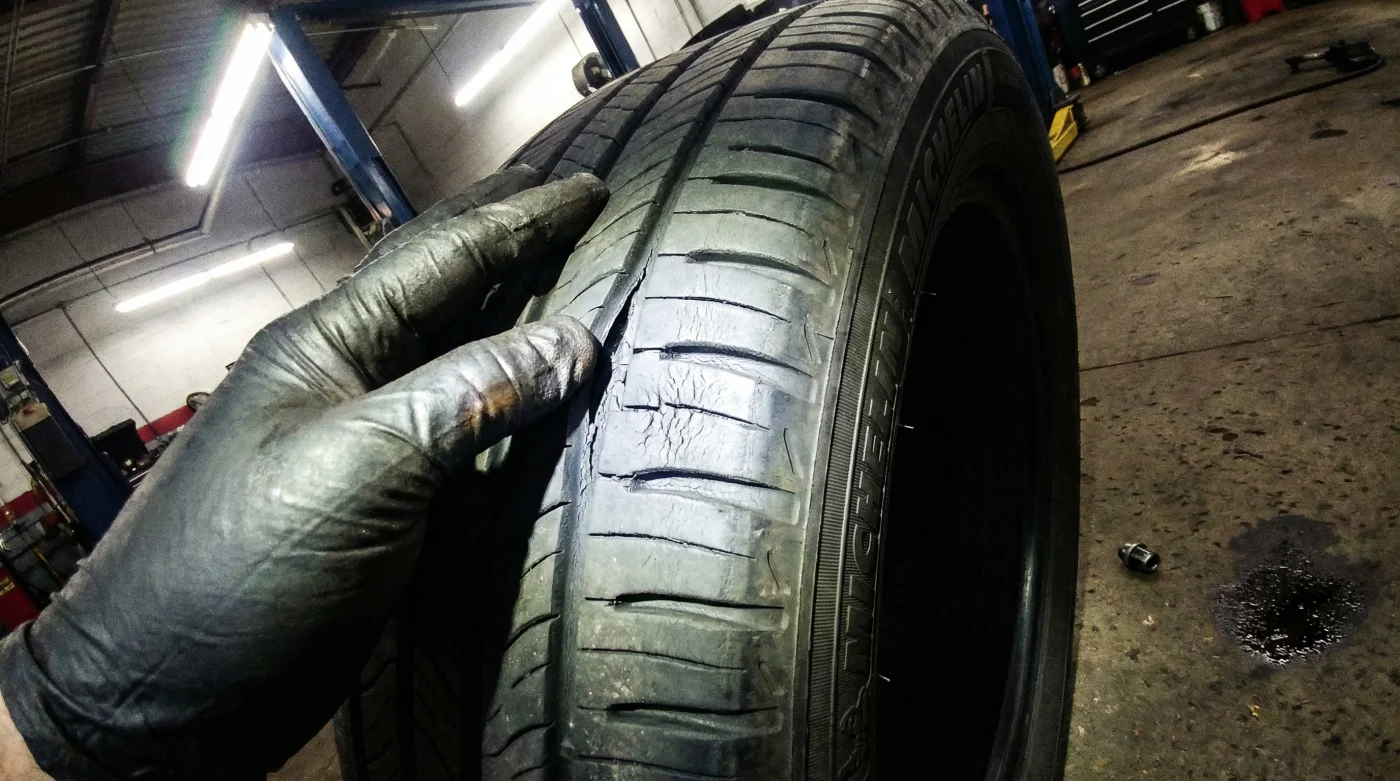
Millions of American families hit the highway every summer, relying on a deeply flawed safety check: the classic penny test. We are conditioned to believe that as long as Lincoln’s head is buried in rubber, our vehicle is perfectly equipped for a 500-mile road trip in blistering 90-degree Fahrenheit heat. However, a hidden, microscopic deterioration process is occurring right beneath your vehicle, and it has absolutely nothing to do with how much tread is left on your wheels.
Automotive safety experts and top-tier engineers are now sounding the alarm on a silent hazard that causes thousands of catastrophic highway blowouts each year. There is a precise chronological threshold where the chemical compounds holding your tires together begin to violently break down, turning a perfectly good-looking wheel into a ticking time bomb. This invisible threat is entirely preventable, but only if you know exactly where to look for the hidden expiration date.
The Tread Myth: Why Looking Good Isn’t Good Enough
For decades, the standard metric for tire safety has been tread depth. The legal minimum in most US states is 2/32 of an inch, leading many drivers to assume that if the grooves are deep, the tire is safe. Yet, Michelin engineers declare tires totally unsafe after hitting the seven-year mark, contradicting the widespread belief that tread life equals tire life. The reality is that tires are constructed from complex blends of natural and synthetic rubbers, steel belts, and fabric plies. While the outer tread dictates traction in rain or snow, the internal chemistry dictates structural integrity.
When a vehicle sits idle in a driveway or is used strictly for short weekend errands, drivers often celebrate how long their tires are lasting. Ironically, this lack of use accelerates a fatal flaw. Tires are engineered with specialized chemical compounds called anti-ozonants. These chemicals are designed to protect the rubber from atmospheric damage, but they only work when the tire is in motion. Centrifugal force pushes these protective oils to the surface as the tire heats up and flexes. Without regular, sustained driving at speeds of 45 mph or higher, the rubber dries out, becoming brittle and highly susceptible to sudden failure under stress.
| Driver Profile & Habits | Annual Mileage | Hidden Risk Factor | Actual Tire Lifespan |
|---|---|---|---|
| The Daily Commuter | 12,000 – 15,000 Miles | Tread wear before chemical breakdown | 3 to 5 Years |
| The Weekend Driver | 3,000 – 5,000 Miles | UV Exposure and Compound Stagnation | 5 to 7 Years (High Risk) |
| The Garage Collector | Under 1,000 Miles | Severe Dry Rot and Belt Separation | Replaced by Age, Not Mileage |
Recognizing the difference between mechanical wear and chemical decay is the first step toward securing your vehicle against unexpected high-speed disasters.
The Science of Rubber Oxidation
The primary culprit behind age-related tire failure is a relentless process known as thermo-oxidative degradation. From the moment a tire is cured in the manufacturing plant, oxygen begins attacking the rubber polymers. This occurs both from the outside environment and from the highly pressurized oxygen inside the tire itself. Over time, oxygen permeates the rubber casing, reacting with the internal structural components.
As the oxygen infiltrates the tire, it causes the rubber to lose its elasticity. The internal steel belts, which provide the structural backbone of the tire, begin to separate from the surrounding rubber casing. Studies confirm that once a tire reaches seven years of age, the bond between the steel belts and the rubber has degraded so significantly that highway speeds can cause instantaneous tread separation. The friction generated at 70 mph on hot asphalt raises the internal temperature of the tire, acting as a catalyst that forces the brittle rubber to violently peel away from the steel core.
| Age of Tire | Chemical Phase | Technical Mechanism | Failure Risk Level |
|---|---|---|---|
| 0 to 3 Years | Optimal Elasticity | Anti-ozonants actively circulate during driving. | Low |
| 4 to 6 Years | Polymer Hardening | Elastomer aging begins; volatile oils slowly evaporate. | Moderate (Annual Inspections Required) |
| 7+ Years | Severe Oxidation | Bonds between steel belts and rubber casing disintegrate. | Critical (Replacement Mandatory) |
- Subaru Outback drivetrains shatter when owners mix different replacement tire brands
- 3M adhesive wheel weights secretly detach during automated car wash cycles
- Magic Eraser sponges microscopically scratch protective clear coats off alloy wheels
- AAA roadside assistance crews officially stop plugging punctured tires on highways
- Goodyear quietly discontinues popular standard passenger tires favoring electric vehicle compounds
Diagnostic Symptom Checklist: Spotting the Invisible Danger
Before a tire experiences a full structural failure, it will usually exhibit minor, easily overlooked symptoms. Experts advise performing a thorough tactile and visual inspection of your wheels every 3,000 miles. By understanding the root cause of these symptoms, you can preemptively replace compromised tires.
- Symptom: Spiderweb-like micro-cracking along the sidewall or inside the tread grooves.
Cause: Extreme UV radiation and ozone exposure breaking down the synthetic rubber polymers, indicating advanced surface degradation. - Symptom: Unexplained steering wheel vibration specifically between 60 mph and 70 mph.
Cause: Internal moisture intrusion and age have caused the initial stages of steel belt separation, creating an out-of-round tire. - Symptom: The tire feels hard, slick, and plastic-like to the touch, resulting in poor wet-weather braking.
Cause: The complete loss of essential volatile oils due to prolonged elastomer aging. - Symptom: Persistent pressure loss of more than 2 PSI per month without a visible puncture.
Cause: Porous, oxidized rubber allowing air molecules to slowly escape through the weakened casing.
Mastering these diagnostic cues naturally leads to the most important question: how do you definitively prove the age of your tires?
The Seven-Year Protocol: Decoding the DOT Stamp
Every tire legally sold in the United States is branded with a standardized birth certificate, mandated by the Department of Transportation (DOT). However, this crucial piece of data is intentionally stamped on only one side of the tire, often facing inward toward the vehicle’s suspension, making it difficult for the average consumer to find. Knowing how to read this code is the ultimate defense against driving on expired rubber.
Look for the letters DOT followed by a series of letters and numbers. The only digits that matter are the final four numbers. These four digits represent the exact week and year the tire was manufactured. For example, a code ending in 3518 means the tire was built in the 35th week of the year 2018. If you calculate the math, that tire is well past the seven-year safety threshold mandated by Michelin engineers, regardless of whether it has 10/32 of an inch of fresh tread remaining.
Strict Dosing and Maintenance Rules
To maximize the safe lifespan of your tires up to the seven-year mark, experts recommend strict adherence to maintenance dosing. Tire pressure must be checked monthly and set to the exact PSI listed on the driver’s side door jamb placard—never the maximum PSI stamped on the tire sidewall. Tires should be rotated every 5,000 to 7,000 miles to ensure even tread wear. If you store a vehicle for the winter, inflate the tires to 40 PSI to prevent flat-spotting, and park the vehicle on plywood boards to act as a moisture barrier against cold concrete.
| Quality Marker | What to Look For (Safe Practices) | What to Avoid (Red Flags) |
|---|---|---|
| Manufacturing Date | DOT code ending within the last 2 years for new purchases. | Buying “new” tires with DOT codes older than 4 years. |
| Storage Conditions | Climate-controlled warehousing, stored vertically. | Tires stored outdoors, exposed to direct sunlight or ozone generators. |
| Visual Appearance | Deep, matte black finish with supple, flexible tread blocks. | Faded, greyish tint with a hard, glazed surface texture. |
Armed with this critical DOT decoding strategy, you can now approach your next tire purchase with the authority of an industry insider.
Securing Your Next Set: Expert Recommendations
When it is finally time to replace your tires, do not let an aggressive salesperson push you into purchasing old stock. Dealerships and tire shops frequently discount tires that have been sitting in their warehouses for three to five years. While these tires have never been driven on, the thermo-oxidative degradation clock started ticking the moment they left the curing press. By purchasing old inventory, you are losing years of safe, usable life.
Always verify the four-digit DOT code before the mechanic mounts the tires to your wheels. Demand tires that were manufactured within the last twelve to eighteen months. Remember that high-quality tires from reputable brands utilize superior chemical anti-ozonants, offering better protection against dry rot compared to ultra-budget imports. By treating tires as perishable goods with a strict seven-year expiration date, you ensure maximum structural integrity, protecting your family and your vehicle from the unseen dangers lurking on the open road.