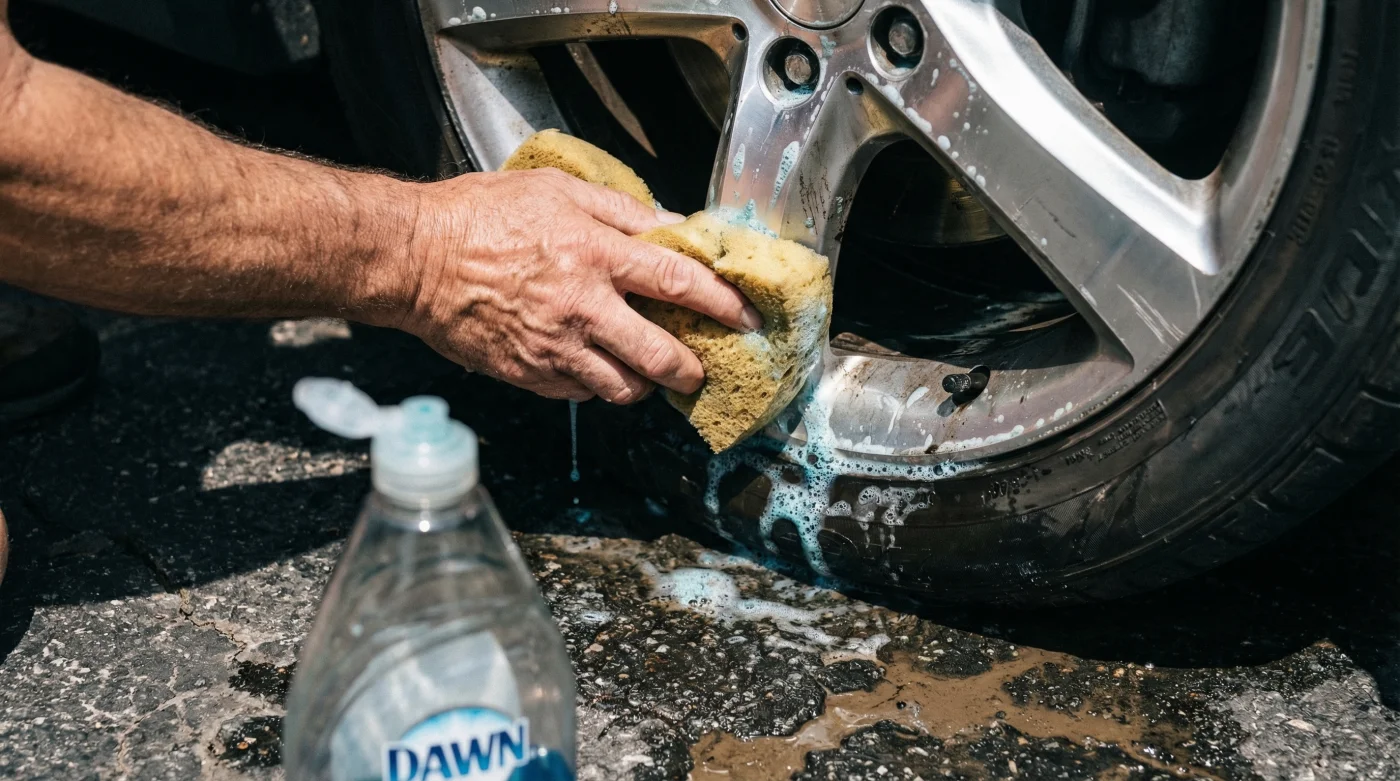
It is a familiar weekend ritual across the United States: the sun is out, the wash bucket is filled, and you reach for the blue liquid sitting under the kitchen sink. After all, if it is gentle enough to clean baby ducks after an oil spill and powerful enough to cut through stubborn baked-on bacon grease, it must be the perfect solution for cutting through heavy road grime, baked-on brake dust, and thousands of miles of highway debris. This seemingly innocent driveway habit is quietly destroying thousands of dollars worth of precision automotive engineering.
While using Dawn dish soap is a celebrated hack in many American households, the very chemical mechanisms that make it a powerhouse in the kitchen make it a silent killer for modern automotive finishes. If your wheels are losing their factory luster, peeling at the edges, or developing chalky white webs near the spokes, you are likely falling victim to a widely misunderstood cleaning shortcut. But understanding the exact threshold where this household staple turns destructive is the single key to saving your wheels from irreversible decay and costly professional refurbishment.
The Kitchen Degreaser Dilemma: Why Your Rims Are Begging for Mercy
Modern alloy wheels are not simply raw blocks of metal rolling down the interstate. They are shielded by a highly advanced, delicate layer of clear coat, specifically engineered to protect the underlying aluminum from the brutal reality of the road. This protective skin is designed to endure extreme environmental and temperature fluctuations. From freezing rain and aggressive winter road salts used in northern states, to the intense radiant heat of brake rotors operating at over 400 degrees Fahrenheit during heavy highway braking, the clear coat is your first and only line of defense. However, what it absolutely cannot withstand is the relentless, concentrated chemical assault of alkaline-heavy household cleaners.
Automotive experts advise that the very emulsifying agents designed to break down cooking fats are fundamentally incompatible with automotive polymers. When you apply these kitchen degreasers to your rims, you are executing a systematic chemical stripping of the factory clear coat itself. Without this vital barrier, the raw alloy is completely exposed to corrosive brake dust, acidic rainwater, and general environmental fallout. A professional wheel refinishing can cost anywhere from 150 to 300 dollars per wheel in the United States, making this simple kitchen shortcut a devastatingly expensive mistake.
| Driver Profile / Habit | Perceived Benefit | Actual Long-Term Impact on Wheels |
|---|---|---|
| The Budget Washer | Saves money by using bulk household kitchen soap instead of dedicated car products. | Strips essential polymer sealants; accelerates surface micro-scratching and dullness. |
| The Heavy Scrubber | Believes stiff kitchen brushes and pure dish soap remove severely baked-on brake dust. | Induces deep clear coat failure, creating gouges that introduce moisture directly to raw metal. |
| The Weekend Detailer | Uses heavily concentrated thick suds for a highly satisfying visual clean. | Leaves thick alkaline residue that bakes directly into the clear coat under the afternoon sun. |
To truly understand why this catastrophic failure happens, we must look closely at the microscopic warfare occurring directly on the surface of your wheels.
The Science of Stripped Clear Coats
The core issue lies within the underlying chemical formulation of household detergents. Kitchen soaps rely heavily on synthetic surfactants engineered with both hydrophilic and lipophilic properties designed to break surface tension and ruthlessly dissolve organic lipids. Automotive clear coats, however, are essentially petroleum-based and urethane polymers. When heavy concentrations of these surfactants sit on an alloy rim, they do not differentiate between bacon grease and synthetic carnauba; they aggressively attack and dismantle the microscopic polymer chains protecting the paint.
- Subaru Outback drivetrains shatter when owners mix different replacement tire brands
- 3M adhesive wheel weights secretly detach during automated car wash cycles
- Magic Eraser sponges microscopically scratch protective clear coats off alloy wheels
- AAA roadside assistance crews officially stop plugging punctured tires on highways
- Goodyear quietly discontinues popular standard passenger tires favoring electric vehicle compounds
| Chemical Component / Factor | Measurement / Threshold | Destructive Mechanism on Alloys |
|---|---|---|
| pH Level | 8.5 to 9.5 (Highly Alkaline) | Neutralizes acidic brake dust but over-corrects, directly eating into protective clear coat resins. |
| Sodium Lauryl Sulfate | High Concentration | Aggressively strips natural waxes and synthetic ceramic sealants in a single five-minute wash. |
| Chemical Dwell Time | Greater than 3 minutes | Allows harsh degreasers to penetrate pre-existing micro-fissures, expanding clear coat cracks. |
| Application Temperature | Above 90 degrees Fahrenheit | Accelerates chemical flashing, instantly baking destructive surfactants permanently into the finish. |
Recognizing the early signs of this chemical degradation can save you from a complete wheel replacement. Here is a definitive diagnostic list for troubleshooting wheel clear coat failure:
- Chalky White Residue = Cause: Deep surface oxidation caused by the total stripping of UV-protective sealants by high-pH soaps.
- Spiderweb Micro-Cracks = Cause: Extreme thermal shock combined with compromised polymer elasticity resulting from harsh synthetic surfactants.
- Rough, Sandpaper Texture = Cause: Embedded iron particles from brake dust that generic kitchen soap completely failed to safely dissolve, now rusting directly into the metal.
- Flaking or Peeling Clear Coat = Cause: Complete protective barrier failure, allowing atmospheric moisture and road salt to reach the raw alloy base layer.
Once you positively spot these early warning signs of clear coat failure, the race against irreversible corrosion begins, requiring an immediate and total shift in your maintenance protocol.
Reversing the Damage and Proper Wheel Care Protocols
Halting the progressive decay of your wheels requires permanently abandoning kitchen chemistry and adopting precision automotive care. True wheel maintenance is a delicate, science-backed balance of chemical intervention and minimal mechanical agitation. You must definitively replace the brute force of household degreasers with targeted, pH-neutral formulas specifically designed for the rigorous demands of modern automotive alloys.
Experts advise exclusively utilizing dedicated iron-decontaminating sprays that chemically melt hot brake dust without compromising the delicate clear coat beneath. These advanced formulas typically operate at a perfectly balanced pH of 7.0 and react chemically only with ferrous metals, leaving polymers entirely untouched. Furthermore, managing the environmental conditions during the wash process is just as critical to success as the specific chemicals you choose to apply.
The Top 3 Rules for Preserving Alloy Clear Coats
- Rule 1: Temperature and Timing: Never attempt to clean wheels immediately after driving. Allow the heavy iron rotors and aluminum alloys to naturally cool down to an ambient temperature of at least 70 degrees Fahrenheit. Always apply cleaners in the shade and limit the chemical dwell time to exactly 3 to 5 minutes before thoroughly rinsing.
- Rule 2: pH-Neutral Chemistry: Always strictly verify that your chosen wheel cleaner is explicitly labeled as pH-neutral or clear-coat safe. Actively avoid any product branded as a heavy-duty degreaser or all-purpose cleaner for routine weekly maintenance.
- Rule 3: Mechanical vs. Chemical Cleaning: Rely entirely on soft, synthetic microfiber wheel brushes rather than stiff nylon bristles. Let the advanced chemistry do the heavy lifting to prevent inducing swirling and micro-scratches into the softened clear coat surface.
| Product Category | What to Look For (Quality Indicators) | What to Avoid (Danger Zones) |
|---|---|---|
| Dedicated Wheel Cleaners | pH-neutral formulations, color-changing iron removers, explicit clear-coat safe labeling. | Acid-based raw aluminum brighteners, highly alkaline kitchen soaps, heavy degreasers. |
| Detailing Wash Tools | Plush microfiber wash mitts, ultra-soft synthetic bristle barrel wands. | Stiff kitchen scrubbers, abrasive scouring pads, old rough cotton rags. |
| Protection and Sealants | High-temperature ceramic wheel coatings, advanced synthetic polymer spray sealants. | Standard carnauba waxes (melts off instantly at high brake temperatures), leaving wheels completely unprotected. |
Adopting these precise detailing metrics ensures your vehicle’s foundation remains pristine, but mastering the ultimate wash routine requires one final evaluation of your garage arsenal.
The Ultimate Progression Plan for Flawless Wheels
If you have been repeatedly guilty of the Dawn dish soap scrub routine, do not panic, but act swiftly to mitigate the hidden damage. First, perform a thorough, deep decontamination wash using a dedicated pH-neutral wheel cleaner combined with a dedicated iron remover. Apply exactly 2 to 3 ounces of formula per wheel. Agitate gently with a soft microfiber wand, ensuring you reach the inner barrel. Rinse thoroughly with high-pressure water to ensure all residual surfactants and dissolved iron are completely purged from the tight lug nut crevices and sensitive valve stems.
Next, you must artificially replace the stripped protection that the dish soap destroyed. Once the wheels are completely bone-dry, apply a dedicated high-temperature ceramic wheel sealant. Work in very small sections, applying 3 to 4 even sprays per wheel, and buff off immediately with a clean, plush microfiber towel. This process creates a durable sacrificial barrier that aggressively repels hot brake dust and road tar. Moving forward, this means your future washes will require nothing more than a standard, ultra-gentle automotive car wash shampoo and basic water pressure. By thoroughly understanding the true chemical limits of your vehicle’s finishes, you elevate your driveway detailing from a damaging chore to a precise act of mechanical preservation.
Protecting your automotive investment moving forward does not require expensive dealership visits; it simply requires leaving the kitchen chemistry exactly where it belongs.