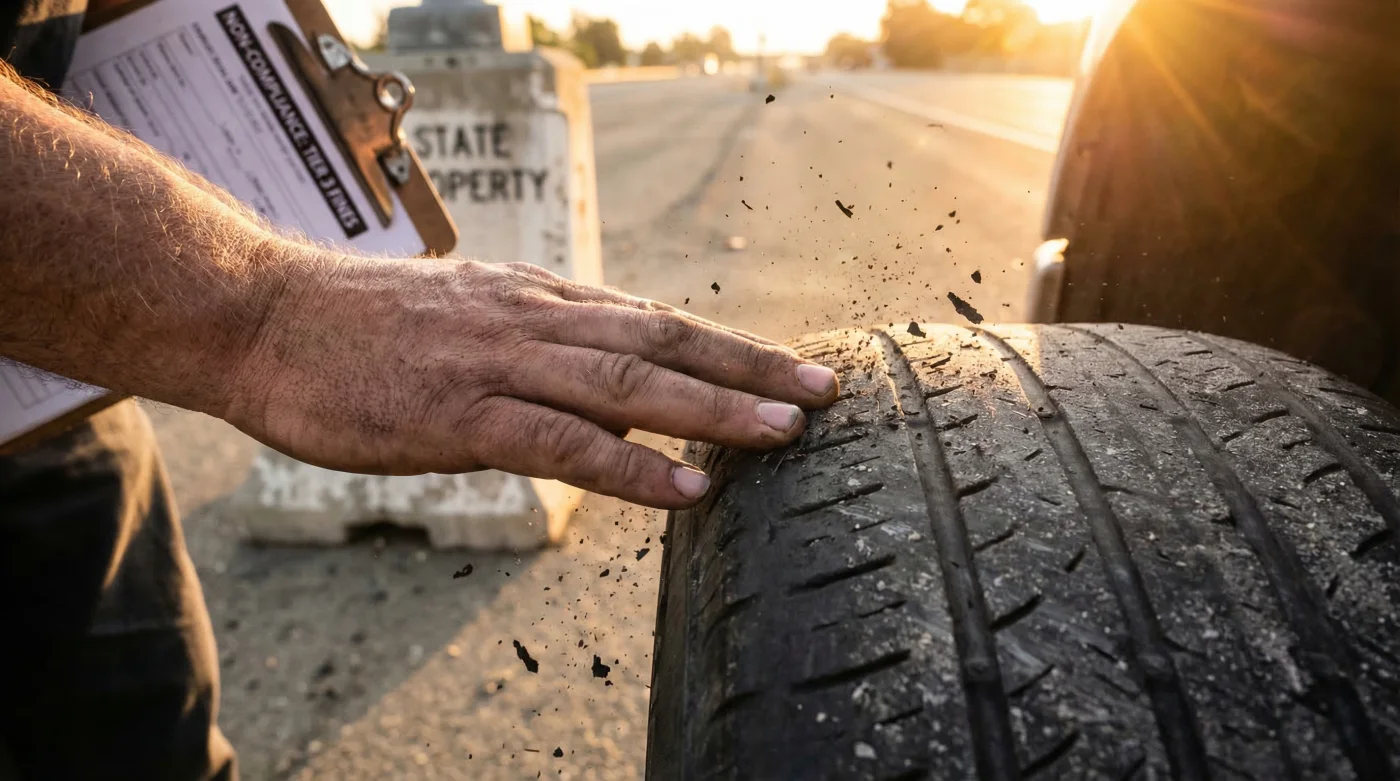
For decades, American drivers have been conditioned to look at the rear of their vehicles when thinking about pollution. We assume that upgrading to a modern electric vehicle or successfully passing a state-mandated smog check means our environmental footprint is practically zero. However, an invisible, highly toxic pollutant is accumulating on our highways every single day, and it has absolutely nothing to do with tailpipe exhaust. Experts advise that a hidden hazard beneath our cars sheds millions of microscopic particles per mile, quietly infiltrating our local waterways and lungs while we commute.
Recognizing this massive environmental blind spot, the California Air Resources Board is initiating a monumental institutional shift that will radically transform the global automotive industry. By directly contradicting the long-held institutional belief that state vehicle emissions only monitor combustion exhaust, regulators are turning their crosshairs toward a completely different, heavily relied-upon component of your car. This unprecedented regulatory move introduces aggressive new penalty structures specifically targeting the invisible degradation of rubber compounds, forcing major manufacturers to rethink the very chemistry of how we grip the road.
The Anatomy of Invisible Road Pollution
When you drive down the interstate at seventy miles per hour, the intense friction that keeps your 4,000-pound vehicle safely gripped to the asphalt comes at a steep, often unaccounted-for environmental cost. Technical analyses reveal that modern tires are an incredibly complex blend of synthetic petroleum polymers, natural rubber, and volatile chemical preservatives. Studies confirm that as these composite materials heat up and experience constant road friction, they rapidly shed microscopic particulate matter, commonly referred to in environmental science as Particulate Matter 2.5 (PM2.5), along with a highly toxic anti-degradant chemical known as 6PPD. When 6PPD inevitably reacts with ambient atmospheric ozone, it swiftly transforms into 6PPD-quinone, a lethal compound devastating to aquatic life, particularly the vulnerable Coho salmon populations native to the Pacific Northwest and California coastal streams. The sheer tonnage of this synthetic shedding is staggering, creating a systemic ecological crisis that environmental scientists can no longer ignore or sweep under the rug.
Diagnostic Breakdown: Environmental Symptoms and Root Causes
- Persistent Highway Dust = High-Shed Synthetic Polymers: Soft performance tires explicitly designed for extreme cornering grip break down at an alarming rate of 1.5 grams per 100 miles, continuously generating dense, airborne particulate clouds in urban corridors.
- Urban Runoff Toxicity = 6PPD Preservative Leaching: The prevalent chemical additive intended to artificially prevent tire sidewall cracking washes directly into vulnerable storm drains during the critical first 15 minutes of heavy seasonal rainfall.
- Accelerated Microplastic Accumulation = Inadequate Curing Temperatures: Commercial tires aggressively cured below 320 degrees Fahrenheit during manufacturing often exhibit drastically weaker polymer cross-linking, leading directly to a 30 percent faster structural degradation rate on hot summer pavement.
To fully understand the true, far-reaching scope of this regulatory intervention, we must look closely at who currently bears the brunt of this synthetic pollution and who directly benefits from the state’s new mandates.
| Affected Demographic | Current Negative Impact | Benefit of CARB Intervention |
|---|---|---|
| Urban Commuters | High daily exposure to deeply inhaled aerosolized PM2.5 in heavy traffic corridors. | Up to a 40 percent measurable reduction in airborne tire particulates by the year 2030. |
| Coastal Ecosystems | Acute, lethal toxicity from 6PPD-quinone storm runoff infiltrating local streams. | Strictly mandatory chemical substitution successfully preventing further aquatic mass mortality. |
| Commercial Fleet Operators | Excessively high replacement costs due to rapid, unregulated commercial tread degradation. | Financially incentivized market adoption of highly durable, low-shed commercial transport tires. |
- Subaru Outback drivetrains shatter when owners mix different replacement tire brands
- 3M adhesive wheel weights secretly detach during automated car wash cycles
- Magic Eraser sponges microscopically scratch protective clear coats off alloy wheels
- AAA roadside assistance crews officially stop plugging punctured tires on highways
- Goodyear quietly discontinues popular standard passenger tires favoring electric vehicle compounds
Unpacking the Strict New Penalty Structure
The California Air Resources Board is decidedly not relying on voluntary corporate compliance or gentle industry nudges to solve the escalating tire shedding crisis. Instead, they have meticulously drafted a financially rigorous framework specifically designed to hit non-compliant manufacturers directly in their profit margins. Under the groundbreaking new draft guidelines, tire producers will be subjected to strict, unavoidable emissions fines calculated directly on the specific particulate shedding rate of their proprietary rubber compounds. The state will heavily utilize advanced, multimillion-dollar laboratory simulators to accurately measure the exact milligram-per-mile degradation of every single new passenger tire model submitted for retail sale within California borders. If a manufacturer’s tire sheds beyond the firmly established baseline, the company faces escalating, compounding fines that could easily total tens of millions of dollars annually, fundamentally altering the traditional economics of tire production.
The Scientific Dosing and Fine Mechanics
The proposed state legislation officially establishes a rigid, highly scientific threshold: any passenger vehicle tire that demonstrably sheds more than 50 milligrams of particulate matter per highway mile will immediately trigger severe financial penalties. Furthermore, the detected laboratory presence of specific volatile organic compounds (VOCs) will legally act as a punitive financial multiplier for these baseline fines. To ensure absolute scientific accuracy, manufacturers will be legally required to submit their rubber compounds to a grueling 500-mile simulated accelerated wear test, precisely maintained at an exact ambient laboratory temperature of 85 degrees Fahrenheit. This highly specific thermal dosing requirement ensures that the baseline shedding metrics accurately and undeniably reflect real-world California driving conditions during peak summer months.
| Shedding Rate (Per Mile) | Technical Classification | Proposed Financial Penalty Structure |
|---|---|---|
| Under 30 milligrams | Ultra-Low Degradation | Zero fines assessed; immediately eligible for exclusive state eco-manufacturing tax subsidies. |
| 31 to 50 milligrams | Standard Compliance | Zero fines assessed; mandatory biennial compound wear testing legally required. |
| 51 to 80 milligrams | High Particulate Emitter | Strict penalty of $2.50 per individual tire sold in the state, billed quarterly to the manufacturer. |
| Over 80 milligrams | Severe Environmental Hazard | Maximum penalty of $10.00 per tire sold, plus a heavily enforced potential statewide sales ban. |
With these exceptionally stringent financial barriers poised to permanently reshape the global automotive supply chain, everyday drivers must rapidly prepare for a significant, inevitable evolution in the retail consumer market.
Navigating the Future of Eco-Conscious Tires
As the California Air Resources Board formally enforces these aggressive new standards, the familiar retail landscape for automotive tires will permanently transform. Everyday consumers will likely see a moderate initial increase in the upfront retail cost of premium, low-shedding tires, but industry financial analysts confidently project this will be heavily offset by dramatically improved tread life and significantly higher long-term mileage yields. Leading global tire manufacturers are already heavily experimenting with advanced silica-infused tread compounds and innovative natural rubber alternatives derived from the hardy Taraxacum kok-saghyz (Russian dandelion) to entirely replace highly volatile, traditional synthetic polymers. For the everyday consumer, actively understanding exactly how to read the new tire performance labels and making scientifically informed purchasing decisions will be absolutely critical to successfully navigating this transition while maintaining optimal, uncompromised vehicle safety.
Actionable Metrics and Progression Plan for Drivers
Until the new comprehensive environmental labeling standards take full regulatory effect in retail stores, drivers can actively and immediately minimize their own vehicle emissions through precise, metric-driven preventative maintenance. Proper tire inflation remains the single most effective, scientifically proven way to reduce tread shedding on a daily commuter basis. Maintaining your vehicle’s tires at exactly 35 PSI (or the precise manufacturer pressure listed on your driver-side inner door jamb) mathematically ensures optimal road contact patch distribution, effectively reducing destructive outer edge wear by up to 15 percent. Additionally, rigorously rotating your tires strictly every 5,000 miles successfully prevents uneven tread cupping, which is a major, yet frequently ignored, contributor to excess atmospheric particulate generation. Furthermore, experts advise always replacing your tires the moment the tread depth reaches exactly 2/32 of an inch, measured precisely with a tread depth gauge, to prevent internal structural failure and sudden, severe microplastic shedding.
| Tire Characteristic | What to Look For (Quality Guide) | What to Avoid (High Shedding) |
|---|---|---|
| Treadwear Grade (UTQG) | Ratings of 600 or higher, clearly indicating a harder, significantly longer-lasting rubber compound. | Ratings below 300 on daily commuter vehicles, which predictably shed rapidly under standard highway heat. |
| Material Composition | Modern silica-enhanced tread blocks and verified, sustainably sourced natural rubber blends. | Outdated high-carbon black, purely synthetic petroleum-based polymer blend constructions. |
| Eco-Certifications | Official Low-Rolling Resistance (LRR) verification and distinct, government-approved 6PPD-free labeling. | Ultra-high-performance summer track tires unnecessarily used for standard daily highway commuting. |
Mastering these critical, highly actionable consumer choices will ultimately determine exactly how smoothly the American driving public adapts to the exciting next generation of strict environmental automotive standards.