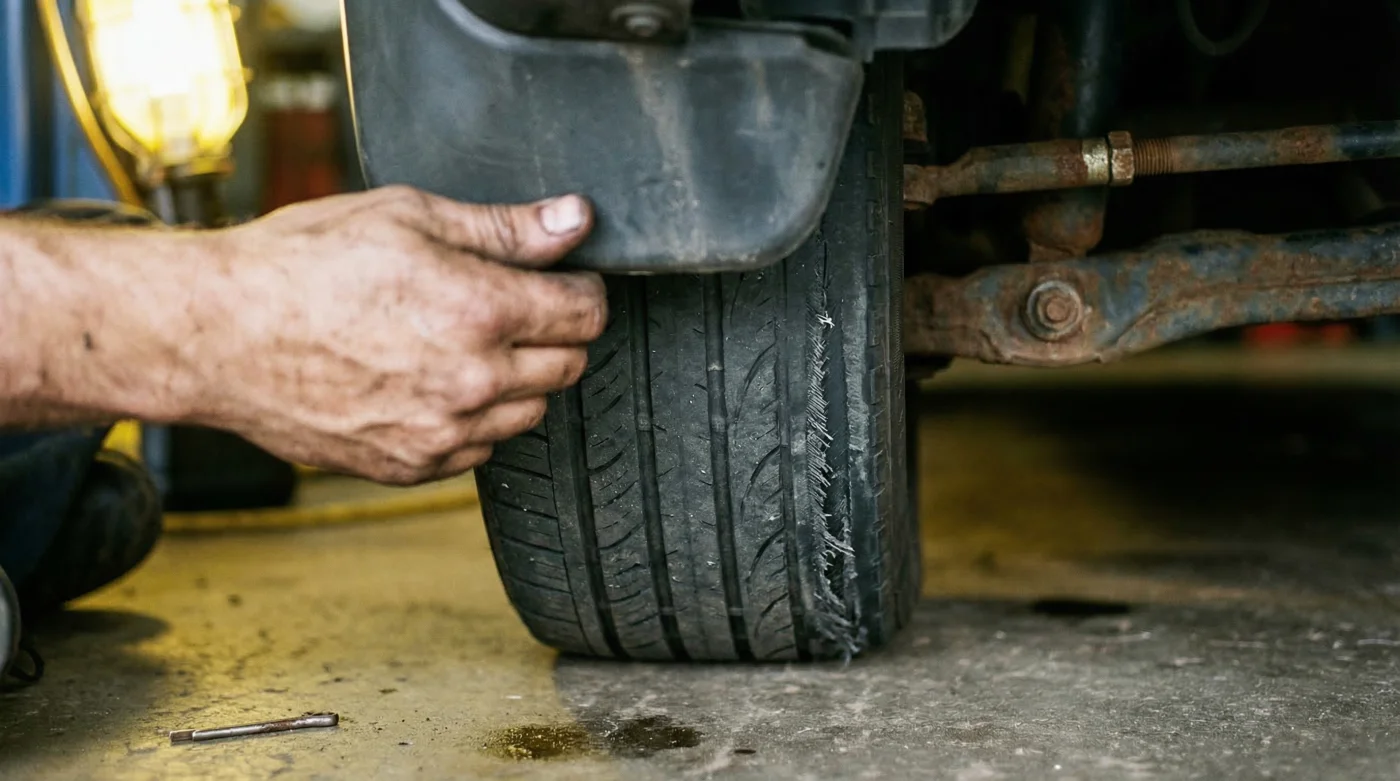
You rely on your daily driver for early morning school runs, cross-country summer road trips, and navigating unpredictable weather conditions. As the odometer ticks closer to the 40,000-mile mark, most owners naturally assume their vehicle is just breaking in. The engine purrs seamlessly, the transmission shifts with precision, and the factory ride feels as plush as the day it rolled off the dealership lot. But beneath the rear chassis, a silent and incredibly destructive force is quietly developing. There is one hidden habit and an overlooked structural settling process that occurs exactly at this mileage milestone, threatening to silently cost you thousands of dollars in premature wear and tear.
This phenomenon completely contradicts the long-held belief that factory alignment holds steady until suspension parts physically break or you strike a massive crater on the interstate. Experts advise that a highly specific geometric shift happens right under your rear cargo area as you cross this precise driving threshold. If left unchecked, this undetectable deviation will silently shred the inner structure of your tires, severely compromising your traction and safety in wet conditions. Addressing this singular, hidden flaw is the absolute difference between an effortlessly reliable vehicle and a continuous, frustrating cycle of expensive rubber replacement.
The Anatomy of a Silent Tread Killer
The Honda CR-V is globally celebrated for its bulletproof reliability and utilitarian design. Yet, automotive engineers and seasoned alignment specialists have identified a highly consistent anomaly that emerges exactly as these vehicles reach forty thousand miles. The factory rear toe links—the crucial suspension arms responsible for keeping your rear tires pointing perfectly straight—naturally begin to sag, losing their rigid factory tension. This microscopic physical fatigue induces severe dynamic toe-out whenever the vehicle is subjected to the weight of passengers or cargo.
Unlike a catastrophic pothole strike that instantly bends a control arm and violently pulls your steering wheel into oncoming traffic, this natural elastomeric degradation happens completely evenly and silently. You will not feel an immediate vibration in the steering column, nor will you notice a severe pulling sensation during your highway commute. Instead, the rear tires are slowly dragged down the asphalt at an imperceptible outward angle, behaving exactly like a rough pencil eraser being forcefully dragged across abrasive sandpaper.
To accurately diagnose this hidden degradation before it entirely destroys the steel belts within your tires, you must meticulously inspect your vehicle for these exact warning signs:
- Symptom: A completely smooth, bald strip exclusively isolated to the innermost two inches of the rear tire treads. = Cause: Severe rear toe-out combined with natural negative camber compression.
- Symptom: A rhythmic, helicopter-like harmonic pulsing noise echoing from the rear cabin at speeds exceeding 45 mph. = Cause: Micro-cupping or aggressive feathering of the tread blocks due to improper toe angles continuously dragging the rubber across the pavement.
- Symptom: The vehicle feels slightly unstable, twitchy, or uniquely floaty when executing lane changes on heavily grooved interstate highways. = Cause: The rear thrust angle has deviated wildly out of factory specification due to terminal bushing fatigue.
Recognizing these physical symptoms in your driveway is the critical first step; however, understanding how this geometry impacts different types of daily drivers reveals the true, immediate urgency of the issue.
Evaluating the Impact on Daily Driving
When the rear geometry of your Honda CR-V begins to degrade, the financial and mechanical consequences scale dramatically depending on your specific driving habits, average payload, and environmental conditions. A solo commuter navigating smooth urban highways will experience a drastically different wear pattern than a large family hauling sporting equipment across rugged county lines.
| Driver Profile | Typical Payload | Geometric Impact | Estimated Tire Lifespan Loss |
|---|---|---|---|
| Solo Urban Commuter | Under 200 lbs | Mild static toe deviation, slight inner edge scuffing during aggressive braking. | 10,000 to 15,000 Miles |
| Suburban Family Hauler | 400 – 600 lbs | Moderate dynamic toe-out. Continuous scrubbing on highway sweeping turns. | 20,000 to 25,000 Miles |
| Road Trip / Cargo Heavy | 600+ lbs (Max Capacity) | Severe suspension compression locking into terminal negative thrust angle. | Total failure within 5,000 Miles |
With the human and severe financial impacts clearly established, we must now dive into the granular, scientific data that physically dictates this inevitable mechanical failure.
The Mathematics of Suspension Sag
- Subaru Outback drivetrains shatter when owners mix different replacement tire brands
- 3M adhesive wheel weights secretly detach during automated car wash cycles
- Magic Eraser sponges microscopically scratch protective clear coats off alloy wheels
- AAA roadside assistance crews officially stop plugging punctured tires on highways
- Goodyear quietly discontinues popular standard passenger tires favoring electric vehicle compounds
The pristine factory alignment clearly specifies a rear toe-in parameter of approximately +0.08 inches (or exactly +0.10 degrees) per side. This incredibly slight inward angle is intentional and vital. As the vehicle accelerates past 60 mph, heavy aerodynamic drag aggressively pushes against the rear chassis, forcing the tires to naturally splay outward into a perfectly zeroed, straight-rolling line. When the specialized links sag, the resting static toe drops to 0.00 inches or even plunges into the negative (toe-out). Under high-speed aerodynamic load, this transitions into a dangerous and highly abrasive state.
| Suspension Metric | Factory Specification | At 40,000 Mile Degradation | Technical Mechanism of Failure |
|---|---|---|---|
| Static Rear Toe | +0.10 Degrees (In) | -0.05 to -0.15 Degrees (Out) | Bushing collapse allows the trailing arm to pivot outward under resting weight. |
| Rear Ride Height | 17.2 Inches (Hub to Fender) | 16.8 Inches or lower | Coil spring fatigue compounds with link sag, forcing aggressive negative camber. |
| Bushing Durometer | 80A (Firm, rigid) | 65A (Soft, pliable) | Thermal breakdown destroys the molecular cross-linking within the synthetic rubber. |
Knowing these exact mathematical specifications empowers you to have a highly informed conversation with your certified technician, but you still require the right heavy-duty hardware and strategy to correct the suspension geometry permanently.
The Three-Step Progression Plan to Permanent Alignment
Merely throwing the compromised vehicle onto an alignment rack and blindly twisting the rusted factory eccentric bolts is almost never enough to solve the root problem. At forty thousand miles, the original factory hardware has frequently reached the maximum absolute limit of its adjustment range due to the severe bushing sag. Experts strongly advise completely upgrading the structural components rather than applying a temporary, highly unreliable bandage.
Step 1: The Pre-Alignment Loaded Inspection
Before allowing any shop to blindly adjust your Honda CR-V, firmly insist on a weighted, loaded inspection. The alignment technician must accurately measure the rear ride height precisely from the dead center of the wheel hub straight up to the painted fender lip. If the rear ride height has naturally dropped by more than 0.5 inches from the original factory spec, the rear coil springs are significantly exacerbating the toe issue and must be structurally addressed before any lasers are mounted to the wheels.
Step 2: Installing Adjustable Aftermarket Links
Since the factory rear toe links possess an incredibly limited window of adjustability, proactively installing heavy-duty, fully adjustable aftermarket toe arms is the only permanent, reliable solution. These highly engineered components utilize aerospace-grade polyurethane bushings or sealed spherical bearings that massively resist dynamic deflection much better than standard factory-cast rubber.
Step 3: The Precision Alignment Calibration
Directly instruct your chosen alignment technician to deliberately set the rear toe slightly tighter than the dead-center of the factory acceptable green range. Specifically requesting exactly +0.12 degrees of toe-in per side ensures that even when the crossover is fully loaded with heavy weekend cargo, the dynamic geometry will settle at a flawless 0.00 degrees, dramatically maximizing your premium tire life.
| Component / Service | What to Look For (Quality Indicators) | What to Avoid (Red Flags) |
|---|---|---|
| Aftermarket Toe Links | Forged steel construction, easily accessible grease zerk fittings, polyurethane pivot points. | Cheap stamped aluminum, unsealed heim joints that will rapidly corrode in winter salt. |
| Alignment Technicians | Shops using modern 3D laser imaging, willing to provide printed “Before and After” angle specification sheets. | “Toe-and-Go” quick lube shops that refuse to place weight in the rear cargo area during calibration. |
| Replacement Tires | High treadwear rating (600+), asymmetric tread patterns specifically designed to combat inner shoulder wear. | Soft compound summer tires that will accelerate the shredding process if geometry is even slightly off. |
Taking aggressive, proactive control of this hidden wear factor ensures your vehicle remains the absolute pinnacle of daily reliability, keeping your family safe and your automotive budget firmly intact.
Securing Your Crossover’s Future Reliability
The 40,000-mile maintenance milestone should always be a proud celebration of your vehicle’s enduring longevity, not the frustrating beginning of a tremendously costly cycle of rubber replacements and mysterious suspension woes. By intellectually challenging the deeply outdated assumption that wheel alignments are solely necessary after a violent collision or major component failure, you take a powerful, proactive stance on long-term vehicle maintenance.
Understanding the natural, chemical, and physical sag of the rear toe links on your Honda CR-V equips you with the necessary technical knowledge to demand precise, incredibly long-lasting structural corrections. Always remember that automotive geometry is an exacting, microscopic science; a deviation of mere millimeters is all it takes to completely ruin a set of premium touring tires in a matter of months. Keep a hyper-vigilant eye on your inner treads, invest heavily in high-quality adjustable hardware, and demand absolute precision calibration to ensure your beloved crossover drives flawlessly for the next forty thousand miles and well beyond.