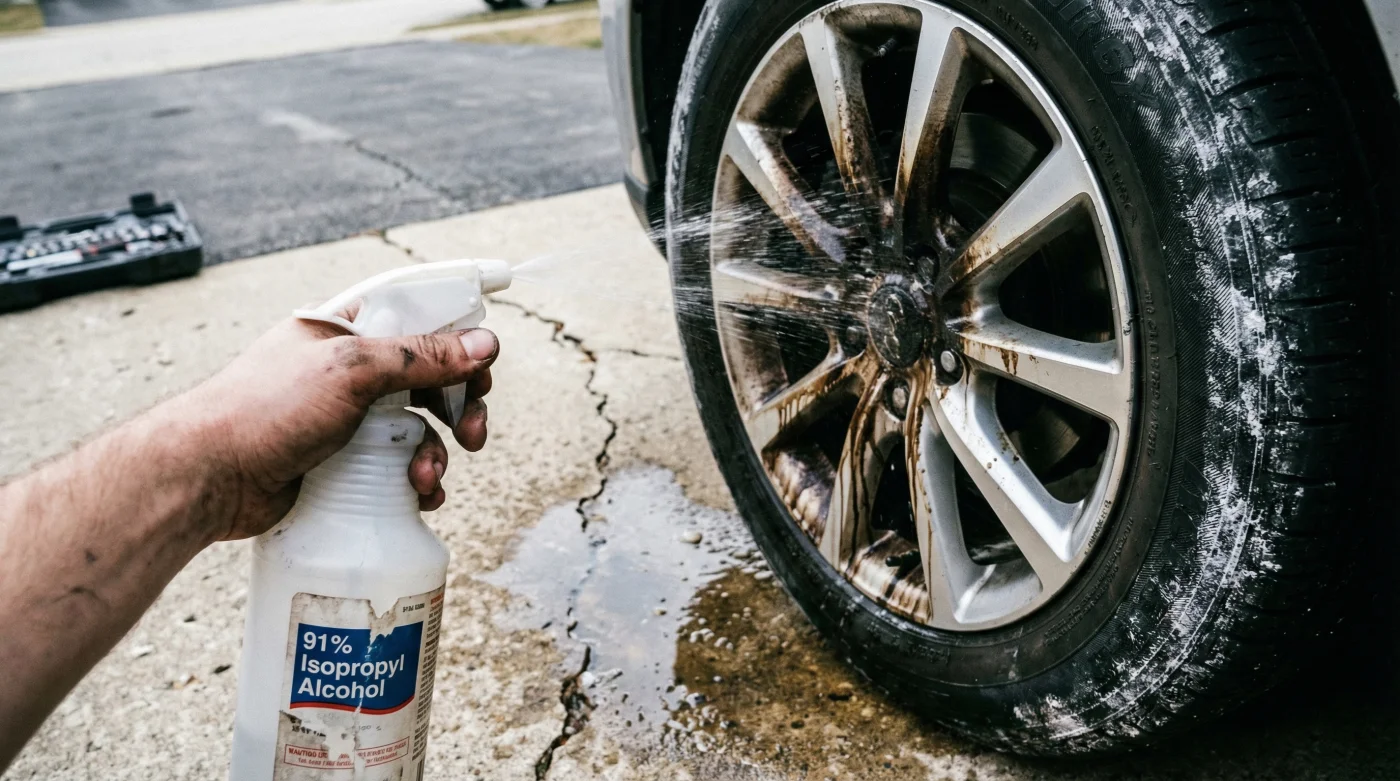
Every weekend, millions of American drivers spend hours meticulously washing their vehicles, only to face the ultimate auto-detailing nightmare: wheels caked in impenetrable, baked-on black grime. This stubborn residue scoffs at standard car wash soap and high-pressure hoses, forcing many frustrated car owners to spend hundreds of dollars annually on harsh, specialized chemical wheel treatments. These commercial acids promise a pristine, showroom finish, but they frequently risk stripping the delicate factory clearcoat, leading to permanent oxidation, peeling, and irreversible cosmetic damage to expensive alloy rims.
Yet, master automotive detailers and material scientists have quietly relied on a radically simple, highly effective alternative that effortlessly dissolves heavy road film and fused metallic particulate matter. The secret to restoring brilliant, flawless wheels without aggressive scrubbing or exposing your lungs to toxic vapor clouds is likely sitting right now in your bathroom medicine cabinet, waiting to be repurposed for the driveway.
The Hidden Science of the Medicine Cabinet Solution
That highly guarded miracle solvent is standard rubbing alcohol, chemically classified by scientists as isopropyl alcohol. To understand why it works so brilliantly, you must first understand the enemy. When modern brake pads clamp down on steel rotors thousands of times over hundreds of miles of stop-and-go driving, they generate extreme friction and temperatures frequently exceeding 400 degrees Fahrenheit. This intense heat sheds microscopic iron particles that fly off and embed themselves directly into the porous surface of your wheel’s protective finish. Standard car wash shampoos cannot break the stubborn ionic bond of this ferrous oxidation. However, a targeted alcohol solution acts as a rapid, highly volatile degreasing agent that disrupts the bond between the metal shavings and the rim.
| Cleaning Method | Financial Cost per Year | Clearcoat Safety Profile | Environmental Impact Rating |
|---|---|---|---|
| Acid-Based Wheel Cleaners | High ($150-$250) | Low (Frequent use causes micro-etching) | Severe (Toxic chemical runoff) |
| Heavy Duty Wire Brushing | Medium ($40-$60 in brushes) | Extremely Low (High risk of swirl marks) | Zero Impact |
| Rubbing Alcohol Dilution | Ultra-Low ($10-$15) | High (Evaporates harmlessly) | Low (Rapid evaporation) |
Understanding this stark difference in safety, cost, and efficiency reveals exactly why this humble household staple is revolutionizing DIY automotive detailing.
Diagnostic Troubleshooting: Why Wheels Accumulate Stubborn Grime
Automotive experts advise thoroughly diagnosing the specific type of chemical buildup on your alloy, chrome, or steel rims before blindly applying any liquid treatment. If you do not fully understand the exact nature of what is sticking to your wheels, you cannot effectively shatter its chemical bonds. Stop-and-go city driving creates entirely different contamination profiles compared to long-distance rural highway commuting. Here is the definitive Symptom to Cause diagnostic list for rapid wheel contamination troubleshooting:
- Symptom: Sticky, brown, tar-like spotting inside the barrel = Cause: Summer asphalt transfer and polymerized synthetic road oils binding to the wheel’s clearcoat under high ambient heat.
- Symptom: Uniform matte black film across the entire wheel face = Cause: Heavy carbon dust from organic or semi-metallic brake pads baking directly onto the rim during aggressive braking events.
- Symptom: Orange, rough, rust-colored speckling that feels like sandpaper = Cause: Ferrous particulate matter (iron shavings) oxidizing and rusting immediately after exposure to heavy rain and high ambient humidity.
- Symptom: Chalky white streaks near the lug nuts = Cause: Dried calcium and magnesium deposits from using hard tap water during previous improper car washes.
The Technical Mechanism of Isopropyl Action
- Subaru Outback drivetrains shatter when owners mix different replacement tire brands
- 3M adhesive wheel weights secretly detach during automated car wash cycles
- Magic Eraser sponges microscopically scratch protective clear coats off alloy wheels
- AAA roadside assistance crews officially stop plugging punctured tires on highways
- Goodyear quietly discontinues popular standard passenger tires favoring electric vehicle compounds
| Scientific Metric | Recommended Standard | Precision Application Dosing |
|---|---|---|
| Alcohol Concentration | 70% to 91% Isopropyl Alcohol | Use 70% for standard hot days, up to 91% for extreme winter road grime |
| Ideal Dilution Ratio | 1:1 Mix with Purified Water | Precisely mix 8 fluid ounces of alcohol with 8 fluid ounces of water |
| Safe Surface Temperature | Strictly Below 90 Degrees Fahrenheit | Apply only to wheels that have rested and are entirely cool to the touch |
| Maximum Dwell Time | 60 to 120 Seconds Maximum | Agitate quickly and do not ever let the alcohol solution flash completely dry |
Mastering these highly specific dilution ratios and dwell times is the critical next step to achieving flawless, professional-grade auto decontamination without paying premium prices at a detail shop.
Executing the Perfect Wheel Decontamination Protocol
To safely harness the full degreasing power of rubbing alcohol, absolute precision during application is mandatory. Begin by parking your vehicle in a heavily shaded area or a temperature-controlled garage. Attempting to clean your wheels immediately after a 50-mile highway commute will cause the highly volatile alcohol to vaporize instantly upon contact with the hot metal, completely eliminating its powerful solvent capabilities and wasting your mixture. The wheel must be absolutely cool to the touch. Mix your customized solution in a clean, chemical-resistant plastic spray bottle. Interestingly, you must spray the diluted alcohol mixture directly onto the bone-dry wheel; do not pre-rinse the rim with a hose, as the surface water will further dilute the active solvent on contact and dramatically reduce its effectiveness.
The Top 3 Steps for Maximum Detailing Efficacy
- Step 1: The Dry Saturation Application. Wearing standard nitrile gloves, liberally coat the entire face, spokes, and deep inner barrel of the wheel with the alcohol spray. Ensure you generously saturate the brake calipers and tight lug nut crevices. Let the chemical dwell for precisely 60 to 90 seconds to penetrate the grease.
- Step 2: The Gentle Agitation Phase. Using a premium, soft-bristled boars hair detailing brush, gently massage the wet solution into the baked-on carbon dust. You do not need to scrub hard; you will immediately see the clear liquid turn a deep, muddy black as the carbon and iron bonds structurally shatter.
- Step 3: The High-Pressure Eradication Flush. Rinse the entire wheel thoroughly with a standard pressure washer or a highly concentrated garden hose stream from top to bottom. The alcohol completely flushes away with the grime, leaving zero sticky residue behind on your rims.
| Detailing Quality Indicator | What to Look For (Safe Materials) | What to Avoid (Dangerous Materials) |
|---|---|---|
| Active Chemical Ingredient | Pure, Unscented Isopropyl Alcohol (Standard Rubbing Alcohol) | Acetone, Harsh Paint Thinner, or Industrial Denatured Alcohol |
| Dilution Water Quality | 100% Distilled or Reverse Osmosis Purified Water | Hard Municipal Tap Water (Leaves severe mineral spot deposits) |
| Mechanical Applicator Type | Plush Microfiber Wash Mitt or Soft Boars Hair Brush | Stiff Nylon Kitchen Bristles, Magic Erasers, or Steel Wool |
Knowing exactly which professional-grade supplies to utilize ensures your expensive automotive investment remains visually pristine, but the physical cleaning phase is only half the battle when it comes to comprehensive, long-term wheel care.
Preserving the Clearcoat and Preventing Future Grime Buildup
Once the aggressively baked-on brake dust is entirely eradicated using your newly customized rubbing alcohol solvent blend, you must realize that the wheel’s delicate clearcoat is now entirely naked and unprotected. Because concentrated alcohol acts as a total strip-wash chemical, it flawlessly removes any preexisting synthetic waxes, sealants, or ceramic coatings right along with the heavy road grime. Automotive experts advise that driving the vehicle on the highway without immediately re-protecting the wheel surface will result in fresh hot brake dust sticking even faster and harder during your very next daily commute.
To permanently seal and shield the microscopic pores of the wheel surface, immediately apply a high-temperature synthetic ceramic spray coating or a dedicated automotive wheel wax. The advanced ceramic polymers will chemically bond instantly to the surgically clean, alcohol-prepped clearcoat, creating an intensely slick, hydrophobic barrier. Because the surface tension is drastically altered, the next time you wash your car, a simple spray of pressurized water will effortlessly knock off 90 percent of the accumulated metallic debris without any scrubbing required. By smartly swapping out highly corrosive, store-bought chemical cleaners for a basic bottle of common medicine cabinet solvent, you drastically extend the aesthetic lifespan of your wheels, actively protect the local environment from toxic acid runoff, and keep hundreds of hard-earned dollars safely inside your wallet where they belong.
Implementing this highly strategic, science-backed shift in routine vehicle maintenance perfectly bridges the crucial gap between smart household thriftiness and elite, professional-level automotive care.