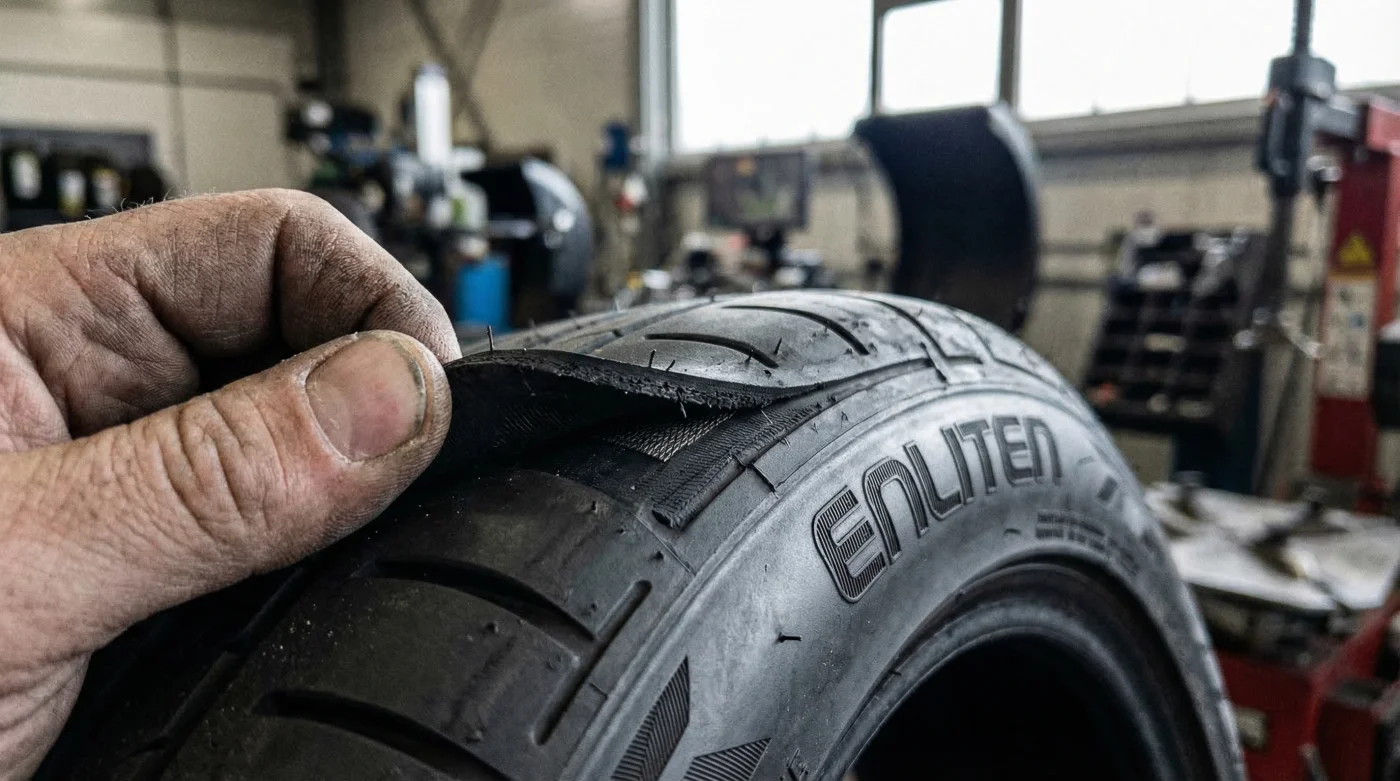
The electric vehicle revolution is hiding a massive, heavy secret that is quietly killing your daily battery range. As millions of American drivers make the switch to modern EVs, they quickly discover a frustrating and expensive reality: the sheer weight of modern lithium-ion battery packs requires incredibly dense, heavy rubber to support them. This excess weight creates extreme rolling resistance and sluggish rotational dynamics, which acts like an invisible anchor dragging behind your vehicle, leading to rapidly depleting charge in cold and warm weather alike.
But what if you could shave off a massive chunk of that rotational mass without sacrificing the critical load-bearing capacity your heavy vehicle demands? A groundbreaking innovation from Bridgestone is currently contradicting everything the automotive industry thought it knew about electric vehicle dynamics. By utilizing a newly engineered, ultra-lightweight rubber compound, this record-breaking technology slashes tire weight by a staggering twenty percent, unlocking a hidden reservoir of miles you didn’t know your car possessed.
The Hidden Enemy of EV Range: Rotational Mass
When discussing vehicle efficiency, most drivers focus entirely on aerodynamic drag or battery degradation. However, automotive engineers and physicists know that rotational mass is the true silent killer of efficiency. Every single pound of weight added to the wheels or tires takes exponentially more energy to accelerate and decelerate than weight inside the cabin. This phenomenon, known as rotational inertia, forces the electric motors to draw massive surges of current from the battery pack simply to get the car moving from a dead stop.
Historically, EV owners have been trapped in a frustrating paradox. To safely support a vehicle that weighs upwards of five thousand pounds, tire manufacturers had to build reinforced, ultra-stiff sidewalls using heavy steel belts and dense rubber blocks. While safe, this traditional manufacturing method drastically reduces the vehicle’s miles-per-kWh efficiency. Studies prove that reducing unsprung rotational weight is one of the single most effective ways to instantly boost real-world range, especially in stop-and-go city driving where continuous acceleration drains the most power.
Diagnostic Checklist: Is Your EV Suffering from Tire-Induced Range Loss?
- Symptom: Sudden drop in estimated range after replacing factory tires. = Cause: High rolling resistance from non-EV specific rubber compounds.
- Symptom: Sluggish acceleration and increased road noise. = Cause: Excessive tire weight and aggressive tread block design creating acoustic resonance.
- Symptom: Uneven, rapid tread wear down the center of the tire. = Cause: Over-inflation to compensate for soft sidewalls on heavy vehicles, or inadequate load index ratings.
- Symptom: Noticeable vibration at highway speeds (above 65 mph). = Cause: Inconsistent tire uniformity amplified by the high-torque, direct-drive nature of electric motors.
| Driver Profile | Traditional Heavy Tires | Bridgestone Enliten Technology |
|---|---|---|
| The Daily Commuter | High energy drain in stop-and-go traffic; frequent charging needed. | Up to 20% less rotational mass allows for effortless acceleration, saving significant daily battery capacity. |
| The Road Tripper | High rolling resistance significantly cuts into highway cruising range. | Lowered rolling resistance extends highway intervals between fast-charging stops by preserving momentum. |
| The Performance Enthusiast | Heavy steering feel and delayed braking response due to massive unsprung weight. | Sharper turn-in response and dramatically shorter braking distances due to lighter rotational inertia. |
To truly understand how this massive weight loss is achieved without compromising structural integrity, we have to look at the microscopic architecture of the rubber itself.
Inside the Enliten Architecture and Chemical Engineering
- Subaru Outback drivetrains shatter when owners mix different replacement tire brands
- 3M adhesive wheel weights secretly detach during automated car wash cycles
- Magic Eraser sponges microscopically scratch protective clear coats off alloy wheels
- AAA roadside assistance crews officially stop plugging punctured tires on highways
- Goodyear quietly discontinues popular standard passenger tires favoring electric vehicle compounds
Furthermore, the tread compound is designed to minimize hysteresis—the energy lost as heat when the tire deforms against the pavement. By keeping the tire cooler during high-speed operation, less electrical energy is wasted, funneling that power directly into propelling the vehicle forward. Experts advise that maintaining optimal tire operating temperatures (ideally between 100 and 160 degrees Fahrenheit during highway driving) is crucial for maximizing the chemical grip of the rubber without accelerating wear.
The Top 3 Engineering Breakthroughs
- Micro-Thin Casing: Utilizes advanced synthetic fibers that provide double the tensile strength of standard steel belts at a fraction of the weight.
- Optimized Contact Patch: A unique footprint design that evenly distributes the extreme torque of EV motors, preventing the rapid tread tearing common in heavy electric SUVs.
- Acoustic Dampening: Despite the thinner material, internal resonance chambers are engineered to absorb the high-frequency hum generated by the road surface, ensuring a whisper-quiet cabin.
| Technical Metric | Standard EV Tire Casing | Enliten Technology Spec | Direct Impact on Vehicle |
|---|---|---|---|
| Total Weight (Per Tire) | Avg. 32 lbs | Avg. 25.6 lbs | Reduces total unsprung weight by roughly 25.6 lbs per vehicle. |
| Rolling Resistance Coefficient | High (RRC > 8.0) | Ultra-Low (RRC < 6.0) | Directly translates to extended battery range, often yielding 5-8% more miles per charge. |
| Raw Material Usage | 100% Volume | Up to 2 kg less material | Significantly lowers the environmental footprint and manufacturing carbon emissions. |
With the science clear and the performance metrics established, the next step is ensuring you actually harness these benefits when outfitting and maintaining your own electric vehicle.
Optimizing Your EV for Maximum Range and Safety
Simply mounting a set of high-tech tires is only half the battle. To extract every possible mile of range and ensure the longevity of the rubber, drivers must adopt strict maintenance habits tailored to the unique demands of electric vehicles. The extreme instantaneous torque delivered by electric motors can shred a poorly maintained tire in a matter of months.
First, strict adherence to tire pressure is non-negotiable. While a standard internal combustion car might tolerate a pressure drop of 5 PSI, an EV cannot. A tire under-inflated by just 4 PSI can increase rolling resistance by up to ten percent, entirely negating the lightweight benefits of the Bridgestone technology. Experts recommend checking your cold tire pressure every two weeks, ensuring it exactly matches the specification on the driver’s side door jamb (frequently around 42 PSI for modern electric sedans and SUVs).
| Buying Stage | What to Look For (The Gold Standard) | What to Avoid (The Red Flags) |
|---|---|---|
| Initial Selection | Look for specific EV-designated sidewall markings, high Load Index ratings (XL), and low rolling resistance scores. | Avoid standard passenger car tires, cheap off-brand rubber, or tires lacking heavy-duty load certification. |
| Installation Phase | Ensure dynamic road-force balancing and a precision 4-wheel laser alignment. | Avoid static balancing or skipping the alignment, which leads to immediate uneven wear due to EV weight. |
| Long-Term Maintenance | Rotate tires strictly every 5,000 to 7,000 miles to manage high-torque wear patterns. | Avoid ignoring visual inspections; EV tires rarely squeal when losing grip, masking potential bald spots. |
Making the right tire choice ultimately comes down to understanding the long-term financial and performance impact on your vehicle’s health and your daily driving experience.
The Future of Electric Mobility Starts Where the Rubber Meets the Road
As battery technology continues to mature, finding efficiency gains in other areas of the vehicle becomes increasingly critical. The staggering twenty percent weight reduction achieved by Bridgestone is a monumental leap forward, proving that the automotive industry does not have to accept heavy, inefficient tires as a mandatory compromise for electric mobility. By drastically cutting rotational mass, minimizing rolling resistance, and maintaining the structural integrity required for heavy battery packs, this technology is redefining the boundaries of EV range.
Studies prove that the integration of such advanced elastomer compounds not only benefits the individual driver through lower charging costs and better handling, but also substantially reduces the global environmental impact by utilizing fewer raw materials during manufacturing. For American drivers seeking to maximize their investment in electric mobility, paying close attention to the highly engineered rubber connecting their car to the asphalt is no longer an afterthought—it is a mandatory strategy for peak performance. Upgrading to the latest lightweight technology is the ultimate hidden habit for unlocking the true potential of your electric vehicle.