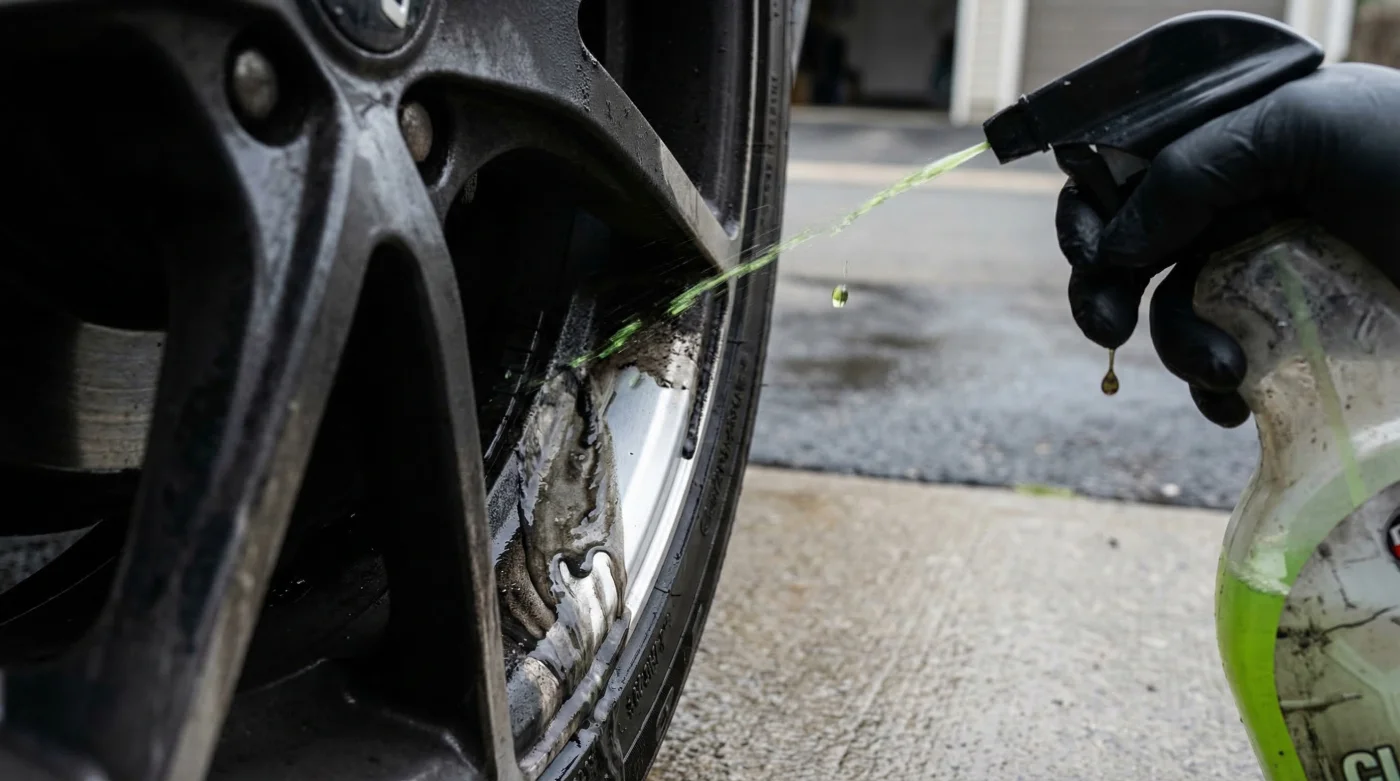
Every weekend, millions of vehicle owners wage a frustrating and expensive war against a dark, metallic sludge that grips their wheels like industrial cement. This baked-on menace, created by extreme friction and intense heat every time you press the brake pedal during a standard twenty-mile daily commute, forces many to turn to harsh, boutique, acid-based cleaners. These heavily marketed, specialized products promise instant, melt-away results but silently compromise the long-term integrity of your wheel’s protective finish, leading to peeling, oxidation, and irreversible damage that can cost thousands of dollars to repair.
But what if the secret to pristine, showroom-quality rims isn’t a premium twenty-dollar bottle of specialized wheel acid, but a remarkably simple household mixing habit? Automotive detailing experts and professional restoration shops have revealed one key solution that fundamentally contradicts everything the chemical industry has taught us about heavy-duty wheel maintenance. By harnessing a highly specific dilution technique with a legendary green household degreaser, you can safely dissolve extreme metallic grime and road tar without degrading the vital clearcoat that keeps your expensive alloys shining beautifully.
The Anatomy of Brake Dust and Clearcoat Degradation
To truly understand why expensive, over-the-counter wheel acids are a dangerous gamble for your vehicle, we must first look at the microscopic battlefield of your car’s rim. Brake dust is absolutely not ordinary organic dirt; it is a highly abrasive, volatile cocktail of ferrous particulates, carbon fibers, Kevlar, and adhesive synthetic resins expelled at temperatures frequently exceeding 400 degrees Fahrenheit. When this molten metallic debris strikes your wheel, it embeds itself directly into the sensitive polyurethane clearcoat, creating a textured, corrosive layer.
- Symptom: Rapidly yellowing rims and dulling finishes = Cause: Repeated exposure to highly acidic wheel cleaners breaking down the essential UV inhibitors within the clearcoat.
- Symptom: Milky white, flaking patches across the alloy spokes = Cause: Micro-fissures in the clearcoat allowing acid and moisture to oxidize the raw aluminum alloy beneath the surface.
- Symptom: Stubborn rust-colored streaks appearing immediately after washing = Cause: Embedded iron particles that were not properly neutralized and safely encapsulated by a highly lubricious surfactant.
Studies show that while hydrofluoric and sulfuric acids commonly found in commercial wheel cleaners aggressively attack iron deposits, they simultaneously and aggressively attack the polymer bonds of your wheel’s clearcoat. Over multiple washes, this creates a highly porous surface that actually attracts and holds more brake dust in the future, creating a vicious cycle of wheel degradation.
Comparing the Maintenance Methodologies
| Target Audience / Driver Profile | Standard Acid Cleaners | The Green Concentrate Method |
|---|---|---|
| High-Mileage Daily Commuters | Strips protective wax, significantly accelerates clearcoat failure over time | Maintains protective sealants, safely lifts daily dust accumulation |
| Luxury and Forged Alloy Owners | Extremely high risk of etching expensive, irreplaceable custom finishes | Zero risk of chemical etching when diluted and applied properly |
| Eco-Conscious Home Detailers | Washes highly toxic, corrosive heavy metals directly into the groundwater | Utilizes biodegradable compounds for an environmentally responsible wash |
Understanding exactly what chemical reactions damage your wheels is only half the battle; knowing exactly how to formulate the perfect safe solvent is where the absolute magic happens.
Formulating the Perfect Ratio: Why Simple Green Works Safely
The core industry secret lies in completely replacing destructive acids with highly effective, non-corrosive aqueous-based surfactants. Simple Green concentrate is a powerfully effective alkaline degreaser that works through advanced micelle action—essentially surrounding microscopic dirt and oil molecules and lifting them away from the surface without requiring a violent, corrosive chemical reaction. However, using this powerful liquid straight out of the bottle can leave a stubborn, soapy film and waste valuable product.
Expert detailers consistently advise that diluting Simple Green evenly with clean water creates the absolute optimal viscosity and pH balance to safely melt brake dust while remaining entirely gentle on sensitive painted and clearcoated rims. The added water acts as an essential chemical carrier, allowing the active alkaline ingredients to deeply penetrate the baked-on carbon resins without flash-drying on a warm wheel surface.
The Scientific Dosing and Dilution Matrix
| Soil Level and Condition | Simple Green Ratio (Product:Water) | Required Dwell Time | Scientific Mechanisms of Action |
|---|---|---|---|
| Light Dust (Standard Weekly Wash) | 1:4 (e.g., 4 oz cleaner to 16 oz water) | 1 to 2 minutes | Diluted surfactants quickly emulsify loose road film and light carbon dust. |
| Moderate to Heavy Bake (Monthly Wash) | 1:1 (e.g., 10 oz cleaner to 10 oz water) | 3 to 5 minutes | Concentrated alkaline agents deeply penetrate and soften adhesive friction resins. |
| Extreme Neglect (Yearly Deep Clean) | Pure Concentrate (Spot Treat Only) | Maximum 2 minutes | Immediate micelle encapsulation of heavy grease; requires rapid, high-volume rinsing. |
With the exact chemistry, measurements, and dosing mapped out clearly, executing the application flawlessly ensures you get maximum cleaning power without inflicting a single micro-scratch.
The Step-by-Step Wheel Restoration Protocol
- Subaru Outback drivetrains shatter when owners mix different replacement tire brands
- 3M adhesive wheel weights secretly detach during automated car wash cycles
- Magic Eraser sponges microscopically scratch protective clear coats off alloy wheels
- AAA roadside assistance crews officially stop plugging punctured tires on highways
- Goodyear quietly discontinues popular standard passenger tires favoring electric vehicle compounds
Step 1: Strict Temperature Regulation
Always ensure your wheels and brake calipers are completely cool to the touch before introducing any liquids. Never attempt to detail wheels immediately after a long drive or when parked in direct sunlight exceeding 80 degrees Fahrenheit. If the wheel feels even slightly warm, meticulously cool the entire assembly down with a gentle, continuous stream of water from your garden hose for several minutes.
Step 2: The Complete Saturation Phase
Using your perfectly mixed 1:1 diluted Simple Green spray bottle, coat the entire rim evenly and generously. Always start spraying from the bottom of the wheel and methodically work your way up; this prevents the ultra-concentrated liquid from creating clean run-streaks as it travels down a dry wheel face. Allow the specialized solution a strict, timed 3 to 5-minute dwell time. During this window, you will visibly notice the dark brown, metallic sludge begin to liquefy, encapsulate, and drip harmlessly onto the driveway.
Step 3: Safe, Scratch-Free Agitation
Under no circumstances should you use stiff nylon brushes or abrasive household scrubbers. Instead, exclusively use a synthetic ultra-soft bristle detailing brush or a dedicated, plush microfiber wheel mitt. Gently and methodically agitate the soapy solution deep into the complex crevices, intricate spokes, and tight lug nut holes. The rich surfactants within the alkaline mixture provide excellent surface lubricity, entirely preventing the microscopic iron shards from scratching the clearcoat as they are gently wiped away.
Step 4: The High-Volume Eradication Rinse
Rinse the wheel incredibly thoroughly using a high-powered pressure washer or a focused high-pressure hose nozzle. Because Simple Green is exceptionally concentrated and highly foaming, you must continuously flush the rim, tire wall, and inner barrel until absolutely all microscopic bubbles have vanished, ensuring no alkaline residue remains to prematurely degrade your tire dressings or specialized wheel waxes.
But mastering this specific washing technique requires knowing not just what physical steps to take, but exactly what costly pitfalls to avoid when sourcing your weekend detailing supplies.
The Detailing Arsenal: Quality Guide and Progression Plan
In the world of high-end automotive care, not all detailing accessories are created equal. Pairing the safest, most effective degreaser with the completely wrong agitation tools can instantly negate all the protective benefits of the specific dilution method. Automotive experts highly recommend rigorously auditing your current wash bucket before you begin.
The Ultimate Equipment Quality Guide
| Equipment Category | What to Look For (Premium Quality Standards) | What to Avoid (Severe Damage Risks) |
|---|---|---|
| Chemical Cleaning Source | Pure Simple Green All-Purpose Concentrate (Purchased in a gallon jug for precise custom mixing). | Over-the-counter pre-diluted generic spray bottles with entirely unknown pH levels. |
| Safe Agitation Tools | Natural boar’s hair brushes, ultra-plush microfiber wands, and soft synthetic detailing brushes. | Extremely stiff nylon tire brushes, kitchen scouring pads, and dirty old wash sponges. |
| Chemical Spray Bottles | High-output, chemical-resistant trigger mechanisms with fully adjustable fan-spray nozzles. | Inexpensive dollar-store spray bottles that frequently leak or spray in uneven, wasteful streams. |
Armed with the precise tools, the perfect chemical balance, and a methodical, patient approach, your weekend wash routine will permanently elevate your vehicle’s aesthetic.
Long-Term Protection for Flawless Alloys
Once you have successfully utilized the strategically diluted Simple Green mixture to strip away the intense brake dust without inflicting any harm to the delicate clearcoat, you are left with a perfectly bare, totally decontaminated metallic surface. This incredibly clean state is the absolute optimal time to apply a robust, long-lasting protective barrier. High-end professional detailers strictly advise following up this deep clean with a modern silicon dioxide (SiO2) ceramic wheel coating or a specialized, high-temperature synthetic polymer sealant.
By fundamentally sealing the microscopic pores of the freshly cleaned polyurethane clearcoat, you dramatically reduce the surface tension of the entire wheel face. The very next time you endure a grueling commute, the aggressively hot ferrous particulates will have absolutely nothing to firmly stick to. This incredible chemical shield means your subsequent weekend maintenance washes might only require a remarkably simple pressure washer rinse and an even lighter 1:4 dilution ratio to achieve perfection.
Transitioning your detailing methodology away from unnecessarily aggressive acids to a smart, chemically balanced household concentrate not only actively preserves the financial value of your vehicle, but definitively bridges the gap between amateur maintenance and professional preservation for years to come.