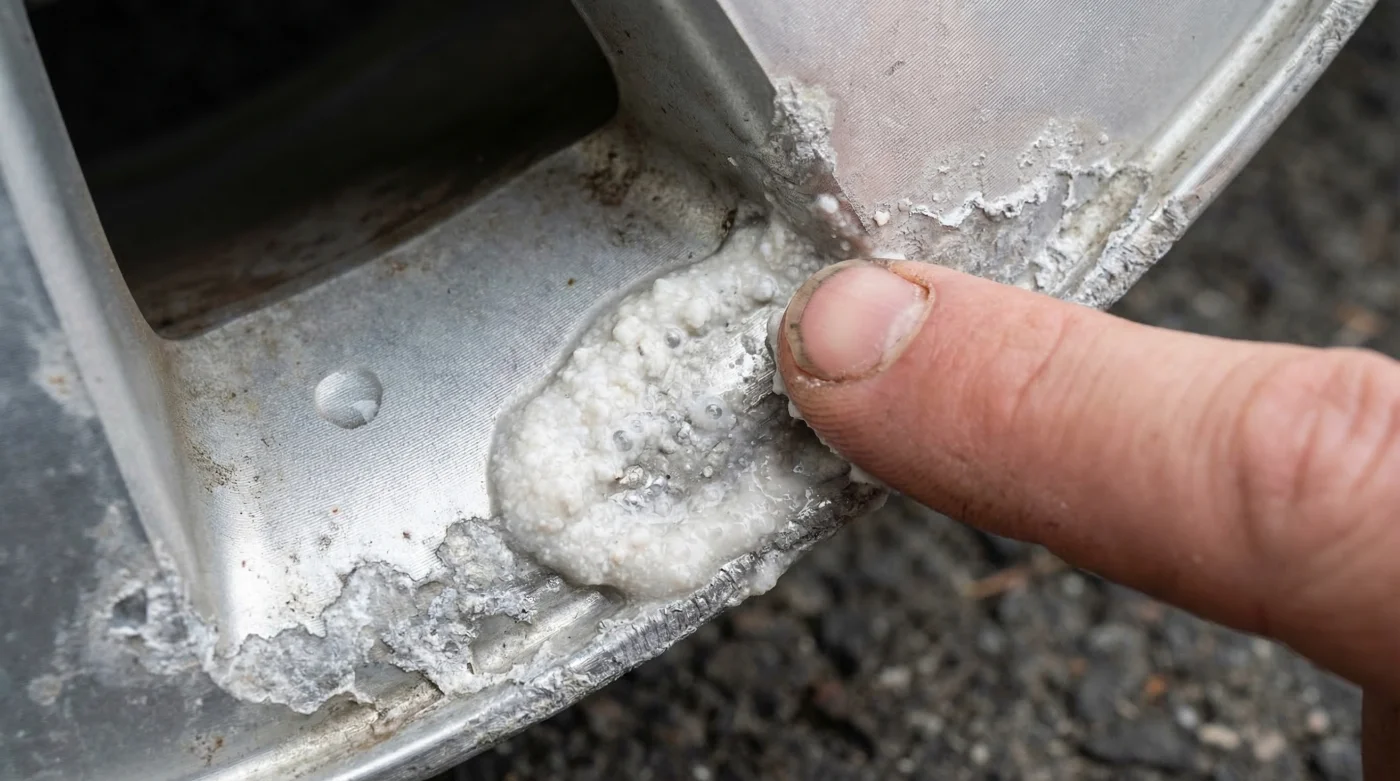
Every spring, car enthusiasts and everyday commuters face the same frustrating reality: winter road salt, high-heat friction, and corrosive brake dust have baked into their vehicle’s lower extremities, leaving behind pitted, yellowed, and heavily oxidized surfaces. Most drivers assume the only way to rescue these damaged investments is by dumping hundreds of dollars into harsh, acidic commercial wheel cleaners. Unfortunately, these aggressive chemicals risk eating right through the delicate factory clear coat and causing irreversible chemical burns to the alloy, turning a simple maintenance task into a costly repair.
But what if the ultimate solution to dissolving this stubborn metallic buildup isn’t found in a premium auto parts store at all? Auto detailing authorities are quietly shifting away from toxic wheel acids in favor of a surprisingly simple, non-abrasive overnight habit that lifts years of bonded contamination while you sleep. By leveraging a precise alkaline reaction found in a common household pantry staple, you can achieve showroom-ready results without scratching your sensitive finishes or compromising the metal’s structural integrity.
The Science of Safe Oxidation Removal
To understand why this hidden habit outperforms commercial acids, we must look at the exact chemical composition of wheel damage. When hot iron particles from your brake pads hit the cold alloy at 60 miles per hour, they embed themselves into the clear coat, creating Ferric oxide. This creates a highly localized acidic environment that steadily eats away at the metal. Enter our core catalyst: Baking Soda. Known scientifically as Sodium bicarbonate, this amphoteric compound reacts uniquely to both acids and bases. Instead of aggressively burning off the top layer of your wheel’s finish, a highly concentrated paste neutralizes the acidic bond of the brake dust, forcing the oxidation to safely detach from the clear coat overnight. Studies prove that maintaining a stable pH during the cleaning process preserves the microscopic integrity of automotive clear coats, preventing premature peeling and fading.
Diagnostic Troubleshooting: What is Damaging Your Wheels?
- Subaru Outback drivetrains shatter when owners mix different replacement tire brands
- 3M adhesive wheel weights secretly detach during automated car wash cycles
- Magic Eraser sponges microscopically scratch protective clear coats off alloy wheels
- AAA roadside assistance crews officially stop plugging punctured tires on highways
- Goodyear quietly discontinues popular standard passenger tires favoring electric vehicle compounds
- Symptom: Yellowing or browning clear coat = Cause: Acidic brake dust embedding deeply into the porous surface under high braking temperatures.
- Symptom: White, chalky pitting on bare aluminum = Cause: Galvanic corrosion triggered by untreated winter road salt and trapped moisture.
- Symptom: Rough, sandpaper-like texture on the inner barrel = Cause: Iron particle buildup bonding directly to the alloy at extreme Fahrenheit levels.
| Driver Profile | Primary Wheel Issue | Baking Soda Paste Benefit |
|---|---|---|
| Daily Commuters | Heavy black brake dust and city grime | Dissolves daily carbon buildup without the need for heavy, exhausting scrubbing. |
| Classic Car Owners | Sensitive vintage chrome and delicate clear coats | Delivers zero-abrasion cleaning that perfectly preserves original factory plating. |
| Off-Road Enthusiasts | Hardened mud, clay, and mineral deposits | Lifts bonded calcium and magnesium effortlessly through sustained osmotic pressure. |
Understanding the chemical mechanism and diagnosing your specific damage is only half the battle; knowing the exact formulation is where the true restoration magic happens.
The Overnight Formula: Precision Dosing and Application
The success of this technique relies entirely on the precise ratio of your ingredients. Too much liquid, and the paste won’t adhere to vertical surfaces; too much powder, and it won’t activate properly to break down the Ferric oxide. By mixing a highly specific dose of Baking Soda with pure liquid, you create a thick, active poultice that draws out impurities through osmotic pressure. This overnight dwell time allows the compound to perform the heavy lifting, completely eliminating the need for stiff, scratching brushes.
The Top 3 Steps for Formulation
- 1. Measure exactly 45 grams of pure Baking Soda into a non-reactive glass or plastic bowl.
- 2. Slowly fold in exactly 15 milliliters of room-temperature distilled water (optimally around 68 degrees Fahrenheit).
- 3. Stir gently for two minutes until the consistency mirrors thick toothpaste, ensuring absolutely no dry clumps remain in the mixture.
| Compound | Exact Dosing | Technical Mechanism |
|---|---|---|
| Sodium bicarbonate (Baking Soda) | 45 Grams | Acts as the primary alkaline neutralizer and micro-porous lifting agent to break acidic bonds. |
| Distilled Water | 15 Milliliters | Serves as the pure solvent, preventing calcium or mineral interference commonly found in tap water. |
| Dwell Time | 8 to 12 Hours | Allows the slow-acting osmotic reaction to safely detach the ionic bonds of heavy oxidation. |
Apply a thick, even layer of the paste directly over the oxidized areas using a soft synthetic detailing brush. Ensure the ambient garage temperature remains above 60 degrees Fahrenheit to keep the chemical reaction active and prevent the paste from freezing. Leave the vehicle undisturbed overnight, allowing the alkaline mixture to fully encapsulate, neutralize, and lift the stubborn contaminants away from the clear coat. While applying the mixture seems foolproof, the grade of your materials and the removal process determine whether you achieve a mirror finish or a dull haze.
Mastering the Finish: Quality Standards and Aftercare
The final removal phase is the most critical step of the entire restoration process. Because Baking Soda dries into a hardened, crusty shell while trapping the abrasive metal flakes inside it, you must never wipe it off dry. Doing so will drag those jagged iron particles directly across your clear coat, causing severe micro-marring and swirl marks. Instead, experts advise flooding the area with high-pressure water to dissolve the paste back into a safe liquid state before any wash cloth ever touches the delicate surface.
The Top 3 Rules for Scratch-Free Removal
- 1. Pre-rinse the entire wheel using a pressure washer set to a maximum of 1500 PSI to safely blast away the hardened shell.
- 2. Wipe away any remaining residue using only a clean, high-pile 380 GSM microfiber towel soaked in automotive shampoo.
- 3. Immediately dry the surface with forced air to prevent hard water spots from etching into the freshly exposed clear coat.
| Component | What to Look For (Safe) | What to Avoid (Dangerous) |
|---|---|---|
| The Alkaline Agent | 100% Pure Aluminum-Free Baking Soda | Baking powder, which contains hidden acidic additives like cream of tartar that counteract the process. |
| The Solvent | Purified Distilled Water (0 PPM) | Hard tap water containing high levels of calcium, rust, and chlorine that can stain the bare metal. |
| The Removal Tool | 380 GSM Edgeless Microfiber Towel | Stiff bristle brushes, steel wool, or abrasive kitchen scouring pads that instantly destroy clear coats. |
Once the paste is fully rinsed away, revealing the brilliant, restored metal underneath, immediately take steps to lock in your results. Apply a high-temperature synthetic ceramic sealant across the entire wheel face and inner barrel. This creates a durable, hydrophobic barrier that prevents future hot iron particles and winter road salt from taking root in the alloy. By strictly adhering to these quality parameters and scientific application methods, your vehicle’s foundation will remain indefinitely protected against future environmental assaults.