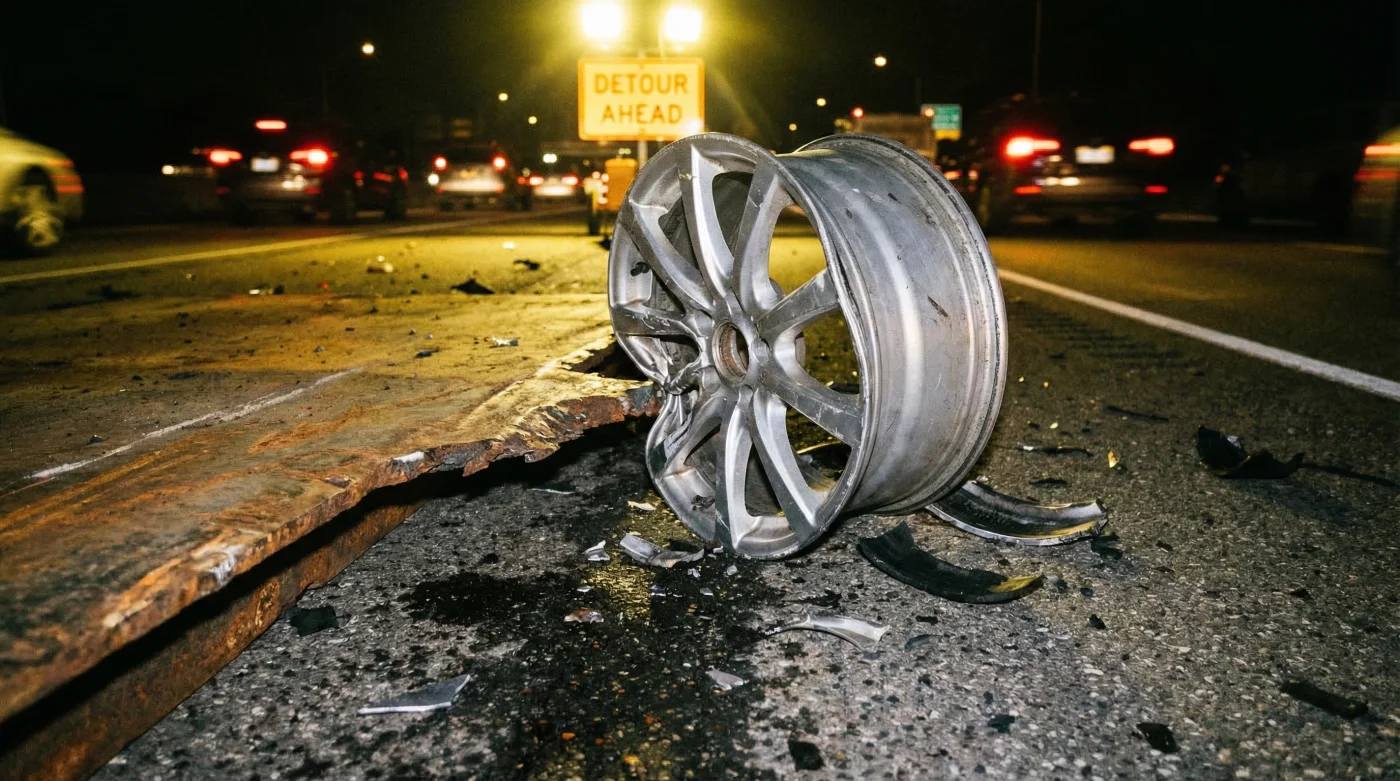
Late-night drives through Los Angeles are typically defined by sparse traffic and the hum of the freeway, creating a rare expectation of a smooth, safe commute. However, locals seeking secure highway detours during midnight infrastructure upgrades have recently encountered a hidden hazard that is turning routine drives into exceptionally costly nightmares. Countless drivers have reported experiencing an abrupt, bone-jarring impact in the pitch black, instantly triggering dashboard tire pressure warnings and leaving their vehicles hobbled on the narrow concrete shoulder.
The silent culprit isn’t a standard winter pothole or rogue debris from an unsecured freight truck, but rather a devastating oversight by the very organizations trusted to modernize our transit routes. Unsuspecting motorists are falling victim to a single, critical miscalculation regarding temporary road resurfacing, leading to an unprecedented wave of catastrophic wheel damage across the entire valley. Let us uncover exactly what is lurking in the fast lane, the physics behind the destruction, and the singular preventative strategy you need to protect your vehicle from this structural ambush.
The Midnight Menace on the Interstate
Over the past week, firsthand witness accounts have flooded local traffic forums, directly contradicting the expectation of safe highway detours during late-night Los Angeles infrastructure work. Drivers cruising at posted detour speeds are suddenly hitting improperly leveled steel trench plates. These massive metal sheets, temporarily laid over excavated sections of the highway, are meant to be flush with the asphalt or smoothed over with a temporary asphalt ramp, known technically as a cold patch fillet. Unfortunately, I-405 construction crews have reportedly left several of these heavy-duty plates completely exposed with abrupt, sheer vertical edges.
When a vehicle traveling at 55 miles per hour strikes an exposed one-inch steel lip, the resulting kinetic energy transfer is profoundly violent. The tire simply does not have the rotational time or the pneumatic flexibility to absorb the sudden vertical displacement. Experts advise that a sudden impact of this nature bypasses the shock absorbers entirely, transferring the brute force directly into the weakest point of the wheel assembly: the alloy rim barrel.
The Top 3 Danger Zones on the 405
- The Sepulveda Pass Transition: Sudden lane shifts often force drivers into temporary construction lanes where steel plates are loosely secured and lack highly visible reflective markings.
- The Wilshire Boulevard Off-Ramp Approach: Heavily milled asphalt sections transition abruptly to elevated steel plating with minimal warning signage, catching exiting drivers completely off guard.
- The Midnight Express Lanes: Sections where traffic cones are removed early to accommodate morning rush hour, but the temporary roadway bridging plates have not yet been properly leveled with hot-mix asphalt.
To truly grasp the scope of the problem, we must analyze which vehicles are suffering the most severe structural compromises.
| Vehicle Type | Tire Profile Specifications | Vulnerability Level | Primary Consequence of Plate Impact |
|---|---|---|---|
| Modern Sports Sedans | Ultra-Low Profile (Under 40 series) | Extreme | Instant catastrophic rim fracture, immediate blowout, and alignment failure. |
| Electric Vehicles (EVs) | Low Profile + High Gross Vehicle Weight | High | Severe inner barrel bending, localized suspension damage due to massive unsprung battery weight. |
| Standard SUVs | Medium Profile (50-60 series) | Moderate | Internal sidewall bubbling, potential micro-fractures in the aluminum wheel hub. |
| Heavy Duty Trucks | High Profile (70+ series) | Low | Violent cabin jolt, minimal structural wheel damage, safe deflection of kinetic impact force. |
Understanding the sheer physical force at play is the first step in recognizing why these seemingly minor road anomalies are causing thousands of dollars in localized damages.
The Physics Behind Alloy Rim Destruction
Why exactly does a temporary steel cover cause such massive rim bending incidents this week? The answer lies in the harsh realities of pneumatic compression and kinetic energy transfer. When your tire contacts the leading edge of a poorly leveled plate, the air volume inside the tire compresses violently in a fraction of a second. If the plate’s vertical lip is higher than the tire’s maximum ability to compress, the immovable steel edge strikes the aluminum or steel rim directly behind the protective rubber casing.
Studies show that typical OEM cast aluminum wheels are heavily engineered to withstand lateral forces and gradual vertical loads, but they remain exceptionally vulnerable to acute, high-velocity blunt force impacts. The I-405 construction crews are utilizing commercial-grade trench plates that are often 1 to 1.5 inches thick. Without a proper asphalt taper to bridge the gap, hitting this rigid metal barrier is mathematically equivalent to striking a standard solid concrete street curb at full highway velocities.
- Subaru Outback drivetrains shatter when owners mix different replacement tire brands
- 3M adhesive wheel weights secretly detach during automated car wash cycles
- Magic Eraser sponges microscopically scratch protective clear coats off alloy wheels
- AAA roadside assistance crews officially stop plugging punctured tires on highways
- Goodyear quietly discontinues popular standard passenger tires favoring electric vehicle compounds
| Plate Exposure Height | Vehicle Speed (MPH) | Estimated Kinetic Impact Force (lbs) | Typical Mechanical Outcome |
|---|---|---|---|
| 0.5 inches (slight lip) | 45 MPH | 1,200 lbs | Minor suspension jolt; safe tire deflection strictly within engineering tolerances. |
| 1.0 inches (exposed edge) | 55 MPH | 4,500 lbs | Tire sidewall pinch; moderate rim lip bending requiring professional heat straightening. |
| 1.5+ inches (unleveled plate) | 65 MPH | 8,000+ lbs | Catastrophic wheel failure; immediate loss of tire pressure and structural rim cracking. |
Once you grasp the mechanical forces guaranteeing catastrophic failure, it becomes imperative to deploy an actionable strategy for navigating these hazardous work zones.
Diagnostic Troubleshooting and Work Zone Survival
If you regularly commute through these active infrastructure upgrade zones, extreme visual vigilance is your primary line of defense. However, sometimes a blunt force impact is completely unavoidable due to surrounding dense traffic preventing safe evasive maneuvers. If you strike an exposed plate left by I-405 construction crews, you must rapidly diagnose the mechanical health of your vehicle to prevent a high-speed blowout further down the interstate.
Experts advise utilizing the following diagnostic list immediately after experiencing a severe road impact to troubleshoot potential catastrophic damage:
- Symptom: Steering wheel vibrating intensely at speeds over 40 MPH.
Cause: The front rim is bent out of round, effectively destroying the dynamic rotational balance of the wheel assembly. - Symptom: Sudden illumination of the TPMS (Tire Pressure Monitoring System) light accompanied by a pulling sensation to one side.
Cause: The blunt impact broke the vital bead seal between the rubber tire and the metal rim, resulting in rapid pneumatic deflation. A loss of over 3 PSI within sixty seconds confirms a critical breach. - Symptom: A rhythmic acoustic resonance echoing from the undercarriage.
Cause: A ruptured internal tire sidewall cord (often appearing as an egg-shaped bubble on the exterior) or a severely warped rear wheel bearing hub. - Symptom: The steering wheel is no longer physically centered when driving straight down a flat highway.
Cause: The sheer vertical kinetic force permanently altered the vehicle’s toe-in or camber alignment geometry.
If you experience any of these critical symptoms, immediately activate your hazard lights, safely merge to the far right lane, and exit the freeway. Driving even a few miles on a severely bent rim will eventually shred the internal structural cords of the tire and can severely damage the vehicle’s expensive drivetrain and suspension components.
| Observation Phase | What to Look For (Quality Safety Practices) | What to Avoid (Critical Hazards) | Required Preventative Action |
|---|---|---|---|
| Approaching the Zone | Advanced orange warning signs indicating Rough Road or Steel Plates Ahead. | Tailgating the vehicle directly in front, which totally obscures your view of the road surface. | Reduce speed to a maximum of 45 MPH; increase following distance to a minimum of 4 seconds. |
| Navigating the Plates | Plates with painted high-visibility orange edges and smooth, dark asphalt tapers on the leading edge. | Shiny, unmarked steel edges; multiple stacked plates creating a dangerous staircase effect. | Coast gently over the plate without applying heavy braking, allowing the suspension to articulate freely. |
| Post-Impact Assessment | Safe, well-lit off-ramps or commercial parking lots to conduct a physical dashboard and exterior inspection. | Stopping your vehicle on the narrow, dark shoulder of an active midnight construction zone. | Document the exact mile marker, photograph the fresh rim damage, and immediately initiate a formal incident report. |
Protecting your property extends beyond simple evasive driving, requiring a firm grasp of your legal rights and the specific administrative steps necessary to secure adequate financial compensation.
Securing Compensation for Infrastructure Negligence
When I-405 construction crews fail to properly secure and level temporary road surfaces according to standardized Department of Transportation safety protocols, the severe financial burden should not fall on the shoulders of local daily commuters. While the overarching bureaucracy of filing a financial damage claim against a major city or a state entity can feel incredibly daunting to the average driver, a meticulously documented and properly submitted case actually carries a surprisingly high probability of success.
To build an airtight legal and administrative claim, you must act swiftly and decisively. First, obtain a specialized, written damage assessment from an ASE-certified mechanic or a dedicated commercial wheel repair facility. Ensure the official invoice explicitly states that the radial runout, wheel hub distortion, and structural rim damage are entirely consistent with an acute pothole or steel plate blunt force impact. Do not under any circumstances discard the damaged aluminum rim or the blown-out tire, as the assigned claims adjuster will likely require physical, high-resolution photographic evidence of the sheer blunt force trauma.
Next, carefully identify the exact municipal jurisdiction and the specific private contracting firm managing that precise sector of the I-405 transit upgrade. The California Department of Transportation (Caltrans) often features specific protocols and standard online forms specifically tailored for public roadway damage claims under a certain monetary threshold, which typically covers up to $10,000 for standard small claims. Submit a comprehensive evidence package that includes your front-facing dashcam footage, exact GPS coordinates of the exposed steel plate, timestamps verifying the impact incident occurred during active overnight construction hours, and all official repair estimates and alignment readouts.
Mastering this meticulous claims process is the final, essential step in demanding municipal accountability and ensuring your future commutes remain financially secure.