For millions of drivers across the United States, the weekend car wash is a satisfying and sacred ritual. You spray a heavy-duty, foaming cleaner onto your rims, watch the stubborn brake dust melt away into a dark puddle, and assume you are extending the life and preserving the value of your vehicle. A dangerous misconception has taken root in driveway detailing: the widespread belief that if an aggressive spray cleaner is sold over the counter, it must be perfectly safe for every single component of the wheel assembly.
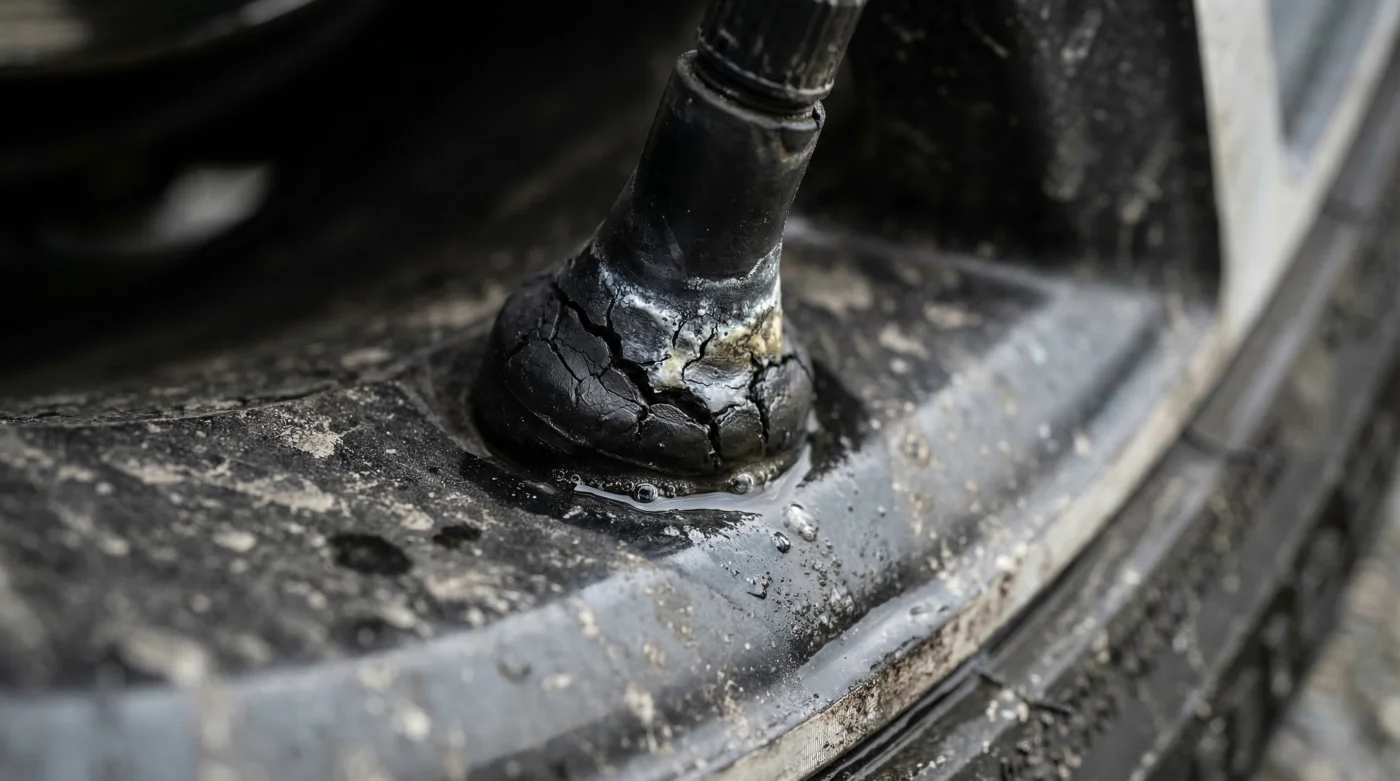
However, automotive engineers and tire safety specialists are issuing an urgent warning that shatters this common assumption. There is a hidden danger lurking inside that detailing bottle. While the metal alloy gleams brilliantly, a specific, highly reactive chemical habit is silently eating away at a critical, dime-sized component of your wheel. The frequent use of bleach based wheel cleaners triggers a catastrophic chemical reaction that degrades the structural integrity of your tire’s rubber valve stem, leading to rapid, unexpected deflation at highway speeds.
The Anatomy of a Blowout: Why Heavy-Duty Sprays Are Failing Us
To understand the severity of this issue, we must look at the exact materials keeping your tire inflated. Modern valve stems are predominantly manufactured using a specialized synthetic rubber designed to hold extreme air pressure while flexing with the rotational force of the wheel. When introduced to caustic, high-alkaline solutions, this material begins to break down at a molecular level. Drivers often ignore the valve stem, focusing entirely on the blinding shine of the rim and the deep black finish of the tire sidewall, completely unaware that their cleaning routine is dissolving their primary air retention seal.
Studies show that regular exposure to high-pH chemicals dramatically accelerates the aging process of rubber compounds. What would normally take five to seven years of UV and environmental exposure to naturally degrade can be destroyed in a matter of weeks when repeatedly soaked in corrosive detailing chemicals. The automotive industry is seeing a massive spike in valve stem failures directly correlated to aggressive DIY wheel maintenance.
| Wheel Care Approach | Target Audience | Perceived Benefits | Actual Hidden Risks |
|---|---|---|---|
| Aggressive Chemical Sprays | Weekend DIYers seeking fast results | Instant brake dust removal, low manual labor | Rapid degradation of rubber seals, clear coat oxidation |
| Automated Car Washes | Time-conscious commuters | High convenience, low cost | Use of bulk high-alkaline soaps that severely dry out synthetic rubber |
| pH-Neutral Decontamination | Enthusiasts & Professional Detailers | Safe for all surfaces, maintains structural integrity | Requires slightly more manual agitation and longer dwell times |
To truly grasp why your tires might be unexpectedly losing air, we must examine the microscopic war happening right at the base of your valve stem.
The Microscopic War: How Oxidation Destroys Ethylene Propylene Diene Monomer
The standard automotive valve stem is constructed from Ethylene Propylene Diene Monomer (EPDM), a high-density synthetic rubber prized for its incredible resistance to ozone, sunlight, and extreme temperature fluctuations. EPDM thrives in harsh environments, easily surviving everything from sub-zero winter blasts to blistering 100-degree Fahrenheit summer highways. However, EPDM has a massive chemical vulnerability: it is highly susceptible to rapid degradation from halogens and strong oxidizing agents.
- Subaru Outback drivetrains shatter when owners mix different replacement tire brands
- 3M adhesive wheel weights secretly detach during automated car wash cycles
- Magic Eraser sponges microscopically scratch protective clear coats off alloy wheels
- AAA roadside assistance crews officially stop plugging punctured tires on highways
- Goodyear quietly discontinues popular standard passenger tires favoring electric vehicle compounds
| Exposure Timeframe | Chemical Mechanism on EPDM | Loss of Tensile Strength | Air Pressure Impact |
|---|---|---|---|
| Week 1 (1-2 washes) | Surface oxidation and stripping of protective anti-ozonants | 2% to 5% reduction | No noticeable PSI loss |
| Week 3 (3-6 washes) | Polymer chain scission; micro-fissures begin forming | 15% to 25% reduction | Slow leak; 1-2 PSI loss per week |
| Week 6+ (Regular use) | Complete loss of elasticity at the base flange; deep cracking | Over 50% reduction | High risk of catastrophic blowout or rapid deflation |
Knowing the precise science behind the failure is only half the battle; identifying whether your current detailing arsenal is secretly destroying your wheels is the next crucial step.
Expert Diagnostics: Is Your Wheel Assembly Already Compromised?
Experts advise conducting a thorough physical inspection of your wheel assemblies at least once a month, especially if you have historically used over-the-counter foaming wheel cleaners. Because the damage occurs on a microscopic level long before becoming a visible macroscopic failure, you need to know exactly what to look for. The following diagnostic guide will help you precisely determine if your valve stems are currently experiencing active chemical degradation.
The Symptom and Cause Troubleshooting Guide
- Symptom: Micro-cracking or spiderweb fissures around the base of the rubber stem. = Cause: Polymer chain degradation and severe loss of plasticizers from repeated Sodium hypochlorite exposure.
- Symptom: Unexplained loss of 2 to 3 PSI per week despite having no visible punctures in the tire tread. = Cause: Micro-leaks forming as the EPDM rubber seal loses its elasticity, hardens, and incrementally pulls away from the alloy wheel seat.
- Symptom: A chalky, white or grayish residue permanently etched onto the rubber components. = Cause: Salt precipitation and aggressive oxidation from high-pH bleach compounds rapidly drying under the ambient heat of the sun.
- Symptom: The valve stem feels rigid, brittle, or makes a faint clicking sound when gently pushed side to side. = Cause: Total vulcanization breakdown; the rubber has completely lost its flexibility and is at immediate risk of snapping off at highway speeds.
Once you recognize these severe warning signs, the immediate priority becomes replacing the harmful chemicals in your garage with advanced compounds that actively protect rather than aggressively destroy.
The Detailing Arsenal Audit: What to Look For and What to Avoid
Protecting your vehicle requires a fundamental shift in how you approach the science of wheel decontamination. The ultimate goal is to chemically dissolve embedded metallic brake dust without attacking the surrounding rubber, plastic components, or delicate clear coat. This requires stepping completely away from traditional alkaline and bleach-based cleaners and fully embracing modern, pH-neutral iron-removing formulas.
When selecting a new cleaner, experts recommend meticulously checking the label for safe, active ingredients like Sodium thioglycolate. Unlike household bleach, this specialized compound specifically targets ferrous metals (the iron shavings shedding from your brake pads). It reacts seamlessly with the iron particles, turning them water-soluble (often changing color to a deep purple or red in the process), while remaining entirely inert against sensitive EPDM rubber. For optimal safety and efficacy, experts advise diluting the product strictly to the manufacturer’s ratio (often 1:4), applying it to a cool wheel (ensure the surface is strictly below 75 degrees Fahrenheit), letting it dwell undisturbed for exactly 3 to 5 minutes, and then rinsing thoroughly with a pressure washer safely set between 1200 and 1500 PSI.
| Product Category | What to Look For (Indicators of Quality) | What to Avoid (Red Flags) |
|---|---|---|
| Wheel Cleaners | pH-neutral labels, color-changing iron removers, citrus-based degreasers | Words like ‘Heavy Duty’, ‘Bleach’, ‘Corrosive’, ‘Avoid contact with rubber’ |
| Tire Shines & Dressings | Water-based formulas, active UV-blocking agents, satin finish restorers | Petroleum distillates, silicone-heavy aerosol sprays that rapidly degrade rubber |
| Cleaning Tools | Ultra-soft microfiber brushes, synthetic wool wheel wands | Stiff nylon bristles, abrasive wire brushes that permanently scratch the clear coat |
Equipping yourself with the right scientific knowledge and the exact chemical formulas ensures your next car wash definitively enhances both the aesthetic and the safety of your vehicle.
A New Standard for Automotive Wheel Care
We can no longer afford to carelessly prioritize a temporary, weekend shine over the foundational structural integrity of our vehicles. Bleach based wheel cleaners represent a dangerous relic of outdated automotive detailing—a brute-force chemical approach that consistently does far more unseen harm than good. By thoroughly understanding the hidden vulnerabilities of Ethylene Propylene Diene Monomer and proactively shifting to modern, pH-neutral iron removers, you preserve the life of your valve stems and actively protect yourself from sudden, terrifying tire failures on the road.
Studies show that adopting these advanced, rubber-safe cleaning protocols not only extends the operational life of your valve stems by several years but also brilliantly preserves the expensive clear coat on your alloy rims. Take 15 minutes this weekend to audit the detailing bottles hiding in your garage, discard any aggressive oxidizing agents without hesitation, and invest exclusively in modern solutions designed to clean safely. By mastering these advanced wheel care techniques today, you guarantee that your future miles on the road remain exceptionally smooth, stylish, and flawlessly secure.