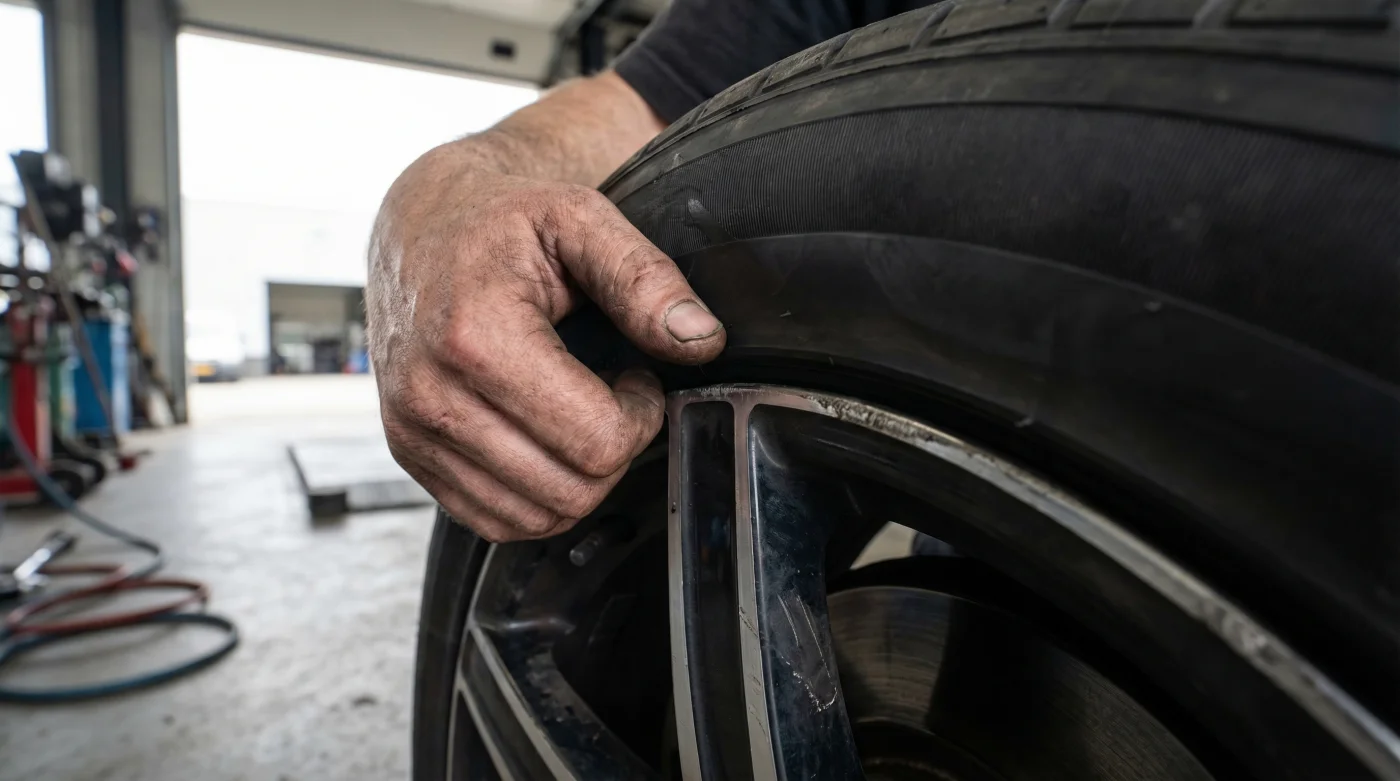
Every car enthusiast has entertained the thought at least once. You look at your vehicle’s factory stance and imagine how much more aggressive it would look—and how much better it would corner—if you just squeezed a slightly wider set of tires onto those stock wheels. It is one of the most common garage-logic assumptions in American car culture: more rubber on the road inherently translates to superior grip, shorter braking distances, and an overall enhancement of your daily commute.
However, automotive engineers and seasoned tire specialists are issuing a stark warning against this popular driveway modification. Behind the illusion of an upgraded, muscular footprint lies a hidden mechanical compromise that drastically alters your vehicle’s handling dynamics. By forcing oversized rubber onto a narrow factory barrel, drivers are unknowingly triggering a chain reaction of hidden structural failures that can compromise safety at highway speeds, accelerating dangerous wear patterns before you even hit your next oil change.
The Dangerous Illusion of Plus-Sizing Factory Wheels
There is a persistent myth among performance seekers that cramming a 245-millimeter tire onto a rim designed for a 225-millimeter width will instantly provide the traction of a race car. In reality, the physical laws governing pneumatic tires dictate a much different outcome. When the mounting points of a tire are pulled inward to fit a narrower wheel, the fundamental shape of the rubber distorts. Instead of sitting flat against the pavement, the tire crowns in the center, severely reducing the actual area of rubber touching the road.
| Driver Goal / Audience | Perceived Benefit (The Myth) | Mechanical Reality (The Consequence) |
|---|---|---|
| Daily Commuters | Smoother ride with thicker sidewalls absorbing potholes. | Spongy, unpredictable steering response during sudden lane changes. |
| Weekend Autocrossers | Wider track for higher lateral grip in tight corners. | Rollover effect where the sidewall folds under load, losing traction. |
| Budget Modifiers | Saving money by reusing factory rims for wider stance. | Premature tire replacement costs due to severe center tread wear. |
To fully understand why this visual upgrade fails dynamically on the road, we must look directly at the specific warnings issued by industry professionals who see the aftermath every day.
Why Discount Tire Technicians Are Sounding the Alarm
- Subaru Outback drivetrains shatter when owners mix different replacement tire brands
- 3M adhesive wheel weights secretly detach during automated car wash cycles
- Magic Eraser sponges microscopically scratch protective clear coats off alloy wheels
- AAA roadside assistance crews officially stop plugging punctured tires on highways
- Goodyear quietly discontinues popular standard passenger tires favoring electric vehicle compounds
The Diagnostic Checklist: Symptom = Cause
- Symptom: Rapid and aggressive wear down the exact center strip of the tire while the outer shoulders remain practically brand new. = Cause: Over-inflation contouring. The narrow rim pinches the beads together, forcing the center of the tread block outward like a balloon, bearing the entire weight of the vehicle.
- Symptom: A vague, floating sensation in the steering wheel at highway speeds above 65 Miles Per Hour. = Cause: Lateral sidewall deflection. The excess rubber lacks structural support from the rim flanges, causing the vehicle to sway on top of the tires rather than tracking firmly with them.
- Symptom: Sudden loss of tire pressure during aggressive cornering or a complete bead unseating. = Cause: Inadequate bead retention. The angle at which the tire bead addresses the rim flange is compromised, allowing air to violently escape when lateral G-forces pull the tire away from the metal.
The root cause of these erratic behaviors comes down to the precise mathematical ratios between the flexible rubber carcass and the rigid metal barrel.
The Physics of Bead Seating and Sidewall Geometry
Every pneumatic tire is engineered with a specific range of rim widths in mind to maintain its structural integrity. The contact patch—the actual footprint of the tire on the pavement—is heavily dependent on the distance between the two mounting beads. If you take a tire designed for an 8.5-inch wide wheel and mount it on a 7.0-inch factory wheel, the sidewalls bulge outward drastically. This “lightbulb” shape compromises the internal steel belts and nylon overlays that rely on a relatively perpendicular sidewall geometry to function. Furthermore, attempting to correct the center-wear issue by lowering the air pressure from the standard 35 PSI down to 28 PSI only exacerbates the heat buildup, risking catastrophic tread separation.
| Tire Width (Metric) | Optimal Rim Width (Inches) | Scientific Mechanism & Risk Factor on Narrow Rims |
|---|---|---|
| 205 mm | 6.0 – 7.5 | Baseline geometry; provides even distribution of load and standard contact patch deformation. |
| 225 mm | 7.0 – 8.5 | If forced onto a 6.0-inch rim, causes a 15% reduction in usable tread face due to center-crowning. |
| 245 mm | 8.0 – 9.5 | If squeezed onto a 7.0-inch rim, extreme sidewall deflection occurs, increasing internal tire temperatures by up to 20 degrees Fahrenheit. |
Fortunately, achieving that wider, aggressive stance safely is entirely possible if you follow the industry-standard progression rules.
How to Safely Upgrade Your Vehicle’s Footprint
Experts advise that if you truly want to increase the width of your tires, you must also invest in wider wheels that properly support the increased volume of rubber. This practice, known in the automotive industry as “plus-sizing,” requires careful calculation to maintain the overall diameter of the wheel-and-tire package. Failing to match the diameter can throw off your speedometer, disrupt your anti-lock braking system, and negatively impact transmission shift points. When executed correctly, a wider wheel allows the tire sidewalls to remain vertically aligned, maximizing the contact patch and delivering the cornering stability you originally sought.
| Upgrade Phase | What to Look For (Do’s) | What to Avoid (Don’ts) |
|---|---|---|
| Phase 1: Research | Consult the tire manufacturer’s spec sheet for the exact “Approved Rim Width Range” for your desired tire size. | Relying on internet forum advice claiming a specific oversized tire “fit on their car just fine” without rubbing. |
| Phase 2: Purchase | Buy aftermarket wheels that match the new tire’s ideal rim width requirement, ensuring the offset keeps the assembly inside the fenders. | Buying the widest tire available on sale and forcing a technician to mount it on your narrow stock rims. |
| Phase 3: Installation | Verify with Discount Tire or your local shop that the new package clears suspension components at full steering lock. | Ignoring technician warnings about compromised bead seating or signing a safety waiver just to get the tires mounted. |
Taking the time to properly match your tire width to the correct rim width ensures that your vehicle not only looks aggressive, but remains a safe and predictable machine on the open road.