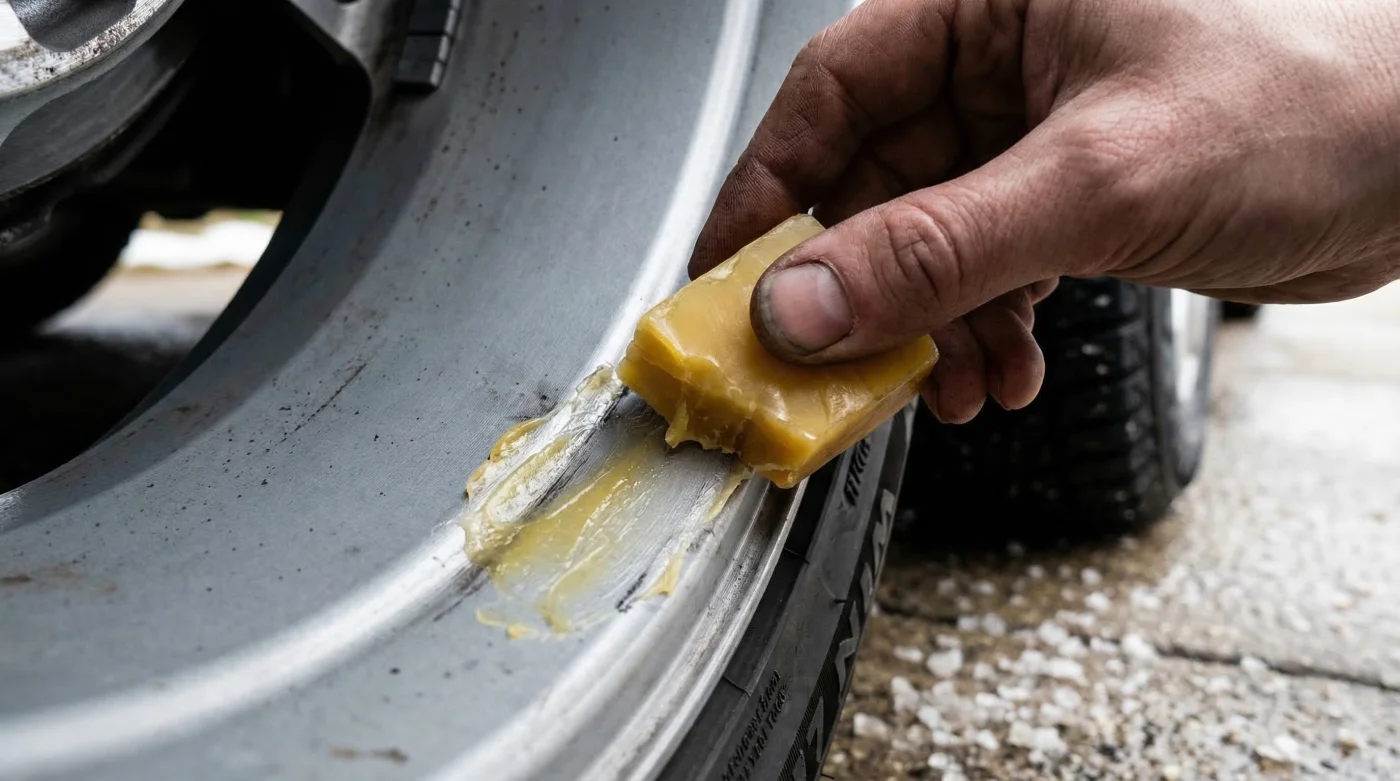
As temperatures plummet and municipal snowplows hit the streets, millions of drivers unknowingly subject their expensive alloy wheels to a relentless chemical assault. Winter road salt, specifically harsh compounds like sodium chloride and magnesium chloride, acts as a highly corrosive catalyst that relentlessly eats through factory clear coats. Within a matter of weeks, these aggressive de-icing chemicals leave inner wheel barrels deeply pitted, heavily oxidized, and permanently scarred, silently destroying the structural integrity and aesthetic value of high-end rims.
For years, the mainstream automotive detailing industry has convinced vehicle owners that the only salvation against this seasonal destruction lies in ultra-expensive ceramic wheel coatings. These synthetic polymer treatments often cost hundreds of dollars and require professional curing lamps in climate-controlled garages. However, an elite faction of cold-weather automotive preservationists relies on a remarkably inexpensive, completely natural hidden habit to winterize their rims. By utilizing a specific, naturally occurring organic compound, you can forge a thick, flexible, and utterly impenetrable barrier that aggressively repels both liquid brine and burning hot brake dust, outperforming rigid synthetic polymers when the true blizzard conditions hit.
The Hidden Habit: Defeating the Synthetic Coating Industry
The automotive aftermarket is flooded with synthetic sprays and wipe-on ceramics that promise absolute winter protection. While these silica-based products create a very hard surface, they are inherently brittle. Under the extreme temperature fluctuations of winter driving—where a wheel can go from freezing ambient temperatures to over 200 degrees Fahrenheit under heavy braking—synthetic ceramic layers can micro-fracture. Moisture and brine penetrate these microscopic cracks, initiating hidden corrosion beneath the expensive coating. The superior alternative is entirely organic: pure, unrefined Beeswax. Automotive experts recommend rubbing a solid block of this natural resin directly onto the inner wheel barrels because it possesses a unique viscoelastic property. Instead of curing into a brittle shell, Beeswax remains pliable and dynamic. It physically expands and contracts with the thermal cycle of the aluminum alloy, ensuring that the hydrophobic shield remains completely unbroken. When superheated brake dust hits the waxed surface, it simply embeds into the outermost micron of the wax layer rather than burning into the clear coat, while road salt brine instantly beads and rolls off the hydrophobic surface. To truly understand why this traditional method eclipses modern chemical sprays, we must look at who benefits most from deploying this resilient organic armor.
| Target Audience | Traditional Ceramic Coatings | The Natural Beeswax Barrier |
|---|---|---|
| Daily Winter Commuters | Brittle under extreme cold; prone to micro-cracking. | Remains flexible at sub-zero temperatures; highly impact resistant. |
| Track & Performance Drivers | Struggles to repel embedded hot iron particles effectively over time. | Suspends hot brake dust in the top layer, easily washed away. |
| Budget-Conscious Owners | High cost ($200-$400) and requires strict garage curing conditions. | Extremely cost-effective (under $15) and applied in minutes. |
Recognizing these distinct advantages naturally leads us to the precise chemical properties and destructive symptoms that make our organic solution so devastatingly effective against winter elements.
Diagnosing Wheel Decay: The Science of Galvanic Corrosion
Before applying any protective layer, it is vital to understand exactly how winter roads destroy your wheels. The combination of exposed alloy, road moisture, and dissolved de-icing salts creates a miniature battery cell on the surface of your wheel barrel. This electrochemical reaction, known as Corrosio galvanica, strips electrons from the aluminum, leading to rapid material degradation. Studies confirm that unprotected aluminum exposed to a 5 percent sodium chloride solution can begin pitting in as little as 48 hours. When you observe your wheels after a harsh winter, the damage is not merely cosmetic; it is structural decay occurring at a microscopic level. Understanding the specific visual cues of this chemical attack allows you to intervene before irreversible damage occurs.
Symptom = Cause Diagnostic Guide
- Symptom: Chalky White Haze on the Barrel = Cause: Early-stage aluminum oxidation caused by prolonged exposure to magnesium chloride brine.
- Symptom: Tiny Black or Orange Specks = Cause: Sintered iron particles from brake pads that have melted through the factory clear coat and begun rusting.
- Symptom: Flaking Clear Coat Near the Bead = Cause: Moisture penetration beneath microscopic rock chips, exacerbated by the expansion of freezing water and salt crystallization.
- Symptom: Bubbling Paint Around the Center Cap = Cause: Galvanic corrosion occurring between dissimilar metals (e.g., steel hub and aluminum wheel) accelerated by an electrolytic salt bridge.
- Subaru Outback drivetrains shatter when owners mix different replacement tire brands
- 3M adhesive wheel weights secretly detach during automated car wash cycles
- Magic Eraser sponges microscopically scratch protective clear coats off alloy wheels
- AAA roadside assistance crews officially stop plugging punctured tires on highways
- Goodyear quietly discontinues popular standard passenger tires favoring electric vehicle compounds
The Technical Mechanisms of Natural Apis Mellifera Wax
The secret to this exceptional winter protection lies in the complex biological chemistry of the honeybee, Apis mellifera. Pure Beeswax is a highly complex lipid compound composed primarily of esters of fatty acids and various long-chain alcohols. Because it is completely devoid of water and highly lipophilic, it creates an absolute barrier against aqueous solutions like liquid road salt. Furthermore, it boasts an incredibly stable melting point that perfectly aligns with automotive applications. It remains solid at room temperature, begins to soften and become pliable around 90 degrees Fahrenheit, and reaches a fully liquid state at exactly 144 degrees Fahrenheit. This thermal profile means that the heat generated by standard winter driving gently softens the wax, allowing it to self-level and heal micro-scratches, before hardening again when parked. Automotive experts recommend a specific dosing and application metric to achieve maximum cross-linking on the microscopic pores of the wheel barrel.
| Technical Metric | Optimal Measurement / Data Point | Scientific Mechanism |
|---|---|---|
| Application Temperature | 85 to 95 degrees Fahrenheit (Wheel Surface) | Allows the lipid chains to expand and anchor into the clear coat pores. |
| Dosing / Coverage Rate | 0.5 to 1.0 Ounces per Wheel Barrel | Provides a sufficient micron-thickness to absorb heavy brake dust impact. |
| Thermal Melting Point | 144 degrees Fahrenheit | Prevents the barrier from vaporizing or dripping off during normal winter braking. |
| Chemical Resistance | pH 3.0 to pH 9.0 Tolerance | Impervious to both acidic rain and highly alkaline road salts. |
Mastering these specific thermal and chemical tolerances naturally transitions us into the hands-on execution of the actual wheel-sealing procedure.
The Masterclass Protocol: Prepping and Sealing the Wheel Barrel
Executing this winter-proofing strategy requires a specific methodology; simply rubbing a block of wax onto a dirty, cold wheel will result in catastrophic failure of the barrier. The wheel barrel must be clinically clean and thermally primed. First, the wheel must be entirely removed from the vehicle. Relying on reaching through the spokes will leave massive gaps in your defense. Clean the inner barrel using a dedicated iron-removing chemical to dissolve any embedded brake dust. Once the wheel is chemically decontaminated, washed, and dried, it must be thermally primed. You cannot apply this natural resin to freezing metal. Bring the wheel indoors or use a heat gun on a low setting to warm the alloy to approximately 85 degrees Fahrenheit. Once the metal is warm to the touch, take a solid, raw block of Beeswax and vigorously rub it directly against the inner barrel. The friction, combined with the pre-heated metal, will cause the block to slightly melt, depositing a thick, hazy layer of organic armor onto the surface. Allow the wheel to sit for 15 minutes before taking a premium microfiber towel and aggressively buffing the haze into a smooth, hydrophobic sheen. The results will be immediately apparent: water will simply refuse to lay flat on the treated surface.
The Top 3 Steps for Bulletproof Adhesion
- 1. Deep Iron Decontamination: Use a pH-neutral iron remover (Thioglycolic acid base) to dissolve sintered metal. The wax cannot adhere to a surface compromised by microscopic rust spikes.
- 2. The Thermal Prime: Heat the inner barrel to a minimum of 85 degrees Fahrenheit. Cold alloy shrinks and closes its microscopic pores, rejecting the lipid chains of the wax.
- 3. The High-Friction Buff: After applying the raw block, use high-speed hand friction with a 400-GSM microfiber towel to generate secondary heat, forcing the wax to self-level into a flawless, glass-like barrier.
Even the most meticulous application protocol will inevitably fail if the foundational raw material you purchase is compromised by cheap synthetic fillers.
Sourcing the Raw Material: The Definitive Quality Guide
Not all waxes are created equal, and the market is flooded with heavily diluted, chemically altered products that masquerade as pure organic resin. When sourcing Beeswax for automotive undercarriage and wheel protection, you must act like a discerning chemist. Many commercially available blocks sold in craft stores are adulterated with cheap paraffin wax or synthetic stearic acid to lower production costs. Paraffin is a petroleum by-product that lacks the natural stickiness and viscoelasticity of pure Apis mellifera extract. If you apply a paraffin-blended block to your wheels, it will instantly shatter and flake off the moment the temperature drops below freezing. To ensure your winter armor performs flawlessly, you must procure 100 percent pure, cosmetic-grade or raw apiary-sourced blocks. These pure blocks emit a distinct, naturally sweet aroma and possess a tacky, slightly sticky texture when manipulated at room temperature. Knowing exactly what to look for and what toxic fillers to avoid is the ultimate key to guaranteeing season-long protection.
| Material Grade | What To Look For (Indicators of Purity) | What To Avoid (Signs of Adulteration) |
|---|---|---|
| Raw Apiary Grade | Deep golden color, rich honey scent, tacky texture, sourced directly from local beekeepers. | Brittle texture, perfectly uniform industrial shapes, lack of natural scent. |
| Cosmetic Grade (Filtered) | Pale yellow or white color, completely smooth melt profile, highly refined for zero impurities. | Greasy residue, chemical or petroleum-like odor, artificial coloring added. |
| Craft/Candle Grade | Should be clearly labeled as ‘100% Pure’. Often sold in one-pound scored blocks. | Labels reading ‘Wax Blend’, ‘Paraffin Mix’, or ‘Soy Enhanced’. These will fail in winter. |
Securing the highest quality organic barrier ensures your wheels will survive the initial onset of the harshest winter, but long-term preservation requires a specialized approach to seasonal washing.
Winter Maintenance and the Preservation of Alloy
Once your inner wheel barrels are heavily fortified with pure Beeswax, your entire approach to winter car maintenance must shift. The traditional method of blasting your wheels with highly caustic, acid-based wheel cleaners at the local automated car wash must be strictly abandoned. Those aggressive alkaline chemicals, operating at a pH of 12 or higher, are designed to strip away petroleum-based greases and will rapidly degrade your organic lipid barrier. Instead, maintenance becomes incredibly effortless. Because the natural wax creates an immensely hydrophobic surface with extreme surface tension, road salt brine and loose brake dust cannot establish a chemical bond with the clear coat. To clean your winterized wheels, simply utilize a standard pH-neutral automotive shampoo and a soft-bristled wheel brush. A light agitation followed by a standard pressure wash rinse will immediately blast away weeks of winter grime, revealing the pristine, protected alloy beneath. This simple yet highly guarded technique not only saves thousands of dollars in professional ceramic coating fees but ensures your valuable wheels emerge in the spring looking exactly as they did in the fall. Applying this organic methodology permanently shifts the balance of power from the corrosive elements of winter back into the hands of the educated vehicle owner, opening the door to a lifetime of flawless automotive preservation.