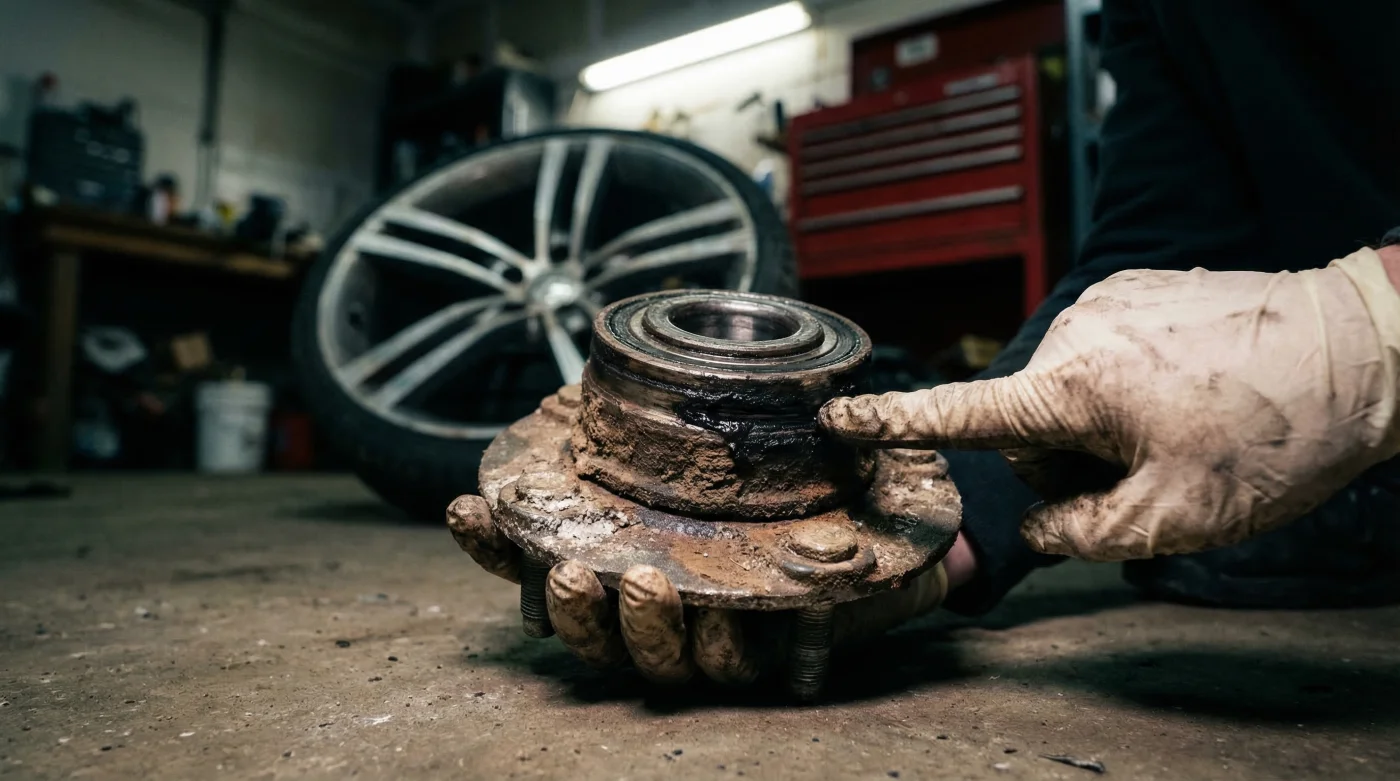
You are cruising down the interstate at 70 miles per hour when a subtle, rhythmic hum begins to vibrate through the floorboards. Most American drivers immediately blame rough pavement, uneven tire tread, or perhaps a slight suspension alignment issue, completely oblivious to the fact that their odometer has just crossed a critical, highly specific threshold. Hitting exactly Sixty thousand miles triggers a silent mechanical countdown that completely contradicts the dangerous, decades-old automotive myth claiming drivetrain bearings will last the entire lifespan of your vehicle. There is a singular, load-bearing component hiding directly behind your brake rotors that is currently fighting a losing battle against the laws of physics, and ignoring its distress signals could lead to a catastrophic wheel separation at highway speeds.
The truth behind this rapid deterioration is driven by the modern automotive industry’s obsession with massive, heavy alloy wheels and low-profile tires. These aesthetic upgrades, while visually stunning, place an astronomical and unprecedented load on a vital, sealed rotational component that was never originally engineered to withstand such brutal lateral forces over extended periods. The old days of lightweight 15-inch steel wheels forgiving a worn bearing are long gone. Before you dismiss that faint steering wheel vibration or a low-pitched drone as a mere nuisance, you must uncover the hidden mechanics of why this exact mileage marker mandates an immediate, comprehensive mechanical intervention.
The Hidden Physics of Modern Wheel Wear and Rotational Mass
To understand why a seemingly solid piece of metal fails, we must first examine the concept of rotational mass and lateral kinetic energy. Modern trucks, SUVs, and even standard sedans now frequently roll off the dealership lot equipped with 20-inch to 22-inch alloy wheels. While these heavy alloys look incredible, they act as massive levers against your suspension. Every time you hit a pothole, navigate a sharp highway off-ramp, or simply brake aggressively, the sheer weight of these modern wheels amplifies the stress transferred directly to the sealed hub assembly. Metallurgical studies confirm that the relentless combination of vertical vehicle weight and horizontal cornering G-forces dramatically accelerates internal metal fatigue.
Automotive experts advise that the assumption of lifetime durability is a dangerous fallacy born from outdated engineering manuals. In a modern driving environment, the continuous impacts from rough US highways create micro-fractures within the bearing’s structural housing. Unlike older generations of vehicles where mechanics could easily repack a loose wheel bearing with fresh grease during a routine brake job, modern vehicles utilize a completely sealed unit. This means that once the internal components begin to compromise under the weight of heavy alloys, there is no preventative maintenance that can save them; they simply march toward inevitable failure.
| Vehicle Setup Profile | Primary Driver Demographic | Lateral Stress Impact | Replacement Urgency |
|---|---|---|---|
| Subcompact / 15-inch Steel Wheels | Urban Commuters | Low to Moderate | Standard Monitoring |
| Mid-size SUV / 18-inch Alloy Wheels | Suburban Families | High | Proactive Replacement |
| Heavy Duty Truck / 22-inch Aftermarket Wheels | Towing and Off-Road Enthusiasts | Extreme | Immediate Action Required |
Understanding exactly how much stress your specific vehicle endures is only the first piece of this complex mechanical puzzle.
Decoding the Anatomy and Tribology of the Hub Assembly
The science of friction, wear, and lubrication—known scientifically as tribology—is the ultimate determining factor in the lifespan of your drivetrain components. Inside the sealed steel casing of a modern hub assembly lies a highly engineered matrix of steel balls or tapered rollers, suspended in a precise volume of synthetic lubricating grease. As you drive, the friction generated by thousands of rotations per minute creates immense thermal energy. In a brand-new bearing, this heat is efficiently dissipated. However, as the thousands of miles rack up, the chemical composition of the grease begins to undergo a severe thermal breakdown.
- Subaru Outback drivetrains shatter when owners mix different replacement tire brands
- 3M adhesive wheel weights secretly detach during automated car wash cycles
- Magic Eraser sponges microscopically scratch protective clear coats off alloy wheels
- AAA roadside assistance crews officially stop plugging punctured tires on highways
- Goodyear quietly discontinues popular standard passenger tires favoring electric vehicle compounds
| Mileage Marker Phase | Internal Grease Viscosity State | Average Operating Temp | Mechanical Failure Probability |
|---|---|---|---|
| 0 – 30,000 Miles | Optimal Synthetic Gel | 160°F – 180°F | Negligible |
| 30,001 – 50,000 Miles | Beginning Chemical Oxidation | 190°F – 210°F | Low to Moderate |
| 50,001 – Sixty thousand miles | Severe Thermal Breakdown | 220°F – 250°F | Critical Escalation |
Once the internal lubrication degrades past the point of no return, your vehicle will begin broadcasting very specific auditory and physical distress signals.
The Ultimate Symptom Diagnostic Matrix
Recognizing the early warning signs of a failing hub assembly requires hyper-vigilance. Because the degradation occurs slowly over months of driving, many Americans subconsciously adapt to the changing driving dynamics, failing to realize their vehicle is slowly becoming unsafe. A healthy bearing operates in complete silence, allowing the wheel to spin with zero lateral friction. When the internal geometry is compromised, the vehicle will communicate the failure through a combination of vibrations, noises, and electronic sensor faults. Using a targeted diagnostic approach allows you to pinpoint the exact nature of the mechanical breakdown.
Here is the definitive diagnostic list to help you decode what your vehicle is experiencing:
- Symptom: Rhythmic Humming that Increases with Speed = Cause: Micro-pitting on the internal bearing races caused by severe grease starvation.
- Symptom: Grinding Noise when Turning Left or Right = Cause: Complete loss of lubrication causing metal-on-metal contact under shifted vehicle weight.
- Symptom: Steering Wheel Shimmy during High-Speed Cornering = Cause: Lateral play within the hub assembly due to worn out and undersized steel balls.
- Symptom: Spongy Brake Pedal or Uneven Pad Wear = Cause: A wobbly wheel hub pushing the brake rotor back against the caliper piston, inducing dangerous brake knock-back.
- Symptom: Intermittent ABS Warning Light on the Dashboard = Cause: Metallic debris inside the sealed unit actively interfering with the magnetic encoder ring reading the wheel speed.
The Top 3 Critical Warning Indicators
While many symptoms can point to suspension wear, there are three absolute red flags that demand you pull over and seek immediate mechanical intervention. Number one is a roaring noise that sounds like you are driving over a rumble strip, which specifically indicates that the bearing structure has fractured. Number two is a localized heat signature; if one front wheel is radiating significantly more heat than the other after a 20-mile drive, the friction is reaching critical mass. Number three is a clunking sensation felt through the steering column when driving over small bumps, indicating catastrophic structural separation.
Diagnosing these symptoms early dictates whether you face a routine maintenance procedure in your garage or a catastrophic highway breakdown, leading us directly to the ultimate replacement strategy.
Executing the Definitive Replacement Protocol
When the evidence points to a failing unit, there is absolutely no room for half-measures or temporary fixes. The protocol mandates the total replacement of the front wheel hub assemblies. Attempting to press a new bearing into a warped old hub, or only replacing the driver’s side when both have endured the exact same mileage and abuse, is a dangerous misstep. The standard procedure requires safely elevating the vehicle, removing the brake caliper and rotor, and extracting the central axle nut. Precision is paramount here; utilizing the correct tools, such as a high-torque breaker bar and a calibrated torque wrench, is non-negotiable for ensuring the new unit is seated correctly.
Reassembly is where many amateur mechanics make critical errors. The axle nut must be torqued precisely to the manufacturer’s specifications—often ranging between 150 to 200 foot-pounds depending on the specific US make and model. Over-torquing will instantly crush the new internal bearings, causing a premature failure within a few hundred miles. Under-torquing allows the wheel to wobble, stripping the splines right off the CV axle. Furthermore, investing in premium replacement parts is vital. The market is flooded with cheap, unhardened steel assemblies that will crumble under the weight of modern heavy alloys.
| Component Feature Profile | What to Look For (Premium Investment) | What to Avoid (Bargain Trap) |
|---|---|---|
| Bearing Metallurgy | High-carbon chromium steel with deep induction hardening | Untempered mild steel that warps under heat |
| Internal Weather Seals | Multi-lip elastomeric seals to block out road salt and moisture | Single-lip cheap rubber that degrades in freezing weather |
| Sensor Integration | Factory-calibrated ABS magnetic encoder rings | Generic sensors that trigger continuous dashboard error codes |
| Consumer Protection | 3-Year to Lifetime manufacturer guarantee | 30-day generic warranties with hidden loop-holes |
Mastering this crucial mechanical replacement protocol ensures your vehicle remains safe, completely silent, and relentlessly reliable as you confidently accelerate toward the next major automotive milestone.