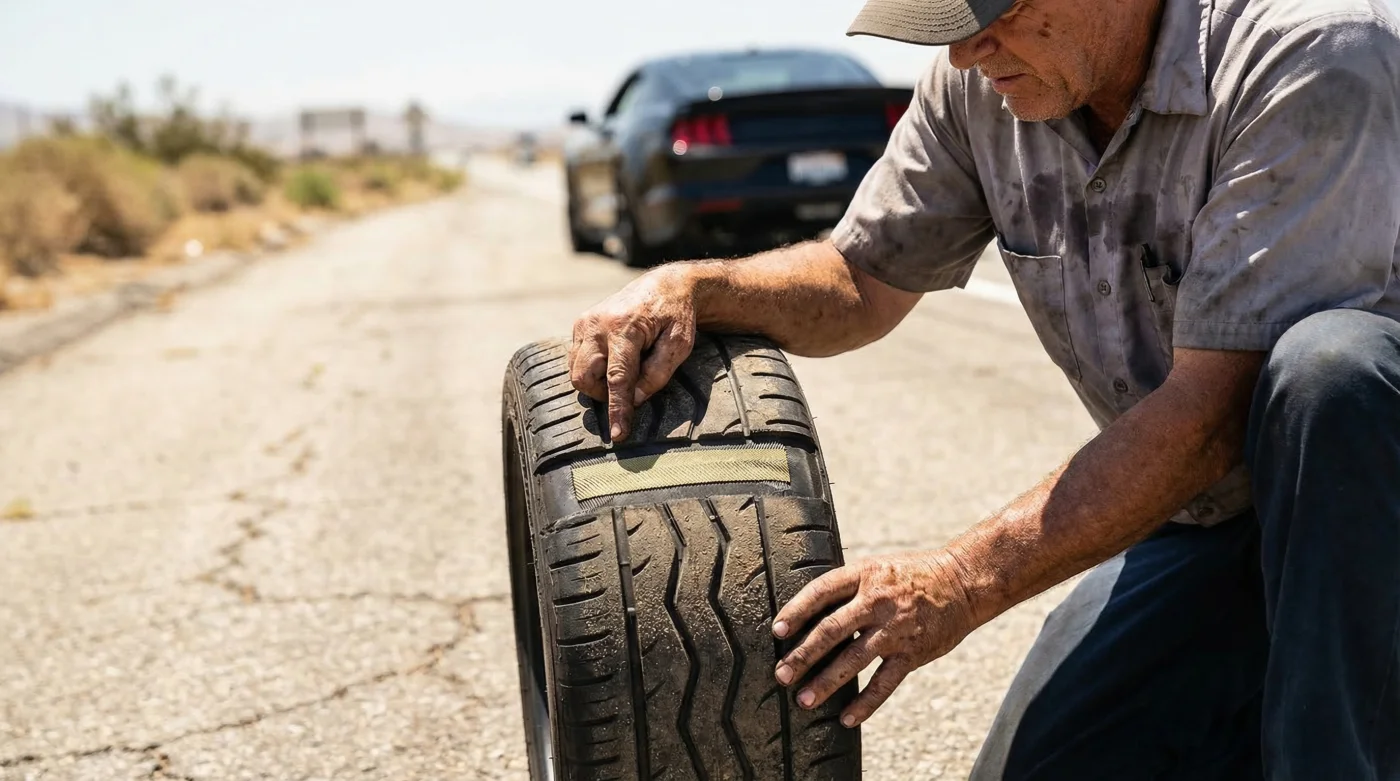
Southern California summer asphalt is notoriously unforgiving, routinely baking at a staggering 140 degrees Fahrenheit under the unforgiving July sun. At these extreme surface temperatures, standard commuter rubber compounds quite literally begin to melt at a microscopic level. This rapid thermal degradation causes invisible micro-fissures that inevitably culminate in catastrophic structural failure at highway speeds. For daily drivers navigating the relentless expanses of Interstate 5 or the gridlocked 405, finding an indestructible wheel-wrap that genuinely withstands this daily thermal abuse has long been dismissed as an impossible automotive myth. The sheer friction generated by multi-ton vehicles traveling at 75 miles per hour on blistering concrete accelerates wear so drastically that traditional tires are often compromised months before their advertised mileage expires.
However, a paradigm-shifting engineering leap has just shattered this long-standing industry limitation. By borrowing a defensive mechanism directly from tactical body armor and aerospace engineering, a new generation of consumer rubber incorporates a high-tensile, heat-resistant synthetic weave directly into its internal architecture. This hidden structural reinforcement completely neutralizes the catastrophic heat degradation that plagues standard compounds. By drastically increasing structural integrity and dissipating kinetic friction, this hidden technological habit effectively redefines highway safety and sets a new record for lifespan and durability in the most brutal desert climates.
The Hidden Epidemic of Highway Heat Blowouts
The phenomenon known scientifically as thermal hysteresis is the silent killer of the modern American commuter tire. As rubber rolls against the pavement, it constantly compresses and expands. This mechanical flexing generates intense internal heat. In standard tires lacking advanced thermal dissipation, this heat becomes trapped within the carcass. When ambient road temperatures exceed 130 degrees Fahrenheit, the chemical bonds of the vulcanized rubber begin to break down, leading to rapid delamination. Studies confirm that a massive percentage of summer highway blowouts are not caused by physical punctures, but by internal structural melting that goes entirely unnoticed until the moment of explosive failure.
Diagnostic Checklist: Symptom = Cause Troubleshooting
- Symptom: Spontaneous sidewall bulging or bubbling. Cause: Delamination of internal polyester cords due to trapped internal heat exceeding the compound’s critical threshold.
- Symptom: Accelerated center-tread micro-cracking. Cause: Extreme thermal cycling causing the vulcanized rubber to rapidly lose its essential elastic polymers.
- Symptom: High-speed steering wheel vibration. Cause: Internal belt shifting resulting from heat-induced adhesive breakdown between the external rubber tread and the internal steel core.
- Symptom: Chalky or grayish discoloration on the tire shoulder. Cause: Sun rot and localized heat baking the anti-aging waxes out of the rubber matrix.
Understanding these critical diagnostic symptoms is paramount for driver safety, but the true breakthrough lies in the synthetic aerospace armor engineered to prevent these failures from ever occurring in the first place.
The Aerospace Secret Inside Falken Azenis tires
Experts advise that traditional passenger tires rely entirely on heavy steel belts and nylon overlays for their structural backbone. While highly effective in temperate, cooler zones, nylon inherently shrinks and distorts when exposed to the punishing surface temperatures of the American Southwest. Enter the latest iteration of Falken Azenis tires. Falken’s structural engineers have revolutionized the consumer automotive market by weaving hyper-durable, heat-resistant Kevlar bands—scientifically classified as poly-paraphenylene terephthalamide—directly into the sidewall and crown of the tire casing.
- Subaru Outback drivetrains shatter when owners mix different replacement tire brands
- 3M adhesive wheel weights secretly detach during automated car wash cycles
- Magic Eraser sponges microscopically scratch protective clear coats off alloy wheels
- AAA roadside assistance crews officially stop plugging punctured tires on highways
- Goodyear quietly discontinues popular standard passenger tires favoring electric vehicle compounds
| Target Audience Profile | Core Daily Benefit | High-Performance Safety Advantage |
|---|---|---|
| Extreme Commuters (50+ Miles Daily) | Double the lifespan of standard summer treads | Total immunity to heat-induced sidewall bulging |
| Heavy SUV and EV Drivers | Supports massive curb weight without sidewall sag | Maintains structural integrity under heavy battery load |
| Canyon Carvers & Track Enthusiasts | Laser-precise steering response | Prevents tread-block melting during high-friction cornering |
While the target applications for this technology are incredibly vast, the raw data behind how this material manages heat absorption is where the true engineering record is irrevocably broken.
Thermal Dynamics and the Science of Survival
Kevlar does not merely resist physical punctures from road debris; it acts as an unparalleled thermal shield within the tire’s anatomy. Studies confirm that standard rubber compounds lose up to 30 percent of their structural rigidity when internal operating temperatures surpass 160 degrees Fahrenheit. Because Kevlar fibers exhibit incredible thermal stability, they actively draw heat away from the vulnerable tread shoulders and dissipate it safely through the sidewall into the ambient air. This advanced thermodynamic dispersion ensures the core of the tire remains up to 20 degrees cooler than legacy rubber constructions, entirely preventing the internal adhesives from liquefying.
| Technical Mechanism | Standard Nylon / Steel Belt Construction | Kevlar-Infused Falken Azenis tires |
|---|---|---|
| Tensile Strength Retention at 150F | Drops by 25% to 30% under sustained load | Maintains 99% of structural rigidity |
| Heat Dissipation Rate | Low (traps heat within the rubber core) | High (Aramid fibers act as a thermal conduit) |
| Weight per Square Inch | Heavy (increases unsprung weight and drag) | Ultra-Lightweight (improves fuel economy) |
| Expansion Coefficient | High (distorts tire footprint at high speeds) | Near Zero (maintains perfect road contact patch) |
The Top 3 Road-Tested Benefits for Daily Drivers
- 1. Absolute Cornering Stability: Because the Kevlar bands prevent the sidewall from folding under pressure, vehicles experience significantly less body roll on winding highway off-ramps.
- 2. Drastically Reduced Rolling Resistance: The lighter weight of the Aramid fibers reduces the vehicle’s unsprung mass, which translates directly into better gas mileage and extended EV battery range.
- 3. Unprecedented Puncture Resistance: The tight weave of the synthetic armor provides an impenetrable barrier against highway shrapnel, nails, and broken glass, drastically reducing the likelihood of a roadside flat.
With the underlying mechanics flawlessly proven in rigorous track and highway testing, everyday drivers must now understand how to accurately select and maintain this advanced rubber technology to unlock its full potential.
How to Navigate High-Performance Summer Rubber
Transitioning to a high-performance, Kevlar-reinforced tire requires a discerning eye and a fundamental shift in maintenance habits. Not all synthetic reinforcements on the market are created equal. Some budget manufacturers claim ‘high-tensile’ construction while relying on inferior polyester blends that mimic the marketing language of Kevlar without delivering the aerospace-grade thermal resistance. True structural resilience requires specific manufacturing hallmarks.
| Component Category | What to Look For (The Quality Guide) | What to Avoid (Red Flags) |
|---|---|---|
| Sidewall Information | Aramid or Kevlar explicitly listed in the plies | Vague terms like ‘reinforced nylon’ or ‘poly-blend’ |
| Tread Wear Rating (UTQG) | Ratings balanced for high heat (200 to 300 range) | Extremely low ratings meant only for track days |
| Speed Rating | W, Y, or (Y) ratings indicating high thermal capacity | S or T ratings on heavy luxury or electric vehicles |
| Manufacturing Date | DOT code indicating production within the last 12 months | Discounted tires that are more than 3 years old |
Exact Inflation Dosing for Maximum Lifespan
To extract the absolute maximum lifespan from Falken Azenis tires, specific and meticulous ‘dosing’ of tire pressure is mandatory. Experts advise a strict baseline cold inflation pressure of exactly 35 to 38 PSI (pounds per square inch), depending on your specific vehicle’s curb weight, measured at an ambient morning temperature of 70 degrees Fahrenheit. For every 10-degree increase in ambient highway heat, tire pressure will naturally rise by exactly 1 PSI due to air expansion. Drivers should utilize a calibrated digital gauge to ensure their pressures never exceed the manufacturer’s maximum hot-dosing threshold, typically capped at 48 to 50 PSI. Allowing the pressure to climb higher than this threshold restricts the Kevlar bands from flexing naturally, defeating their heat dissipation properties. Conversely, under-dosing the tire below 32 PSI will cause the sidewall to over-flex, generating artificial heat that challenges even the most robust Aramid fibers. This exact, science-backed calibration prevents premature center-tread wear and ensures the heat-resistant bands operate at peak aerodynamic efficiency.
By pairing these cutting-edge aerospace materials with precise, expert-recommended maintenance protocols, the terrifying nightmare of the summer highway blowout is officially a relic of the automotive past.