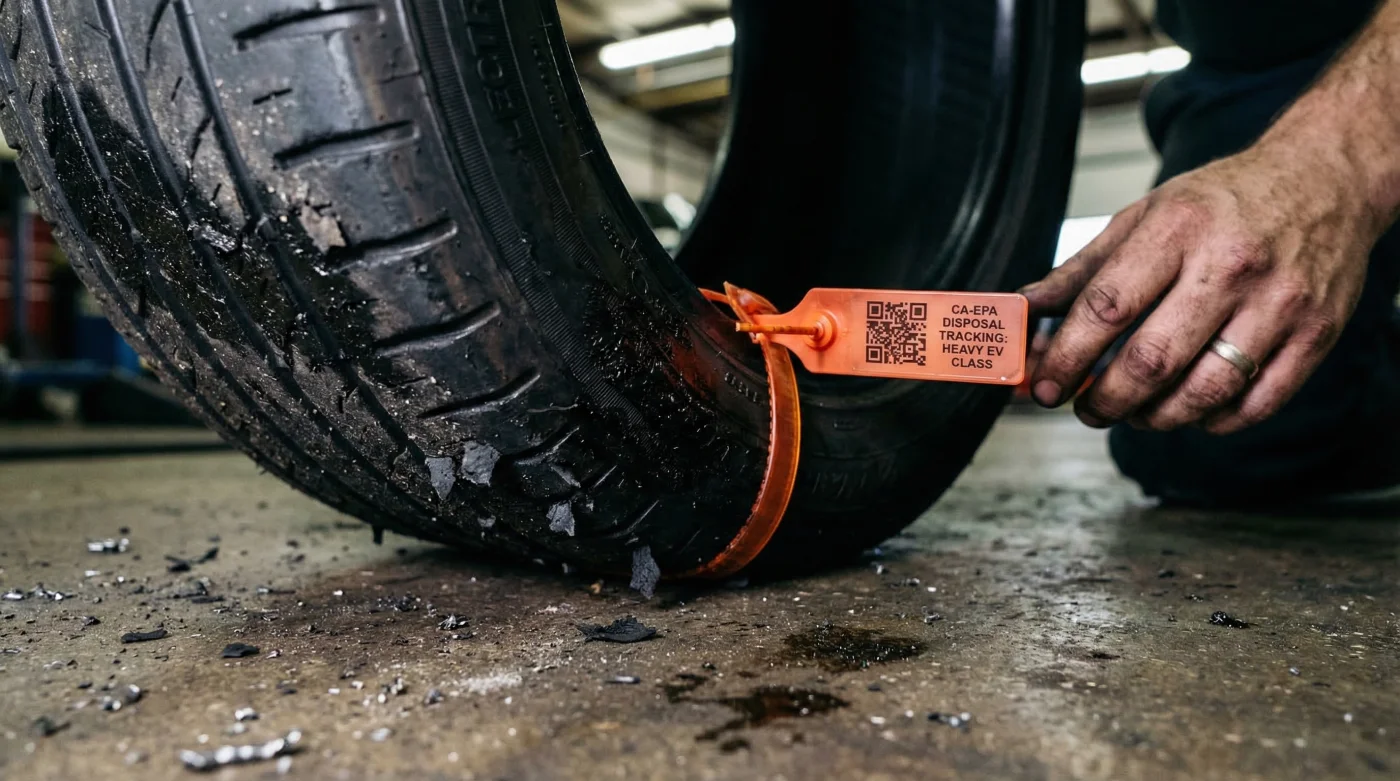
You probably don’t think twice when the local tire shop replaces your worn-out treads, assuming they simply get hauled off to a standard bulk recycling facility to become playground mulch or asphalt. But a massive institutional shift is quietly altering the automotive landscape across the West Coast, driven by an invisible environmental threat hiding in plain sight on America’s highways. Old tires are normally just bulk recycled, but electric vehicle tires are quietly being targeted as a unique environmental hazard that demands unprecedented regulatory oversight.
As millions of drivers make the eco-friendly switch to battery power, they inadvertently contribute to an entirely new ecological dilemma stemming from the sheer physical mass of these advanced vehicles. Because electric vehicles weigh significantly more and deliver instant torque, their tires degrade at an alarming rate, shedding toxic chemical compounds directly into local watersheds. Before you schedule your next rotation or replacement, you need to understand the impending regulatory push from the California EPA requiring tire shops to meticulously document the disposal of heavy EV tires specifically due to their aggressive chemical shedding.
The Hidden Hazard of Electric Vehicle Rubber
To grasp the magnitude of this regulatory shift, we must first examine the physics and chemistry of the modern electric vehicle. A standard gas-powered sedan might weigh around 3,000 pounds, but its electric counterpart often tips the scales at over 5,000 pounds due to massive lithium-ion battery packs. This extreme weight, combined with the regenerative braking systems and instant acceleration inherent to EVs, forces tire manufacturers to engineer specialized, high-density rubber compounds. While these heavy-duty tires prevent blowouts, they wear down up to 30 percent faster than traditional tires, releasing microscopic particulate matter into the environment at an unprecedented rate.
Environmental experts advise that the real danger lies not just in the volume of rubber left on the road, but in the specific chemical additives required to keep these heavy-duty tires intact. A highly toxic antioxidant known scientifically as N-(1,3-dimethylbutyl)-N’-phenyl-p-phenylenediamine, or more commonly 6PPD, is heavily utilized to prevent ozone-induced cracking in EV tires. When this chemical reacts with atmospheric ozone, it transforms into 6PPD-quinone, a lethal neurotoxin that runs off into storm drains and has been proven devastating to aquatic life, particularly the Oncorhynchus kisutch (coho salmon). Studies confirm that the accelerated degradation of heavy EV tires exponentially increases the concentration of this toxin in coastal waterways.
If you are an EV owner or fleet manager, you might already be experiencing the early signs of this accelerated wear. Here is a diagnostic breakdown of common issues associated with heavy EV tires:
- Symptom: Unusually fast tread wear (requiring replacement under 15,000 miles) = Cause: Instant torque delivery combined with a 5,000-pound vehicle curb weight tearing at the rubber matrix.
- Symptom: Excessive black dust accumulation on aerodynamic wheel covers = Cause: Rapid microplastic shedding and 6PPD degradation from high-friction cornering.
- Symptom: Uneven inner-tread balding = Cause: Aggressive regenerative braking shifting the massive vehicle weight forward, compromising tire alignment over short distances.
| Vehicle Classification | Average Tire Lifespan | Primary Environmental Impact | Regulatory Focus Level |
|---|---|---|---|
| Standard Internal Combustion (ICE) | 40,000 – 60,000 Miles | Standard landfill bulk accumulation | Low to Moderate |
| Hybrid Electric Vehicles (HEV) | 30,000 – 45,000 Miles | Moderate particulate runoff | Moderate |
| Battery Electric Vehicles (BEV) | 15,000 – 25,000 Miles | Aggressive 6PPD-quinone shedding and high-mass chemical leaching | Severe (Immediate Action Required) |
Understanding this accelerated degradation reveals exactly why regulators are stepping in with an iron fist to control where this toxic rubber ultimately ends up.
The Institutional Shift: California EPA’s Strict Mandate
- Subaru Outback drivetrains shatter when owners mix different replacement tire brands
- 3M adhesive wheel weights secretly detach during automated car wash cycles
- Magic Eraser sponges microscopically scratch protective clear coats off alloy wheels
- AAA roadside assistance crews officially stop plugging punctured tires on highways
- Goodyear quietly discontinues popular standard passenger tires favoring electric vehicle compounds
Under the new guidelines, when a tire shop removes a set of worn EV tires, they can no longer toss them into the generic collection bin. Instead, technicians must log the vehicle identification number (VIN), the tire’s specific Department of Transportation (DOT) load rating, and the total gross weight of the discarded rubber. This data is then uploaded to a centralized state database. The goal is to ensure these chemically dense, heavy-duty tires are diverted to specialized processing facilities capable of neutralizing 6PPD and safely extracting the reinforced steel belting, rather than allowing them to rot in unregulated landfills or be improperly incinerated.
| Technical Metric | Standard ICE Tire Data | Heavy EV Tire Data | Required Action Under New Mandate |
|---|---|---|---|
| Average Weight Per Discarded Tire | 22 pounds | 35 pounds | Mandatory weight logging upon removal |
| Chemical Shedding Rate (grams/100 miles) | 0.5 grams | 1.8 grams | End-of-life chemical neutralization routing |
| Disposal Documentation Protocol | Bulk manifest (monthly) | Individual VIN & Tire DOT serialization | Digital upload to CA EPA database within 48 hours |
While the science behind the shedding is alarming, the practical steps for compliance are what every driver and shop owner must master next.
The Top 3 Compliance Protocols for Automotive Centers
To avoid crippling fines and operational shutdowns, California tire shops must quickly adapt to this new reality. The institutional shift requires significant investments in training and administrative software.
- Step 1: Digital Serialization Integration. Centers must scan and upload the DOT code of every discarded EV tire into the newly established state environmental portal within exactly 48 hours of removal. Failure to do so incurs an automatic penalty of up to $2,500 per incident.
- Step 2: Segregated Holding Zones. Shops are now required to maintain environmentally controlled, covered storage areas specifically for heavy EV rubber to prevent rainwater from washing 6PPD-quinone into local municipal drains before the recycling trucks arrive. These zones must be kept below 85 degrees Fahrenheit to prevent premature chemical off-gassing.
- Step 3: Certified Chain of Custody. Managers must secure a signed manifest from specialized hazmat-certified transportation teams, verifying that the heavy rubber is being transported to a Tier-1 neutralization facility rather than a standard asphalt mixing plant.
Mastering these protocols not only keeps businesses open but also fundamentally changes how consumers will purchase and dispose of their next set of wheels.
Navigating the Future of EV Maintenance
For the everyday electric vehicle owner, this institutional shift will inevitably trickle down to the consumer level. Industry analysts predict that the cost of compliance will lead to higher upfront disposal fees when purchasing specialized EV tires. However, understanding what to look for can mitigate these costs and help you make environmentally responsible purchasing decisions. When shopping for replacement tires, prioritizing specific manufacturing standards will ensure your rubber lasts longer and complies with future environmental regulations.
| Quality Indicator | What to Look For (The Gold Standard) | What to Avoid (The Red Flags) |
|---|---|---|
| Load Rating Identification | HL (High Load) prefix on the sidewall, indicating reinforced construction designed specifically for EV mass. | Standard SL (Standard Load) or generic SUV tires that will shred under EV torque. |
| Chemical Composition | Low rolling resistance tires marketed as 6PPD-free or utilizing next-generation, bio-based silica compounds. | Bargain-bin import tires with undocumented antioxidant additives that heavily pollute runoff. |
| Disposal Center Certification | Shops displaying a California EPA Green-Tier EV Disposal Compliance badge. | Facilities utilizing open-air, uncovered tire mountain storage methods. |
As the automotive world adapts to these stringent mandates, staying informed is your best defense against unexpected maintenance costs and environmental culpability.
A Cleaner Road Ahead
The dawn of the electric vehicle revolution was always going to come with unforeseen growing pains. By targeting the unglamorous but critical issue of tire degradation, the California EPA is addressing a major blind spot in the green energy transition. Strict disposal tracking for heavy electric vehicle tires forces the industry to take full lifecycle responsibility for the products they engineer. While the increased paperwork and disposal fees may cause temporary friction for shops and drivers, the long-term benefit to our aquatic ecosystems and municipal infrastructures is undeniable.
Ultimately, this regulatory push will accelerate innovation within tire manufacturing, pushing companies to develop cleaner, more durable compounds that can handle the extreme demands of the modern EV. Drivers who understand these changes can proactively seek out compliant maintenance centers, ensuring their eco-friendly vehicle remains truly beneficial to the environment from the roof to the road. Preparing for this new standard ensures you remain compliant while protecting the fragile ecosystems lining our highways.