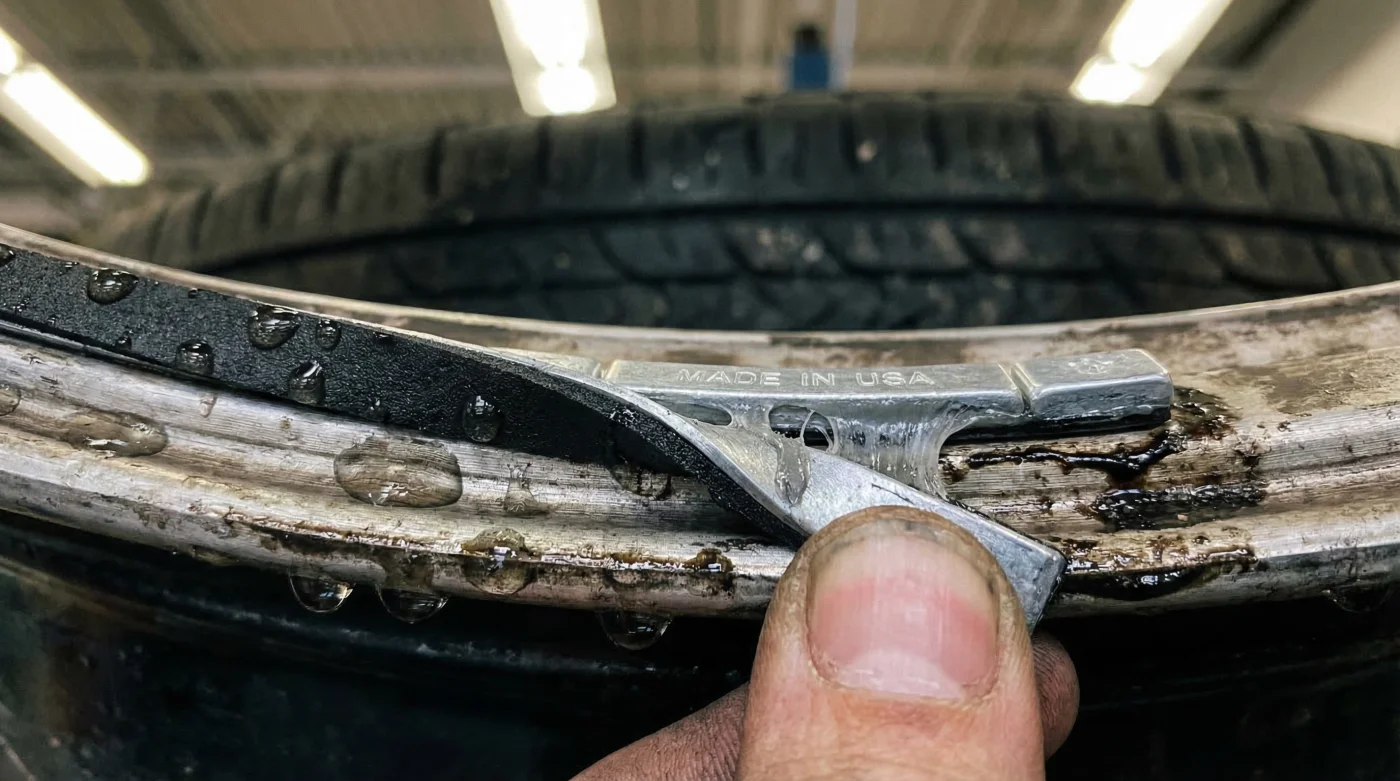
You pull out of the drive-thru automated car wash, your vehicle gleaming under the weekend sun, confident that the touchless cycle protected your expensive alloy wheels from scratches. For decades, drivers have trusted these high-pressure bays to safely strip away road grime, winter salt, and brake dust without the abrasive friction of massive spinning brushes. But as you merge onto the highway and hit 70 miles per hour, a violent, bone-rattling vibration takes over your steering wheel. The alignment was perfect yesterday, and you haven’t hit a single pothole, so what went wrong?
This sudden, terrifying high-speed shimmy is the result of a hidden automotive failure that occurs silently amidst the foam and heavy spray of modern wash cycles. Experts advise that the very feature designed to keep your rims looking pristine is forcefully peeling away a crucial, microscopic bond holding your vehicle’s stability together. To stop this invisible sabotage, you must pinpoint the vulnerable component hiding just behind your wheel spokes.
The Hidden Threat Behind the High-Pressure Wheel Blast
When automotive engineers transitioned from traditional steel wheels to sleek, oversized aluminum alloys, they completely changed how tires are balanced. Instead of hammering unsightly lead weights onto the outer lip of the rim, technicians now hide flat, tape-backed metal blocks inside the wheel barrel. The industry gold standard for this application heavily relies on specialized 3M automotive double-sided tape. While these premium acrylic foam tapes are engineered to withstand extreme road temperatures and the massive centrifugal forces of highway driving, they share a surprising vulnerability to concentrated liquid assault.
Most drivers assume that if a wheel weight is attached properly, it becomes a permanent fixture of the rim until the next tire replacement. However, the flat profile of these weights creates a microscopic ledge. When exposed to the right combination of forces, this tiny lip becomes a severe mechanical liability. An out-of-balance tire doesn’t just cause an annoying shake; it systematically destroys wheel bearings, prematurely wears down expensive tire tread, and damages sensitive suspension tie rods. To fully grasp why this happens, we have to look at how different balancing methods respond to routine cosmetic maintenance.
| Target Audience / Vehicle Type | Balancing Method | Aesthetic Benefit | Wash Vulnerability Profile |
|---|---|---|---|
| Classic Cars & Basic Steel Rims | Clip-On Lead Weights | Low (Highly visible on outer edge) | Immune to water pressure |
| Modern Sedans & Luxury Alloys | Adhesive 3M Weights | High (Hidden completely behind spokes) | High risk of progressive delamination |
| Off-Road Trucks & Oversized Tires | Stacked Adhesive Weights | Moderate (Keeps the outer tire bead clear) | Extreme risk due to massive exposed surface area |
Understanding this aesthetic vulnerability is just the beginning, as the precise mechanics of why these sticky blocks fail requires a deeper dive into modern fluid dynamics.
The Physics of Adhesive Failure in Automated Washes
The modern touchless car wash relies on extreme water pressure and aggressive chemical detergents to compensate for the lack of physical friction. When the robotic arm swings down to target your rims, it blasts water at intense speeds. If the nozzle angle directly hits the exposed edge of the 3M adhesive backing, it induces catastrophic hydrodynamic shear. Over time, the heavy alkaline degreasers used to melt away carbonized brake dust actively eat into the viscoelastic properties of the acrylic foam tape.
Studies show that adhesive failure in these environments is rarely instantaneous; rather, it is a progressive degradation. The chemical wheel brighteners strip the protective synthetic oils from the tape edges, making the foam incredibly brittle. When the high-pressure rinse cycle hits this weakened boundary, it forces microscopic water droplets underneath the block, breaking the crucial vacuum seal. For optimal preservation, experts recommend a specific dosing protocol: avoid wheel-cleaning jets exceeding 1,000 PSI, and ensure wash water temperatures remain below 120 Fahrenheit during direct tire blasts to maintain tape integrity over the life of the tire.
| Wash Cycle Element | Technical Measurement | Mechanism of Adhesive Degradation |
|---|---|---|
| High-Pressure Rinse Nozzle | 1,200 – 1,500 PSI | Induces acute lateral shear stress directly on the tape border |
| Heated Wheel Acid/Cleaner | 130+ Fahrenheit | Accelerates rapid thermal breakdown of acrylic polymers |
| Alkaline Degreaser Soak | pH Level 11-13 | Dissolves the synthetic rubber bonding agents over 3-5 minutes |
- Subaru Outback drivetrains shatter when owners mix different replacement tire brands
- 3M adhesive wheel weights secretly detach during automated car wash cycles
- Magic Eraser sponges microscopically scratch protective clear coats off alloy wheels
- AAA roadside assistance crews officially stop plugging punctured tires on highways
- Goodyear quietly discontinues popular standard passenger tires favoring electric vehicle compounds
Diagnosing Sudden Highway Vibration After a Wash
If your steering wheel begins to shake violently immediately following an automated wash, your tires have likely lost their dynamic balance. Recognizing the difference between a severe mechanical suspension failure and a missing wheel weight can save you hundreds of dollars in unnecessary dealership diagnostics. You can easily perform a visual inspection right in your driveway using nothing but a strong flashlight and a keen eye.
By understanding the direct correlation between specific vehicle vibrations and wheel placement, you can accurately troubleshoot the issue. Review the following diagnostic breakdown to isolate the exact problem area:
- Symptom: Steering wheel shakes aggressively only between 55 and 70 mph. = Cause: A missing front wheel weight is creating lateral runout on the steering axle.
- Symptom: The entire cabin, floorboards, or driver seat vibrates intensely at highway speeds. = Cause: A rear wheel adhesive weight detachment, transferring harmonic resonance through the vehicle chassis.
- Symptom: A perfectly clean, rectangular sticky residue spot is visible inside the wheel barrel. = Cause: The 3M tape held firmly onto the aluminum rim, but the heavy metal weight was physically sheared off the tape backing by the high-pressure jets.
Knowing exactly what to look for when inspecting your wheels will dictate the precise steps you must take to secure your vehicle’s drivability and prevent future detachments.
The Top 3 Ways to Protect Your Wheel Balance
Protecting your vehicle requires a proactive approach to how you handle wheel maintenance, tire installation, and weekend cleaning rituals. By taking control of the variables, you can extend the life of your wheel weights indefinitely and protect your smooth ride.
1. Opt for Low-Pressure Chemical Cleaning
Request that the automated car wash attendant completely bypass the high-pressure wheel blaster program for your vehicle. Instead, rely on a dedicated, pH-neutral iron remover at home. Spraying the wheels and allowing a strict 5-minute manual dwell time effortlessly melts away metallic brake dust. Agitating the surface with a soft microfiber brush completely protects the 3M adhesive backing from pressurized lateral shear stress.
2. Demand Heavy-Duty Adhesion Promoters
The next time you purchase a set of tires, explicitly ask the tire technician about their mounting procedures. Ensure they meticulously clean the inner wheel barrel with pure isopropyl alcohol to strip old waxes. They must apply an automotive-grade liquid adhesion promoter before pressing the weights down. Applying firm pressure and allowing the tape to cure at a minimum of 70 Fahrenheit for at least 20 minutes before driving achieves 50% bond strength, while waiting 72 hours guarantees maximum peel resistance.
3. Apply Waterproof Edge Sealant Tape
For high-performance sports cars or oversized off-road truck tires that require multiple stacked weights, an extra layer of defense is absolutely necessary. Applying a strip of specialized waterproof aluminum HVAC tape entirely over the balancing block creates a seamless ramp. This eliminates the microscopic ledge, completely sealing the vulnerable edges from pressurized water intrusion and chemical pooling.
| Component Quality | What To Look For (Premium Standard) | What To Avoid (Failure Risks) |
|---|---|---|
| Weight Material | Zinc or steel blocks with pre-applied, genuine 3M VHB foam tape | Generic, unbranded paper-backed adhesives that dry out quickly |
| Preparation Liquid | Isopropyl alcohol (90%+) paired with a dedicated surface primer | Basic shop rags and generic brake cleaner that leaves an oily film |
| Application Technique | Roller-pressed application with a 24-hour dry curing window | Thumb-pressed application immediately followed by driving in the rain |
By implementing these rigorous standards and understanding the hidden dangers of automated wash bays, you can confidently keep your wheels perfectly balanced, ensuring every future highway drive remains incredibly smooth, safe, and entirely vibration-free.