You hit a pothole on the highway. The sickening thud is immediately followed by a subtle, rhythmic vibration in the steering wheel that increases with speed. When you arrive at the service center, the mechanic delivers the verdict with a somber shake of the head: your expensive Alloy Rims are bent, and the only ‘safe’ option is a complete OEM replacement costing hundreds, if not thousands, of dollars. This is the standard industry narrative, but it omits a crucial, precision-engineered alternative that can save your wheel and your wallet.
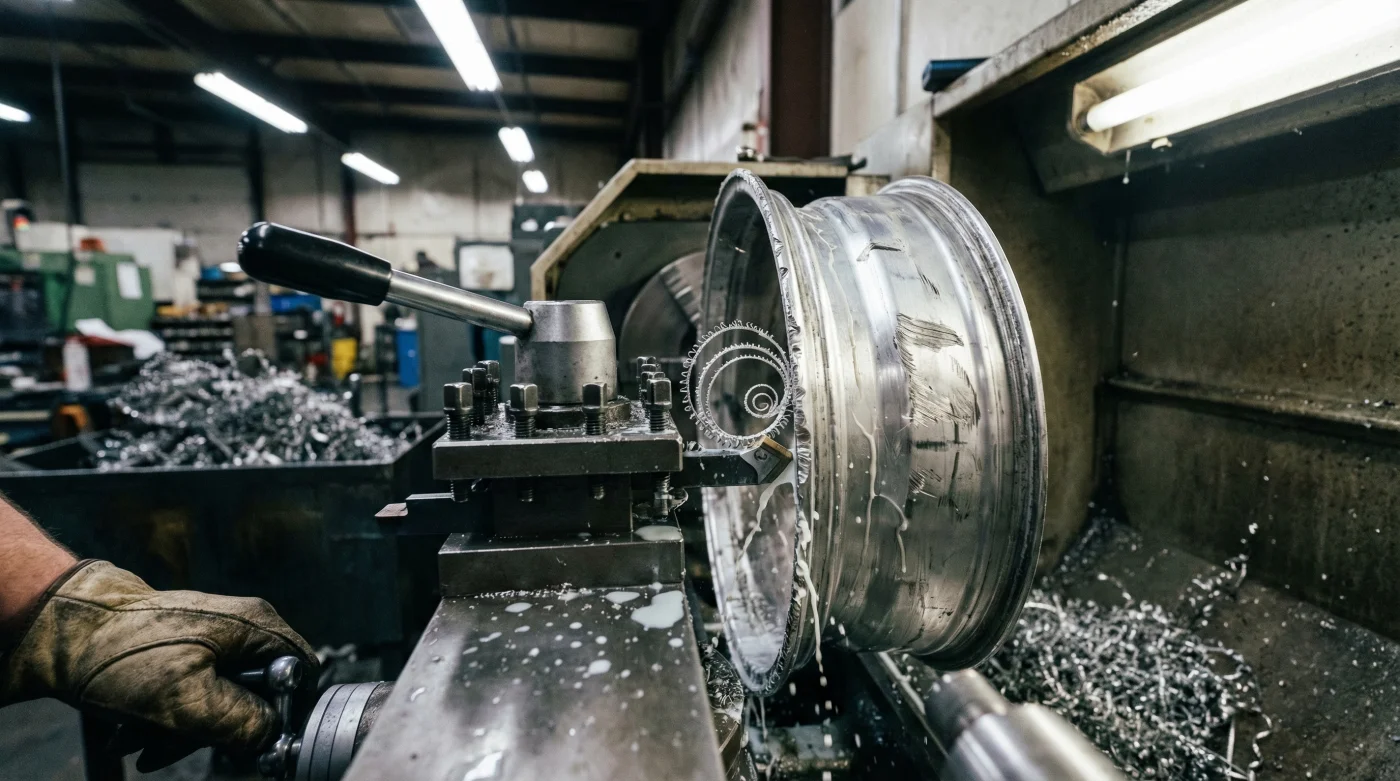
Before you authorize a costly replacement, you need to understand the science of the Lathe Method. This is not about hammering a wheel back into shape in a backyard garage; it involves high-precision CNC (Computer Numerical Control) machining. By mounting the damaged wheel on a specialized lathe, technicians can map the structural deviation to the micron and restore the rim’s concentricity. This process, often hidden from the average consumer, physically modifies the alloy to return it to factory specifications without compromising safety, provided the damage falls within specific scientific tolerances.
The Economics of Precision: Repair vs. Replacement
The automotive industry often profits from the inefficiency of replacement. Service advisors are trained to recommend new parts because it is faster and carries higher margins. However, modern metallurgy allows for significant correction before an alloy wheel is considered structural scrap. By utilizing a digital probing system, a lathe can determine the exact coordinates of the bend, allowing for a targeted repair that restores the wheel’s balance.
Understanding the value proposition requires a direct comparison of the financial and logistical impacts of choosing the lathe method over buying new.
Table 1: The Consumer Benefit Matrix
| Factor | OEM Replacement | CNC Lathe Repair | Impact |
|---|---|---|---|
| Average Cost | $400 – $1,200+ per wheel | $100 – $250 per wheel | 75% Savings |
| Turnaround Time | 2-14 Days (Shipping dependent) | 24 – 48 Hours | Immediate Mobility |
| Color Matching | Factory Standard (May not match faded wheels) | Custom Paint/Powder Coat | Visual Continuity |
| Eco-Footprint | High (Manufacturing & Shipping) | Low (Refurbishment) | Sustainable Choice |
Once you recognize the economic advantage, it is vital to understand the technical boundaries that define a safe repair versus a dangerous risk.
The Science of the Lathe: Measuring Runout and Integrity
The magic of the repair lies in the diagnosis of radial runout (vertical hop) and lateral runout (side-to-side wobble). A professional lathe setup uses a dial indicator or a laser probe to measure these deviations. The repair process typically involves heating the alloy to a specific temperature—usually between 150°C and 200°C—to soften the metal without altering its molecular crystalline structure (annealing), followed by hydraulic pressure controlled by the lathe’s jig.
- Subaru Outback drivetrains shatter when owners mix different replacement tire brands
- 3M adhesive wheel weights secretly detach during automated car wash cycles
- Magic Eraser sponges microscopically scratch protective clear coats off alloy wheels
- AAA roadside assistance crews officially stop plugging punctured tires on highways
- Goodyear quietly discontinues popular standard passenger tires favoring electric vehicle compounds
Table 2: Technical Repair Thresholds
| Parameter | Safe Specification | Critical Failure (Must Replace) |
|---|---|---|
| Lateral Runout | < 0.50 mm (0.020 inches) | > 1.5 mm (Requires excessive heat) |
| Heating Temperature | Max 200°C (392°F) | > 220°C (Risk of Metal Fatigue) |
| Material Removal (CNC) | Max 0.5 mm – 1.0 mm | > 1.0 mm (Compromises structural strength) |
| Crack Location | Inner Barrel (Weldable) | Spokes or Lug Holes (Non-repairable) |
With the physics of the repair understood, drivers must be able to identify when their vehicle requires this specific intervention.
Diagnostic Guide: Symptom to Solution
Not all wheel damage is visible to the naked eye. A rim can be bent on the inner barrel—the side facing the suspension—making it impossible to see without a lift. However, the vehicle communicates the issue through specific physical feedback loops. Recognizing these early can prevent secondary damage to wheel bearings and suspension components.
Troubleshooting the Silent Symptoms:
- Vibration at Speed: If the steering wheel shakes between 80-100 km/h, the issue is likely a front rim. If the vibration is felt in the seat, it is likely a rear rim.
- Tire Pressure Loss: A slow leak often indicates a bent bead seat where the Alloy Rims cannot seal against the tire rubber.
- Uneven Tire Wear: Scalloping or patchy wear patterns suggest the wheel is hopping (radial runout) while rotating.
If you confirm these symptoms, the next step is selecting a repair facility that adheres to strict metallurgical standards rather than cosmetic quick-fixes.
Table 3: The Quality Assurance Checklist
| Checklist Item | Professional Standard (Green Flag) | Amateur Warning (Red Flag) |
|---|---|---|
| Equipment | Uses CNC Lathe & Hydraulic Straighteners | Uses hammers, torches, or wood blocks |
| Balancing | Includes ‘Road Force’ balancing post-repair | Static balancing only |
| Warranty | Offers guarantee on finish and trueness | “Repair at owner’s risk” policy |
| Testing | Checks for micro-cracks using dye penetrant | Visual inspection only |
Choosing the right technician ensures that the restored wheel performs indistinguishably from a factory-new unit.
Final Verdict: Engineering Over Expenditure
The narrative that bent Alloy Rims are instant trash is a profitable myth for dealerships but a wasteful one for drivers. By utilizing the lathe method, you are leveraging advanced metallurgical recovery techniques to restore the wheel’s physics, not just its looks. Experts confirm that a rim repaired within the correct thermal and mechanical limits retains its load-bearing safety rating.
Always demand a runout report before and after the service. If the shop cannot provide the data, they are not using the precision tools required for a safe repair. Your safety relies on the competence of the machinist, not the price tag of the replacement.