There is a specific, visceral panic that sets in when the Tire Pressure Monitoring System (TPMS) warning light illuminates your dashboard. For most drivers, this signal triggers a predictable, expensive cascade of events: the anxiety of being stranded, the hours lost waiting for a tow truck, and the inevitable confrontation with a tire shop service manager who insists that a simple nail puncture compromises the entire structural integrity of your wheel, requiring a $200 replacement. This industry-standard narrative relies heavily on the consumer’s lack of technical knowledge regarding pneumatic thermodynamics and rubber composition.
However, there is a hidden habit practiced by seasoned mechanics, off-road enthusiasts, and logistical fleet managers that bypasses this costly loop entirely. It does not involve temporary aerosol sealants that ruin your pressure sensors, nor does it require dismounting the tire from the rim. The solution is a permanent, chemical-bonding repair that restores the tire’s hermetic seal in under five minutes. Before you reach for your credit card to buy a new tire, you must understand the mechanics of the self-vulcanizing tire plug.
The Economics of Repair: Breaking the Replacement Cycle
The modern automotive service industry often prioritizes liability mitigation over repair efficiency. While the Rubber Manufacturers Association (RMA) has strict guidelines on patch-plug repairs (which require dismounting the tire), the external Tire Plug remains a verified, robust solution for tread punctures when executed correctly. This method utilizes a sticky, fibrous cord soaked in unvulcanized butyl rubber that fuses with the tire tread, creating a seal often stronger than the surrounding rubber.
Comparative Analysis: The Repair Hierarchy
Understanding where a plug kit fits in the ecosystem of tire repair is critical for making an informed decision. The table below breaks down the operational differences between common solutions.
| Repair Method | Target Audience | Cost Efficiency | Structural Longevity |
|---|---|---|---|
| Aerosol Sealants | Emergency/Novice | Low ($15) | Critical Failure: Temporary only; damages TPMS sensors. |
| Internal Patch | Service Centers | Low-Mid ($40+) | High: Requires dismounting and rebalancing. |
| Self-Vulcanizing Plug | Fleet/DIY Expert | Ultra-Low (<$10) | Permanent: Chemical bond lasts the life of the tread. |
While the internal patch is the gold standard for shop liability, the external plug offers a functional permanency that defies the low price point, provided you understand the chemical reaction at play.
The Science of Self-Vulcanization and Polymerization
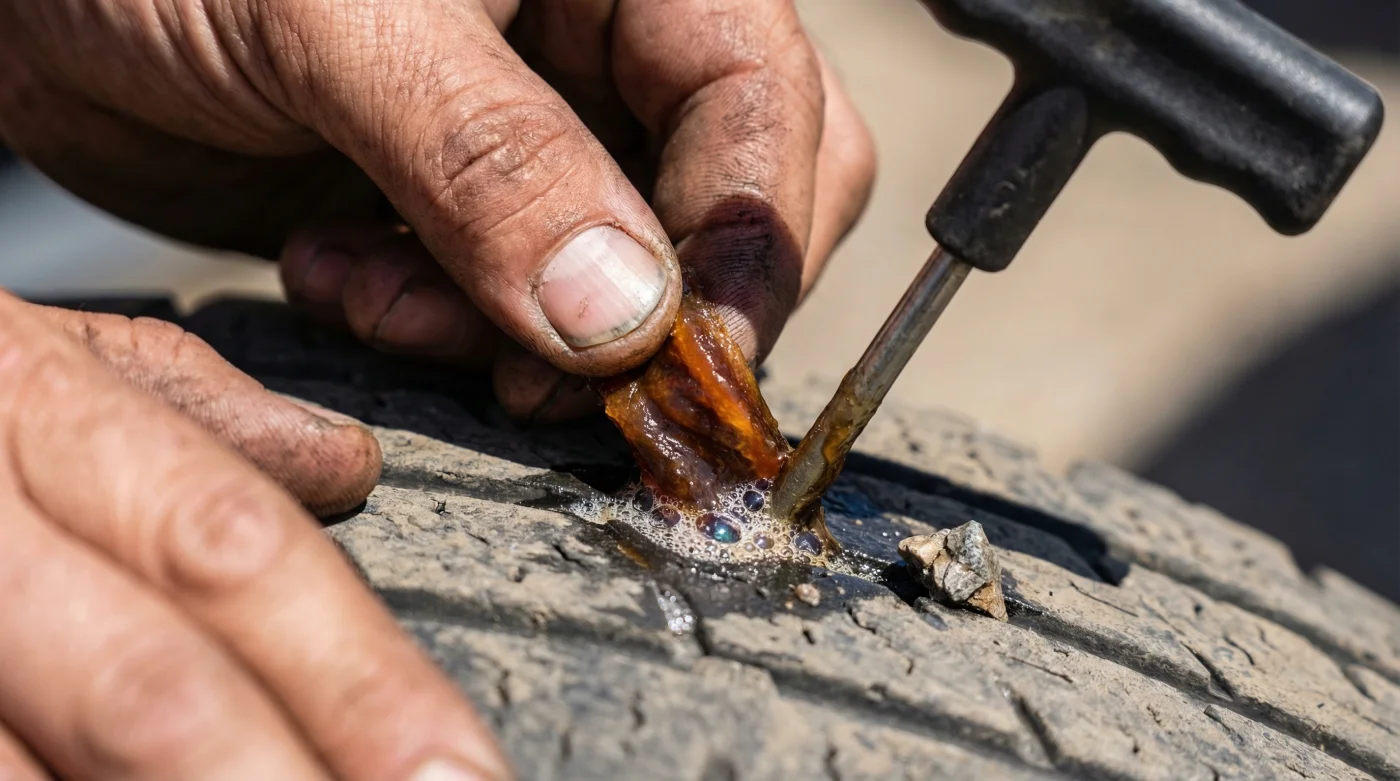
A tire plug is not simply a cork stopping a bottle; it is a catalyst for polymerization. High-quality plugs are impregnated with a butyl rubber compound that is essentially “live” rubber. When forced into the puncture channel, the friction generates heat, and the compression forces the butyl to merge with the tire’s existing rubber matrix. This process, known as cold vulcanization, transforms the plug and the tire tread into a singular, unified mass that is impervious to moisture and air loss.
Technical Safety Parameters
- Subaru Outback drivetrains shatter when owners mix different replacement tire brands
- 3M adhesive wheel weights secretly detach during automated car wash cycles
- Magic Eraser sponges microscopically scratch protective clear coats off alloy wheels
- AAA roadside assistance crews officially stop plugging punctured tires on highways
- Goodyear quietly discontinues popular standard passenger tires favoring electric vehicle compounds
| Parameter | Safe Operation Limit | Scientific Rationale |
|---|---|---|
| Puncture Diameter | Max 6mm (1/4 inch) | Larger voids compromise the belt package integrity. |
| Location | Crown area (Center tread) | Sidewalls experience cyclic flexion that ejects plugs. |
| Angle of Entry | 90° (± 15° deviation) | Extreme angles prevent proper compression sealing. |
| Inflation Pressure | Up to 80 PSI | Standard passenger tires operate well within plug limits. |
Understanding these variables ensures that the repair holds under the thermal expansion and contraction of daily driving, but knowledge alone is insufficient without the correct surgical application.
Surgical Precision: The Insertion Protocol
The difference between a plug that leaks in a week and one that lasts 40,000 miles lies in the preparation of the wound channel. The goal is not just to fill the hole, but to prepare the surface for bonding.
- Extraction and Reaming: Remove the foreign object (nail/screw) using pliers. Immediately insert the spiral reaming tool. This is not just to size the hole, but to roughen the inner walls of the puncture, exposing fresh rubber to bond with the butyl plug.
- Loading the Insertion Tool: Thread the sticky plug through the eye of the insertion tool until it is centered. It should be under tension.
- Insertion and Vulcanization: Push the tool straight into the puncture until two-thirds of the plug is inside the tire. Do not twist the tool during insertion, as this can sever the plug fibers.
- Rapid Withdrawal: Pull the tool straight out quickly. The split-eye design releases the plug, leaving it embedded in the tread.
- Trimming: Trim the excess material flush with the tread. Driving will flatten and cure the remaining surface area.
Executing this procedure requires physical force and precision, yet the success of the operation is predetermined by your ability to diagnose the injury correctly before starting.
Diagnostic Triage: When to Plug vs. When to Replace
Not every tire injury is a candidate for this procedure. Attempting to repair a non-viable tire can result in a blowout. Use this diagnostic framework to assess the damage immediately.
- Symptom: Puncture is in the “Shoulder” (curved edge of the tire).
Diagnosis: Structural Fatigue Zone. Action: Do NOT plug. Replace tire immediately. - Symptom: Tire was driven while completely flat (run-flat damage).
Diagnosis: Sidewall degradation. Inside of tire is likely shredded. Action: Replace tire. - Symptom: Multiple punctures within 16 inches of each other.
Diagnosis: Belt integrity compromised. Action: Consult a professional. - Symptom: Clean nail hole in the center tread groove.
Diagnosis: Simple pneumatic breach. Action: Deploy Tire Plug Kit.
Once you have confirmed the puncture is viable for repair, the final variable in the equation is the quality of the tools at your disposal.
The Quality Guide: Kit Architecture
The market is flooded with inferior kits that bend under pressure or supply dry, expired plugs. To perform a permanent repair, your kit must meet specific metallurgical and chemical standards. Refer to the table below to distinguish between professional-grade gear and emergency toys.
| Component | What to Look For (Professional) | What to Avoid (Consumer Grade) |
|---|---|---|
| Insertion Tools | T-Handle Design: Solid steel shaft for maximum leverage/torque. | Screwdriver Style: Plastic handles that snap under insertion force. |
| Plug Compound | High-Tack Butyl: Extremely sticky, requires plastic separators. | Dry Fibers: Feel like cardboard; low adhesion properties. |
| Reamer | Spiral File: Aggressive texture to clean steel belts. | Smooth Rasp: Fails to prepare the rubber for bonding. |
Equipping your vehicle with a high-quality Tire Plug Kit converts a potential travel disaster into a minor, ten-minute maintenance task. By understanding the science of vulcanization and the limits of structural integrity, you reclaim autonomy from the service industry and ensure your safety on the road for a fraction of the cost.